Podcasts by Category


- 206 - IFM | For rural doctors, impactful work must be supported
In this episode of the Inside Family Medicine podcast, host Rebecca Fuller Beeler talks with Kimberly Becher, MD, a West Virginia family physician and chair of the AAFP's new Rural Health Advisory Committee, about the challenges, opportunities and future of practicing family medicine in rural communities.
Becher shares what drew her to family medicine and why she has spent her career practicing in a community without a hospital. She discusses the broad scope and flexibility of rural practice, where physicians may care for patients across generations while navigating limited access to specialists, emergency transportation, food, reliable utilities and other resources. At the same time, she challenges assumptions that rural medicine is less innovative, describing opportunities to test new care models, use emerging technologies and even participate in clinical research.
The conversation also explores why the AAFP created its Rural Health Advisory Committee. Becher discusses a shrinking and aging rural physician workforce, hospital closures, financial pressures on outpatient practices, and the need to ensure family physicians can practice at the full scope of their training. The committee is examining workforce development, sustainable payment, administrative burden, rural training, and other factors that can help recruit physicians to rural communities — and give them reasons to stay.
Becher also shares how addressing patients' needs sometimes requires thinking beyond traditional clinical care. She describes a project that provided patients experiencing food insecurity with vouchers to choose their own fresh fruits and vegetables, illustrating how relatively small interventions can have a meaningful effect on patients and their relationship with their care team. Looking ahead, the Rural Health Advisory Committee plans to develop a rural health roadmap for family medicine while finding ways to incorporate perspectives from rural physicians, students and others throughout the family medicine community.
For medical students and residents considering rural practice, Becher's advice is simple: find the people and the type of work that resonate with you. Rural family medicine can offer broad clinical experience, independence, strong community relationships and opportunities to make an impact that extends far beyond the exam room.
References and resources
Rural Health Care in Medical Education
Rural Health Transformation Fund
Rural Practice Resources from FPM
Chapter markers
00:00 Introduction and meet Dr. Kimberly Becher 01:09 Why she chose family medicine 02:10 The unique challenges of rural health care 04:48 Why choose rural practice? 06:20 Introducing the Rural Health Advisory Committee 07:39 Building and sustaining the rural physician workforce 08:36 What would make the biggest difference in rural medicine? 10:18 Addressing food insecurity and making an impact beyond the exam room 12:19 Building a rural health roadmap for family medicine 15:20 Advice for students and residents considering rural practice
Mon, 02 Nov 2026 - 17min - 205 - FFFM | A Seat at the Table: Affordability Working Group on Healthcare
In this episode of Fighting for Family Medicine, AAFP Vice President of Government Relations David Tully recaps the Academy's October advocacy efforts before talking with Maryland family physician Amar Duggirala, MD, about his experience representing family medicine at a congressional roundtable focused on health care affordability.
Tully begins with updates from across the AAFP's advocacy work, including the installation of Kisha Davis, MD, MPH, FAAFP, as AAFP president and her participation in a federal discussion on preventing congenital syphilis. He also highlights AAFP advocacy supporting reliable telecommunications and telehealth access in rural communities, protecting the patient-physician relationship as artificial intelligence becomes more common in health care, and improving insurance coverage, affordability and continuity of care. The episode also covers AAFP opposition to proposed H-1B-related fees and restrictions that could create additional barriers for physicians, trainees and other health care professionals entering the U.S. workforce.
The conversation then turns to rising health care costs and what those pressures look like inside a family medicine practice. Duggirala describes seeing patients face higher premiums, growing out-of-pocket costs and reduced benefits while struggling to afford medications, specialty care, testing, and even routine primary care visits. He explains why the presence of a practicing physician at the congressional roundtable mattered and how family physicians can help policymakers understand the real-world consequences of decisions that may appear effective on paper.
Duggirala also shares what he believes is missing from the national affordability conversation. His priorities include substantially increasing investment in primary care, reducing administrative burdens such as prior authorization and strengthening Medicare and Medicaid funding. He argues that greater access to high-quality primary care can prevent more expensive downstream care while improving outcomes for patients with chronic conditions.
The episode closes with a call for more family physicians to become involved in advocacy. Duggirala describes advocacy as an extension of caring for patients and encourages physicians to connect with their state chapters, participate in the AAFP Advocacy Ambassador Program and attend the Family Medicine Advocacy Summit to bring firsthand experiences from their communities directly to policymakers.
Episode hosts
David Tully - Vice President of Government Relations and member of the AAFP advocacy team
Amar Duggirala, MD - Family physician from Maryland and AAFP physician advocate
Resources / Links
AAFP Advocacy Ambassador Program
AAFP Response to Senator Wyden RFI on Health Care Coverage Reform – September 30, 2026
AAFP Response to CMS RFI on MES IT Standards Program - September 23, 2026
Joint AAFP-CAFM Response to FCC on Telehealth in Rural America - September 30. 2026
AAFP Response to CMS RFI on MES IT Standards Program - September 23, 2026
Joint Letter to DHS on Fee for Certain H-1B Petitions NPRM - September 23, 2026
Chapters
00:00 October advocacy roundup
01:01 New AAFP leadership and congenital syphilis advocacy
02:37 Rural connectivity, telehealth and AI policy
04:02 Improving health care coverage and affordability
04:51 H-1B physician workforce advocacy
06:03 Bringing the family physician voice to Congress
08:02 How rising health care costs affect patients
09:41 Why lawmakers need to hear from family physicians
12:24 What's missing from the health care affordability debate
16:37 How family physicians can get involved in advocacy
Mon, 26 Oct 2026 - 19min - 204 - IFM | Whole Health: Medicine's Course Correction
In this episode of Inside Family Medicine, Andrew Bazemore, MD, MPH, and Beth Polk, MD, FAAFP join us to discuss whole health in primary care. Dr. Bazemore distinguishes whole health (physical, behavioral, spiritual and socioeconomic well-being across individuals, families and communities) from whole health care (how care is organized), emphasizing a shift from "What's the matter with you?" to "What matters to you?" Dr. Polk connects whole health to lifestyle medicine's pillars and stresses addressing drivers of outcomes beyond the exam room, including social needs. They cite examples from the VA whole health model and community health centers, discuss team-based care, group visits and using existing evaluation and management (E/M) billing while advocating for payment reform. The episode highlights training needs in residency programs, small, actionable practice changes, clinician well-being and the risks and opportunities of AI in supporting whole health.
Additional resources
Family Physicians: Leaders in Whole Health
AAFP Pilot Program Shows Value of Lifestyle Medicine
Scaling Whole Health Strategies in Primary Care: Action Brief
Disclaimer: Copyright 2026. AAFP. The views presented in this broadcast are the speaker's own and do not represent those of AAFP. The information presented is for general, educational, or entertainment purposes and should not be considered legal, health, financial, or other advice. AAFP makes no representation as to the accuracy or completeness of the information and is not responsible for results that may arise from its use. Consult an appropriate professional concerning your specific situation and respective governing bodies for applicable laws. Reference to any specific product or entity does not constitute an endorsement or recommendation by AAFP unless specifically stated otherwise. AAFP and the AAFP logo are registered trademarks of American Academy of Family Physicians.
Mon, 19 Oct 2026 - 33min - 203 - CME | Brave new world AI & Family Medicine
In this episode of CME On the Go, host Tamaan Osbourne-Roberts, MD, talks with family physician Jennifer Bryan, MD, FAAFP, about the rapidly expanding role of artificial intelligence in medicine and what family physicians need to know to use these tools safely, effectively and responsibly.
Jennifer begins by breaking down the different forms of AI physicians may encounter, from large language models and predictive tools to generative and agentic AI. She explains how these technologies are already embedded in electronic health records, clinical decision support, remote monitoring, and other parts of everyday practice. The conversation pays particular attention to ambient documentation tools, which can reduce time spent typing and allow physicians to spend more time interacting directly with patients.
The discussion then turns to the risks that come with greater AI adoption. Jennifer emphasizes that fluency is not the same as accuracy, and that physicians should not assume an AI-generated recommendation is correct simply because it sounds confident. She discusses bias in training data, clinically significant omissions and inaccuracies, the limitations of proprietary "black box" models and the importance of knowing how an AI tool was validated before relying on its output. She also stresses that physician access to an AI tool is not the same as informed authorization for that tool to act on the physician's behalf.
Jennifer outlines several principles that can help physicians and health systems approach AI more safely, including transparency, explainability, and auditability. She discusses the AAFP's EASIER framework, which evaluates AI tools according to ethics, accuracy, safety, intended use, explainability and transparency, and regulation. She also explains why AI governance should involve more than simply creating a committee or policy; organizations need ongoing systems for monitoring performance, identifying exceptions and supporting clinicians who remain accountable for patient care.
Finally, the episode offers practical guidance for physicians using AI in day-to-day practice. Jennifer describes obtaining patient consent when using an ambient scribe, reviewing and editing every AI-generated note, scrutinizing suggested diagnoses and HCC codes, and carefully reviewing automated orders. While she is optimistic about AI's potential to reduce administrative burden, improve workflows, and ultimately improve patient care, her central message is that physicians must remain in charge. AI should augment clinical expertise, not replace critical thinking or informed physician judgment.
Learning objectives
Differentiate the most common types of artificial intelligence used in clinical practice and their potential applications in patient care.
Evaluate the limitations, biases, and potential risks associated with AI tools used in clinical practice.
Apply clinician-centered strategies for addressing the limitations of AI models and supporting their responsible use in clinical decision-making.
The AAFP has reviewed CME On the Go, Season 3 and deemed it acceptable for AAFP credit(s). Term of Approval is from 10/12/2026 to 10/12/202. Physicians should claim only the credit commensurate with the extent of their participation in the activity.
This session, "CME | Brave new world AI & Family Medicine" is approved for 0.50 credits Enduring Materials, Self-Study, AAFP Prescribed credit(s).
The AAFP is accredited by the Accreditation Council for Continuing Medical Education (ACCME) to provide continuing medical education for physicians.
The American Academy of Family Physicians designates this Enduring Materials activity for a maximum of 1.00 AMA PRA Category 1 Credit(s)™. Physicians should claim only the credit commensurate with the extent of their participation in the activity.
After listening to the podcast episode, claim 0.5 AAFP credit by following the provided link: https://www.aafp.org/assessment/take/21379/e
References and resources
Artificial Intelligence in Family Medicine
An "EASIER" Framework for Evaluating AI Tools
Choosing the Best AI Health Care Tools
Ethical Application of Artificial Intelligence in Family Medicine
Artificial Intelligence — FPM Topic Collection
Disclosure: It is the policy of the AAFP that all individuals in a position to control content disclose any relationships with commercial interests upon nomination/invitation of participation. Disclosure documents are reviewed for potential conflicts of interest and, if identified, conflicts are resolved prior to confirmation of participation. Only those participants who had no conflict of interest or who agreed to an identified resolution process prior to their participation were involved in this CME activity. All individuals in a position to control content for this session have indicated they have no relevant financial relationships to disclose.
Disclaimer: Copyright 2026. AAFP. The views presented in this broadcast are the speaker's own and do not represent those of AAFP. The information presented is for general, educational, or entertainment purposes and should not be considered legal, health, financial, or other advice. AAFP makes no representation as to the accuracy or completeness of the information and is not responsible for results that may arise from its use. Consult an appropriate professional concerning your specific situation and respective governing bodies for applicable laws. Reference to any specific product or entity does not constitute an endorsement or recommendation by AAFP unless specifically stated otherwise. AAFP and the AAFP logo are registered trademarks of American Academy of Family Physicians.
Mon, 12 Oct 2026 - 41min - 202 - IFM | Plot twist: Embracing the unexpected in family medicine careers
In this episode of the Inside Family Medicine podcast, host Adam Bradley talks with Victoria Boggiano, MD, MPH, and Connie Leeper, MD, MPH, about the unexpected turns that can shape a career in family medicine.
Boggiano and Leeper share the experiences that led them to the specialty and the career "plot twists" that followed. Boggiano reflects on an early interest in health policy, anthropology and global health before finding her way to clinical medicine, public health and academic family medicine. Leeper discusses entering medicine with an interest in sports medicine and global health before discovering a passion for teaching during an obstetrics fellowship and ultimately building a career in academics.
Their stories highlight one of family medicine's defining strengths: flexibility. Because family physicians receive broad training, they can build careers that include outpatient care, hospital medicine, obstetrics, procedures, academics, advocacy, public health and other areas — and change that mix as their interests, communities and lives evolve. Boggiano and Leeper discuss why "full scope" does not have to mean the same thing for every physician and how family medicine allows physicians to continually redefine what their own practice looks like.
The conversation also offers practical advice for students, residents and early-career physicians facing an unexpected opportunity or difficult career decision. Boggiano and Leeper encourage physicians to identify what brings them joy, understand their value, ask for what they need and lean on mentors and the broader family medicine community. Whether a career change begins with a new opportunity or an unexpected "no," they emphasize that family medicine training provides room to pivot, experiment and continue building a career aligned with personal values.
AAFP Family Medicine Career Options
AAFP Find a Job in Family Medicine
AAFP Career Resources for Members
00:00 Family Medicine Career Plot Twists 01:23 Why they chose family medicine 03:21 When a career "no" creates a new path 05:00 Discovering an unexpected passion for academics 07:10 Why family medicine offers career flexibility 10:54 Advice for navigating a career plot twist 11:35 Knowing your value and finding the right job fit 13:11 Mentorship, networking and leaning on your community 15:13 If your family medicine career were a novel 17:54 Closing thoughts and career resources
Mon, 05 Oct 2026 - 18min - 201 - CME | When colleagues are struggling: a conversation on physician suicide prevention
In this episode of CME On the Go, family physicians Janet West, MD, and Michelle Chestovich, MD, share deeply personal experiences with suicide and explore why physicians can struggle to recognize and address mental health challenges in themselves and their colleagues. Through their stories, they examine the culture of medicine, the stigma surrounding mental health treatment, and the importance of creating environments where asking for help is viewed as a strength rather than a weakness.
Janet shares her experience surviving a suicide attempt in 2023 and reflects on how perfectionism, independence and the pressure to perform contributed to her difficulty recognizing and responding to her own mental health crisis. She explains how chronic stress and an overwhelmed nervous system can influence emotional regulation, cognitive distortions, and feelings of hopelessness. The conversation also examines how fears surrounding professional reputation, licensing and burdening colleagues can prevent physicians from seeking support, even when they recognize similar warning signs in their patients.
Michelle shares the loss of her sister, physician Gretchen Butler, to suicide in 2021 and identifies three areas she believes are essential to prevention: reducing mental health stigma, addressing dangerous levels of sleep deprivation and recognizing when someone needs help. She discusses how the expectation to continue working despite exhaustion or personal distress can have serious consequences and encourages physicians and health care organizations to reconsider workplace practices that normalize these conditions.
Together, Janet and Michelle offer practical guidance for supporting colleagues who may be struggling, including asking direct questions about suicide, recognizing changes in behavior, encouraging professional mental health treatment and considering training programs such as Question, Persuade, Refer (QPR). They emphasize that physicians are not immune to mental health challenges, and that meaningful prevention requires individual awareness, connection, and a shift in medical culture toward prioritizing physician well-being.
Learning objectives
Recognize factors associated with physician suicide risk, including biological, cultural, and professional influences, to support earlier identification of colleagues experiencing psychological distress.
Identify opportunities to recognize and respond to colleagues at risk for suicide, including behavioral warning signs and direct disclosures of distress.
Apply evidence-informed communication strategies to engage colleagues or patients at risk for suicide, connect them with appropriate support resources, and provide ongoing follow-up.
The AAFP has reviewed CME On the Go, Season 3 and deemed it acceptable for AAFP credit(s). Term of Approval is from 09/30/2026 to 07/06/2028. Physicians should claim only the credit commensurate with the extent of their participation in the activity.
This session, "CME | When Colleagues Are Struggling" Is approved for 0.50 credits Enduring Materials, Self-Study, AAFP Prescribed credit(s).
The AAFP is accredited by the Accreditation Council for Continuing Medical Education (ACCME) to provide continuing medical education for physicians.
The American Academy of Family Physicians designates this Enduring Materials activity for a maximum of 1.00 AMA PRA Category 1 Credit(s)™. Physicians should claim only the credit commensurate with the extent of their participation in the activity.
After listening to the podcast episode, claim 0.5 AAFP credit by following the provided link.
https://www.aafp.org/assessment/take/21262/e
References
Makhija, H., Davidson, J. E., Lee, K. C., Barnes, A., Choflet, A., & Zisook, S. (2025). National incidence of physician suicide and associated features. JAMA Psychiatry, 82(5), 451-458. https://doi.org/10.1001/jamapsychiatry.2024.4816
Porges, S. W. (2022). Polyvagal theory: A science of safety. Frontiers in Integrative Neuroscience, 16, Article 871227. https://doi.org/10.3389/fnint.2022.871227
Chu, C., Buchman-Schmitt, J. M., Stanley, I. H., Hom, M. A., Tucker, R. P., Hagan, C. R., Rogers, M. L., Podlogar, M. C., Chiurliza, B., Ringer-Moberg, F. B., Michaels, M. S., Patros, C., & Joiner, T. E. (2017). Interpersonal theory of suicide: A systematic review and meta-analysis after a decade of cross-national research. Psychological Bulletin, 143(12), 1313-1345. https://doi.org/10.1037/bul0000123
Jobes, D. A. (2023). Managing suicidal risk: A collaborative approach. The Guilford Press.
Disclosure: It is the policy of the AAFP that all individuals in a position to control content disclose any relationships with commercial interests upon nomination/invitation of participation. Disclosure documents are reviewed for potential conflicts of interest and, if identified, conflicts are resolved prior to confirmation of participation. Only those participants who had no conflict of interest or who agreed to an identified resolution process prior to their participation were involved in this CME activity. All individuals in a position to control content for this session have indicated they have no relevant financial relationships to disclose.
Disclaimer: Copyright 2026. AAFP. The views presented in this broadcast are the speaker's own and do not represent those of AAFP. The information presented is for general, educational, or entertainment purposes and should not be considered legal, health, financial, or other advice. AAFP makes no representation as to the accuracy or completeness of the information and is not responsible for results that may arise from its use. Consult an appropriate professional concerning your specific situation and respective governing bodies for applicable laws. Reference to any specific product or entity does not constitute an endorsement or recommendation by AAFP unless specifically stated otherwise. AAFP and the AAFP logo are registered trademarks of American Academy of Family Physicians.
Wed, 30 Sep 2026 - 25min - 200 - FFFM | State and Local Advocacy at Work
In this episode of Fighting for Family Medicine, AAFP Vice President of Government Relations David Tully recaps the Academy's September advocacy efforts before sitting down with Julie Harrison, Senior Manager of State Affairs and Member Advocacy, to examine some of the biggest policy trends and state-level wins for family medicine during the 2026 legislative sessions.
Tully highlights the AAFP's advocacy efforts during the months of August and September, including immunizations, Medicare physician payment, prior authorization, rural obstetric care and the primary care workforce. He also reviews several regulatory issues the AAFP weighed in over the past several weeks.
The conversation then turns to state legislatures, where Julie identifies four major themes from 2026: scope of practice, insurer reform, physician workforce investment, and increased attention to primary care investment. She highlights efforts involving prior authorization and insurer downcoding, loan repayment and physician recruitment, primary care spending and policies supporting physician-led, team-based care. The AAFP maintains state policy resources covering these issues, including backgrounders on prior authorization, primary care spending, scope of practice and workforce policy.
Julie also explains why state advocacy matters even for physicians who do not consider themselves policy experts. She encourages family physicians to stay connected with their state chapters, use AAFP advocacy resources, and respond when opportunities arise to contact lawmakers or share firsthand experiences from practice. The episode emphasizes that many policies affecting day-to-day patient care and medical practice are decided at the state level — and that physician participation can help inform those decisions.
Episode hosts
David Tully
Vice president of government relations and member of the AAFP advocacy team
Julie Harrison
Sr. Manager, State Affairs and Member Advocacy
Resources
State advocacy for family physicians
State legislative backgrounders for family physicians
Model health legislation library
AAFP Letter to Congressional leadership urging action on critical AAFP priorities
Initial Response to RFI on Federal Vaccine Categories - August 24, 2026
Family Physicians: Vaccines Essential to Preventing Serious Illness and Death | AAFP
Immunizations And Vaccines For Family Physicians | AAFP
AAFP Announces Fall Immunization Recommendations to Protect Patients and Communities | AAFP
AAFP Letter to Congressional leadership urging action on critical AAFP priorities
Proposed Medicare Physician Fee Schedule Takes Important Steps to Bolster Primary Care | AAFP
AAFP Response to CMS-CDC on CLIA Request for Information - September 9, 2026
AAFP Letter for Energy and Commerce Hearing on Physician Payment Legislation - September 15, 2026
Topics By Timestamp
00:00 September advocacy roundup 00:35 Fall immunization recommendations and vaccine access 01:53 Medicare payment, prior authorization and rural care advocacy 03:09 Regulatory updates affecting family physicians 05:59 Looking back at the 2026 state legislative sessions 06:30 Four major state policy trends for family medicine 10:02 Prior authorization and insurer reform victories 11:26 Primary care investment and workforce initiatives 13:52 Protecting physician-led, team-based care 16:39 How family physicians can get involved in state advocacy
Disclaimer: Copyright 2026. AAFP. The views presented in this broadcast are the speaker's own and do not represent those of AAFP. The information presented is for general, educational, or entertainment purposes and should not be considered legal, health, financial, or other advice. AAFP makes no representation as to the accuracy or completeness of the information and is not responsible for results that may arise from its use. Consult an appropriate professional concerning your specific situation and respective governing bodies for applicable laws. Reference to any specific product or entity does not constitute an endorsement or recommendation by AAFP unless specifically stated otherwise. AAFP and the AAFP logo are registered trademarks of American Academy of Family Physicians.
Mon, 28 Sep 2026 - 19min - 199 - IFM | New Oral Medication to Prevent COVID-19 After Exposure
In this special sponsored episode of the Inside Family Medicine podcast, brought to you by Shionogi, host Darren Sextro talks with family physician Ben Silverberg, MD, about ensitrelvir, a newly approved oral medication for COVID-19 post-exposure prophylaxis (PEP).
Dr. Silverberg explains how the medication works to inhibit viral replication and discusses findings from the Phase III SCORPIO-PEP trial, which evaluated ensitrelvir among household contacts of people with confirmed COVID-19. The conversation highlights the importance of starting post-exposure prophylaxis quickly, along with safety considerations, potential drug interactions and factors family physicians may evaluate when determining whether a patient may be eligible.
The discussion also explores how this new option may fit alongside vaccination and other COVID-19 prevention strategies, particularly during respiratory illness season. Dr. Silverberg discusses patients who may benefit from a conversation about PEP after a known exposure, including older adults, people with chronic conditions, individuals who are not up to date on vaccination and those who may face significant challenges if they become ill. Throughout the episode, he emphasizes the role family physicians can play in helping patients understand their options and navigate COVID-19 prevention as the virus continues to evolve.
References and resources
AAFP resources related to COVID-19 prevention
Immunizations And Vaccines For Family Physicians | AAFP
COVID-19 antiviral treatment | Family Doctor
Topics by timestamp
00:00 Introduction 01:27 A new option for COVID-19 post-exposure prevention 01:58 What is ensitrelvir and how does it work? 03:21 Preventing COVID-19 spread within households 03:46 Clinical considerations for family physicians 04:03 Inside the SCORPIO-PEP trial 05:00 Effectiveness and importance of early treatment 05:29 Safety profile and adverse events 06:12 Which patients may be appropriate candidates? 07:00 Patients who may benefit during respiratory season 07:23 Key takeaways for talking with patients 07:43 Vaccination and post-exposure prophylaxis 08:18 Closing thoughts and COVID-19 resources
This episode is brought to you by Shionogi.
Disclaimer: Copyright 2026. AAFP. The views presented in this broadcast are the speaker's own and do not represent those of AAFP. The information presented is for general, educational, or entertainment purposes and should not be considered legal, health, financial, or other advice. AAFP makes no representation as to the accuracy or completeness of the information and is not responsible for results that may arise from its use. Consult an appropriate professional concerning your specific situation and respective governing bodies for applicable laws. Reference to any specific product or entity does not constitute an endorsement or recommendation by AAFP unless specifically stated otherwise. AAFP and the AAFP logo are registered trademarks of American Academy of Family Physicians.
Mon, 21 Sep 2026 - 09min - 198 - IFM | How we create vaccine guidance
In this episode of the Inside Family Medicine podcast, host Michael Monroe talks with Margot Savoy, MD, MPH, FAAFP, AAFP chief medical officer and senior vice president for education, inclusiveness and physician well-being, and Danielle Carter, MD, FAAFP, about how the Academy develops evidence-based immunization recommendations in a changing vaccine policy environment.
They explain how the AAFP historically worked alongside the CDC's Advisory Committee on Immunization Practices (ACIP) and other medical organizations to review vaccine evidence and translate it into practical guidance for family physicians. Savoy and Carter discuss why that process needed to evolve beginning in 2025 and how the AAFP has built a new approach designed to preserve rigorous evidence review, transparency and independence from nonscientific influence.
They walk through the new process, including evidence synthesis from the Vaccine Integrity Project (VIP), collaboration with other medical societies and review by the AAFP's Vaccine Evidence Review Council, Commission on Health of the Public and Science (CHPS) and Board of Directors. The goal remains the same: provide recommendations that family physicians can trust and realistically implement in everyday practice.
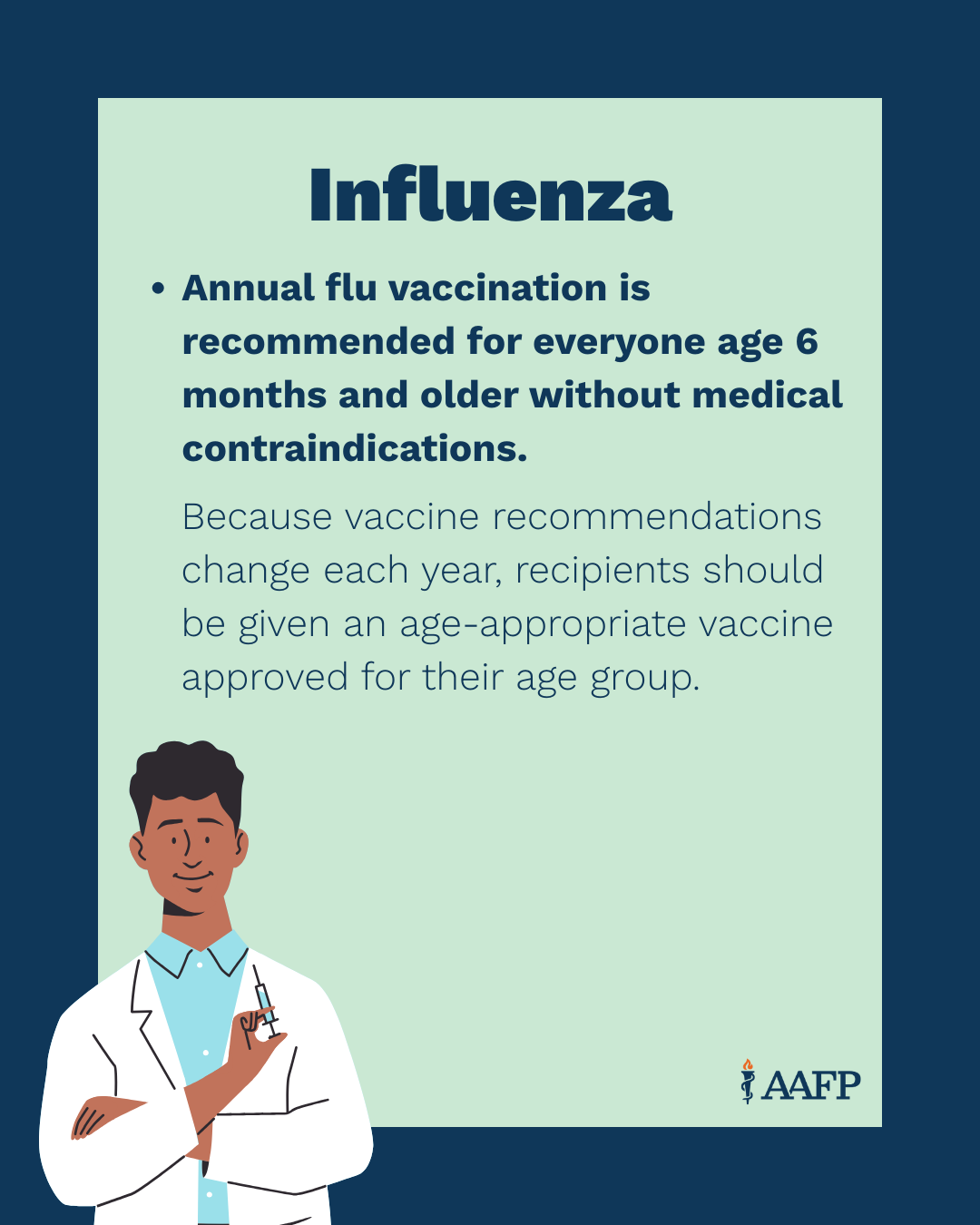
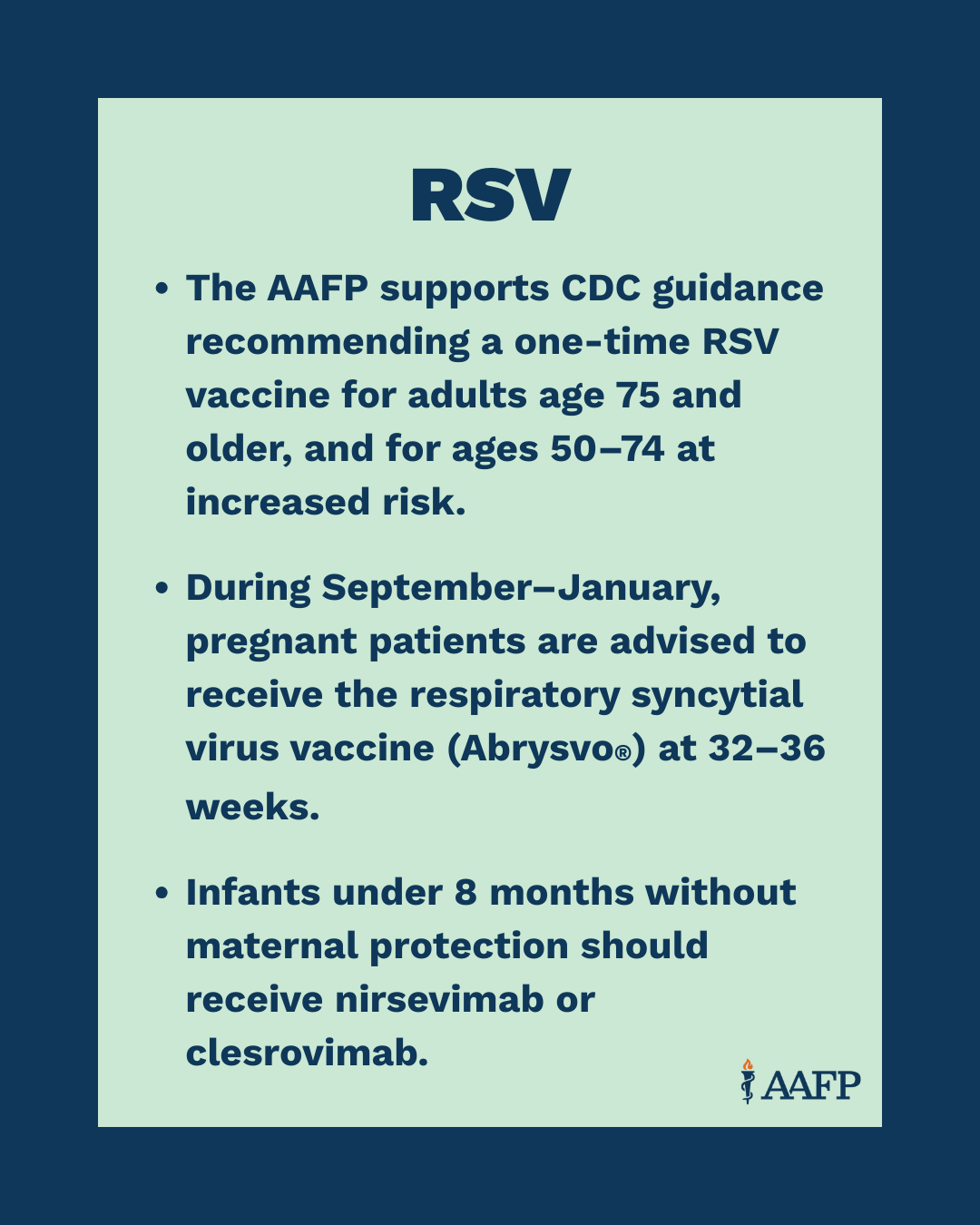
The episode also turns to the questions physicians are hearing from patients as respiratory virus season begins. Carter reviews common questions surrounding COVID-19, RSV and influenza vaccination and discusses how family physicians can tailor recommendations to each patient's age, health conditions, pregnancy status and individual concerns. Savoy and Carter emphasize that vaccine hesitancy is often an opportunity for conversation rather than a simple yes-or-no position, and that listening to patients' concerns can strengthen trust well beyond immunization decisions.
References and resources
Immunization and vaccine schedules and resources
Respiratory virus vaccines: Clinical guidance and resources
Topics by Timestamp
00:00 Vaccine Hesitancy 00:55 How AAFP vaccine recommendations were traditionally developed 03:44 Why the vaccine recommendation process changed 05:22 How the AAFP's new evidence review process works 08:39 Family physicians take the lead in reviewing evidence 11:18 How recommendations receive final AAFP approval 13:53 What patients are asking about fall vaccines 15:58 COVID-19, RSV and flu recommendations 18:28 Talking with patients who have vaccine concerns 21:31 Why trusted family physicians still make a difference
Disclaimer
Copyright 2026. AAFP. The views presented in this broadcast are the speaker's own and do not represent those of AAFP. The information presented is for general, educational, or entertainment purposes and should not be considered legal, health, financial, or other advice. AAFP makes no representation as to the accuracy or completeness of the information and is not responsible for results that may arise from its use. Consult an appropriate professional concerning your specific situation and respective governing bodies for applicable laws. Reference to any specific product or entity does not constitute an endorsement or recommendation by AAFP unless specifically stated otherwise. AAFP and the AAFP logo are registered trademarks of the American Academy of Family Physicians.
Mon, 14 Sep 2026 - 26min - 197 - IFM | From Passion to Impact: How AAFP Foundation Programs Empower the Next Generation
In this episode of Inside Family Medicine, host Margot L. Savoy, MD, MPH, FAAFP, talks with family medicine residents Katie Allan, MD, and Bridget Bunda, MD, recipients of the AAFP Foundation's Family Medicine Cares Resident Service Award. They share how a community-identified need in Boise grew into a resident-supported program providing wound care, health screenings and other services to people experiencing homelessness.
The conversation explores what it means to meet patients where they are, build trust through consistency and listen before acting. Allan and Bunda also discuss how Foundation support helped them expand street- and shelter-based care, involve more residents and build the work into their training program. Their advice for students and residents with big ideas is simple: find your people, follow what sparks your curiosity and be willing to take a chance.
Topics by timestamp
00:00 Introduction 01:07 Meet Katie Allan and Bridget Bunda 04:12 Bringing health care to people experiencing homelessness 07:01 Expanding street and shelter-based care in Boise 09:18 Homelessness and housing challenges in the community 16:36 How AAFP Foundation support helped the project grow 20:42 Developing leadership and building a sustainable program 24:38 How the experience is shaping their careers 27:30 Advice for students and residents with big ideas 35:07 What gives them hope for the future of family medicine
Learn more about AAFP Foundation programs, award opportunities and ways to support the future of family medicine through the AAFP Foundation.
Family Medicine Leads Emerging Leader Institute
Family Medicine Cares Resident Service Award
Ways to support the Foundation
Disclaimer
Copyright 2026. AAFP. The views presented in this broadcast are the speaker's own and do not represent those of AAFP. The information presented is for general, educational, or entertainment purposes and should not be considered legal, health, financial, or other advice. AAFP makes no representation as to the accuracy or completeness of the information and is not responsible for results that may arise from its use. Consult an appropriate professional concerning your specific situation and respective governing bodies for applicable laws. Reference to any specific product or entity does not constitute an endorsement or recommendation by AAFP unless specifically stated otherwise. AAFP and the AAFP logo are registered trademarks of the American Academy of Family Physicians.
Mon, 07 Sep 2026 - 35min - 196 - FFFM | Strengthening immunization access and advocating for public health
Join David Tully, vice president of government relations and a member of the AAFP's advocacy team, and Julie Riley, AAFP manager of legislative affairs, for this episode of Inside Family Medicine as they dive into the Academy's work to protect vaccine access and evidence-based immunization policy at the federal and state levels.
Get updates on the AAFP's priorities around vaccine coverage and infrastructure, including efforts to close Medicare vaccine coverage gaps, protect immunization programs and preserve science-based vaccine recommendations. Also catch up on recent changes affecting the Advisory Committee on Immunization Practices, the AAFP's response to federal actions involving childhood vaccine recommendations and the importance of working through coalitions to strengthen advocacy.
Listen for tips on how your trusted relationships with patients can support vaccine confidence and make an impact beyond the exam room, then amplify your experiences with policymakers by:
Participating in AAFP Speak Out campaigns
Staying connected with your state chapter
Becoming an Advocacy Ambassador to help shape policies affecting vaccines, patients and family medicine
Topics
00:00 FFFM Vaccine Advocacy 01:01 AAFP vaccine advocacy priorities 02:21 Protecting vaccine infrastructure and science-based recommendations 03:35 How the AAFP is responding to federal vaccine policy changes 05:24 The "Gold Standard" vaccine recommendations executive order 07:26 New federal vaccine policy and physician input 09:09 Why vaccine advocacy depends on coalitions 12:25 Family physicians as trusted vaccine messengers 14:00 Current advocacy opportunities for family physicians
Additional resources
Resources and clinical guidance: Immunizations and vaccines for family physicians
Immunization and vaccine schedules and resources
Disclaimer: Copyright 2026, AAFP. The views presented in this broadcast are the speaker's own and do not represent those of AAFP. The information presented is for general, educational, or entertainment purposes and should not be considered legal, health, financial, or other advice. The AAFP makes no representation as to the accuracy or completeness of the information and is not responsible for results that may arise from its use. Consult an appropriate professional concerning your specific situation and respective governing bodies for applicable laws. Reference to any specific product or entity does not constitute an endorsement or recommendation by AAFP unless specifically stated otherwise. AAFP and the AAFP logo are registered trademarks of American Academy of Family Physicians.
Mon, 31 Aug 2026 - 16min - 195 - IFM | The FMIG effect: Finding community, building leaders and choosing family medicine
In this episode of the Inside Family Medicine podcast, host Adam Bradley, AAFP Manager of Student Choice, explores how Family Medicine Interest Groups (FMIGs) help medical students discover the possibilities within family medicine.
Student leaders Sharleen Cineas of Burrell College of Osteopathic Medicine and Gabriella Morin of East Carolina University's Brody School of Medicine share what drew them to family medicine. They discuss the specialty's emphasis on treating the whole person, caring for patients throughout their lives and understanding the social and community factors that influence health.
The conversation highlights how FMIG involvement can provide students with mentorship, community, leadership experience and opportunities to advocate for patients. They discuss how their FMIGs helped them build confidence, connect with family physicians and explore the wide range of procedures, fellowships and career paths available within the specialty.
They also share successful events organized by their award-winning FMIGs, including community health fairs and hands-on clinical procedure workshops. The discussion offers practical ideas for planning affordable events, forming partnerships, recruiting members and building an FMIG leadership team that can sustain the organization over time.
Topics
00:00 Introduction 00:55 Meet the FMIG student leaders 02:09 What drew the students to family medicine 02:22 Gabriella's path to family medicine 04:41 Charlene's whole-person approach to care 06:02 How FMIG solidifies interest in family medicine 07:03 Developing leadership skills through FMIG 10:43 Recognizing award-winning FMIG program 11:03 Building a collaborative community health fair 12:31 Creating a hands-on procedures workshop 13:41 Affordable ideas for FMIG events 16:56 Advice for starting or rebuilding an FMIG 19:44 Advice for aspiring FMIG leaders 20:59 How FMIG involvement shapes medical school 23:01 Making the most of the FUTURE conference 24:32 Closing thoughts and FMIG resources
Resources
Family Medicine Interest Groups (FMIG) homepage
FMIG Program of Excellence Award
Family Medicine Champions program
Student leadership opportunities
Disclaimer
Copyright 2026. AAFP. The views presented in this broadcast are the speaker's own and do not represent those of AAFP. The information presented is for general, educational, or entertainment purposes and should not be considered legal, health, financial, or other advice. AAFP makes no representation as to the accuracy or completeness of the information and is not responsible for results that may arise from its use. Consult an appropriate professional concerning your specific situation and respective governing bodies for applicable laws. Reference to any specific product or entity does not constitute an endorsement or recommendation by AAFP unless specifically stated otherwise. AAFP and the AAFP logo are registered trademarks of the American Academy of Family Physicians.
Mon, 24 Aug 2026 - 26min - 194 - CME | AI as a Partner in Whole-Person Care: Empowering Clinicians, Enhancing Workflows
In this episode of CME On the Go, our hosts explore artificial intelligence as a partner in whole-person care and examine how family physicians can thoughtfully incorporate AI into clinical practice without losing the human judgment and relationships at the heart of family medicine.
They break down what today's AI tools can – and cannot – do, including the differences between traditional artificial intelligence, large language models and the still-theoretical concept of artificial general intelligence. The conversation addresses common concerns surrounding AI, including hallucinations, bias, privacy, environmental impact, workforce disruption and health equity. Throughout the discussion, the hosts emphasize a "trust but verify" approach and the importance of keeping physicians in the decision-making loop rather than treating AI-generated information as a final clinical answer.
The hosts also examine current clinical applications of AI, with particular attention to ambient documentation tools and their potential to reduce documentation burden. They discuss how family physicians can evaluate new technology by considering whether it improves workflow, integrates with existing systems, protects patient information, provides sufficient transparency and actually solves a problem clinicians experience. The conversation also explores the importance of accountability, explainability and recognizing how inaccurate or poorly implemented alerts and recommendations can contribute to clinician burden rather than reduce it.
Finally, the hosts look at how family physicians can help shape the future of AI in health care. They offer practical guidance for selecting and implementing tools, working with clinical informatics and IT teams, providing feedback to technology developers and using more specific prompts to improve AI-generated results. They emphasize that successful AI adoption depends not simply on technological capability or accuracy, but on thoughtful implementation, organizational culture and meaningful clinician involvement. Above all, they encourage family physicians to develop AI literacy, maintain healthy skepticism and ensure that human judgment remains central to patient care.
Learning objectives
Evaluate the capabilities, limitations, and ethical considerations of AI-driven tools in supporting decision-making, patient safety, and whole-person care within Family Medicine practice.
Explore the use of AI-enabled documentation and workflow optimization tools to reduce administrative burden, enhance efficiency, and strengthen communication across the care team.
Develop a strategic plan for implementing AI technologies that uphold data privacy, minimize bias, and promote human-centered, ethical use in healthcare settings.
The AAFP has reviewed CME On the Go, Season 3 and deemed it acceptable for AAFP credit(s). Term of Approval is from 08/20/2026 to 07/06/2028. Physicians should claim only the credit commensurate with the extent of their participation in the activity.
This session, "CME | Beyond the Hype: Using AI as a Partner in Whole-Person Care," is approved for 0.50 credits Enduring Materials, Self-Study, AAFP Prescribed credit(s).
The AAFP is accredited by the Accreditation Council for Continuing Medical Education (ACCME) to provide continuing medical education for physicians.
The American Academy of Family Physicians designates this Enduring Materials activity for a maximum of 1.00 AMA PRA Category 1 Credit(s)™. Physicians should claim only the credit commensurate with the extent of their participation in the activity.
After listening to the podcast episode, claim 0.5 AAFP credit by following the provided link.
https://www.aafp.org/assessment/take/20856/e
Disclosure: It is the policy of the AAFP that all individuals in a position to control content disclose any relationships with commercial interests upon nomination/invitation of participation. Disclosure documents are reviewed for potential conflicts of interest and, if identified, conflicts are resolved prior to confirmation of participation. Only those participants who had no conflict of interest or who agreed to an identified resolution process prior to their participation were involved in this CME activity. All individuals in a position to control content for this session have indicated they have no relevant financial relationships to disclose.
Disclaimer: Copyright 2026. AAFP. The views presented in this broadcast are the speaker's own and do not represent those of AAFP. The information presented is for general, educational, or entertainment purposes and should not be considered legal, health, financial, or other advice. AAFP makes no representation as to the accuracy or completeness of the information and is not responsible for results that may arise from its use. Consult an appropriate professional concerning your specific situation and respective governing bodies for applicable laws. Reference to any specific product or entity does not constitute an endorsement or recommendation by AAFP unless specifically stated otherwise. AAFP and the AAFP logo are registered trademarks of American Academy of Family Physicians.
Mon, 17 Aug 2026 - 1h 03min - 193 - IFM | Residency Selection Improvement Initiative: Enhancing Family Medicine Recruitment and Applicant Experience
In this episode of the Inside Family Medicine podcast, AAFP Executive Vice President and CEO, Shawn Martin, speaks with a panel of family medicine leaders about the Residency Selection Improvement Initiative, or RSII, and its goal of creating a more effective, efficient and equitable residency selection process.
Guests Karen Mitchell, MD, FAAFP, AAFP Vice President of National Residency and Academic Partnerships; Grace Chen Yu, MD, FAAFP; Raj Woolever, MD, FAAFP; Saroj Misra, DO, FACOFP; and Molly Stegman, MD, discuss the challenges applicants and residency programs face as the number of family medicine programs and available positions continue to grow. They explain how inconsistent program information, compressed interview timelines and increasingly complex application strategies can contribute to unnecessary stress, uncertainty and expense.
The conversation explores RSII's four priority areas: establishing centralized and specialty-specific program information, improving the residency interview process, supporting international medical graduates and multispecialty applicants, and helping programs identify applicants who are committed to family medicine.
Panelists also discuss practical recommendations for making interview offers more transparent and predictable, expanding meaningful application review and creating stronger alignment between an applicant's values and a program's mission. The episode concludes with actionable guidance for residency programs, medical schools and applicants preparing for the next Match cycle.
Learn more about the Residency Selection Improvement Initiative and access recommendations and resources for applicants and residency programs at aafp.org/rsii.
Topics by Timestamps
00:00 Introduction 01:01 Meet the panel 01:42 What is the Residency Selection Improvement Initiative? 02:49 Building RSII through collaboration 03:41 The initiative's four priority areas 04:43 What applicants want to know about residency programs 05:41 Creating a centralized source for program information 06:37 Improving the residency interview process 08:35 Recommendations for residency interview offers 10:08 The applicant experience during interview season 13:13 Making the process more transparent and equitable 13:32 Supporting international graduates and multispecialty applicants 16:37 Identifying applicants committed to family medicine 17:38 Aligning applicants with program missions and values 19:55 What a better Match could look like 21:08 Practical recommendations for residency programs 21:54 Advice for family medicine applicants 22:29 How medical schools can better support students 23:01 One thing to remember about RSII 23:47 Closing remarks and RSII resources
Resources
Residency Selection Improvement Initiative (RSII)
AAFP residency initiative drives changes for 2027 Match
AAFP launches initiative to improve family medicine Match
AAFP Residency Program Resources
AAFP Medical Student and Resident hubs
Disclaimer
Copyright 2026. AAFP. The views presented in this broadcast are the speaker's own and do not represent those of AAFP. The information presented is for general, educational, or entertainment purposes and should not be considered legal, health, financial, or other advice. AAFP makes no representation as to the accuracy or completeness of the information and is not responsible for results that may arise from its use. Consult an appropriate professional concerning your specific situation and respective governing bodies for applicable laws. Reference to any specific product or entity does not constitute an endorsement or recommendation by AAFP unless specifically stated otherwise. AAFP and the AAFP logo are registered trademarks of the American Academy of Family Physicians.
Mon, 10 Aug 2026 - 23min - 192 - FFFM | Advocacy in action: Members take key issues from clinics to Congress
In this episode of Fighting for Family Medicine, David Tully, AAFP Vice President of Government Relations, reviews the Academy's July advocacy efforts, including proposed Medicare payment improvements, physician workforce policies, Medicaid coverage protections and efforts to reduce administrative burdens.
He also highlights AAFP advocacy related to Public Service Loan Forgiveness, federal research grants, Medicare Advantage reform, overdose prevention and Primary Care for America's Triple Double campaign to expand investment in and access to primary care.
Tully then speaks with Rebecca King, AAFP Senior Strategist for State Affairs and Member Advocacy, about the record-setting 2026 Family Medicine Advocacy Summit and how family physicians, residents and students can continue building momentum during the August congressional recess. They discuss the summit's legislative priorities, the August Recess Advocacy Challenge and the AAFP Advocacy Ambassadors program.
00:00 July Advocacy Updates 00:51 Medicare Physician Payment Proposals 01:17 Supporting the Patients First Act 01:58 Public Charge Rule Concerns 02:16 Protecting Public Service Loan Forgiveness 02:39 Medicaid Work Reporting Requirements 03:04 Federal Grants and Scientific Review 03:30 Medicaid Payment Flexibility 03:56 Overdose Prevention and Medicare Advantage Reform 04:21 The Triple Double Primary Care Campaign 04:49 Family Medicine Advocacy Summit Recap 05:08 FMAS Legislative Priorities 06:45 Why Physicians' Stories Matter 08:59 Continuing Advocacy After FMAS 09:42 August Recess Advocacy Priorities 10:14 Connecting With Lawmakers at Home 11:48 August Recess Advocacy Challenge 14:01 AAFP Advocacy Ambassadors 16:17 Closing and Disclaimers
Additional Resources
AAFP Advocacy Ambassador Program
Rounds Resources:
AAFP Statement on 2027 MPFS Proposed Rule
AAFP letter to OMB on Regulation for Federal Financial Assistance - July 13, 2026
AAFP Letter to CMS on Medicaid State Directed Payments - July 21, 2026
AAFP urges withdrawal of proposed PSLF rule | AAFP
AAFP Letter to the Department of Education on Intent to Develop Proposed Regulations - May 8, 2025
AAFP Letter to CMS on Medicaid State Directed Payments - July 21, 2026
Triple Double - Primary Care For America
AAFP Letter to House Energy and Commerce Committee on MA & Opioid Legislation – July 2, 2026
Patients First Act Signals Commitment to Modernizing Primary Care Payment | AAFP
Leading Physician Groups: Patients First Act Addresses Longstanding Payment Challenges | AAFP
Leading Frontline Physician Groups Oppose Final Public Charge Rule | AAFP
Disclaimer: Copyright 2026, AAFP. The views presented in this broadcast are the speaker's own and do not represent those of AAFP. The information presented is for general, educational, or entertainment purposes and should not be considered legal, health, financial, or other advice. The AAFP makes no representation as to the accuracy or completeness of the information and is not responsible for results that may arise from its use. Consult an appropriate professional concerning your specific situation and respective governing bodies for applicable laws. Reference to any specific product or entity does not constitute an endorsement or recommendation by AAFP unless specifically stated otherwise. AAFP and the AAFP logo are registered trademarks of American Academy of Family Physicians.
Fri, 31 Jul 2026 - 17min - 191 - IFM | AAFP x Unbiased Science: Behind Every Vaccine Question Is a Person
Vaccine conversations have changed. Patients are asking new questions, trust is harder to earn, and clinicians are navigating increasingly complex discussions in limited time. In this episode of Inside Family Medicine, host Rebecca Fuller Beeler, PhD, vice president of Integrated Marketing Communications at AAFP is joined by public health scientist and founder of Unbiased Science Jess Steier, DrPH. Together, they discuss why facts alone are often not enough, how empathy and listening can strengthen vaccine conversations, and what physicians can do to support patients before, during, and after clinical visits.
Drawing on thousands of conversations with people seeking credible health information, Steier shares insights into the concerns, emotions, and information ecosystems that shape patients' decisions. The conversation offers practical strategies for building trust, addressing uncertainty, and helping patients make informed decisions—while reminding clinicians that even small conversations can plant seeds that matter. Whether discussing vaccines or any health topic where trust and clarity are essential, this episode highlights the power of meeting people where they are.
Steier emphasizes practical communication strategies such as listening first, understanding a patient's perspective, sharing personal experiences, leveraging the entire care team and extending education beyond the exam room. Listen in to this conversation that highlights the critical role family physicians continue to play as trusted sources of health information and offer encouragement for clinicians working to foster informed, compassionate conversations in an era of misinformation.
Mon, 27 Jul 2026 - 24min - 190 - IFM | From Hypertension to Hypopneas: Bringing Obstructive Sleep Apnea Management into Primary Care Practice
In this special episode of the Inside Family Medicine podcast, brought to you by Resmed, host Darren Sextro talks with family physician James Bigham, MD, MPH, FAAFP about how he has successfully integrated sleep health and OSA management into his practice. He discusses the well-established connection between OSA and hypertension and explains how screening and treatment can become a natural part of chronic disease management.
The conversation highlights the barriers he's faced in practice, from uncertainty around role ownership to patient hesitation, and the practical solutions he's implemented to make sleep and OSA care more feasible in primary care settings. The discussion covers the importance of early diagnosis and therapy referrals as well as outlines effective workflow strategies for primary care teams.
Topics by Timestamp
00:00 – Welcome and episode overview
02:14 – Dr. Bigham's path to family medicine
03:15 – How OSA became part of primary care
05:59 – Early barriers to OSA management
09:37 – Barriers colleagues face in primary care
12:07 – Practical ways to integrate obstructive sleep apnea care
14:07 – Improving patient engagement in evaluation and treatment
17:38 – Working with sleep medicine and cardiology
20:16 – Impact on patients and practice
25:56 – First steps for family physicians and care teams
29:00 – Closing and resources
Additional resources for your team include:
OSA in primary care: a practical clinical guide from Resmed
Explore practical tools and guidance to help primary care teams identify patients at risk for OSA, support evaluation and navigate treatment conversations.
Resources from the American Academy of Family Physicians:
Cardiometabolic health for family physicians | AAFP
Find clinical guidance, educational resources and patient-centered tools for managing hypertension, diabetes, obesity, chronic kidney disease and related conditions.
This episode is brought to you by Resmed.
Disclaimer: Copyright 2026. AAFP. The views presented in this broadcast are the speaker's own and do not represent those of AAFP. The information presented is for general, educational, or entertainment purposes and should not be considered legal, health, financial, or other advice. AAFP makes no representation as to the accuracy or completeness of the information and is not responsible for results that may arise from its use. Consult an appropriate professional concerning your specific situation and respective governing bodies for applicable laws. Reference to any specific product or entity does not constitute an endorsement or recommendation by AAFP unless specifically stated otherwise. AAFP and the AAFP logo are registered trademarks of American Academy of Family Physicians.
Wed, 22 Jul 2026 - 25min - 189 - CME | From Heat Waves to Health Risks: Climate Change in Primary Care
In this episode of CME On the Go, our hosts discuss how changing climate and weather patterns are already affecting patient health and family medicine practice.
They examine the health consequences associated with extreme heat, worsening air quality, wildfire smoke, longer pollen seasons, expanding vector-borne diseases, food and water insecurity and climate-related mental health concerns. They also highlight how these effects can compound existing cardiovascular, respiratory, renal and pregnancy-related risks, particularly among older adults, children, outdoor workers and historically marginalized communities.
The hosts offer practical strategies family physicians can use to prepare their practices and protect patients, including broadening clinical differentials, discussing heat safety and hydration, helping patients monitor air quality, recommending appropriate protection from smoke and insects and identifying patients who may lack access to cooling or other essential resources. They also explore opportunities for community advocacy, climate resilience and sustainable changes within medical practices.
Learning objectives
Identify climate‑related environmental changes that directly affect patient health, including heat, air quality, allergens, infectious disease patterns, and extreme weather events.
Recognize emerging climate‑related trends in clinical practice and implement strategies to anticipate and respond to these changes in patient care.
Describe the role of physicians in climate advocacy, including practical ways clinicians can engage without compromising professionalism or clinical boundaries.
The AAFP has reviewed CME On the Go, Season 3 and deemed it acceptable for AAFP credit(s). Term of Approval is from 07/20/2026 to 07/06/2028. Physicians should claim only the credit commensurate with the extent of their participation in the activity.
This session, "CME | From Heat Waves to Health Risks: Climate Change in Primary Care" is approved for 0.50 credits Enduring Materials, Self-Study, AAFP Prescribed credit(s).
The AAFP is accredited by the Accreditation Council for Continuing Medical Education (ACCME) to provide continuing medical education for physicians.
The American Academy of Family Physicians designates this Enduring Materials activity for a maximum of 1.00 AMA PRA Category 1 credit(s)™. Physicians should claim only the credit commensurate with the extent of their participation in the activity.
After listening to the podcast episode, claim 0.5 AAFP credit by following the provided link.
https://www.aafp.org/assessment/take/20236/e
Resources
Climate-Smart Health Care: Family Medicine's Role in Climate Action and Resilience (American Family Physician)
Climate Change and Health (New England Journal of Medicine) Read the article
AAFP Environmental Health and Climate Change Resources Explore AAFP resources
Medical Society Consortium on Climate and Health (AAFP) Learn about the consortium
Medical Society Consortium for Climate & Health Visit the consortium website
References
Romanello M, Ballester J, Cai W, et al. The 2024 report of the Lancet Countdown on health and climate change: facing record-breaking threats from delayed action. Lancet. 2024;404(10465):1847-1896. doi:10.1016/S0140-6736(24)01822-1
Neven JCG, Quispel C. Extreme heat and pregnancy: A growing public health concern. Case Reports in Women's Health. 2025;49:e00762. Published October 30, 2025. doi:10.1016/j.crwh.2025.e00762
Romanello M, Amann M, Ayeb-Karlsson S, et al. Climate change and health. New England Journal of Medicine. 2019;380(26):2519-2529. doi:10.1056/NEJMra1807873
Disclosure: It is the policy of the AAFP that all individuals in a position to control content disclose any relationships with commercial interests upon nomination/invitation of participation. Disclosure documents are reviewed for potential conflicts of interest and, if identified, conflicts are resolved prior to confirmation of participation. Only those participants who had no conflict of interest or who agreed to an identified resolution process prior to their participation were involved in this CME activity. All individuals in a position to control content for this session have indicated they have no relevant financial relationships to disclose.
Disclaimer: Copyright 2026. AAFP. The views presented in this broadcast are the speaker's own and do not represent those of AAFP. The information presented is for general, educational, or entertainment purposes and should not be considered legal, health, financial, or other advice. AAFP makes no representation as to the accuracy or completeness of the information and is not responsible for results that may arise from its use. Consult an appropriate professional concerning your specific situation and respective governing bodies for applicable laws. Reference to any specific product or entity does not constitute an endorsement or recommendation by AAFP unless specifically stated otherwise. AAFP and the AAFP logo are registered trademarks of American Academy of Family Physicians.
Mon, 20 Jul 2026 - 36min - 188 - IFM | Direct Primary Care: Building Autonomy, Access and Sustainability
IFM | Direct Primary Care: Building Autonomy, Access and Sustainability
AAFP Vice President of Practice Advancement Dr. Karen Johnson, PhD, welcomes Dr. Maryal Concepcion, MD, FAAFP, a full-scope family physician, founder and CEO of Big Trees MD, and host of the My DPC Story podcast, to discuss direct primary care (DPC) as an evolving practice model for family physicians. Drawing from her own transition out of corporate medicine, Dr. Concepcion shares how DPC has allowed her to build a sustainable practice centered on physician autonomy, meaningful patient relationships, and comprehensive, community-focused care.
The conversation explores Dr. Concepcion's journey into family medicine and direct primary care, practical considerations for launching and growing a DPC practice, strategies for managing financial and operational challenges, and the flexibility DPC provides to meet community needs. She also discusses common misconceptions about direct primary care, improving access to care in rural and underserved communities, and why supporting diverse practice models is essential to the future of family medicine.
Topics by Timestamp
00:00 Welcome and Guest Introduction
02:13 Why Family Medicine
05:04 Transitioning from Corporate Medicine to Direct Primary Care
09:15 Launching a DPC Practice and Lessons Learned
12:16 Financial and Operational Decisions for Long-Term Sustainability
16:15 Growing the Practice and Managing Risk
19:30 Building a Direct Primary Care Practice
21:30 Improving Access Through Transparent, Patient-Centered Care
24:24 Expanding Community Services Through Innovation
26:47 Addressing Equity and Access in Direct Primary Care
30:33 Supporting Diverse Practice Models and the Future of Family Medicine
32:07 Closing Remarks
Additional Resources
Clinician Resources:
Direct Primary CarePatient Resources:
Direct Primary Care for PatientsRelated AAFP CME Activities:
Business Fundamentals for New Physicians
Medical Practice Management Essentials
Disclaimer
Copyright 2026. AAFP. The views presented in this broadcast are the speaker's own and do not represent those of AAFP. The information presented is for general, educational, or entertainment purposes and should not be considered legal, health, financial, or other advice. AAFP makes no representation as to the accuracy or completeness of the information and is not responsible for results that may arise from its use. Consult an appropriate professional concerning your specific situation and respective governing bodies for applicable laws. Reference to any specific product or entity does not constitute an endorsement or recommendation by AAFP unless specifically stated otherwise. AAFP and the AAFP logo are registered trademarks of the American Academy of Family Physicians.
Wed, 15 Jul 2026 - 33min - 187 - IFM | Strengthening Vaccine Confidence and Adult Immunization
AAFP Vaccine Science Fellows James Bigham, MD, MPH, FAAFP, and Amra Resic, MD, FAAFP, join host Emily Holwick to discuss practical strategies for improving adult vaccination rates in primary care. Drawing from their clinical experience and fellowship work, they explore how family physicians can build vaccine confidence through strong recommendations, trusted patient relationships, and team-based workflows.
The conversation covers presumptive vaccine recommendations, shared clinical decision-making, increasing vaccine confidence with empathy, integrating the assessment of immunization reviews into every patient visit, and empowering the entire care team to support vaccination efforts. Dr. Bigham and Dr. Resic also discuss workflow strategies such as standing orders, pre-visit planning, EMR reminders, and consistent messaging that make adult vaccination a routine part of preventive care while helping patients make informed decisions that protect themselves, their families, and their communities.
Topics by Timestamp
00:00 Welcome and Guest Introductions
03:00 The AAFP Vaccine Science Fellowship Experience
04:35 Starting Vaccine Conversations with Adult Patients
06:03 Vaccination as Routine Preventive Care
07:02 Understanding Low Adult Vaccination Rates
09:17 Team-Based Strategies to Improve Vaccine Uptake
12:20 Shared Clinical Decision-Making and Building Trust
15:07 Empowering the Care Team to Build Vaccine Confidence
16:28 Key Takeaways for Family Physicians
18:45 Closing Remarks
Additional Resources:
Clinician Resources:
Immunizations Shared Decision-making and Clinical Guidance Resources
Immunizations And Vaccines For Family Physicians
AAFP Vaccine Advocacy: Strengthening Immunization Access | AAFP
Patient Resources:
Immunization Schedules | Family Doctor
Funding Statement: This podcast episode was independently developed by the AAFP with support provided by GlaxoSmithKline.
Disclaimer: Copyright 2026. AAFP. The views presented in this broadcast are the speaker's own and do not represent those of AAFP. The information presented is for general, educational, or entertainment purposes and should not be considered legal, health, financial, or other advice. AAFP makes no representation as to the accuracy or completeness of the information and is not responsible for results that may arise from its use. Consult an appropriate professional concerning your specific situation and respective governing bodies for applicable laws. Reference to any specific product or entity does not constitute an endorsement or recommendation by AAFP unless specifically stated otherwise. AAFP and the AAFP logo are registered trademarks of American Academy of Family Physicians.
Mon, 13 Jul 2026 - 17min - 186 - CME | Dementia Demystified: From Early Signs to Everyday Management
In this CME On the Go episode, our hosts discuss evaluating and managing dementia-related concerns in primary care using a common scenario: an older patient brought in by an adult child concerned about Alzheimer's disease and possible nursing home placement. They emphasize that these visits are time intensive and require history from both the patient and family, distinguishing normal aging from functional cognitive decline across domains such as memory, judgment, language and orientation, while remaining aware of family dynamics. Key exam priorities include vision, hearing and depression screening. They review brief and extended cognitive screening tools, labs for reversible causes and selective imaging. The episode outlines definitions of normal aging, mild cognitive impairment and dementia, along with practical, safety-focused management, medication options and the family physician's role in long-term planning and caregiver support.
Learning Objectives
Recognize early signs and symptoms of dementia and distinguish them from normal aging and potentially reversible causes of cognitive change.
Differentiate behavioral and psychological symptoms of dementia (BPSD) from unmet needs or environmental triggers, clarifying what BPSD is—and what it is not.
Share practical, evidence‑informed management pearls with patients and caregivers, focusing on nonpharmacologic strategies and realistic expectations for disease progression.
The AAFP has reviewed CME On the Go, Season 3 and deemed it acceptable for AAFP credit(s). Term of Approval is from 07/06/2026 to 07/06/2028. Physicians should claim only the credit commensurate with the extent of their participation in the activity.
This session, "Dementia Demystified: From Early Signs to Everyday Management" is approved for 0.50 credits Enduring Materials, Self-Study, AAFP Prescribed credit(s).
The AAFP is accredited by the Accreditation Council for Continuing Medical Education (ACCME) to provide continuing medical education for physicians.
The American Academy of Family Physicians designates this Enduring Materials activity for a maximum of 1.00 AMA PRA Category 1 credit(s)™. Physicians should claim only the credit commensurate with the extent of their participation in the activity.
After listening to the podcast episode, claim 0.5 AAFP credit by following the provided link.
https://www.aafp.org/assessment/take/20235/e
References and Resources
All AAFP Dementia topics:
https://www.aafp.org/pubs/afp/topics/by-topic.dementia.html
Dementia Diagnosis and Care: CME for Family Physicians
https://www.aafp.org/cme-and-events/topics/geriatrics-end-of-life-care/dementia-on-demand
Article from AAFP titled "Evaluation of Suspected Dementia" https://www.aafp.org/pubs/afp/issues/2025/1200/suspected-dementia-evaluation.html
Disclosure: It is the policy of the AAFP that all individuals in a position to control content disclose any relationships with commercial interests upon nomination/invitation of participation. Disclosure documents are reviewed for potential conflicts of interest and, if identified, conflicts are resolved prior to confirmation of participation. Only those participants who had no conflict of interest or who agreed to an identified resolution process prior to their participation were involved in this CME activity. All individuals in a position to control content for this session have indicated they have no relevant financial relationships to disclose.
Disclaimer: Copyright 2026. AAFP. The views presented in this broadcast are the speaker's own and do not represent those of AAFP. The information presented is for general, educational, or entertainment purposes and should not be considered legal, health, financial, or other advice. AAFP makes no representation as to the accuracy or completeness of the information and is not responsible for results that may arise from its use. Consult an appropriate professional concerning your specific situation and respective governing bodies for applicable laws. Reference to any specific product or entity does not constitute an endorsement or recommendation by AAFP unless specifically stated otherwise. AAFP and the AAFP logo are registered trademarks of American Academy of Family Physicians.
Mon, 06 Jul 2026 - 37min - 185 - IFM | Family Physician Compensation: Myths, Models and Using the AAFP Career Benchmark Dashboard
In this episode of Inside Family Medicine, we hear from Norman Chenven, MD, founding CEO of Austin Regional Clinic (ARC), and AAFP Director of Career and Practice, Tracey Allen-Ehrhart. They discuss family physician compensation, common income myths, and tools for evaluating job offers. Chenven explains why he chose family medicine and outlines how compensation varies by geography, practice type, work hours, productivity, coding, patient satisfaction, and value-based quality measures. Allen-Ehrhart highlights the AAFP Career Benchmark Dashboard, which offers family physicians real-world compensation data and includes filters by role and state for tailored searches. They also compare employed roles and practice ownership, discuss risks associated with private equity and health system stability, and share advice and resources for evaluating employers and reviewing contracts.
Topics by Timestamp
00:00 Welcome and Guests
01:20 Why Family Medicine
02:27 Compensation Basics
05:05 Benchmark Dashboard
06:27 Ownership vs Employment
09:52 Myths and Reality
10:50 Advice for New Docs
13:42 Negotiate Your Worth
16:17 Resources and Wrap Up
Additional Resources
Comparing Physician Compensation
Family Medicine Compensation and Career Satisfaction Benchmark Dashboard
Understanding and Improving Your Work RVUs
Disclaimer: Copyright 2026, AAFP. The views presented in this broadcast are the speaker's own and do not represent those of AAFP. The information presented is for general, educational, or entertainment purposes and should not be considered legal, health, financial, or other advice. The AAFP makes no representation as to the accuracy or completeness of the information and is not responsible for results that may arise from its use. Consult an appropriate professional concerning your specific situation and respective governing bodies for applicable laws. Reference to any specific product or entity does not constitute an endorsement or recommendation by AAFP unless specifically stated otherwise. AAFP and the AAFP logo are registered trademarks of American Academy of Family Physicians.
Mon, 29 Jun 2026 - 17min - 184 - FFFM | What federal student loan borrowers need to know
In this episode of Fighting for Family Medicine, David Tully, AAFP vice president of government relations, reviews June advocacy efforts, including the Family Medicine Advocacy Summit, where more than 300 physicians advocated for policies to improve access to care.
He also highlights AAFP positions on H-1B physician policy, Medicaid work requirements, ACA marketplace changes, rural training and hospital payments, and reducing prior authorization burdens.
Tully then discusses student loan changes from the U.S. Department of Education under H.R.1 with members of the AAFP government relations team, Meagan Mortimer and Mandi Neff, outlining new repayment rules, elimination of programs and borrowing caps,.
Topics by Timestamp
00:00 Student Loan Changes Ahead
01:02 June Advocacy Wins
02:17 Policy Updates Roundup
05:26 DOE Loan Overhaul Explained
06:19 AAFP Pushback on HR1
08:42 Borrowing Caps Timeline
10:28 Exceptions and Legacy Plans
11:48 Mitigation and Advocacy Strategy
15:58 How Members Can Help
18:26 Closing and Disclaimers
Additional Resources
Blog: Policymakers have a roadmap to ease medical student debt
Advocacy topic: Medical student debt relief
Loan repayment strategies for medical students and residents
Letter to the Department of Education to Protect Medical Training Pathways
Speak Out: Support the Medicare Advantage Improvement Act of 2026
Letter in Resposne to IPPS Rule
Speak Out: Chronic Care Management Improvement Act
Speak Out: Support H-1B Physicians
Primary Care Innovation Network
Disclaimer: Copyright 2026, AAFP. The views presented in this broadcast are the speaker's own and do not represent those of AAFP. The information presented is for general, educational, or entertainment purposes and should not be considered legal, health, financial, or other advice. The AAFP makes no representation as to the accuracy or completeness of the information and is not responsible for results that may arise from its use. Consult an appropriate professional concerning your specific situation and respective governing bodies for applicable laws. Reference to any specific product or entity does not constitute an endorsement or recommendation by AAFP unless specifically stated otherwise. AAFP and the AAFP logo are registered trademarks of American Academy of Family Physicians.
Fri, 26 Jun 2026 - 19min - 183 - IFM | Firearm Injury Prevention in the Exam Room: A Conversation with Family Physicians
In this episode of Inside Family Medicine, James Bigham, MD, MPH, and Sanjay Batish, MD, discuss the family physician's role in preventing firearm injuries and addressing gun violence through relationship-based, upstream care. Bigham describes training clinicians in culturally aware counseling, secure firearm storage and collaboration with gun shop owners through and the nonprofit SAFE, or Scrubs Addressing the Firearm Epidemic, emphasizing a public health approach that uses population data, including that firearm injury is the leading cause of death among people ages 1 to 19. Batish explains how treating the long-term physical and mental health effects of firearm injuries led him into research, including an AAFP Foundation RapSDI pilot that tested a firearm safety score tool in nonurban primary care settings and found unexpectedly high risk. Both physicians recommend universal screening, nonjudgmental counseling focused on suicide risk, practical storage planning, community resources and clinician training tools.
Topics by Timestamp
00:00 Welcome and Guests
01:52 Why Family Medicine
02:39 Why Firearm Prevention Matters
05:40 Public Health Lens
07:04 RAPSODI Research Findings
09:23 Screening and Counseling Tips
11:36 Handling Discomfort
12:52 Stories and Blind Spots
17:53 Advice and Resources
21:19 Closing and Disclaimers
Additional Resources
Gun Violence, Prevention of (Position Paper) | AAFP
Prevention of Gun Violence (Policy Statement) | AAFP
https://www.aafp.org/news/blogs/aafp-voices/storage-conversations.html
https://aafp.libsyn.com/ifm-the-aafp-foundations-signature-research-program
Disclaimer: Copyright 2026, AAFP. The views presented in this broadcast are the speaker's own and do not represent those of AAFP. The information presented is for general, educational, or entertainment purposes and should not be considered legal, health, financial, or other advice. The AAFP makes no representation as to the accuracy or completeness of the information and is not responsible for results that may arise from its use. Consult an appropriate professional concerning your specific situation and respective governing bodies for applicable laws. Reference to any specific product or entity does not constitute an endorsement or recommendation by AAFP unless specifically stated otherwise. AAFP and the AAFP logo are registered trademarks of American Academy of Family Physicians.
Mon, 22 Jun 2026 - 22min - 182 - CME | This Is Giving Me a Headache: Managing the Headache Patient Without Losing Your Mind
In this re-released episode of CME on the Go, originally published on 12/1/2025, our hosts discuss the complexities of diagnosing and treating headaches in primary care. They cover common challenges faced by family physicians, such as differentiating between primary and secondary headaches, the importance of taking thorough patient histories, and the appropriate use of diagnostic tests like MRI and CT scans. The episode offers a deep dive into treatment options for headaches, including pharmacologic and non-pharmacologic methods, with a special focus on managing chronic daily headaches, migraine disorders, and medication overuse headaches. The discussion also touches on the role of cognitive behavioral therapy, osteopathic manipulation, and the efficacy of various medications like NSAIDs, triptans, and beta blockers.
After listening to the podcast episode, claim 0.5 AAFP credit by following the provided link.
https://www.aafp.org/assessment/take/19579/e
Learning Objectives
Apply a standardized, evidence-informed diagnostic and treatment algorithm for evaluating patients with headache, while acknowledging alternative approaches.
Differentiate between appropriate and potentially problematic interventions, including the use of narcotics, in-office procedures, and newer pharmacologic therapies.
Reflect on provider discomfort and fatigue in managing headache complaints, and develop strategies to maintain empathy, clinical consistency, and patient rapport.
References and Resources
Bahra, A., & Evans, R. W. (2021). The secondary headaches. Cephalalgia, 41(4), 427-430.
Jairo Hernandez, Eduardo Molina, Ashley Rodriguez, Samuel Woodford, Andrew Nguyen, Grace Parker, Brandon Lucke-Wold. Headache Disorders: Differentiating Primary and Secondary Etiologies. J. Integr. Neurosci. 2024, 23(2), 43. https://doi.org/10.31083/j.jin2302043
https://www.sciencedirect.com/science/article/pii/S1470211823000052#bib0003 Novel screening tool for secondary headache in acute care—A pilot study.
https://doi.org/10.1016/j.clinme.2023.100005
Disclosure:It is the policy of the AAFP that all individuals in a position to control content disclose any relationships with commercial interests upon nomination/invitation of participation. Disclosure documents are reviewed for potential conflicts of interest and, if identified, conflicts are resolved prior to confirmation of participation. Only those participants who had no conflict of interest or who agreed to an identified resolution process prior to their participation were involved in this CME activity. All individuals in a position to control content for this session have indicated they have no relevant financial relationships to disclose.
Disclaimer: Copyright 2026. AAFP. The views presented in this broadcast are the speaker's own and do not represent those of AAFP. The information presented is for general, educational, or entertainment purposes and should not be considered legal, health, financial, or other advice. AAFP makes no representation as to the accuracy or completeness of the information and is not responsible for results that may arise from its use. Consult an appropriate professional concerning your specific situation and respective governing bodies for applicable laws. Reference to any specific product or entity does not constitute an endorsement or recommendation by AAFP unless specifically stated otherwise. AAFP and the AAFP logo are registered trademarks of American Academy of Family Physicians.
Fri, 19 Jun 2026 - 35min - 181 - IFM | FASDs in Primary Care: Recognition, Prevention, and Support
AAFP Chief Medical Officer and Senior Vice President of Education, Inclusiveness and Physician Well-Being Margot Savoy, MD, MPH, FAAFP, welcomes back Jeffrey Quinlan, MD, FAAFP, a family physician and University of Iowa department leader with a 28-year US Navy career, to discuss his AAFP work on fetal alcohol spectrum disorders (FASDs) and substance use in pregnancy. He emphasizes that alcohol is a teratogen with no safe amount or timing in pregnancy and outlines associated neurodevelopmental, craniofacial, organ, growth and behavioral effects.
The conversation covers primary care screening and early identification using exposure history and clinical signs, common diagnostic frameworks (COFASP and the University of Washington 4-digit code), multidisciplinary care coordination and prevention through routine screening (AUDIT-C or NIAAA single-question), preconception counseling and stigma reduction. For longitudinal care, Quinlan highlights early intervention, individualized care plans, family support and training, school accommodations, behavioral therapies, nutrition support and medications for comorbid conditions, all using a strength-based approach.
Topics by Timestamp
00:00 Welcome and Guest Intro
00:51 Clinical Background and Exposure
01:55 No Safe Alcohol in Pregnancy
04:02 Screening and Diagnosis Basics
06:46 Building the Care Team
09:05 Preventing Alcohol Exposed Pregnancy
12:38 Long Term Care and Interventions
20:13 Key Takeaways and Closing
Additional Resources
Clinician Resources
Substance use disorders: Clinical guidance and practice resources from the AAFP Alcohol use during pregnancy and fetal alcohol spectrum disorders: Educational supplement on improving screening, diagnosis and treatment of children and families with FASDs, and improving support services and access to care for impacted women and families IFM | Medical insights on cannabis and alcohol use during pregnancy: Jeffrey Quinlan, MD, FAAFP, addresses alcohol and cannabis use during pregnancy in primary care Treating excessive alcohol use: Guidance for screening, diagnosing and treating excessive alcohol use in primary care settings Tobacco and nicotine use | Prevention and cessation resources: Comprehensive toolkit to assist in helping patients stop smoking or prevent them from startingPatient Resources
Substance use disorder: Evidence-based patient educational resource Opioid addiction: Evidence-base patient educational resourcesRelated AAFP CME Activities
Substance Use Disorders Edition 2: CME meeting DEA-mandated eight hours of Medication Access and Training Expansion (MATE) Act Addiction Treatment and Care CME for Family Physicians: Free, on-demand CME to gain deeper understanding of the neurobiology and psychosocial dimensions of substance use disorders, and learn practical strategies to integrate harm reduction, trauma-informed approaches and culturally responsive care into your practiceFunding Statement: This activity is supported by the Centers for Disease Control and Prevention of the U.S. Department of Health and Human Services (HHS) as part of a financial assistance award totaling $1,219,331 with 100 percent funded by CDC/HHS. The contents are those of the author(s) and do not necessarily represent the official views of, nor an endorsement, by CDC/HHS, or the U.S. Government.
Disclaimer: Copyright 2026. AAFP. The views presented in this broadcast are the speaker's own and do notrepresent those of AAFP. The information presented is for general, educational, or entertainment purposes and should not be considered legal, health, financial, or other advice. AAFP makes no representation as to the accuracy or completeness of the information and is not responsible for results that may arise from its use. Consult an appropriate professional concerning your specific situation and respective governing bodies for applicable laws. Reference to any specific product or entity does not constitute an endorsement or recommendation by AAFP unless specifically stated otherwise. AAFP and the AAFP logo are registered trademarks of American Academy of Family Physicians.
Mon, 08 Jun 2026 - 22min - 180 - CME | Menopause, Minus the Mystery: What Every Clinician Should Know
In this re-released episode of CME on the Go, originally published on 9/2/2025, our hosts delve into menopause, providing family physicians with essential insights, treatment options, and the latest research findings. While discussing hormone replacement therapy, non-hormonal treatments, and the interpretation of the Women's Health Initiative, the hosts emphasize patient-centered care and the natural progression of menopause. This episode aims to equip physicians with practical tools and knowledge, enhancing their ability to support patients through this critical stage of life.
Learning Objectives
Recognize the spectrum of menopausal symptoms across age groups, including premature menopause, and assess appropriate treatment and contraceptive options.
Evaluate the risks and benefits of hormone therapy in postmenopausal women, including red flags that warrant closer monitoring or alternative management.
Recommend evidence-based non-hormonal strategies for managing menopausal symptoms and support patient-centered conversations that normalize and destigmatize the menopause experience.
After listening to the podcast episode, claim 0.5 AAFP credit by following the provided link.
https://www.aafp.org/assessment/take/18338/e
Additional Resources
AFP 7/2025: https://www.aafp.org/pubs/afp/issues/2025/0700/editorials-menopausal-hormone-therapy.html
AFP 7/2023: https://www.aafp.org/pubs/afp/issues/2023/0700/menopausal-symptoms.html
AFP 5/2025: Testosterone for menopause?: https://www.aafp.org/pubs/afp/issues/2025/0500/fpin-ci-topical-testosterone-menopausal-symptoms.html
The Menopause Society with certification: https://menopause.org/
Disclosure: It is the policy of the AAFP that all individuals in a position to control content disclose any relationships with commercial interests upon nomination/invitation of participation. Disclosure documents are reviewed for potential conflicts of interest and, if identified, conflicts are resolved prior to confirmation of participation. Only those participants who had no conflict of interest or who agreed to an identified resolution process prior to their participation were involved in this CME activity. All individuals in a position to control content for this session have indicated they have no relevant financial relationships to disclose.
Disclaimer: Copyright 2026. AAFP. The views presented in this broadcast are the speaker's own and do not represent those of AAFP. The information presented is for general, educational, or entertainment purposes and should not be considered legal, health, financial, or other advice. AAFP makes no representation as to the accuracy or completeness of the information and is not responsible for results that may arise from its use. Consult an appropriate professional concerning your specific situation and respective governing bodies for applicable laws. Reference to any specific product or entity does not constitute an endorsement or recommendation by AAFP unless specifically stated otherwise. AAFP and the AAFP logo are registered trademarks of American Academy of Family Physicians.
Fri, 05 Jun 2026 - 35min - 179 - FFFM | FamMedPAC: How Family Physicians Engage in Policy and Politics
In this episode of Fighting for Family Medicine, David Tully, AAFP vice president of government relations, previews recent AAFP advocacy updates and interviews Domenic Casablanca, MD, FAAFP at FMX about the Family Medicine Political Action Committee (FamMedPAC).
Highlights include urging HHS to preserve family medicine representation on the United States Preventive Services Task Force, AAFP advocacy efforts around Medicare payment reform and student loan repayment updates.
Casablanca explains how a political action committee pools member donations to support vetted, bipartisan candidates, describes the importance of relationship-building with lawmakers and cites AAFP advocacy wins. He also shares how physicians can stay involved and make their voices heard.
Topics by Timestamp
00:00 Welcome and Episode Setup
00:38 Advocacy Highlights Roundup
01:34 Medicare Payment Reform Push
02:40 Workforce Loans and Visas
04:33 Pharmacist Services Concerns
05:22 Meet the FamMedPAC Chair
06:11 What a PAC Does
06:56 Easy Ways to Advocate
08:29 How Candidates Are Chosen
09:50 Why Bipartisan Matters
11:38 Relationship Building Stories
13:44 Election Cycle Strategy
16:28 PAC Wins for Family Medicine
18:25 Hot Policy Issues Now
20:41 Career Advice for New Docs
24:10 Final Call to Engage
25:13 Wrap Up and Resources
Additional Resources
Op-ed: Making America healthy again needs more than a committee
[2026-04-14] Kaine & Courtney Lead Bicameral Resolution to Repeal...
Will AI destroy or boost healthcare? Medical professionals weigh in
Physician groups react to visa freeze reversal with praise, questions
Disclaimer: Copyright 2026, AAFP. The views presented in this broadcast are the speaker's own and do not represent those of AAFP. The information presented is for general, educational, or entertainment purposes and should not be considered legal, health, financial, or other advice. The AAFP makes no representation as to the accuracy or completeness of the information and is not responsible for results that may arise from its use. Consult an appropriate professional concerning your specific situation and respective governing bodies for applicable laws. Reference to any specific product or entity does not constitute an endorsement or recommendation by AAFP unless specifically stated otherwise. AAFP and the AAFP logo are registered trademarks of American Academy of Family Physicians.
Fri, 29 May 2026 - 26min - 178 - IFM | Whole Health: Medicine's Course Correction
In this episode of Inside Family Medicine Andrew Bazemore, MD, MPH, and Beth Polk, MD, FAAFP join us to discuss whole health in primary care. Dr. Bazemore distinguishes whole health (physical, behavioral, spiritual and socioeconomic well-being across individuals, families and communities) from whole health care (how care is organized), emphasizing a shift from "What's the matter with you?" to "What matters to you?" Dr. Polk connects whole health to lifestyle medicine's pillars and stresses addressing drivers of outcomes beyond the exam room, including social needs. They cite examples from the VA whole health model and community health centers, discuss team-based care, group visits and using existing evaluation and management (E/M) billing while advocating for payment reform. The episode highlights training needs in residency programs, small, actionable practice changes, clinician well-being and the risks and opportunities of AI in supporting whole health.
Topics by timestamp
00:00 Welcome and guests
01:25 Why family medicine
03:36 Why whole health now
05:22 Defining whole health
08:22 Lifestyle medicine link
10:54 Principles and team care
13:03 Real-world examples
16:09 Billing and payment reality
22:05 Training and resources
25:57 Takeaways and next steps
29:51 Salutogenesis explained
30:57 AI and closing
Additional resources
Family Physicians: Leaders in Whole Health
AAFP Pilot Program Shows Value of Lifestyle Medicine
Scaling Whole Health Strategies in Primary Care: Action Brief
Disclaimer: Copyright 2026. AAFP. The views presented in this broadcast are the speaker's own and do not represent those of AAFP. The information presented is for general, educational, or entertainment purposes and should not be considered legal, health, financial, or other advice. AAFP makes no representation as to the accuracy or completeness of the information and is not responsible for results that may arise from its use. Consult an appropriate professional concerning your specific situation and respective governing bodies for applicable laws. Reference to any specific product or entity does not constitute an endorsement or recommendation by AAFP unless specifically stated otherwise. AAFP and the AAFP logo are registered trademarks of American Academy of Family Physicians.
Wed, 20 May 2026 - 33min - 177 - CME | From Awkward to Affirming: Mastering the Sexual History
In this episode of CME On the Go, our hosts discuss how family physicians can take a comprehensive, sensitive sexual history. They highlight common discomfort and bias in asking "Are you sexually active?" and emphasize using respectful, gender-inclusive language, humility, trauma-informed care and clear medical purpose to avoid voyeurism, with supportive EHR documentation when possible. They review terminology around sex, gender and sexuality and outline the CDC "Five Ps" framework—partners, practices, protection from STIs, past history of STIs and pregnancy intention—adding two additional Ps: permission and primary sexual and gender identity. They suggest open-ended questions, assess STI risk and prevention, address sexual function and trauma and revisit the sexual history during major life transitions.
Learning Objectives
Recognize the clinical and relational consequences of poorly conducted sexual histories, including the role of implicit bias and documentation challenges in EMRs and patient portals.
Differentiate between sex, gender, and sexual identity to enhance inclusive, respectful communication during sexual history taking.
Demonstrate strategies to reduce personal discomfort and foster a safe, affirming environment for patients during sensitive conversations.
The AAFP has reviewed From Awkward to Affirming: Mastering the Sexual History and deemed it acceptable for up to 0.50 Enduring Materials, Self-Study AAFP Prescribed credits. Term of Approval is from 05/18/2026 to 6/4/2027. Physicians should claim only the credit commensurate with the extent of their participation in the activity.
The AAFP is accredited by the Accreditation Council for Continuing Medical Education (ACCME) to provide continuing medical education for physicians.
The American Academy of Family Physicians designates this Enduring Materials for a maximum of 0.50 AMA PRA Category 1 credits™. Physicians should claim only the credit commensurate with the extent of their participation in the activity.
CME activities approved for AAFP credit are recognized by the AOA as equivalent to AOA Category 2 credit.
After listening to the podcast episode, claim 0.5 AAFP credit by following the provided link.
https://www.aafp.org/assessment/take/19939/e
References and Resources
Yale Reflections – Gender Glossary A clear, accessible glossary of terms related to sex, gender and sexual orientation.
https://reflections.yale.edu/article/sex-gender-power-reckoning/gender-glossary
CDC – Taking a Sexual History CDC guidance on taking an inclusive, patient-centered sexual history in clinical care.
https://www.cdc.gov/sti/hcp/clinical-guidance/taking-a-sexual-history.html
American Family Physician – Sexual Health History: Techniques and Tips Evidence-based strategies for comprehensive, affirming sexual health histories in primary care.
https://www.aafp.org/pubs/afp/issues/2020/0301/p286.html#afp20200301p286-b3
Disclosure: It is the policy of the AAFP that all individuals in a position to control content disclose any relationships with commercial interests upon nomination/invitation of participation. Disclosure documents are reviewed for potential conflicts of interest and, if identified, conflicts are resolved prior to confirmation of participation. Only those participants who had no conflict of interest or who agreed to an identified resolution process prior to their participation were involved in this CME activity. All individuals in a position to control content for this session have indicated they have no relevant financial relationships to disclose.
Disclaimer: Copyright 2026. AAFP. The views presented in this broadcast are the speaker's own and do not represent those of AAFP. The information presented is for general, educational, or entertainment purposes and should not be considered legal, health, financial, or other advice. AAFP makes no representation as to the accuracy or completeness of the information and is not responsible for results that may arise from its use. Consult an appropriate professional concerning your specific situation and respective governing bodies for applicable laws. Reference to any specific product or entity does not constitute an endorsement or recommendation by AAFP unless specifically stated otherwise. AAFP and the AAFP logo are registered trademarks of American Academy of Family Physicians.
Mon, 18 May 2026 - 31min - 176 - IFM | Mental Health Month: Behavioral Health Integration
In this episode of Inside Family Medicine, Shannon Connolly, MD, FAAFP, associate medical director at the Planned Parenthood of Orange and San Bernardino Counties, discusses family physicians' crucial role as the first and sometimes only point of contact for mental health care, especially in underserved settings. She explains how psychosocial and behavioral factors underlie many primary care challenges such as complex pain, substance use disorders and uncontrolled chronic disease. Connolly shares a patient story illustrating how integrated support (therapy, social work and appropriate medications) improved both mental health and diabetes outcomes. She outlines behavioral health integration models, including physician-delivered care, co-located primary care behavioral health and the registry-driven collaborative care model, highlighting benefits for patient outcomes and physician workload. The conversation also addresses access barriers, telehealth as a scaling strategy and the importance of destigmatizing physicians seeking mental healthcare to combat burnout, depression and anxiety.
Topics By Timestamp
00:00 Welcome and Guest Intro
01:00 Why Family Medicine
01:38 Path to Behavioral Health
02:51 Family Docs as First Line
03:52 Patient Story Real Impact
06:47 What Is Behavioral Integration
07:05 Models Collaborative Care
08:46 Benefits for Patients and Docs
10:32 Access for Underserved Patients
12:12 Overcoming Implementation Barriers
13:52 Physician Mental Health Matters
16:38 Resources and Closing
Additional Resources
Mental and Behavioral Health Clinical Guidance | AAFP
FPM Topic Collection: Behavioral Health | AAFP
Integrating Behavioral Health Into Primary Care | AAFP
Free CME: Behavioral Health Integration On Demand | AAFP
CME collection: Mental Health and Behavior | AAFP CME
Behavioral Health Integration (BHI) Collaborative | American Medical Association
Disclaimer: Copyright 2026, AAFP. The views presented in this broadcast are the speaker's own and do not represent those of AAFP. The information presented is for general, educational, or entertainment purposes and should not be considered legal, health, financial, or other advice. The AAFP makes no representation as to the accuracy or completeness of the information and is not responsible for results that may arise from its use. Consult an appropriate professional concerning your specific situation and respective governing bodies for applicable laws. Reference to any specific product or entity does not constitute an endorsement or recommendation by AAFP unless specifically stated otherwise. AAFP and the AAFP logo are registered trademarks of American Academy of Family Physicians.
Thu, 14 May 2026 - 18min - 175 - IFM | Innovative Diagnostic Tools and Workflows for Suspected Alzheimer's in Primary Care
In this special edition of Inside Family Medicine, sponsored by Roche Diagnostics, host Darren Sextro talks with brain health experts Deanna Willis, MD, MBA, a board-certified family physician, and Jared Brosch, MD, board-certified neurologist, on the use of blood-based biomarkers (BBBMs) in primary care settings for Alzheimer's disease and related dementias. Their discussion explores how BBBMs can make referrals more efficient and enhance the evaluation of patients with cognitive decline. The conversation highlights the value of early diagnosis and therapy referrals as well as outlines effective workflow strategies for primary care teams.
This episode is brought to you by Roche Diagnostics.
Topics by Timestamp
00:00 Introduction
01:03 Meet the experts
02:22 Dr. Willis' journey
04:32 Dr. Brosch's journey
05:32 Connection between family medicine and neurology
07:24 New tools for early detection
11:19 Workflow models and biomarkers
14:08 Best practices for referrals
16:35 Biomarkers in practice
19:47 Conclusion and additional resources
Additional Resources:
Roche Diagnostics Elecsys Phospho-Tau (181P) Plasma decision summary
https://www.accessdata.fda.gov/cdrh_docs/reviews/K252163.pdf
2024 CEOi recommendations for clinical implementation of blood-based biomarkers for Alzheimer's disease: https://doi.org/10.1002/alz.14184
2025 Alzheimer's Association clinical guidelines for primary care: https://doi.org/10.1002/alz.14333
Implementing early detection of cognitive impairment in primary care to improve care for older adults: https://doi.org/10.1111/joim.20098
FPM journal article: Blood Biomarkers and Early Detection of Alzheimer's Disease and Related Dementias
Brain health hub on AAFP.org including newest brain health resources
Brain health resources for patients from the AAFP
Disclaimer: Copyright 2026. AAFP. The views presented in this broadcast are the speaker's own and do not represent those of AAFP. The information presented is for general, educational, or entertainment purposes and should not be considered legal, health, financial, or other advice. AAFP makes no representation as to the accuracy or completeness of the information and is not responsible for results that may arise from its use. Consult an appropriate professional concerning your specific situation and respective governing bodies for applicable laws. Reference to any specific product or entity does not constitute an endorsement or recommendation by AAFP unless specifically stated otherwise. AAFP and the AAFP logo are registered trademarks of American Academy of Family Physicians.
Tue, 12 May 2026 - 20min - 174 - CME | Private Practice, Public Impact: Finding Your Fit in Modern Medicine
In this episode of CME On the Go, Jason Marker, MD, MPA, FAAFP and Lauren Brown-Berchtold, MD, FAAFP, discuss how private practice in family medicine is evolving and how physicians can evaluate different models in 2026. They review trends showing a shift from 50/50 self-owned vs. other-owned practices in 2016 to about 75% other-owned and 25% private practice today, note rural workforce losses, and highlight rapid growth in direct primary care (DPC) and concierge models, alongside increasing corporate ownership. They compare employed practice vs. independent practice trade-offs, outline traditional fee-for-service, DPC, and hybrid structures, define the Triple Aim and related aims, and emphasize aligning practice choice with desired autonomy, scope, patient relationships, and community investment, with resources available through AAFP.
Learning Objectives
Compare the structures and implications of direct primary care (DPC), fee-for-service (FFS), and hybrid practice models to identify how each can impact patient access, continuity of care, and physician satisfaction.
Evaluate the trade-offs between employed and independent practice models, focusing on how physician autonomy can influence clinical decision-making, patient relationships, and practice sustainability.
Formulate personalized strategies for incorporating "private practice" principles—such as relationship-based care and operational efficiency—into any clinical setting to enhance both patient experience and professional fulfillment.
The AAFP has reviewed Private Practice, Public Impact: Finding Your Fit in Modern Medicine and deemed it acceptable for up to 0.50 Enduring Materials, Self-Study AAFP Prescribed credits. Term of Approval is from 05/04/2026 to 6/4/2027. Physicians should claim only the credit commensurate with the extent of their participation in the activity.
The AAFP is accredited by the Accreditation Council for Continuing Medical Education (ACCME) to provide continuing medical education for physicians.
The American Academy of Family Physicians designates this Enduring Materials for a maximum of 0.50 AMA PRA Category 1 credits™. Physicians should claim only the credit commensurate with the extent of their participation in the activity.
CME activities approved for AAFP credit are recognized by the AOA as equivalent to AOA Category 2 credit.
After listening to the podcast episode, claim 0.5 AAFP credit by following the provided link.
https://www.aafp.org/assessment/take/19938/e
References and Resources
Direct Primary Care
Managing Your Practice
https://www.aafp.org/family-physician/practice-and-career/managing-your-practice.html
Eskew, P. M., & Klink, K. (2015). Direct Primary Care: An Alternative to Fee-for-Service. Journal of the American Board of Family Medicine. Eskew PM, Klink K. Direct Primary Care: Practice Distribution and Cost Across the Nation. J Am Board Fam Med. 2015 Nov-Dec;28(6):793-801. doi: 10.3122/jabfm.2015.06.140337. PMID: 26546656.
Sinsky, C. A., et al. (2013). Joy in Practice: Innovative Professional Models. Lessons on operational efficiency. Sinsky CA, Willard-Grace R, Schutzbank AM, Sinsky TA, Margolius D, Bodenheimer T. In search of joy in practice: a report of 23 high-functioning primary care practices. Ann Fam Med. 2013 May-Jun;11(3):272-8. doi: 10.1370/afm.1531. PMID: 23690328; PMCID: PMC3659145.
Physician Employment Eclipses Practice Ownership: The Ongoing Trend and Its Effect on Family Medicine
JULIE HYPPOLITE, MD, MPH, BRIAN ANTONO, MD, MPH, STEPHEN PETTERSON, PhD, AND YALDA JABBARPOUR, MD
Am Fam Physician. 2021;104(4):351-352
Fogarty CT, Byun H, Huffstetler AN. Family Physician Workforce Trends: The Toll on Rural Communities. Ann Fam Med. 2025 Nov 24;23(6):535-538. doi: 10.1370/afm.240549. PMID: 41285597; PMCID: PMC12751282.
Zhu JM, Marsh T, Polsky D, Huntington A, Song Z. Growth In Number Of Practices And Clinicians Participating In Concierge And Direct Primary Care, 2018-23. Health Aff (Millwood). 2025 Dec;44(12):1473-1481. doi: 10.1377/hlthaff.2025.00656. PMID: 41329882; PMCID: PMC12965179.
Disclosure: It is the policy of the AAFP that all individuals in a position to control content disclose any relationships with commercial interests upon nomination/invitation of participation. Disclosure documents are reviewed for potential conflicts of interest and, if identified, conflicts are resolved prior to confirmation of participation. Only those participants who had no conflict of interest or who agreed to an identified resolution process prior to their participation were involved in this CME activity. All individuals in a position to control content for this session have indicated they have no relevant financial relationships to disclose.
Disclaimer: Copyright 2026. AAFP. The views presented in this broadcast are the speaker's own and do not represent those of AAFP. The information presented is for general, educational, or entertainment purposes and should not be considered legal, health, financial, or other advice. AAFP makes no representation as to the accuracy or completeness of the information and is not responsible for results that may arise from its use. Consult an appropriate professional concerning your specific situation and respective governing bodies for applicable laws. Reference to any specific product or entity does not constitute an endorsement or recommendation by AAFP unless specifically stated otherwise. AAFP and the AAFP logo are registered trademarks of American Academy of Family Physicians.
Mon, 04 May 2026 - 33min - 173 - FFFM | April 2026 Advocacy Rounds
David Tully, AAFP vice president of government relations, recaps the AAFP's April 2026 advocacy efforts.
AAFP led a coalition letter urging the Departments of Homeland Security and State to speed visa and immigration processing for international medical graduates, citing delays with J-1 waivers, H-1B extensions, and green cards that disrupt care in rural and underserved areas.
AAFP warned the Department of Education that a proposed Workforce Pell rule could exclude physicians with graduate degrees from short-term training support, worsening workforce gaps.
The organization backed legislation to eliminate Medicare's 20% coinsurance for chronic care management, joined a CMS convening on the new ACO LEAD model, and submitted regulatory comments opposing added administrative burden and HRSA's proposed 340B rebate model.
Topics by Timestamp
00:00 April Advocacy Recap
00:34 Supporting IMG Visas
01:57 Workforce Pell Concerns
02:34 Chronic Care Management Bill
03:16 CMS ACO Lead Model
03:57 Regulatory Burden Pushback
05:01 GME IQ Data Tool
05:26 Primary Care Underinvestment
06:32 Get Involved and Wrap Up
Additional Resources
Shawn Martin Testimony to Energy and Commerce Committee
AAFP letter to HRSA on 340B Rebate Pilot RFI- April 20, 2026
AAFP Letter to FDA on Flavored Electronic Nicotine Delivery Systems
AAFP Letter to CMS on CRUSH RFI
LEAD (Long-term Enhanced ACO Design) Model | CMS
Joint Letter in Support of Chronic Care Management Improvement Act - April 14, 2026
AAFP Response to Education Department on AHEAD PR - April 8, 2026
Disclaimer: Copyright 2026, AAFP. The views presented in this broadcast are the speaker's own and do not represent those of AAFP. The information presented is for general, educational, or entertainment purposes and should not be considered legal, health, financial, or other advice. The AAFP makes no representation as to the accuracy or completeness of the information and is not responsible for results that may arise from its use. Consult an appropriate professional concerning your specific situation and respective governing bodies for applicable laws. Reference to any specific product or entity does not constitute an endorsement or recommendation by AAFP unless specifically stated otherwise. AAFP and the AAFP logo are registered trademarks of American Academy of Family Physicians.
Thu, 30 Apr 2026 - 07min - 172 - CME | A Crash Course in Thyroid Confusion
In this episode of CME On the GO, the hosts discuss a practical approach to hypothyroidism, using a case of a 50-year-old woman with nonspecific symptoms (weight gain, fatigue, edema, constipation). They emphasize thorough history and physical exam, then outline key thyroid testing: TSH as the initial screening test (often with reflex free T4), free T4 for confirmation and special situations (including pregnancy), and limited uses for T3 tests. They review antibody testing (TPO for Hashimoto's, thyroglobulin antibodies in select cases) and note tests for Graves disease outside this episode. They cover sick thyroid considerations, subclinical hypothyroidism controversy, pregnancy management with tighter TSH goals and dose increases, and treatment preferences favoring standardized levothyroxine over desiccated thyroid, with limited/controversial use of combination T4/T3 therapy.
Learning Objectives
Interpret key thyroid laboratory tests—including TSH, T4, fT4, T3, fT3, and thyroid antibodies—within the framework of thyroid physiology and the hypothalamic-pituitary-thyroid axis.
Compare the efficacy, safety, and clinical indications of thyroid hormone replacement options such as levothyroxine, liothyronine (Cytomel), and desiccated thyroid extract.
Explain the clinical significance of subclinical hypothyroidism and apply evidence-based reasoning to common patient scenarios with borderline thyroid function.
The AAFP has reviewed A Crash Course in Hypothyroid Confusion and deemed it acceptable for up to 0.50 Enduring Materials, Self-Study AAFP Prescribed credits. Term of Approval is from 04/20/2026 to 6/4/2027. Physicians should claim only the credit commensurate with the extent of their participation in the activity.
The AAFP is accredited by the Accreditation Council for Continuing Medical Education (ACCME) to provide continuing medical education for physicians.
The American Academy of Family Physicians designates this Enduring Materials for a maximum of 0.50 AMA PRA Category 1 credits™. Physicians should claim only the credit commensurate with the extent of their participation in the activity.
CME activities approved for AAFP credit are recognized by the AOA as equivalent to AOA Category 2 credit.
After listening to the podcast episode, complete and submit the evaluation to claim 0.5 AAFP credit by following the provided link.
https://www.aafp.org/assessment/take/19856/e
References and Resources
Hypothyroidism: Diagnosis and Treatment: https://www.aafp.org/pubs/afp/issues/2021/0515/p605.html
Thyroiditis: Evaluation and Treatment: https://www.aafp.org/pubs/afp/issues/2021/1200/p609.html
Hypothyroidism A Review: https://jamanetwork.com/journals/jama/fullarticle/2838457?utm_source=openevidence&utm_medium=referral
Hyperthyroidism A Review:
Thyroid Hormone Therapy for Older Adults with Subclinical Hypothyroidism: https://www.nejm.org/doi/full/10.1056/NEJMoa1603825
Article on lab testing: https://pmc.ncbi.nlm.nih.gov/articles/PMC10517335/
https://pmc.ncbi.nlm.nih.gov/articles/PMC7640752/
Ahluwalia R, Baldeweg SE, Boelaert K, et al. Use of liothyronine (T3) in hypothyroidism: Joint British Thyroid Association/Society for endocrinology consensus statement. Clin Endocrinol (Oxf). 2023;99(2):206-216. doi:10.1111/cen.14935
Disclosure: It is the policy of the AAFP that all individuals in a position to control content disclose any relationships with commercial interests upon nomination/invitation of participation. Disclosure documents are reviewed for potential conflicts of interest and, if identified, conflicts are resolved prior to confirmation of participation. Only those participants who had no conflict of interest or who agreed to an identified resolution process prior to their participation were involved in this CME activity. All individuals in a position to control content for this session have indicated they have no relevant financial relationships to disclose.
Disclaimer: Copyright 2026. AAFP. The views presented in this broadcast are the speaker's own and do not represent those of AAFP. The information presented is for general, educational, or entertainment purposes and should not be considered legal, health, financial, or other advice. AAFP makes no representation as to the accuracy or completeness of the information and is not responsible for results that may arise from its use. Consult an appropriate professional concerning your specific situation and respective governing bodies for applicable laws. Reference to any specific product or entity does not constitute an endorsement or recommendation by AAFP unless specifically stated otherwise. AAFP and the AAFP logo are registered trademarks of American Academy of Family Physicians.
Thu, 23 Apr 2026 - 31min - 171 - FFFM | Lawmaker Spotlight: Physician Voices Shaping Health Policy
David Tully, AAFP vice president of government relations, speaks with U.S. Rep. Mike Kennedy, MD, a family physician and former Utah state legislator, about why he chose family medicine, how having more clinicians in public office can lead to bipartisan physician collaboration on health care policy and the need for greater professional autonomy. We also hear from U.S. Rep. Maxine Dexter, MD, a pulmonary/critical care physician and former Oregon state legislator who helped pass a state law expanding naloxone access, about how policy affects public health. She also discusses harms from cutting Medicaid and Medicare and allowing ACA premium tax credits to expire, the need for long-term Medicare payment reform and less administrative burden, and pushing back against misinformation and threats to evidence-based medicine.
Topics by Timestamp
00:00 Show intro and guest
00:50 Why family medicine
02:55 From clinic to Congress
04:51 Surprises in Washington
08:08 Doctors shaping policy
13:46 Advice on running for office
18:00 Dr. Kennedy wrap-up
18:25 Meet Dr. Maxine Dexter
19:03 Policy meets medicine
21:02 HR1 and Medicaid fallout
24:31 Fixing physician payment
28:43 Defending science and trust
33:50 Dr. Dexter's advice to physicians
Additional Resources
AAFP member resource page: H.R. 1
Fighting for Family Medicine podcast: How H.R. 1 Will Affect Family Medicine
AAFP Chapter Advocacy
The Academy's Family Medicine Advocacy Summit
Disclaimer: Copyright 2026, AAFP. The views presented in this broadcast are the speaker's own and do not represent those of AAFP. The information presented is for general, educational, or entertainment purposes and should not be considered legal, health, financial, or other advice. The AAFP makes no representation as to the accuracy or completeness of the information and is not responsible for results that may arise from its use. Consult an appropriate professional concerning your specific situation and respective governing bodies for applicable laws. Reference to any specific product or entity does not constitute an endorsement or recommendation by AAFP unless specifically stated otherwise. AAFP and the AAFP logo are registered trademarks of American Academy of Family Physicians.
Fri, 17 Apr 2026 - 39min - 170 - IFM | Dr. Bayo Curry-Winchell: Delivering Maternal Health Care and Equity
In this episode of Inside Family Medicine, Bayo Curry-Winchell, MD, MS, discusses maternal health care and the role of family physicians in providing consistent care from preconception through pregnancy and postpartum. Dr. Curry-Winchell shares why she chose family medicine and her nontraditional path from a Certified Nursing Assistant to Physicians Assistant to physician, including the risks she took to attend medical school. She describes her own near-fatal postpartum complication following a cesarean section and emphasizes the importance of self-advocacy. She also highlights postpartum risks in the fourth trimester, including hypertension, diabetes, mental health concerns, and postpartum preeclampsia, as well as the value of doulas and midwives.
Topics By Timestamp
00:00 Welcome and Guest Intro
01:10 Why Family Medicine
01:45 Nontraditional Path to MD
03:30 Maternal Care Continuum
04:38 Reducing Maternal Mortality
06:17 Exam Room Prevention
07:29 Her Birth Health Scare
09:48 Self Advocacy and Bias
11:24 Postpartum Fourth Trimester
13:12 Postpartum Preeclampsia Story
16:01 Clinicians Who Care
Additional Resources
Center for Women's Health | AAFP
Women's Health Resources | AAFP
Perinatal Mood and Anxiety Disorders
Maternity & ALSO Program | AAFP CME
Fourth Trimester Care CME | AAFP
Podcast: Optimizing Postpartum Care | Dr. Keyona Oni: Prioritizing Perinatal Mental Health
Podcast: Optimizing Postpartum Care | Dr. Beth Oller: Reducing Perinatal Mental Health Stigma
Do No Harm - Dr. Bayo's TEDx Talk
Why Black Patients Don't Trust the Healthcare System - Dr. Bayo's TEDx Talk
Beyond Clinical Walls Podcast - Dr. Bayo's podcast
Follow Dr. Bayo on social media:
Disclaimer: Copyright 2026, AAFP. The views presented in this broadcast are the speaker's own and do not represent those of AAFP. The information presented is for general, educational, or entertainment purposes and should not be considered legal, health, financial, or other advice. The AAFP makes no representation as to the accuracy or completeness of the information and is not responsible for results that may arise from its use. Consult an appropriate professional concerning your specific situation and respective governing bodies for applicable laws. Reference to any specific product or entity does not constitute an endorsement or recommendation by AAFP unless specifically stated otherwise. AAFP and the AAFP logo are registered trademarks of American Academy of Family Physicians.
Wed, 15 Apr 2026 - 19min - 169 - IFM | From Clinic to Community: Advancing Health Equity in Rural Settings
In this episode of Inside Family Medicine, host Emily Holwick speaks with Calin Kirk, MD, family physician at the Cherokee Nation's Sam Hider Health Center in Jay, Oklahoma, and Sarah Gerrish, MD, full-spectrum family physician and assistant professor at the University of Washington School of Medicine, to discuss advancing health equity in rural and tribal communities. They share why family medicine's broad scope of practice and continuity of care matter, and outline barriers like distance, transportation, insurance gaps, language access and limited mental health care.
Topics by Timestamp
00:00 Welcome and Guests
01:37 Why Family Medicine
03:05 Defining Health Equity
05:38 Inequities in Practice
10:38 Rural Barriers and Solutions
14:51 Tools and Resources
15:41 Training Future Doctors
19:02 Calls to Action
20:28 Wrap Up and Disclaimers
Additional Resources
Education and Practice-Based Resources | AAFP
Anti-Racism and Social Determinants of Health | AAFP
Health Equity Online CME | AAFP
Native American family physician brings trust and healing home to Cherokee Nation | Family Doc Focus
Disclaimer: Copyright 2026, AAFP. The views presented in this broadcast are the speaker's own and do not represent those of AAFP. The information presented is for general, educational, or entertainment purposes and should not be considered legal, health, financial, or other advice. The AAFP makes no representation as to the accuracy or completeness of the information and is not responsible for results that may arise from its use. Consult an appropriate professional concerning your specific situation and respective governing bodies for applicable laws. Reference to any specific product or entity does not constitute an endorsement or recommendation by AAFP unless specifically stated otherwise. AAFP and the AAFP logo are registered trademarks of American Academy of Family Physicians.
Wed, 08 Apr 2026 - 21min - 168 - CME | Twisted Truths: What You Didn't Learn About Sickle Cell
In this episode of CME On the Go, the hosts discuss sickle cell disease (SCD) and the role of family medicine in recognizing, screening, and preventing complications. They review SCD as an autosomal recessive hemoglobin disorder distinct from sickle cell trait and highlight major complications such as anemia, infection risk, pain crises, and acute chest syndrome. The episode emphasizes global prevalence, newborn screening (and potential gaps), and risk beyond African ancestry. It also covers hemoglobin electrophoresis patterns, preventive care including penicillin prophylaxis and vaccines, recommended screenings, preconception and genetic counseling, and the use, dosing, and monitoring of hydroxyurea.
Learning Objectives
Differentiate between sickle cell trait and disease and interpret screening results across the lifespan to guide patient and family education.
Apply evidence-based screening recommendations and routine treatment strategies for sickle cell disease across the lifespan to support longitudinal care in primary care.
The AAFP has reviewed Twisted Truths: What You Didn't Learn About Sickle Cell and deemed it acceptable for up to 0.50 Enduring Materials, Self-Study AAFP Prescribed credits. Term of Approval is from 04/06/2026 to 6/4/2027. Physicians should claim only the credit commensurate with the extent of their participation in the activity.
The AAFP is accredited by the Accreditation Council for Continuing Medical Education (ACCME) to provide continuing medical education for physicians.
The American Academy of Family Physicians designates this Enduring Materials for a maximum of 0.50 AMA PRA Category 1 credits™. Physicians should claim only the credit commensurate with the extent of their participation in the activity.
CME activities approved for AAFP credit are recognized by the AOA as equivalent to AOA Category 2 credit.
After listening to the podcast episode, claim 0.5 AAFP credit by following the provided link.
https://www.aafp.org/assessment/take/19787/e
References and Resources
Management of Sickle Cell Disease: Recommendations from the 2014 Expert Panel Report. BARBARA P. YAWN, MD, MSc, MSPH, AND JOYLENE JOHN-SOWAH, MD, MPH. Am Fam Physician. 2015;92(12):1069-1076A
Elendu C, Amaechi DC, Alakwe-Ojimba CE, et al. Understanding Sickle cell disease: Causes, symptoms, and treatment options. Medicine (Baltimore). 2023;102(38):e35237. doi:10.1097/MD.0000000000035237
https://www.cdc.gov/sickle-cell/data/index.html
Obeagu EI, Obeagu GU. Immunization strategies for individuals with sickle cell anemia: A narrative review. Medicine (Baltimore). 2024 Sep 20;103(38):e39756. doi: 10.1097/MD.0000000000039756. PMID: 39312357; PMCID: PMC11419550.
https://www.cdc.gov/contraception/media/pdfs/2024/07/us-mec-summary-chart-color-508.pdf
Disclosure: It is the policy of the AAFP that all individuals in a position to control content disclose any relationships with commercial interests upon nomination/invitation of participation. Disclosure documents are reviewed for potential conflicts of interest and, if identified, conflicts are resolved prior to confirmation of participation. Only those participants who had no conflict of interest or who agreed to an identified resolution process prior to their participation were involved in this CME activity. All individuals in a position to control content for this session have indicated they have no relevant financial relationships to disclose.
Disclaimer: Copyright 2026. AAFP. The views presented in this broadcast are the speaker's own and do not represent those of AAFP. The information presented is for general, educational, or entertainment purposes and should not be considered legal, health, financial, or other advice. AAFP makes no representation as to the accuracy or completeness of the information and is not responsible for results that may arise from its use. Consult an appropriate professional concerning your specific situation and respective governing bodies for applicable laws. Reference to any specific product or entity does not constitute an endorsement or recommendation by AAFP unless specifically stated otherwise. AAFP and the AAFP logo are registered trademarks of American Academy of Family Physicians.
Mon, 06 Apr 2026 - 26min - 167 - IFM | Enhancing Knowledge About mRNA Vaccines
In this episode of Inside Family Medicine, host Michael Monroe speaks with AAFP Vaccine Science fellows Anne Schneider, DO, FAAFP, and Mina Saleem Khan, MD, FAAFP, about why mRNA vaccines matter and how family physicians can address patient questions and misinformation. They explain mRNA basics, review COVID-19 vaccine safety and efficacy, address common myths, and share practical communication strategies—such as empathetic counseling, presumptive recommendations, and team-based systems—to reduce missed vaccination opportunities.
Topics by Timestamp
00:00 Welcome
01:15 Why Family Medicine
02:37 mRNA Vaccine Basics
04:47 Safety and Evidence
06:46 Myths and Misinformation
10:08 Trust Building Talk
11:47 Motivational Interviewing
16:25 Team Systems for Vaccines
19:59 Key Takeaways
21:26 Resources and Wrap Up
Additional Resources
Immunizations & Vaccines | AAFP
Colds and the Flu | Family Doctor
This content was independently developed by the AAFP with support provided by Moderna.
Disclaimer: Copyright 2026, AAFP. The views presented in this broadcast are the speaker's own and do not represent those of AAFP. The information presented is for general, educational, or entertainment purposes and should not be considered legal, health, financial, or other advice. The AAFP makes no representation as to the accuracy or completeness of the information and is not responsible for results that may arise from its use. Consult an appropriate professional concerning your specific situation and respective governing bodies for applicable laws. Reference to any specific product or entity does not constitute an endorsement or recommendation by AAFP unless specifically stated otherwise. AAFP and the AAFP logo are registered trademarks of American Academy of Family Physicians.
Fri, 03 Apr 2026 - 22min - 166 - FFFM | March 2026 Advocacy Rounds
David Tully, AAFP vice president of government relations, recaps the AAFP's March 2026 advocacy efforts. Academy EVP and CEO Shawn Martin testified before Congress on how underinvestment fuels workforce shortages, longer waits and practice closures. Chronic disease drives 90% of the $4.9 trillion the US spends on health care each year, but primary care receives less than 5% of those funds. With that in mind, the AAFP urged Congress to improve patients' access and costs by making primary care affordable, supporting science-based vaccine policy, advancing targeted tax policies, protecting medical student loans (including the Public Service Loan Forgiveness program) and funding the Agency for Healthcare Research and Quality at $500 million.
Topics by Timestamp
00:00 March advocacy recap
00:35 Primary care underfunding
01:48 Capitol Hill meetings
02:03 Affordable access message
02:42 Science-based vaccine policy
03:03 Tax incentives to improve the PC workforce
03:37 Student loan protections
05:23 AI principles in care
07:35 Fund AHRQ research
08:48 Closing and resources
Additional Resources
Six ways Congress can make health care affordable for doctors and patients
Joint Letter in Support of Fiscal Year 2027 AHRQ Funding - 030226
AAFP Comments to ASTP-ONC on HTI-5 PR - February 25, 2026
The Starfield Signal: A Shared Vision and Roadmap for AI in Primary Care
Health IT End-Users Alliance Response to ASTP-ONC on HHS Health Sector AI RFI - February 20, 2026
AI Is in the Doctor's Bag—And Primary Care Is Ready to Use It | Rock Health
AAFP Response to Education Department on RISE PR - February 24, 2026
Disclaimer: Copyright 2026, AAFP. The views presented in this broadcast are the speaker's own and do not represent those of AAFP. The information presented is for general, educational, or entertainment purposes and should not be considered legal, health, financial, or other advice. The AAFP makes no representation as to the accuracy or completeness of the information and is not responsible for results that may arise from its use. Consult an appropriate professional concerning your specific situation and respective governing bodies for applicable laws. Reference to any specific product or entity does not constitute an endorsement or recommendation by AAFP unless specifically stated otherwise. AAFP and the AAFP logo are registered trademarks of American Academy of Family Physicians.
Tue, 31 Mar 2026 - 09min - 165 - IFM | Brain Health and Chronic Conditions: Lifelong Connections
In this episode of Inside Family Medicine, we hear from Dr. Ariel Cole, a family and geriatric medicine physician and fellowship/residency leader at AdventHealth Orlando, about the family physician's role in cognitive aging, Alzheimer's disease and related dementias. Dr. Cole describes her experience caring for patients across the cognitive decline spectrum and emphasizes prevention. The conversation covers barriers like time and system awareness, strategies for sensitive discussions about shame and independence, and leveraging community resources such as Area Agencies on Aging, Meals on Wheels, caregiver supports, adult day programs, the Alzheimer's Association, and referrals to neurology or geriatrics.
Topics By Timestamp
00:00 Welcome and Guest Intro
00:47 Dr. Cole's Background
01:15 Prevention and Risk Factors
02:58 Screening Tools in Primary Care
03:50 Barriers and Team Based Care
04:58 Talking About Cognitive Decline
06:13 Community Resources and Referrals
07:34 Assessing Home Support Needs
08:27 Key Takeaways for Clinicians
09:21 Wrap Up and Resources
09:50 Disclaimers and Copyright
Additional Resources
Brain Health: Clinical Guidance and Practice Resources | AAFP
Alzheimer's Disease | Family Doctor
Evaluation of Suspected Dementia | AAFP
Blood Biomarkers in Alzheimer's Dementia FREE CME | AAFP
Utilization of the AAFP Cognitive Care Kit FREE CME | AAFP
Disclaimer: Copyright 2026. AAFP. The views presented in this broadcast are the speaker's own and do not represent those of AAFP. The information presented is for general, educational, or entertainment purposes and should not be considered legal, health, financial, or other advice. AAFP makes no representation as to the accuracy or completeness of the information and is not responsible for results that may arise from its use. Consult an appropriate professional concerning your specific situation and respective governing bodies for applicable laws. Reference to any specific product or entity does not constitute an endorsement or recommendation by AAFP unless specifically stated otherwise. AAFP and the AAFP logo are registered trademarks of American Academy of Family Physicians.
Fri, 27 Mar 2026 - 10min - 164 - CME | Tiny Ties & Big Opinions: Hot Takes in Peds
In this episode of CME on The Go, our hosts discuss a postpartum patient with painful breastfeeding and concerns about milk supply. They emphasize listening, cultural context, and early breastfeeding discussions. The episode reviews baby‑friendly hospital practices, noting risks when taken too far, and affirms that formula supplementation may be appropriate. Practical guidance includes assessing latch and positioning, supportive tools, tongue‑tie considerations, and concludes with neonatal circumcision as an elective, culturally influenced procedure.
Learning Objectives
Evaluate the current evidence and identify gaps regarding tongue tie, neonatal circumcision, and breastfeeding.
Apply effective, empathetic communication strategies utilizing shared decision-making with patients and caregivers in regard to tongue tie, neonatal circumcision, and breastfeeding.
The AAFP has reviewed Tiny Ties & Big Opinions: Hot Takes in Peds and deemed it acceptable for up to 0.50 Enduring Materials, Self-Study AAFP Prescribed credits. Term of Approval is from 03/23/2026 to 6/4/2027. Physicians should claim only the credit commensurate with the extent of their participation in the activity.
The AAFP is accredited by the Accreditation Council for Continuing Medical Education (ACCME) to provide continuing medical education for physicians.
The American Academy of Family Physicians designates this Enduring Materials for a maximum of 0.50 AMA PRA Category 1 credits™. Physicians should claim only the credit commensurate with the extent of their participation in the activity.
CME activities approved for AAFP credit are recognized by the AOA as equivalent to AOA Category 2 credit.
After listening to the podcast episode, claim 0.5 AAFP credit by following the provided link.
https://www.aafp.org/assessment/take/19731/e
References and Resources
https://womenshealth.gov/breastfeeding/learning-breastfeed/getting-good-latch
https://my.clevelandclinic.org/health/articles/breastfeeding-latch
https://my.clevelandclinic.org/health/articles/5182-breastfeeding
https://nurturingmilk.com/how-to-get-a-deep-latch/
https://www.sbcc.sg/breastfeeding-101-tips-for-first-time-mums/
Disclosure: It is the policy of the AAFP that all individuals in a position to control content disclose any relationships with commercial interests upon nomination/invitation of participation. Disclosure documents are reviewed for potential conflicts of interest and, if identified, conflicts are resolved prior to confirmation of participation. Only those participants who had no conflict of interest or who agreed to an identified resolution process prior to their participation were involved in this CME activity. All individuals in a position to control content for this session have indicated they have no relevant financial relationships to disclose.
Disclaimer: Copyright 2025. AAFP. The views presented in this broadcast are the speaker's own and do not represent those of AAFP. The information presented is for general, educational, or entertainment purposes and should not be considered legal, health, financial, or other advice. AAFP makes no representation as to the accuracy or completeness of the information and is not responsible for results that may arise from its use. Consult an appropriate professional concerning your specific situation and respective governing bodies for applicable laws. Reference to any specific product or entity does not constitute an endorsement or recommendation by AAFP unless specifically stated otherwise. AAFP and the AAFP logo are registered trademarks of American Academy of Family Physicians.
Mon, 23 Mar 2026 - 29min - 163 - IFM | Downcoding: How Payers Are Cutting Payments and What Family Physicians Can Do
Guest host Karen Johnson, PhD, VP of Practice Advancement for the AAFP, talks with Dr. Tina Philip, DO, a solo family physician in Round Rock, Texas, and AAFP CEO, Shawn Martin, about payer downcoding, where insurers reduce billed evaluation and management levels (e.g., 99214 to 99213), lowering payment and adding administrative burden. Dr. Philip describes how downcoding most often affects moderate-to-high complexity office visits and stresses physicians must monitor claims beyond denials by working with billing/coding staff to confirm expected reimbursement. Martin explains downcoding as an evolution of coding integrity programs amplified by AI-enabled scale and as a less visible cost-control approach than prior authorization, often with limited transparency and historically few appeals.
Topics By Timestamp
01:01 Why Family Medicine
02:32 What Downcoding Means
04:02 Why Payers Downcode
08:40 Spotting It in Practice
10:51 Who Should Investigate
12:07 AAFP Advocacy Efforts
15:17 Undercoding and Appeals
18:04 Tools and Next Steps
20:29 Final Thoughts
Additional Resources
Coding for Evaluation and Management Services: FAQs
Letter template for writing to payers about ending downcoding policies
The AAFP Advocates Against Payer Downcoding Policies and For Improved Primary Care Payment
AAFP urges feds to investigate downcoding as threat to primary care | Advocacy and Government
Cigna's downcoding policy gets pushback from physician groups | AAFP
Disclaimer:Copyright 2026. AAFP. The views presented in this broadcast are the speaker's own and do not represent those of AAFP. The information presented is for general, educational, or entertainment purposes and should not be considered legal, health, financial, or other advice. AAFP makes no representation as to the accuracy or completeness of the information and is not responsible for results that may arise from its use. Consult an appropriate professional concerning your specific situation and respective governing bodies for applicable laws. Reference to any specific product or entity does not constitute an endorsement or recommendation by AAFP unless specifically stated otherwise. AAFP and the AAFP logo are registered trademarks of American Academy of Family Physicians.
Thu, 19 Mar 2026 - 22min - 162 - IFM | Primary Care and Cognitive Concerns: Screening, Diagnosis, and Support
Host Michael Monroe interviews Dr. Brianna Wynne, a board-certified geriatric medicine physician, about how family physicians can support prevention, screening, and early detection of cognitive aging and Alzheimer's disease. Dr. Wynne distinguishes normal aging (slower processing speed) from mild cognitive impairment (objective test deficits with preserved function) and dementia as a spectrum from mild functional difficulties with instrumental activities to severe end-stage dependence. She describes how concerns typically surface through caregivers or during routine visits such as Medicare annual wellness visits and emphasizes proactive questioning. She highlights practical tools and resources including the Mini-Cog, AAFP shared decision-making guidance to help differentiate dementia types, the Alzheimer's Association for patient and caregiver support, and familydoctor.org for accessible, bite-sized clinical information.
Topics By Timestamp
00:00 Welcome and Guest Intro
00:47 Dr. Wynne Background
01:40 Cognitive Decline Basics
05:11 What Family Docs See
07:05 Starting the Conversation
08:51 Screening Tools and Resources
11:18 CME and Quick References
12:22 Future of Dementia Care
14:38 Wrap Up
Additional Resources
6 tips for talking about brain health across the lifespanBrain Health: Clinical Guidance and Practice Resources | AAFP
Alzheimer's Disease | Family Doctor
Evaluation of Suspected Dementia | AAFP
Disclaimer: Copyright 2026. AAFP. The views presented in this broadcast are the speaker's own and do not represent those of AAFP. The information presented is for general, educational, or entertainment purposes and should not be considered legal, health, financial, or other advice. AAFP makes no representation as to the accuracy or completeness of the information and is not responsible for results that may arise from its use. Consult an appropriate professional concerning your specific situation and respective governing bodies for applicable laws. Reference to any specific product or entity does not constitute an endorsement or recommendation by AAFP unless specifically stated otherwise. AAFP and the AAFP logo are registered trademarks of American Academy of Family Physicians.
Tue, 17 Mar 2026 - 15min - 161 - FFFM | Primary Care at the Center of Fighting Chronic Disease
Yalda Jabbarpour, MD, of the AAFP's Robert Graham Center, interviews rural family physician Jennifer Bacani McKenney, MD, FAAFP, about the Robert Graham Center's report "Investing in Primary Care: The Missing Strategy in America's Fight Against Chronic Disease," co-funded by the Milbank Memorial Fund and the Physicians Foundation. The report uses national data to show that having a usual source of primary care increases preventive services and screening, reduces emergency department visits and hospitalizations for people with chronic disease and lowers Medicare costs. The discussion highlights rural impacts, policy levers such as Medicare payment improvements and community health center funding, and how data supports advocacy and practice-level resource requests.
Topics by Timestamp
00:00 Introduction
01:20 Meet Dr. Bacani McKenney
01:51 Key findings snapshot
03:24 Rural practice stories
06:29 Scorecard to deep dive
09:13 Policy levers and payment
12:10 Using data for advocacy
19:31 Rural access and ER strain
24:19 Validation and takeaways
25:59 Closing and resources
Additional Resources
The Health of US Primary Care: 2026 Thematic Report
Robert Graham Center Maps, Data, and Tools
Jennifer Bacani McKenney, MD, FAAFP
Disclaimer: Copyright 2026. AAFP. The views presented in this broadcast are the speaker's own and do not represent those of AAFP. The information presented is for general, educational, or entertainment purposes and should not be considered legal, health, financial, or other advice. AAFP makes no representation as to the accuracy or completeness of the information and is not responsible for results that may arise from its use. Consult an appropriate professional concerning your specific situation and respective governing bodies for applicable laws. Reference to any specific product or entity does not constitute an endorsement or recommendation by AAFP unless specifically stated otherwise. AAFP and the AAFP logo are registered trademarks of American Academy of Family Physicians.
Fri, 13 Mar 2026 - 27min - 160 - CME | Hot Takes and Flashbacks of Menopause
In this episode of CME On the Go, our hosts revisit menopause through a case of a 51-year-old with seven months of amenorrhea, vasomotor and cognitive symptoms, and osteopenia-range DEXA findings, highlighting that she is perimenopausal. They note the limited role of FSH/LH testing and the need to rule out other causes. The episode focuses on systemic hormone therapy, recommending 17β-estradiol with progesterone for patients with an intact uterus, favoring transdermal routes for lower risk, gradual dose titration, shared decision making, and supportive lifestyle measures.
Learning Objectives
Learn how to select proper dosing and route of administration for estrogen replacement therapy including initiation, adjustments through monitoring, and discontinuation.
Discuss non-medicinal strategies for healthy aging in the menopausal woman including issues around sleep management, general cardiovascular fitness, and dementia.
The AAFP has reviewed Hot Takes and Flashbacks of Menopause and deemed it acceptable for up to 0.50 Enduring Materials, Self-Study AAFP Prescribed credits. Term of Approval is from 03/09/2026 to 6/4/2027. Physicians should claim only the credit commensurate with the extent of their participation in the activity.
The AAFP is accredited by the Accreditation Council for Continuing Medical Education (ACCME) to provide continuing medical education for physicians.
The American Academy of Family Physicians designates this Enduring Materials for a maximum of 0.50 AMA PRA Category 1 credits™. Physicians should claim only the credit commensurate with the extent of their participation in the activity.
CME activities approved for AAFP credit are recognized by the AOA as equivalent to AOA Category 2 credit.
After listening to the podcast episode, claim 0.5 AAFP credit by following the provided link.
https://www.aafp.org/assessment/take/19730/e
References and Resources
Menopause and Perimenopause Livestream: https://www.aafp.org/cme/all/womens/menopause-perimenopause-hrt.html
Menopause Management: When Hormone Therapy Is Appropriate: https://www.aafp.org/pubs/afp/issues/2026/0200/editorials-menopause-management.html
Hormone Therapy for the Primary Prevention of Chronic Conditions in Postmenopausal Women: https://jamanetwork.com/journals/jama/fullarticle/10.1001/jama.2017.16952?utm_source=openevidence&utm_medium=referral
Blog Article: More people than ever are interested in menopause. Family physicians should be, too: https://www.aafp.org/news/blogs/aafp-voices/menopause-perimenopause-education.html
ACOG President Says Label Change on Estrogen Will Increase Access to Hormone Therapy: https://www.acog.org/news/news-releases/2025/11/acog-president-says-label-change-on-estrogen-will-increase-access-to-hormone-therapy
https://www.webmd.com/menopause/which-type-of-estrogen-hormone-therapy-is-right-for-you
https://www.ncbi.nlm.nih.gov/books/NBK493191/
The NAMS 2017 Hormone Therapy Position Statement Advisory Panel. The 2017 hormone therapy position statement of The North American Menopause Society. Menopause. 2017;24(7):728-753. doi:10.1097/GME.0000000000000921
. Yet, the latest update from WHI showed that HT with CEE + MPA or with CEE alone was not associated with risk of all-cause, cardiovascular or cancer mortality during a cumulative follow-up of 18 years (Manson et al., 2017
Manson JE, Aragaki AK, Rossouw JE, Anderson GL, Prentice RL, LaCroix AZ, Chlebowski RT, Howard BV, Thomson CA, Margolis KLet al. Menopausal hormone therapy and long-term all-cause and cause-specific mortality: the Women's Health Initiative randomized trials. JAMA 2017;318:927–938.
Clare Oliver-Williams, Marija Glisic, Sara Shahzad, Elizabeth Brown, Cristina Pellegrino Baena, Mahmuda Chadni, Rajiv Chowdhury, Oscar H Franco, Taulant Muka, The route of administration, timing, duration and dose of postmenopausal hormone therapy and cardiovascular outcomes in women: a systematic review, Human Reproduction Update, Volume 25, Issue 2, March-April 2019, Pages 257–271, https://doi.org/10.1093/humupd/dmy039
Disclosure: It is the policy of the AAFP that all individuals in a position to control content disclose any relationships with commercial interests upon nomination/invitation of participation. Disclosure documents are reviewed for potential conflicts of interest and, if identified, conflicts are resolved prior to confirmation of participation. Only those participants who had no conflict of interest or who agreed to an identified resolution process prior to their participation were involved in this CME activity. All individuals in a position to control content for this session have indicated they have no relevant financial relationships to disclose.
Disclaimer:Copyright 2025. AAFP. The views presented in this broadcast are the speaker's own and do not represent those of AAFP. The information presented is for general, educational, or entertainment purposes and should not be considered legal, health, financial, or other advice. AAFP makes no representation as to the accuracy or completeness of the information and is not responsible for results that may arise from its use. Consult an appropriate professional concerning your specific situation and respective governing bodies for applicable laws. Reference to any specific product or entity does not constitute an endorsement or recommendation by AAFP unless specifically stated otherwise. AAFP and the AAFP logo are registered trademarks of American Academy of Family Physicians.
Mon, 09 Mar 2026 - 31min - 159 - IFM | Coverage and Care: What Family Physicians Should Know About Disability Insurance
On this episode of 'Inside Family Medicine', you'll hear from Jered Hunt, president of AAFP Insurance Services, and Eric Muehlbach, disability insurance manager, about why disability insurance is a critical part of a family physician's financial plan. They emphasize protecting a physician's greatest asset, future earning potential, by securing coverage early to lock in insurability due to intensive medical underwriting. The discussion covers how to start by reviewing existing employer benefits, common limitations such as own-occupation caps, monthly benefit caps, offsets, taxation of employer-paid benefits, and poor portability, and how personally owned policies can supplement coverage and travel throughout a career.
Topics by Timestamp
00:32 Meet the Guests
01:09 Why Disability Matters
02:40 How to Get Covered
03:11 Evaluating Employer Plans
05:19 Choosing Coverage Amounts
06:47 Picking the Right Advisor
08:28 Claims and New Benefits
10:25 Career Stage Advice
11:52 Wrap Up and Resources
Additional Resources
Individual Disability Income - AAFP Insurance Program
Complimentary Insurance Review - AAFP Insurance Program
Disclaimer: Copyright 2025. AAFP. The views presented in this broadcast are the speaker's own and do not represent those of AAFP. The information presented is for general, educational, or entertainment purposes and should not be considered legal, health, financial, or other advice. AAFP makes no representation as to the accuracy or completeness of the information and is not responsible for results that may arise from its use. Consult an appropriate professional concerning your specific situation and respective governing bodies for applicable laws. Reference to any specific product or entity does not constitute an endorsement or recommendation by AAFP unless specifically stated otherwise. AAFP and the AAFP logo are registered trademarks of American Academy of Family Physicians.
Wed, 04 Mar 2026 - 12min - 158 - FFFM | February 2026 Advocacy Rounds
David Tully, AAFP vice president of government relations, recaps the Academy's February 2026 advocacy efforts. He highlights passage of a government funding package that keeps agencies operating and includes reauthorization of the Teaching Health Center GME program through 2029, continued funding for community health centers and the National Health Service Corps and a two-year extension of telehealth flexibilities. The episode outlines the AAFP's push for Congress to address Medicare Advantage practices that strain primary care, including downcoding and prior authorization delays; and to pass bipartisan bills to speed decisions, ensure fair payment and protect patients nationwide.
Topics By Timestamp
00:00 February advocacy recap
00:37 Federal funding wins
01:36 Insurance barriers spotlight
03:03 Medicare Advantage oversight
04:32 NHSC loan repayment
05:05 Disability nondiscrimination
05:59 Primary care research findings
07:16 Advocacy Summit invitation
08:00 Get involved and closing
Additional Resources
NHSC Loan Repayment Program | NHSC
https://www.aafp.org/dam/AAFP/documents/advocacy/prevention/equality/LT-HHS-Section504-011926.pdf
AAFP Comments to CMS on CY27 Medicare Advantage Proposed Rule - January 23, 2026
AAFP Letter for House Hearings with Health Insurance CEOs - January 22, 2026
Disclaimer: Copyright 2026, AAFP. The views presented in this broadcast are the speaker's own and do not represent those of AAFP. The information presented is for general, educational, or entertainment purposes and should not be considered legal, health, financial, or other advice. The AAFP makes no representation as to the accuracy or completeness of the information and is not responsible for results that may arise from its use. Consult an appropriate professional concerning your specific situation and respective governing bodies for applicable laws. Reference to any specific product or entity does not constitute an endorsement or recommendation by AAFP unless specifically stated otherwise. AAFP and the AAFP logo are registered trademarks of American Academy of Family Physicians.
Fri, 27 Feb 2026 - 09min - 157 - IFM | Recognizing and Managing COPD Exacerbations in Primary Care: A Conversation with Dr. Barbara Yawn
In this episode of Inside Family Medicine we hear from Dr. Barbara Yawn, a family physician and clinical researcher and former Chief Science Officer at the COPD Foundation, about recognizing and managing COPD exacerbations in primary care. Dr. Yawn explains why COPD is often missed due to gradual symptom onset and patients minimizing symptoms, and stresses asking targeted questions about dyspnea, activity tolerance, chronic cough, sputum changes, and frequent colds. She reviews recognizing exacerbations, instructions to call the office, outpatient treatment with short courses of systemic corticosteroids and antibiotics, and considering alternative diagnoses such as heart failure, pulmonary embolus, and pneumonia.
Topics by Timestamp
01:16 Why Family Medicine
02:20 Spotting Early COPD Signs
04:42 Asking Better Questions
06:44 Guidelines and Acute Exacerbations
09:07 Post Exacerbation Follow Up
10:20 When to Consult Pulmonology
12:40 Preventing Future Exacerbations
15:06 Shared Decision-Making SHARE
18:14 Advanced and Newer Therapies
22:40 Key Takeaways and Wrap Up
Additional Resources
CME Activities:
ABFM Board Review Self-Study - CME 2025 | AAFP
Care of Chronic Conditions CME | AAFP
Adult Medicine 11th Edition – Online CME | AAFP
Disclaimer: Copyright 2025. AAFP. The views presented in this broadcast are the speaker's own and do notrepresent those of AAFP. The information presented is for general, educational, or entertainment purposes and should not be considered legal, health, financial, or other advice. AAFP makes no representation as to the accuracy or completeness of the information and is not responsible for results that may arise from its use. Consult an appropriate professional concerning your specific situation and respective governing bodies for applicable laws. Reference to any specific product or entity does not constitute an endorsement or recommendation by AAFP unless specifically stated otherwise. AAFP and the AAFP logo are registered trademarks of American Academy of Family Physicians.
Wed, 25 Feb 2026 - 24min - 156 - IFM | Understanding Yourself: Personal Journeys into Family Medicine
Hosted by Dr. Margot Savoy, this episode highlights the AAMC Careers in Medicine "Understanding Yourself" phase and free tools at careersinmedicine.aamc.org. Three board‑certified family physicians share their paths: Anthony Okolo on home‑based care and adaptability during COVID; Chase Mussard on returning to Appalachia for full‑spectrum practice; and Anita Ravi on trauma‑informed, justice‑focused work and policy research, with mentorship support and practical resources for learners.
Topics By Timestamp
00:00 Welcome to Inside Family Medicine & What to Expect
00:12 AAFP Future Conference: Why It's a Big Deal for Students & Residents
01:27 Careers in Medicine Resources & "Understanding Yourself"
02:38 Dr. Anthony Olo: A Home-Visit Origin Story (and the Roots of Family Medicine)
07:07 Dr. Chase Mussard: Coming Back to Appalachia & Community-Based Care
11:40 Imposter Syndrome, Team Support, and Why Patients Need You
14:16 Dr. Anita Ravi: Trauma-Informed Care & Advocating for Survivors
17:28 Not a Traditional Path: Mentors, Identity, and Finding Your "Why"
27:23 Closing Thoughts, Links, and Episode Disclaimers
Additional Resources
Career Options in Family Medicine
Disclaimer: Copyright 2026, AAFP. The views presented in this broadcast are the speaker's own and do notrepresent those of AAFP. The information presented is for general, educational, or entertainment purposes and should not be considered legal, health, financial, or other advice. The AAFP makes no representation as to the accuracy or completeness of the information and is not responsible for results that may arise from its use. Consult an appropriate professional concerning your specific situation and respective governing bodies for applicable laws. Reference to any specific product or entity does not constitute an endorsement or recommendation by AAFP unless specifically stated otherwise. AAFP and the AAFP logo are registered trademarks of American Academy of Family Physicians.
Fri, 20 Feb 2026 - 28min - 155 - CME | Magic, Microdosing, and Moral Panic: A Primary Care Look at Substances with Abuse Potential
In this episode of CME on the Go, our hosts discuss the integration of psychedelic substances like ketamine, psilocybin, iboga, and various social stimulants into treatment practices. The conversation delves into the therapeutic potential and risks associated with these substances, particularly for treatment-resistant conditions like depression and opioid addiction. The hosts emphasize the importance of setting, intention, and evidence-based practice while navigating the emerging landscape of psychedelics in medicine.
Learning Objectives
Examine the emerging evidence on therapeutic uses and risks of substances like psilocybin, ketamine, and other quasi-illicit drugs, while recognizing historical and cultural influences on their stigma.
Discuss strategies for counseling patients about the actual versus perceived risks of these substances, including legal, safety, and harm reduction considerations.
Recognize the impact of regional attitudes and biases on clinician-patient conversations around quasi-illicit substances and develop approaches to foster open, nonjudgmental dialogue.
The AAFP has reviewed Magic, Microdosing, and Moral Panic: A Primary Care Look at Substances with Abuse Potential and deemed it acceptable for up to 0.50 Enduring Materials, Self-Study AAFP Prescribed credits. Term of Approval is from 02/16/2026 to 6/4/2027. Physicians should claim only the credit commensurate with the extent of their participation in the activity.
The AAFP is accredited by the Accreditation Council for Continuing Medical Education (ACCME) to provide continuing medical education for physicians.
The American Academy of Family Physicians designates this Enduring Materials for a maximum of 0.50 AMA PRA Category 1 credits™. Physicians should claim only the credit commensurate with the extent of their participation in the activity.
CME activities approved for AAFP credit are recognized by the AOA as equivalent to AOA Category 2 credit.
After listening to the podcast episode, claim 0.5 AAFP credit by following the provided link.
https://www.aafp.org/assessment/take/19664/e
References and Resources
National Academies of Sciences, Engineering, and Medicine; Health and Medicine Division; Board on Health Sciences Policy; Forum on Neuroscience and Nervous System Disorders; Stroud C, Posey Norris SM, Matney C, et al., editors. Washington (DC): National Academies Press (US); 2022 Sep 1.
Penn A, Yehuda R. Preventing the Gaps in Psychedelic Research from Becoming Practice Pitfalls: A Translational Research Agenda. Psychedelic Med (New Rochelle). 2023;1(4):198-209. Published 2023 Dec 13. doi:10.1089/psymed.2023.0017
Pollan, Michael. How to Change Your Mind: What the New Science of Psychedelics Teaches Us About Consciousness, Dying, Addiction, Depression, and Transcendence. Penguin Press, 2018.
Smausz R, Neill J, Gigg J. Neural mechanisms underlying psilocybin's therapeutic potential - the need for preclinical in vivo electrophysiology. J Psychopharmacol. 2022;36(7):781-793. doi:10.1177/02698811221092508
Adeyinka D, Forsyth D, Currie S, Faraone N. Neurobiology of psilocybin: a comprehensive overview and comparative analysis of experimental models. Front Syst Neurosci. 2025;19:1585367. Published 2025 Aug 5. doi:10.3389/fnsys.2025.1585367
Matthew W. Johnson, Roland R. Griffiths, Peter S. Hendricks, Jack E. Henningfield. The abuse potential of medical psilocybin according to the 8 factors of the Controlled Substances Act. Neuropharmacology,Volume 142,2018,Pages 143-166,ISSN 0028-3908, https://doi.org/10.1016/j.neuropharm.2018.05.012.
Shah K, Trivedi C, Kamrai D, Akbar M, Tankersley W. Association of Psilocybin Use in Adolescents with Major Depressive Episode. Eur Psychiatry. 2022;65(Suppl 1):S329. Published 2022 Sep 1. doi:10.1192/j.eurpsy.2022.837
https://pmc.ncbi.nlm.nih.gov/articles/PMC9010394/
https://www.nature.com/articles/s41386-023-01629-w
https://pubmed.ncbi.nlm.nih.gov/37732856/
https://aafp.libsyn.com/cme-psychedelics-and-mental-health-a-new-frontier-for-medicine
Disclosure: It is the policy of the AAFP that all individuals in a position to control content disclose any relationships with commercial interests upon nomination/invitation of participation. Disclosure documents are reviewed for potential conflicts of interest and, if identified, conflicts are resolved prior to confirmation of participation. Only those participants who had no conflict of interest or who agreed to an identified resolution process prior to their participation were involved in this CME activity. All individuals in a position to control content for this session have indicated they have no relevant financial relationships to disclose.
Disclaimer: Copyright 2025. AAFP. The views presented in this broadcast are the speaker's own and do not represent those of AAFP. The information presented is for general, educational, or entertainment purposes and should not be considered legal, health, financial, or other advice. AAFP makes no representation as to the accuracy or completeness of the information and is not responsible for results that may arise from its use. Consult an appropriate professional concerning your specific situation and respective governing bodies for applicable laws. Reference to any specific product or entity does not constitute an endorsement or recommendation by AAFP unless specifically stated otherwise. AAFP and the AAFP logo are registered trademarks of American Academy of Family Physicians.
Mon, 16 Feb 2026 - 32min - 154 - FFFM | Advocacy in Action: Family Physicians Take the Lead
In this episode of Fighting for Family Medicine, you'll hear from Shana Ntiri, MD, MPH, and Patrick Connolly, MD, about their advocacy journeys and their involvement in the AAFP's Advocacy Ambassadors Program. They discuss their experiences advocating for family medicine, the impact of their advocacy at both state and national levels and the importance of engaging new physicians in advocacy from the beginning of their careers. The episode also touches on the integration of AI in health care, the future of advocacy and the Academy's role in supporting family physicians through various challenges.
Topics by Timestamp
00:00 Introduction to Advocacy Ambassadors Program
00:31 Meet the Advocates: Drs. Shana Ntiri and Patrick Connolly
01:05 Dr. Connolly's advocacy journey
02:11 Dr. Naii's advocacy journey
02:53 State vs. federal advocacy
05:06 Pressing issues in health care
08:08 The Advocacy Ambassadors program
12:59 Impactful moments in family medicine
15:22 Advice for new physicians
17:22 The role of AI in family medicine
19:54 Final thoughts and encouragement
21:38 Conclusion and how to get involved
Additional Resources
Disclaimer: Copyright 2026, AAFP. The views presented in this broadcast are the speaker's own and do not represent those of AAFP. The information presented is for general, educational, or entertainment purposes and should not be considered legal, health, financial, or other advice. The AAFP makes no representation as to the accuracy or completeness of the information and is not responsible for results that may arise from its use. Consult an appropriate professional concerning your specific situation and respective governing bodies for applicable laws. Reference to any specific product or entity does not constitute an endorsement or recommendation by AAFP unless specifically stated otherwise. AAFP and the AAFP logo are registered trademarks of American Academy of Family Physicians.
Fri, 13 Feb 2026 - 22min - 153 - CME | Navigating the Latest in Atrial Fibrillation Guidelines: Bedside Implementation
In this episode of CME on the Go, Dr. Eddie Needham, MD, an experienced family medicine educator, discusses recent updates in the classification and management of atrial fibrillation. He outlines the new classification system introduced by the American College of Cardiology and the American Heart Association, including risk factors, and the importance of early rhythm control. He emphasizes the important role of lifestyle modifications and the influence of social determinants of health in treating atrial fibrillation. The conversation also includes practical strategies for patient counseling and shared decision-making.
Learning Objectives
Discuss recent updates to the AF clinical guidelines and their impact on health outcomes.
Discuss the influence of social determinants of health on AF patients.
Explore the role of shared decision-making in improving patient outcomes.
The AAFP has reviewed Navigating the Latest in Atrial Fibrillation Guidelines: Bedside Implementation and deemed it acceptable for up to 0.50 Enduring Materials, Self-Study AAFP Prescribed credits. Term of Approval is from 02/02/2026 to 6/4/2027. Physicians should claim only the credit commensurate with the extent of their participation in the activity.
The AAFP is accredited by the Accreditation Council for Continuing Medical Education (ACCME) to provide continuing medical education for physicians.
The American Academy of Family Physicians designates this Enduring Materials for a maximum of 0.50 AMA PRA Category 1 credits™. Physicians should claim only the credit commensurate with the extent of their participation in the activity.
CME activities approved for AAFP credit are recognized by the AOA as equivalent to AOA Category 2 credit.
After listening to the podcast episode, claim 0.5 AAFP credit by following the provided link.
https://www.aafp.org/assessment/take/19663/e
References and Resources
Board Review Express
Hybrid: Offered both in-person (in Atlanta) and livestream
Wednesday, Feb. 18 – Saturday, Feb. 21, 2026 (3.5 days)
Disclosure: It is the policy of the AAFP that all individuals in a position to control content disclose any relationships with commercial interests upon nomination/invitation of participation. Disclosure documents are reviewed for potential conflicts of interest and, if identified, conflicts are resolved prior to confirmation of participation. Only those participants who had no conflict of interest or who agreed to an identified resolution process prior to their participation were involved in this CME activity. All individuals in a position to control content for this session have indicated they have no relevant financial relationships to disclose.
Disclaimer: Copyright 2025. AAFP. The views presented in this broadcast are the speaker's own and do notrepresent those of AAFP. The information presented is for general, educational, or entertainment purposes and should not be considered legal, health, financial, or other advice. AAFP makes no representation as to the accuracy or completeness of the information and is not responsible for results that may arise from its use. Consult an appropriate professional concerning your specific situation and respective governing bodies for applicable laws. Reference to any specific product or entity does not constitute an endorsement or recommendation by AAFP unless specifically stated otherwise. AAFP and the AAFP logo are registered trademarks of American Academy of Family Physicians.
Mon, 02 Feb 2026 - 28min - 152 - FFFM | January 2026 Advocacy Rounds
In this episode of Fighting for Family Medicine, David Tully, vice president of Government Relations at AAFP, provides an overview of the Academy's advocacy work for family medicine in January. Key topics include urging Congress to improve health care accessibility, advocating for better primary care investments, supporting telehealth policy extensions, opposing changes to childhood vaccine schedules and responding to proposed changes to the public charge rule. Additionally, Tully shares information about how to register for the upcoming Family Medicine Advocacy Summit. The summary concludes with ways to get involved and a reminder to visit the AAFP website for more details.
Topics by Timestamp
00:00 Introduction and overview
00:33 Advocacy efforts in January
01:15 Expanding family medicine training
01:56 Telehealth flexibilities and policies
02:41 Vaccine policy and advocacy
03:55 Immigration and public health
05:00 Modernizing Medicare physician payment
06:06 Family Medicine Advocacy Summit
06:55 Conclusion and call to action
Additional Resources
AAFP Comments to DEA on Special Registrations for Telemedicine CS Prescribing PR - March 17, 2025
Joint AAFP-CAFM Comments on FY 2026 IPPS Proposed Rule - June 10, 2025
AAFP Letter to DHS on Public Charge Proposed Rule - December 17, 2025
Sign-on Letter to DHS on Public Charge Proposed Rule - December 19, 2025
Family Medicine Advocacy Summit | AAFP
Joint Letter Requesting Congressional Oversight of New Childhood Vaccine Schedule - January 9, 2026
Joint Letter on US Childhood Immunization Schedule - January 7, 2026
AAFP Letter for Energy and Commerce Hearing on Medicare Legislation - January 8, 2026
AAFP Letter for House Hearings with Health Insurance CEOs - January 22, 2026
Disclaimer: Copyright 2026, AAFP. The views presented in this broadcast are the speaker's own and do not represent those of AAFP. The information presented is for general, educational, or entertainment purposes and should not be considered legal, health, financial, or other advice. The AAFP makes no representation as to the accuracy or completeness of the information and is not responsible for results that may arise from its use. Consult an appropriate professional concerning your specific situation and respective governing bodies for applicable laws. Reference to any specific product or entity does not constitute an endorsement or recommendation by AAFP unless specifically stated otherwise. AAFP and the AAFP logo are registered trademarks of American Academy of Family Physicians.
Fri, 30 Jan 2026 - 07min - 151 - IFM | Empowering Patient Research: Inside FamilyDoctor.org
In this episode of Inside Family Medicine, we hear from Dr. Alex McDonald and Dr. Alexa Mieses Malchuk. They discuss how family physicians can effectively engage with patients who conduct their own research before appointments. Dr. McDonald and Dr. Mieses Malchuk share their insights on how family medicine has shaped their careers, the importance of building relationships with patients, and strategies for addressing misinformation. The conversation also highlights the American Academy of Family Physicians' (AAFP) patient-facing website, familydoctor.org, and the new features and improvements of familydoctor.org, designed to better serve both physicians and patients in finding credible health information.
Topics by Timestamp
00:00 Introduction to Inside Family Medicine
00:11 Meet the Experts: Dr. McDonald and Dr. Mieses Malchuk
01:31 Choosing Family Medicine: Personal Stories
03:40 Engaging Patients Who Do Their Own Research
05:39 Navigating Online Medical Information
14:50 FamilyDoctor.org: A Valuable Resource
17:56 Final Thoughts and Takeaways
20:48 Closing Remarks and Contact Information
Additional Resources
Disclaimer: Copyright 2025. AAFP. The views presented in this broadcast are the speaker's own and do not represent those of AAFP. The information presented is for general, educational, or entertainment purposes and should not be considered legal, health, financial, or other advice. AAFP makes no representation as to the accuracy or completeness of the information and is not responsible for results that may arise from its use. Consult an appropriate professional concerning your specific situation and respective governing bodies for applicable laws. Reference to any specific product or entity does not constitute an endorsement or recommendation by AAFP unless specifically stated otherwise. AAFP and the AAFP logo are registered trademarks of American Academy of Family Physicians.
Wed, 21 Jan 2026 - 21min - 150 - CME | Expecting the Unexpected: The Pregnancy Side Effects Nobody Warned You About
In this episode of CME on the Go, our hosts delve into a variety of topics crucial for the care of pregnant patients. They explore patient queries regarding travel, nutrition, exercise, and common pregnancy symptoms, offering evidence-based advice along the way. The episode also recommends various resources for both patients and healthcare providers, including useful apps and books to navigate the journey of pregnancy
Learning objectives
Describe common but often under-discussed pregnancy-related symptoms—such as round ligament pain, varicose veins, GERD, and sleep disturbances—and their appropriate management strategies.
Differentiate between typical nausea and vomiting in pregnancy and hyperemesis gravidarum, and recommend evidence-based non-pharmacologic treatments.
Summarize lifestyle guidance for pregnant patients, including safe exercise, nutrition, and environmental considerations, to support symptom relief and overall well-being.
The AAFP has reviewed Expecting the Unexpected: The Pregnancy Side Effects Nobody Warned You About and deemed it acceptable for up to 0.50 Enduring Materials, Self-Study AAFP Prescribed credits. Term of Approval is from 1/19/2026 to 6/4/2027. Physicians should claim only the credit commensurate with the extent of their participation in the activity.
The AAFP is accredited by the Accreditation Council for Continuing Medical Education (ACCME) to provide continuing medical education for physicians.
The American Academy of Family Physicians designates this Enduring Materials for a maximum of 0.50 AMA PRA Category 1 credits™. Physicians should claim only the credit commensurate with the extent of their participation in the activity.
After listening to the podcast episode, claim 0.5 AAFP credit by following the provided link.
https://www.aafp.org/assessment/take/19632/e
References and Resources
Fejzo, M., Rocha, N., Cimino, I. et al. GDF15 linked to maternal risk of nausea and vomiting during pregnancy. Nature 625, 760–767 (2024). https://doi.org/10.1038/s41586-023-06921-9
The windsor definition for hyperemesis gravidarum: A multistakeholder international consensus definition Jansen, L.A.W. et al. European Journal of Obstetrics and Gynecology and Reproductive Biology, Volume 266, 15 - 22
Einarson A, Maltepe C, Boskovic R, Koren G. Treatment of nausea and vomiting in pregnancy: an updated algorithm. Can Fam Physician. 2007;53(12):2109-2111
https://www.nhs.uk/pregnancy/finding-out/health-things-you-should-know-in-pregnancy/
Disclosure: It is the policy of the AAFP that all individuals in a position to control content disclose any relationships with commercial interests upon nomination/invitation of participation. Disclosure documents are reviewed for potential conflicts of interest and, if identified, conflicts are resolved prior to confirmation of participation. Only those participants who had no conflict of interest or who agreed to an identified resolution process prior to their participation were involved in this CME activity. All individuals in a position to control content for this session have indicated they have no relevant financial relationships to disclose.
Disclaimer:Copyright 2025. AAFP. The views presented in this broadcast are the speaker's own and do not represent those of AAFP. The information presented is for general, educational, or entertainment purposes and should not be considered legal, health, financial, or other advice. AAFP makes no representation as to the accuracy or completeness of the information and is not responsible for results that may arise from its use. Consult an appropriate professional concerning your specific situation and respective governing bodies for applicable laws. Reference to any specific product or entity does not constitute an endorsement or recommendation by AAFP unless specifically stated otherwise. AAFP and the AAFP logo are registered trademarks of American Academy of Family Physicians.
Mon, 19 Jan 2026 - 32min - 149 - FFFM | The Power of Advocacy: Insights from the 2025 Family Medicine Advocacy Summit
In this episode of Fighting for Family Medicine, David Tully, vice president of Government Relations, talks with Drs. Aaron George and Andrea DeSantis about their experiences at the 2025 Family Medicine Advocacy Summit (FMAS). They discuss the importance of advocacy in family medicine, building relationships with lawmakers and their staff and the significance of personal stories in influencing policy. They also share advice on mentorship, career decisions and how to become active in advocacy.
Registration is now open for the Academy's 2026 FMAS, June 14-16. Details here.
Topics By Timestamp
00:39 Meet the guests: Andrea DeSantis, DO, and Aaron George, DO.
01:16 The Importance of advocacy in family medicine
03:39 Experiences from the Family Medicine Advocacy Summit
04:08 Returning home: impact and reflections
07:50 Encouraging advocacy among family physicians
10:59 Personal stories and their impact on advocacy
15:13 Advice for new physicians
17:46 The Advocacy Ambassador program
19:21 Final thoughts and upcoming events
Additional Resources
Register for the Family Medicine Advocacy Summit
Disclaimer: Copyright 2025, AAFP. The views presented in this broadcast are the speaker's own and do not represent those of AAFP. The information presented is for general, educational, or entertainment purposes and should not be considered legal, health, financial, or other advice. The AAFP makes no representation as to the accuracy or completeness of the information and is not responsible for results that may arise from its use. Consult an appropriate professional concerning your specific situation and respective governing bodies for applicable laws. Reference to any specific product or entity does not constitute an endorsement or recommendation by AAFP unless specifically statedotherwise. AAFP and the AAFP logo are registered trademarks of American Academy of Family Physicians.
Fri, 16 Jan 2026 - 22min - 148 - IFM | Exploring Leadership Development: An Insight into AAFP Foundation's Emerging Leader Institute
In this episode of Inside Family Medicine, we hear from Dr. Jason Marker and Dr. Mackenzie Bredbenner about the AAFP Foundation's Emerging Leader Institute (ELI). Dr. Marker, a prominent leader in family medicine, discusses the inception and structure of the ELI program, designed to foster leadership skills in medical students and residents. Dr. Bredbenner shares her personal journey and growth through the ELI, emphasizing how the program's support and structured guidance enabled her to successfully lead a project addressing the needs of the unhoused population in Dover, Delaware. Both guests highlight the program's impact on developing future leaders in family medicine and the importance of mentorship in the process.
Topics By Timestamp
00:11 Meet the Guests: Dr. Jason Marker and Dr. Mackenzie Bredbenner
01:26 Why Choose Family Medicine?
03:23 Founding the Emerging Leader Institute
04:34 Tracks and Opportunities in ELI
05:05 Dr. Bredbenner's Journey with ELI
10:30 Impact of ELI on Family Medicine
12:19 How ELI Supports Its Scholars
18:22 Advice for Future ELI Applicants
21:07 Conclusion
Additional Resources
Family Medicine Leads Emerging Leader Institute | AAFP Foundation
Disclaimer: Copyright 2026. AAFP. The views presented in this broadcast are the speaker's own and do not represent those of AAFP. The information presented is for general, educational, or entertainment purposes and should not be considered legal, health, financial, or other advice. AAFP makes no representation as to the accuracy or completeness of the information and is not responsible for results that may arise from its use. Consult an appropriate professional concerning your specific situation and respective governing bodies for applicable laws. Reference to any specific product or entity does not constitute an endorsement or recommendation by AAFP unless specifically stated otherwise. AAFP and the AAFP logo are registered trademarks of American Academy of Family Physicians.
Wed, 07 Jan 2026 - 22min - 147 - CME | Not a Lecture, just a Conversation: Hormones & Transgender Care
In this episode of CME on the Go, our hosts tackle the nuanced topic of transgender patient care with the help of Dr. Evans Lodge, a specialist in gender affirming care. The discussion covers the basics of gender dysphoria, the importance of compassionate care, building therapeutic relationships, and the practicalities of hormone treatment. Dr. Lodge also touches on the significance of an interdisciplinary approach and the key medical monitoring guidelines for hormone therapies. This episode emphasizes the role of family physicians in providing comprehensive and inclusive care, aiming to reduce fear and promote familiarity with gender affirming practices.
Learning Objectives:
Describe the foundational concepts and terminology related to gender-affirming hormone therapy to improve communication and comfort with transgender patients.
Identify common hormone regimens, dosing considerations, and monitoring strategies for transgender patients, including potential side effects and lab tracking.
Engage in reflective dialogue with clinical experts to increase confidence in supporting transgender patients, even if not directly managing hormone therapy.
The AAFP has reviewed Not a Lecture, just a Conversation: Hormones & Transgender Care and deemed it acceptable for up to 0.50 Enduring Materials, Self-Study AAFP Prescribed credits. Term of Approval is from 1/5/2026 to 6/4/2027. Physicians should claim only the credit commensurate with the extent of their participation in the activity.
The AAFP is accredited by the Accreditation Council for Continuing Medical Education (ACCME) to provide continuing medical education for physicians
The American Academy of Family Physicians designates this Enduring Materials for a maximum of 0.50 AMA PRA Category 1 credits™. Physicians should claim only the credit commensurate with the extent of their participation in the activity.
CME activities approved for AAFP credit are recognized by the AOA as equivalent to AOA Category 2 credit.
After listening to the podcast episode, claim 0.5 AAFP credit by following the provided link.
https://www.aafp.org/assessment/take/19631/e
References and Resources
Guidelines for the Primary and Gender-Affirming Care of Transgender and Gender Nonbinary People. UCSF Gender Affirming Health Program.Guidelines for the Primary and Gender-Affirming Care of Transgender and Gender Nonbinary People | Gender Affirming Health Program
World Professional Association for Transgender Health (WPATH), including their "Standards of Care Version 8."Home - WPATH
Disclosure: It is the policy of the AAFP that all individuals in a position to control content disclose any relationships with commercial interests upon nomination/invitation of participation. Disclosure documents are reviewed for potential conflicts of interest and, if identified, conflicts are resolved prior to confirmation of participation. Only those participants who had no conflict of interest or who agreed to an identified resolution process prior to their participation were involved in this CME activity. All individuals in a position to control content for this session have indicated they have no relevant financial relationships to disclose.
Disclaimer: Copyright 2026. AAFP. The views presented in this broadcast are the speaker's own and do not represent those of AAFP. The information presented is for general, educational, or entertainment purposes and should not be considered legal, health, financial, or other advice. AAFP makes no representation as to the accuracy or completeness of the information and is not responsible for results that may arise from its use. Consult an appropriate professional concerning your specific situation and respective governing bodies for applicable laws. Reference to any specific product or entity does not constitute an endorsement or recommendation by AAFP unless specifically stated otherwise. AAFP and the AAFP logo are registered trademarks of American Academy of Family Physicians.
Mon, 05 Jan 2026 - 29min - 146 - IFM | Top Highlights from Your Favorite 3 Episodes of 2025
In this special episode of Inside Family Medicine, we revisit the top three most popular episodes of 2025. First, AAFP's Fall Immunization Recommendations for the 2025-2026 respiratory season. Next, Chronic Kidney Disease Care: Essential Insights for Family Physicians, emphasizing early screening and collaboration with nephrologists. Finally, the episode covers the transition from med school to residency, featuring personal stories and valuable tips for navigating this challenging phase. Tune in to relive standout moments and gain practical advice from your peers.
Topics by Timestamp
00:00 Introduction to Inside Family Medicine
00:28 Top Episode: Fall Immunization Recommendations
04:04 Highlight: Chronic Kidney Disease Care
06:14 From Med School to Residency: What We Wish We Knew
08:38 Conclusion and Listener Engagement
Additional Resources
Listen to: AAFP Fall Immunization Recommendations
Listen to: Chronic Kidney Disease Care: Essential Insights for Family Physicians
Listen to: From Med School to Residency: What We Wish We Knew
Disclaimer:Copyright 2025. AAFP. The views presented in this broadcast are the speaker's own and do not represent those of AAFP. The information presented is for general, educational, or entertainment purposes and should not be considered legal, health, financial, or other advice. AAFP makes no representation as to the accuracy or completeness of the information and is not responsible for results that may arise from its use. Consult an appropriate professional concerning your specific situation and respective governing bodies for applicable laws. Reference to any specific product or entity does not constitute an endorsement or recommendation by AAFP unless specifically stated otherwise. AAFP and the AAFP logo are registered trademarks of American Academy of Family Physicians.
Wed, 31 Dec 2025 - 09min - 145 - FFFM | December 2025 Advocacy Rounds
In this episode of Fighting for Family Medicine, David Tully, Vice President of Government Relations at AAFP, provides a detailed review of the organization's advocacy efforts for December. Topics covered include a new advisory committee vote on Hepatitis B vaccination, the decline in the rural family physician workforce, updates on value-based care models, feedback on AI-enabled medical devices, opposition to proposed HIPAA security rule, the harmful practice of downcoding by health plans, policies to make health care more affordable, IRS updates on health savings accounts for direct primary care services, and the reauthorization of the SUPPORT Act.
Topics by Timestamp
00:00 Introduction and Year-End Advocacy Overview
00:36 Hepatitis B Vaccine Policy Update
01:27 Rural Family Physician Workforce Decline
02:19 Value-Based Care and New Payment Models
02:56 AI in Medical Devices and Cybersecurity Concerns
04:05 Addressing Down Coding and Healthcare Costs
05:51 Direct Primary Care and Health Savings Accounts
06:37 Substance Use Disorder Legislation Success
07:10 Conclusion and How to Get Involved
Additional Resources
AAFP Supports Maintaining Universal Hepatitis B Vaccination at Birth | AAFP
Family Physician Workforce Trends: The Toll on Rural Communities | Annals of Family Medicine
AAFP Letter to DOJ, FTC and CMS on Downcoding - November 21, 2025
Sign-on Letter to HHS on Withdrawing HIPAA Cybersecurity Proposed Rule - December 8, 2025
Disclaimer: Copyright 2025, AAFP. The views presented in this broadcast are the speaker's own and do not represent those of AAFP. The information presented is for general, educational, or entertainment purposes and should not be considered legal, health, financial, or other advice. The AAFP makes no representation as to the accuracy or completeness of the information and is not responsible for results that may arise from its use. Consult an appropriate professional concerning your specific situation and respective governing bodies for applicable laws. Reference to any specific product or entity does not constitute an endorsement or recommendation by AAFP unless specifically stated otherwise. AAFP and the AAFP logo are registered trademarks of American Academy of Family Physicians.
Mon, 22 Dec 2025 - 08min - 144 - IFM | Reconnecting with the AAFP: Dr. Kaci Larsen's Journey in Family Medicine
In this episode of Inside Family Medicine, guest host, Adam Bradley interviews Dr. Kaci Larsen, a regional medical director in Phoenix, Arizona, about her journey in family medicine and her involvement with the American Academy of Family Physicians (AAFP). Dr. Larsen discusses her early introduction to the AAFP, the importance of community and leadership within the organization, and the challenges and rewards of a career in family medicine. She also gives advice for new physicians on staying connected and maintaining work-life balance.
Topics By Timestamp
00:00 Introduction
01:14 Choosing Family Medicine
01:59 Early Involvement with AAFP
03:39 Leadership and Community in Family Medicine
07:35 Career Milestones and Personal Growth
13:37 Balancing Leadership and Clinical Practice
16:54 Impact of AAFP on Practice
22:26 Advice for New Physicians
25:50 Conclusion and Acknowledgements
Additional Resources
Student and Resident Leadership Opportunities | AAFP
FUTURE 2026 | Formerly National Conference for Family Medicine | AAFP
FMX 2026 in Nashville | Family Medicine Conference | AAFP
Family Medicine Compensation and Career Satisfaction Benchmark Dashboard | AAFP
Family Medicine Jobs – AAFP CareerLink
Family Medicine Champions | AAFP
Disclaimer: Copyright 2025. AAFP. The views presented in this broadcast are the speaker's own and do not represent those of AAFP. The information presented is for general, educational, or entertainment purposes and should not be considered legal, health, financial, or other advice. AAFP makes no representation as to the accuracy or completeness of the information and is not responsible for results that may arise from its use. Consult an appropriate professional concerning your specific situation and respective governing bodies for applicable laws. Reference to any specific product or entity does not constitute an endorsement or recommendation by AAFP unless specifically stated otherwise. AAFP and the AAFP logo are registered trademarks of American Academy of Family Physicians.
Wed, 17 Dec 2025 - 27min - 143 - CME | Beyond Judgement: What Actually Works for Weight Loss?
In this episode of CME on the go, our hosts focus on discussing GLP-1 agonists and their impact on obesity management. They delve into patients' varying perceptions and willingness to use these medications versus non-pharmacologic approaches like lifestyle, integrative, and preventive medicine. The hosts examine different dietary plans, such as the Mediterranean, DASH, and plant-based diets, and their efficacy in weight loss. They stress the importance of shared decision-making, individualized patient care, and considering cultural and socioeconomic factors. The episode concludes with gratitude reflections from the hosts.
After listening to the podcast episode, claim 0.5 AAFP credit by following the provided link.
https://www.aafp.org/assessment/take/19580/e
Learning Objectives
Differentiate between lifestyle, integrative, and preventive medicine approaches in weight management, including their roles in addressing genetic and chronic factors contributing to obesity.
Appraise the current evidence behind popular dietary strategies—such as intermittent fasting, ketogenic, and paleo diets—to effectively respond to common patient inquiries.
Develop patient-centered strategies that incorporate evidence-based practices and practical behavioral details to enhance long-term weight loss success without medication.
Disclosure: It is the policy of the AAFP that all individuals in a position to control contentdisclose any relationships with commercial interests upon nomination/invitation of participation. Disclosure documents are reviewed for potential conflicts of interest and, if identified, conflicts are resolved prior to confirmation of participation. Only those participants who had no conflict of interest or who agreed to an identified resolution process prior to their participation were involved in this CME activity. All individuals in a position to control content for this session have indicated they have no relevant financial relationships to disclose.
Disclaimer: Copyright 2025. AAFP. The views presented in this broadcast are the speaker's own and do notrepresent those of AAFP. The information presented is for general, educational, or entertainment purposes and should not be considered legal, health, financial, or other advice. AAFP makes no representation as to the accuracy or completeness of the information and is not responsible for results that may arise from its use. Consult an appropriate professional concerning your specific situation and respective governing bodies for applicable laws. Reference to any specific product or entity does not constitute an endorsement or recommendation by AAFP unless specifically stated otherwise. AAFP and the AAFP logo are registered trademarks of American Academy of Family Physicians.
Mon, 15 Dec 2025 - 35min - 142 - FFFM | Members at the Center of Advocacy in 2025
In this episode of Fighting for Family Medicine, David Tully, vice president of Government Relations and a member of the AAFP Advocacy team, reviews the significant advocacy efforts by the Academy and its members in 2025. Highlighting key legislative victories and member participation, Tully underscores the impact of family physicians in shaping health care policy. The episode features an interview with Dr. Adrienne Parad, a family physician and town council member in Ledyard, Connecticut, who shares her journey into public service and how her medical background informs her role in local government. Dr. Parad discusses balancing her professional responsibilities with her personal life and offers advice for family physicians interested in pursuing public office.
Topics By Timestamp
00:00 Introduction and overview
00:36 Advocacy achievements in 2025
01:56 Grassroots advocacy and member engagement
03:04 Political Action and Public Office
03:59 Interview with Dr. Adrienne Parad
10:34 Balancing medicine and public service
13:52 Encouraging more physicians in public service
18:40 Conclusion and resources
Additional Resources
'A Window for Helping My Patients': AAFP Member and California Assembly Member Jasmeet Bains, M.D.
FFFM | Advocacy in Action: Dr. Alex McDonald's Path to Public Service
AAFP Advocacy Ambassadors
Disclaimer: Copyright 2025, AAFP. The views presented in this broadcast are the speaker's own and do not represent those of AAFP. The information presented is for general, educational, or entertainment purposes and should not be considered legal, health, financial, or other advice. The AAFP makes no representation as to the accuracy or completeness of the information and is not responsible for results that may arise from its use. Consult an appropriate professional concerning your specific situation and respective governing bodies for applicable laws. Reference to any specific product or entity does not constitute an endorsement or recommendation by AAFP unless specifically stated otherwise. AAFP and the AAFP logo are registered trademarks of American Academy of Family Physicians.
Fri, 12 Dec 2025 - 19min - 141 - CME | Let's Talk Flu Shots: Clearing the Air on Flu Vaccine Safety
In this episode of CME on the Go, Dr. Jason Marker, Dr. Tamaan Osbourne-Roberts, and Dr. Lauren Brown-Berchtold discuss the importance of influenza vaccination. They share personal experiences, outline vaccine recommendations for various age groups, and address common safety concerns and myths about the flu vaccine. They emphasize the role family physicians play in preventing hospitalizations and deaths through effective vaccination campaigns. Listeners are encouraged to incorporate practical strategies for discussing vaccines with patients and to stay informed on the latest vaccine guidelines.
This CME podcast is supported by an educational grant to the AAFP from Seqirus.
After listening to the podcast episode, claim 0.5 AAFP credit by following the provided link.
https://www.aafp.org/assessment/take/19581/e
Learning Objectives:
Discuss common misconceptions about vaccine safety and the actual risk profile of commonly administered vaccines.
Highlight evidence-based recommendations for influenza vaccinations, recommendations, and updates for children, adults, and older adults, including vaccine safety, best practices for shared decision-making, and encouraging timely vaccination against influenza.
Key evidence-based recommendations
Universal recommendation
Annual vaccination for everyone ≥6 months each season (unless specific contraindication). AAFP
Timing
Aim for September–October for most people; earlier (July–August) for some groups can be reasonable, but avoid too-early vaccination in older adults if coverage through season is a concern. September–October balances getting protected before circulation starts and maintaining protection through the season. CDC+1
Children
Kids 6 months–8 years who are receiving influenza vaccine for the first time (or who previously received only 1 dose) need 2 doses at least 4 weeks apart.
FluMist (LAIV) is approved for ages 2–49 but has exclusions (certain medical conditions, recent wheeze/asthma in young children, pregnancy). Use age- and condition-appropriate vaccine choice for kids. CDC+1
Adults & special groups
Pregnancy: Inactivated or recombinant influenza vaccines may be given in any trimester; vaccination protects pregnant person and provides newborn protection by transplacental antibodies. CDC+1
Egg allergy: People with egg allergy may receive any age-appropriate flu vaccine (egg-based or non-egg-based). Severe egg allergy is not a reason to avoid flu vaccine, but observe basic precautions (clinic equipped for allergic reaction). CDC+1
Older adults (≥65 years)
Preferential recommendation: use high-dose (e.g., Fluzone High-Dose), adjuvanted (e.g., Fluad), or recombinant (e.g., Flublok) vaccines because they show improved protection and reduce hospitalizations compared with standard-dose unadjuvanted vaccines. If unavailable, any age-appropriate vaccine is acceptable. CDC+1
Safety & myth-busting
"You cannot get influenza from the inactivated vaccine — the seasonal shot contains killed virus or recombinant proteins; it can cause soreness or low-grade fever for a day or two, but serious reactions are rare." CDC
"Large studies show no increased risk of miscarriage or stillbirth after influenza vaccination in pregnancy; the vaccine is safe at any trimester." CDC
"If you're allergic to eggs, you can still get the flu vaccine; egg allergy alone is not a reason to skip vaccination." CDC
Shared decision-making — practical, 30-second clinician scripts
Use a presumptive + offer approach, then personalize briefly:
Presumptive opener (10–15s): "Today I recommend the flu vaccine for you/your child — it's the best way to reduce risk of serious flu, hospital visits, and to protect infants and older relatives."
If hesitant (10–20s): Ask one focused question: "What worries you most about the flu vaccine?" Listen 15s.
Targeted response (15–30s): Address their specific concern with a brief fact: e.g., "If you're worried about safety in pregnancy — large studies show it's safe and helps protect your baby for several months." Then close: "Would you like to get it now, or talk more about options (high-dose/LAIV/etc.)?"
If true medical uncertainty (e.g., some immunocompromised patients, transplant recipients): use shared decision-making to weigh individual risks and vaccine type (prefer inactivated or recombinant for immunocompromised). (See resources in show notes.) CDC+1
Quick patient-facing lines to encourage timely vaccination
"The best time to get protected before flu starts circulating is now — by late September or October — so schedule your vaccine this month." historyofvaccines.org
"Getting your flu shot protects you and helps protect babies under 6 months who cannot be vaccinated." CDC
"If you're 65 or older, ask for the high dose/adjuvanted/recombinant option for extra protection." CDC
https://www.cdc.gov/flu/highrisk/65over.htm
Between 70 percent and 85 percent of seasonal flu-related deaths have occurred in people 65 years and older, and between 50 percent and 70 percent of seasonal flu-related hospitalizations have occurred among people in this age group.
Specific flu shots for people 65 years and older
CDC and ACIP preferentially recommend the use of higher dose flu vaccines (high-dose inactivated and recombinant) or adjuvanted inactivated flu vaccine over standard-dose unadjuvanted flu vaccines for people 65 years and older. This recommendation is based on a review of available studies which suggests that, in this age group, these vaccines are potentially more effective than standard dose unadjuvanted flu vaccines. If one of these vaccines is not available at the time of administration, people in this age group should get a standard-dose unadjuvanted inactivated flu vaccine instead. There are other flu vaccines approved for use in people 65 years and older. People 65 years and older should not get a nasal spray vaccine.
Pneumococcal pneumonia is an example of a serious flu-related complication that can cause death.
People who are 50 years and older also should be up to date with pneumococcal vaccination. This vaccination helps protect against pneumococcal pneumonia and other serious infections.
Disclosure: It is the policy of the AAFP that all individuals in a position to control content disclose any relationships with commercial interests upon nomination/invitation of participation. Disclosure documents are reviewed for potential conflicts of interest and, if identified, conflicts are resolved prior to confirmation of participation. Only those participants who had no conflict of interest or who agreed to an identified resolution process prior to their participation were involved in this CME activity. All individuals in a position to control content for this session have indicated they have no relevant financial relationships to disclose.
Disclaimer:Copyright 2025. AAFP. The views presented in this broadcast are the speaker's own and do not represent those of AAFP. The information presented is for general, educational, or entertainment purposes and should not be considered legal, health, financial, or other advice. AAFP makes no representation as to the accuracy or completeness of the information and is not responsible for results that may arise from its use. Consult an appropriate professional concerning your specific situation and respective governing bodies for applicable laws. Reference to any specific product or entity does not constitute an endorsement or recommendation by AAFP unless specifically stated otherwise. AAFP and the AAFP logo are registered trademarks of American Academy of Family Physicians.
Tue, 09 Dec 2025 - 32min - 140 - CME | This Is Giving Me a Headache: Managing the Headache Patient Without Losing Your Mind
In this episode of CME on the Go, our hosts discuss the complexities of diagnosing and treating headaches in primary care. They cover common challenges faced by family physicians, such as differentiating between primary and secondary headaches, the importance of taking thorough patient histories, and the appropriate use of diagnostic tests like MRI and CT scans. The episode offers a deep dive into treatment options for headaches, including pharmacologic and non-pharmacologic methods, with a special focus on managing chronic daily headaches, migraine disorders, and medication overuse headaches. The discussion also touches on the role of cognitive behavioral therapy, osteopathic manipulation, and the efficacy of various medications like NSAIDs, triptans, and beta blockers.
After listening to the podcast episode, claim 0.5 AAFP credit by following the provided link.
https://www.aafp.org/assessment/take/19579/e
Learning Objectives
Apply a standardized, evidence-informed diagnostic and treatment algorithm for evaluating patients with headache, while acknowledging alternative approaches.
Differentiate between appropriate and potentially problematic interventions, including the use of narcotics, in-office procedures, and newer pharmacologic therapies.
Reflect on provider discomfort and fatigue in managing headache complaints, and develop strategies to maintain empathy, clinical consistency, and patient rapport.
References and Resources
Bahra, A., & Evans, R. W. (2021). The secondary headaches. Cephalalgia, 41(4), 427-430.
Jairo Hernandez, Eduardo Molina, Ashley Rodriguez, Samuel Woodford, Andrew Nguyen, Grace Parker, Brandon Lucke-Wold. Headache Disorders: Differentiating Primary and Secondary Etiologies. J. Integr. Neurosci. 2024, 23(2), 43. https://doi.org/10.31083/j.jin2302043
https://www.sciencedirect.com/science/article/pii/S1470211823000052#bib0003 Novel screening tool for secondary headache in acute care—A pilot study.
https://doi.org/10.1016/j.clinme.2023.100005
Disclosure: It is the policy of the AAFP that all individuals in a position to control content disclose any relationships with commercial interests upon nomination/invitation of participation. Disclosure documents are reviewed for potential conflicts of interest and, if identified, conflicts are resolved prior to confirmation of participation. Only those participants who had no conflict of interest or who agreed to an identified resolution process prior to their participation were involved in this CME activity. All individuals in a position to control content for this session have indicated they have no relevant financial relationships to disclose.
Disclaimer: Copyright 2025. AAFP. The views presented in this broadcast are the speaker's own and do not represent those of AAFP. The information presented is for general, educational, or entertainment purposes and should not be considered legal, health, financial, or other advice. AAFP makes no representation as to the accuracy or completeness of the information and is not responsible for results that may arise from its use. Consult an appropriate professional concerning your specific situation and respective governing bodies for applicable laws. Reference to any specific product or entity does not constitute an endorsement or recommendation by AAFP unless specifically stated otherwise. AAFP and the AAFP logo are registered trademarks of American Academy of Family Physicians.
Mon, 01 Dec 2025 - 35min - 139 - FFFM | November 2025 Advocacy Rounds
As the holiday season approaches, David Tully, VP of Government Relations at the AAFP, recaps the organization's advocacy efforts in November. Key topics include the Medicare physician fee schedule; student loan debt for primary care physicians; and meetings with lawmakers to push for continued telehealth flexibilities, strengthening the primary care workforce and ensuring that the Medicare physician fee schedule is implemented as published. The AAFP also addresses the issue of down coding by health plans and the urgency to extend ACA health care tax credits. Listeners are encouraged to get involved through AAFP's advocacy programs and check the show notes for detailed information.
Topics By Timestamp
00:00 Introduction to the AAFP's advocacy efforts
00:37 Understanding the Medicare physician fee schedule
01:52 Advocating for student loan debt reduction
02:43 Meeting with lawmakers to improve care access
03:40 Addressing downcoding practices
04:24 Ensuring access to affordable health care
04:51 Conclusion and How to Get Involved
Additional Resources
November 2025 FMAR
Family Physicians Respond to Final 2026 Medicare Physician Fee Schedule | AAFP
Disclaimer: Copyright 2025, AAFP. The views presented in this broadcast are the speaker's own and do notrepresent those of AAFP. The information presented is for general, educational, or entertainment purposes and should not be considered legal, health, financial, or other advice. The AAFP makes no representation as to the accuracy or completeness of the information and is not responsible for results that may arise from its use. Consult an appropriate professional concerning your specific situation and respective governing bodies for applicable laws. Reference to any specific product or entity does not constitute an endorsement or recommendation by AAFP unless specifically stated otherwise. AAFP and the AAFP logo are registered trademarks of American Academy of Family Physicians.
Tue, 25 Nov 2025 - 05min - 138 - IFM | Supporting Family Caregivers: How Family Physicians Can Strengthen Healthcare's Hidden Workforce
In this episode of Inside Family Medicine, we are joined by Rita Choula, AARP's Senior Director of Caregiving, and Dr. Ecler Jaqua, a family and geriatric medicine expert, to discuss how family physicians can support caregivers. Topics include the role and challenges faced by family caregivers, key findings from AARP's Caregiving in the US 2025 report, and important practices for family physicians to support caregivers. Both guests share personal experiences and underscore the importance of recognizing and supporting caregivers as a critical component of the health care system.
Topics By Timestamp
00:00 Introduction to Inside Family Medicine
00:12 Meet the Experts: Rita Chola and Dr. Ecler Jaqua
01:37 AARP's Role in Supporting Caregivers
03:37 Key Findings from AARP's Caregiving Report
05:49 Challenges Faced by Family Caregivers
07:22 Supporting Caregivers in Family Medicine
10:12 The Growing Caregiving Population
11:51 Training and Support for Caregivers
17:32 Unique Challenges of the Sandwich Generation
22:58 Personal Stories and Impactful Support
27:25 Final Takeaways and Resources
Additional Resources
Caregiving in the US 2025: Key Trends, Strains, and Policy Needs
Caregiving in the U.S. 2025 - AARP Research Report
Geriatric Medicine Online CME | AAFP
Disclaimer: Copyright 2025. AAFP. The views presented in this broadcast are the speaker's own and do not represent those of AAFP. The information presented is for general, educational, or entertainment purposes and should not be considered legal, health, financial, or other advice. AAFP makes no representation as to the accuracy or completeness of the information and is not responsible for results that may arise from its use. Consult an appropriate professional concerning your specific situation and respective governing bodies for applicable laws. Reference to any specific product or entity does not constitute an endorsement or recommendation by AAFP unless specifically stated otherwise. AAFP and the AAFP logo are registered trademarks of American Academy of Family Physicians.
Mon, 24 Nov 2025 - 30min - 137 - IFM | Exploring Rural Health and Private Practice with Dr. Brittney Anderson
In this episode of Inside Family Medicine, we hear from Dr. Brittney Anderson, a board-certified family physician and founder of Anderson Family Care in rural Alabama. Dr. Anderson discusses her journey from training to opening her private practice, the importance of providing comprehensive care in rural areas, and the challenges and rewards of owning a private practice. She emphasizes the significance of community involvement and shares valuable advice for physicians considering opening their own practices.
Topics By Timestamp
00:00 Introduction
00:11 Meet Dr. Brittney Anderson
01:07 Choosing Family Medicine
01:47 Practicing in Rural Alabama
06:17 Community Involvement and Impact
09:32 Starting a Private Practice
11:48 Balancing Clinical and Business Demands
16:02 Advice for Aspiring Private Practitioners
21:15 Conclusion and Resources
Additional resources
Rural Health | AAFP (member interest group)
Starting, Closing, or Selling a Practice | AAFP
Business of Medicine for Physicians | AAFP
Business Fundamentals for New Physicians CME | AAFP
AAFP starting a practice tool: https://www.aafp.org/content/dam/AAFP/documents/practice_management/restricted/start-a-practice.xlsx
Independent Solo/Small Group Practice | AAFP (member interest group)
Disclaimer: Copyright 2025. AAFP. The views presented in this broadcast are the speaker's own and do not represent those of AAFP. The information presented is for general, educational, or entertainment purposes and should not be considered legal, health, financial, or other advice. AAFP makes no representation as to the accuracy or completeness of the information and is not responsible for results that may arise from its use. Consult an appropriate professional concerning your specific situation and respective governing bodies for applicable laws. Reference to any specific product or entity does not constitute an endorsement or recommendation by AAFP unless specifically stated otherwise. AAFP and the AAFP logo are registered trademarks of American Academy of Family Physicians.
Thu, 20 Nov 2025 - 22min - 136 - CME | Get In, Learner, we're Doing Family Medicine!
In this episode of CME on the Go, our hosts delve into the nuances of medical teaching and education. They share personal experiences, teaching strategies, and the significance of engaging learners from different generations. The episode highlights the importance of questioning, respect, and collaborative learning in developing skilled family physicians. Special guest, Chief Resident Elaine Wong, provides insights into what makes teaching effective from a learner's perspective, emphasizing the value of interactive and respectful learning environments.
After listening to the podcast episode, claim 0.5 AAFP credit by following the provided link.
https://www.aafp.org/assessment/take/19541/e
Learning Objectives
Implement practical teaching strategies that actively engage learners in patient care, improving both educational outcomes and clinical efficiency.
Demonstrate how patient-centered teaching at the bedside can reinforce trust, model collaborative care, and strengthen the overall quality of family medicine practice.
References and Resources
https://www.aafp.org/pubs/afp/issues/2020/0801/p140.html
https://www.stfm.org/facultyskillscourse
https://www.teachingphysician.org/\
Disclosure: It is the policy of the AAFP that all individuals in a position to control content disclose any relationships with commercial interests upon nomination/invitation of participation. Disclosure documents are reviewed for potential conflicts of interest and, if identified, conflicts are resolved prior to confirmation of participation. Only those participants who had no conflict of interest or who agreed to an identified resolution process prior to their participation were involved in this CME activity. All individuals in a position to control content for this session have indicated they have no relevant financial relationships to disclose.
Disclaimer: Copyright 2025. AAFP. The views presented in this broadcast are the speaker's own and do notrepresent those of AAFP. The information presented is for general, educational, or entertainment purposes and should not be considered legal, health, financial, or other advice. AAFP makes no representation as to the accuracy or completeness of the information and is not responsible for results that may arise from its use. Consult an appropriate professional concerning your specific situation and respective governing bodies for applicable laws. Reference to any specific product or entity does not constitute an endorsement or recommendation by AAFP unless specifically stated otherwise. AAFP and the AAFP logo are registered trademarks of American Academy of Family Physicians.
Mon, 17 Nov 2025 - 27min - 135 - FFFM | 2026 Medicare Physician Fee Schedule: Key Updates and Advocacy Efforts
In this episode of Fighting for Family Medicine, host David Tully, vice president of Government Relations at the AAFP, speaks with Kate Gilliard, the Academy's senior manager for federal policy and regulatory affairs, about the newly finalized 2026 Medicare physician fee schedule (MPFS). The conversation covers the MPFS' efficiency adjustment policy, adjustments for practice expense and the creation of new add-on codes for advanced primary care management (APCM) services.
Topics By Timestamp
00:00 Introduction
00:24 Breaking down the 2026 Medicare physician fee schedule
01:14 Understanding the conversion factors
01:59 The catch in the fee schedule
03:07 Efficiency adjustment explained
05:01 Practice expense information
06:44 New add-on codes and cost-sharing
08:43 Conclusion
Additional Resources
AAFP News: Final 2025 MPFS brings primary care payment boost and other wins
AAFP Voices blog post: Some good news for primary care: the 2026 Medicare physician fee schedule
AAFP executive summary of the 2026 Medicare physician fee schedule final rule
AAFP News story on the Academy's letter to CMS on the proposed MPFS
AAFP advocacy focus: Medicare physician payment
FPM: What is the RUC?
AAFP Medicare physician payment Speak Out campaign
AAFP Advocacy Ambassadors
Disclaimer: Copyright 2025, AAFP. The views presented in this broadcast are the speaker's own and do not represent those of AAFP. The information presented is for general, educational, or entertainment purposes and should not be considered legal, health, financial, or other advice. The AAFP makes no representation as to the accuracy or completeness of the information and is not responsible for results that may arise from its use. Consult an appropriate professional concerning your specific situation and respective governing bodies for applicable laws. Reference to any specific product or entity does not constitute an endorsement or recommendation by AAFP unless specifically stated otherwise. AAFP and the AAFP logo are registered trademarks of American Academy of Family Physicians.
Fri, 14 Nov 2025 - 10min - 134 - IFM | Evaluating Changes to Meningococcal Vaccination Schedules
In this special edition of 'Inside Family Medicine', sponsored by Sanofi, Dr. Jana Shaw and Dr. Peter Ziemkowski discuss potential changes to the meningococcal vaccination schedule. Key topics include the current two-dose vaccination schedule, proposed alternative schedules, recent research findings, and the potential implications of schedule changes on public health, health equity, and disease prevention. The episode emphasizes the importance of maintaining the current vaccination schedule for effective disease prevention and highlights the significance of timely vaccinations in protecting adolescents and young adults.
This episode was sponsored by Sanofi. The research discussed was developed through Sanofi funding.
Topics by Timestamp
00:00 Introduction to Inside Family Medicine
00:46 Meet the Experts: Dr. Jana Shaw and Dr. Peter Ziemkowski
02:13 Current Meningococcal Vaccination Schedule
04:23 Proposed Changes to the Vaccination Schedule
05:59 Research Findings on Vaccination Schedule Changes
09:19 Impact on Health Equity and Access
12:40 Advice for Family Physicians and Policymakers
16:24 Conclusion and Additional Resources
Additional Resources
Research studies and related articles
Article by podcast guest Dr Jana Shaw - Risks of removing the age 11–12-year meningococcal vaccine dose from the US immunization schedule - ScienceDirect
Clinician Resources:
Meningitis information on aafp.org
Patient Resources:
https://familydoctor.org/condition/meningitis/
Related Activities:
Leading Edge LinkedIn Live, October 5, 2025
This episode was sponsored by Sanofi. The research discussed was developed through Sanofi funding.
Disclaimer: Copyright 2025. AAFP. The views presented in this broadcast are the speaker's own and do not represent those of AAFP. The information presented is for general, educational, or entertainment purposes and should not be considered legal, health, financial, or other advice. AAFP makes no representation as to the accuracy or completeness of the information and is not responsible for results that may arise from its use. Consult an appropriate professional concerning your specific situation and respective governing bodies for applicable laws. Reference to any specific product or entity does not constitute an endorsement or recommendation by AAFP unless specifically stated otherwise. AAFP and the AAFP logo are registered trademarks of American Academy of Family Physicians.
Thu, 13 Nov 2025 - 16min - 133 - CME | Stimulants & Strategy: Integrating ADHD Treatments Into Daily Practice
In this episode of CME on the go, recorded live at FMX in Anaheim, our hosts discuss the complexities of ADHD treatment. They cover initial thoughts on stimulant and non-stimulant medications, dosing guidelines, and the importance of addressing comorbid conditions. Listeners' feedback from a previous ADHD episode is highlighted, emphasizing the need for practical prescribing insights. The hosts also discuss the relevance of shared decision-making and strategies for managing ADHD amid potential substance abuse risks.
After listening to the podcast episode, claim 0.5 AAFP credit by following the provided link.
https://www.aafp.org/assessment/take/19540/e
Learning Objectives
- Design efficient workflows for managing controlled substances in ADHD treatment, balancing regulatory requirements with patient care. Analyze the pharmacology, clinical applications, and abuse potential of stimulant medications, including considerations for off-label use and misuse in non-ADHD populations. Integrate ADHD medications into treatment plans for patients with comorbid psychiatric conditions, such as depression, to enhance overall therapeutic outcomes.
References and Resources
https://chadd.org/for-adults/medication-management/
Chang Z, Lichtenstein P, Halldner L, et al. Stimulant ADHD medication and risk for substance abuse. J Child Psychol Psychiatry. 2014;55(8):878-885. doi:10.1111/jcpp.12164
https://chadd.org/for-parents/substance-abuse-and-adhd/
Volkow ND, Swanson JM. Does childhood treatment of ADHD with stimulant medication affect substance abuse in adulthood?. Am J Psychiatry. 2008;165(5):553-555. doi:10.1176/appi.ajp.2008.08020237
Journal of Child and Adolescent PsychopharmacologyVol. 32, No. 4
Published Online: 17 May 2022
The Impact of Pharmacotherapy of Childhood-Onset Psychiatric Disorders on the Development of Substance Use Disorders
Authors: Timothy E. Wilens https://orcid.org/0000-0002-5749-8503 twilens@mgh.harvard.edu, Diana W. Woodward, Je Deuk Ko, Amy F. Berger, Colin Burke, and Amy M. Yule
Molina BSG, Kennedy TM, Howard AL, et al. Association Between Stimulant Treatment and Substance Use Through Adolescence Into Early Adulthood. JAMA Psychiatry. 2023;80(9):933-941. doi:10.1001/jamapsychiatry.2023.2157
Olagunju AE, Ghoddusi F. Attention-Deficit/Hyperactivity Disorder in Adults. Am Fam Physician. 2024;110(2):157-166.
Attention-Deficit/Hyperactivity Disorder Medications for Adults: Drugs [Internet]. Ottawa (ON): Canadian Agency for Drugs and Technologies in Health; 2024 Nov. Available from: https://www.ncbi.nlm.nih.gov/books/NBK610422/
Disclosure: It is the policy of the AAFP that all individuals in a position to control content disclose any relationships with commercial interests upon nomination/invitation of participation. Disclosure documents are reviewed for potential conflicts of interest and, if identified, conflicts are resolved prior to confirmation of participation. Only those participants who had no conflict of interest or who agreed to an identified resolution process prior to their participation were involved in this CME activity. All individuals in a position to control content for this session have indicated they have no relevant financial relationships to disclose.
Disclaimer:Copyright 2025. AAFP. The views presented in this broadcast are the speaker's own and do not represent those of AAFP. The information presented is for general, educational, or entertainment purposes and should not be considered legal, health, financial, or other advice. AAFP makes no representation as to the accuracy or completeness of the information and is not responsible for results that may arise from its use. Consult an appropriate professional concerning your specific situation and respective governing bodies for applicable laws. Reference to any specific product or entity does not constitute an endorsement or recommendation by AAFP unless specifically stated otherwise. AAFP and the AAFP logo are registered trademarks of American Academy of Family Physicians.
Mon, 03 Nov 2025 - 26min - 132 - FFFM | October 2025 Advocacy Rounds
In this episode, AAFP Vice President of Government Relations David Tully recaps the Academy's October advocacy efforts around vaccines, workforce and immigration.
Topics by Timestamp
00:37 Addressing the IMG Visa Issue 02:07 Advocating for the Safe Step Act 02:56 Impact of Government Shutdown on Healthcare 03:58 Combating Vaccine Misinformation 04:42 Celebrating New Leadership 05:34 Conclusion and Call to ActionAdditional Resources
October 2025 FMAR
Joint letter with the American Medical Association on Visas
AAFP Announces New Board of Directors and Officers | AAFP
Sarah C. Nosal, MD, FAAFP, Takes Office as AAFP President, Emphasizes Community-Centered Care | AAFP
Family Physicians Stand With Our Patients and Communities | AAFP
AAFP: Linking Vaccines to Autism is Unproven and Dangerous | AAFP
Disclaimer: Copyright 2025, AAFP. The views presented in this broadcast are the speaker's own and do not represent those of AAFP. The information presented is for general, educational, or entertainment purposes and should not be considered legal, health, financial, or other advice. The AAFP makes no representation as to the accuracy or completeness of the information and is not responsible for results that may arise from its use. Consult an appropriate professional concerning your specific situation and respective governing bodies for applicable laws. Reference to any specific product or entity does not constitute an endorsement or recommendation by AAFP unless specifically stated otherwise. AAFP and the AAFP logo are registered trademarks of American Academy of Family Physicians.
Fri, 31 Oct 2025 - 06min - 131 - FFFM | Navigating Health Policy in Congress: A Conversation with Dr. Herb Conaway
In this episode of Fighting for Family Medicine, David Tully, AAFP vice president of Government Relations, speaks with Herb Conaway, MD, JD, a physician and congressman representing New Jersey's Third Congressional District. They discuss the intersection of health care and policymaking, the significance of physician advocacy and the impacts of recent legislative decisions on Medicaid and Medicare. Dr. Conaway shares insights on promoting evidence-based practices amid political challenges and emphasizes the essential role physicians play in both health care and politics.
Topics by Timestamp
00:00 Introduction to Dr. Herb Conaway
00:58 Dr. Conaway's journey from medicine to politics
03:30 Impact of HR-1 on health care
04:13 Challenges in health care access and Medicaid cuts
10:50 Physician payment and Medicare reimbursement
14:53 Public health and vaccine advocacy
21:37 Encouraging physicians to run for office
27:57 Conclusion and resources for advocacy
Additional Resources
Rep. Herb Conaway, MD, JD
AAFP member resource page: H.R. 1
Fighting for Family Medicine podcast: How H.R. 1 Will Affect Family Medicine
AAFP Chapter Advocacy
The Academy's Family Medicine Advocacy Summit
Disclaimer: Copyright 2025, AAFP. The views presented in this broadcast are the speaker's own and do not represent those of AAFP. The information presented is for general, educational, or entertainment purposes and should not be considered legal, health, financial, or other advice. The AAFP makes no representation as to the accuracy or completeness of the information and is not responsible for results that may arise from its use. Consult an appropriate professional concerning your specific situation and respective governing bodies for applicable laws. Reference to any specific product or entity does not constitute an endorsement or recommendation by AAFP unless specifically stated otherwise. AAFP and the AAFP logo are registered trademarks of American Academy of Family Physicians.
Thu, 23 Oct 2025 - 29min - 130 - CME | Transitioning to the Final Chapter: Rethinking Retirement in Family Medicine
In this episode of CME on the Go, our hosts discuss retirement planning for family physicians. They cover insights tailored for different career stages, from early financial planning for students and residents to finding fulfilling post-retirement activities for mid-to-late career doctors. They also delve into the importance of maintaining joy in practice, setting up sustainable boundaries, and exploring financial literacy, all while preparing for a balanced and fulfilling retirement.
After listening to the podcast episode, claim 0.5 AAFP credit by following the provided link.
https://www.aafp.org/assessment/take/19535/e
Learning Objectives
1. Evaluate personal financial goals and retirement strategies to support long-term career sustainability and patient care continuity. 2. Differentiate between various retirement models (e.g., full retirement, part-time, teaching, side gigs) and their impact on maintaining clinical knowledge and practice stability.
References and Resources
The concept of a "happiness plateau," a point where increased income no longer significantly increases happiness, was popularized by a 2010 study by Daniel Kahneman and Angus Deaton, which suggested a plateau around $75,000 in 2010 dollars. However, later research, including a 2021 study by Matthew Killingsworth and a 2023 collaboration between Killingsworth and Kahneman, found that while this plateau may exist for some unhappy individuals, for most people, happiness and well-being continue to rise with income beyond $75,000.
The Original "Happiness Plateau" Theory
The 2010 Study: A study by Nobel laureates Daniel Kahneman and Angus Deaton found that while income boosts happiness, this relationship tends to level off at a certain point, around $75,000 in 2010 U.S. dollars.
Focus on Experienced Well-being: This finding primarily related to "experienced well-being," which refers to day-to-day feelings and emotions. After a certain income level, more money didn't seem to provide more daily satisfaction, though it could still contribute to overall life satisfaction.
Disclosure: It is the policy of the AAFP that all individuals in a position to control content disclose any relationships with commercial interests upon nomination/invitation of participation. Disclosure documents are reviewed for potential conflicts of interest and, if identified, conflicts are resolved prior to confirmation of participation. Only those participants who had no conflict of interest or who agreed to an identified resolution process prior to their participation were involved in this CME activity. All individuals in a position to control content for this session have indicated they have no relevant financial relationships to disclose.
Disclaimer: Copyright 2025. AAFP. The views presented in this broadcast are the speaker's own and do not represent those of AAFP. The information presented is for general, educational, or entertainment purposes and should not be considered legal, health, financial, or other advice. AAFP makes no representation as to the accuracy or completeness of the information and is not responsible for results that may arise from its use. Consult an appropriate professional concerning your specific situation and respective governing bodies for applicable laws. Reference to any specific product or entity does not constitute an endorsement or recommendation by AAFP unless specifically stated otherwise. AAFP and the AAFP logo are registered trademarks of American Academy of Family Physicians.
Mon, 20 Oct 2025 - 38min - 129 - IFM | The Role of AI in Primary Care
In this episode of Inside Family Medicine, we speak with Karen Johnson, Vice President of Practice Advancement at AAFP, and Drs. Brent Sugimoto and Jennifer Pena. The discussion focuses on the integration of AI in primary care, addressing AI's potential to alleviate administrative burdens, enhance patient care, and improve clinician workflows. The guests share personal experiences, challenges, and the future outlook for AI in health care, emphasizing the need for clinician involvement in AI development and the importance of building trust and transparency between technology developers and healthcare professionals.
Topics By Timestamp
00:00 Introduction to Inside Family Medicine
00:11 Meet the Experts
01:35 Choosing Primary Care: Personal Stories
03:38 The Role of AI in Primary Care
05:35 Real-World AI Applications in Healthcare
11:13 Challenges and Barriers in AI Implementation
14:19 Building Bridges: Collaboration Between Clinicians and AI Developers
18:36 Future Directions and Stakeholder Actions
23:24 Conclusion and Resources
Additional Resources
Disclaimer: Copyright 2025. AAFP. The views presented in this broadcast are the speaker's own and do not represent those of AAFP.The information presented is for general, educational, or entertainment purposes and should not be considered legal, health, financial, or other advice.AAFP makes no representation as to the accuracy or completeness of the information and is not responsible for results that may arise from its use.Consultan appropriate professionalconcerning your specific situation and respective governing bodies for applicable laws. Reference to any specific product or entity does not constitute an endorsement or recommendation by AAFP unless specifically stated otherwise.AAFP and the AAFP logo are registered trademarks of American Academy of Family Physicians.
Thu, 09 Oct 2025 - 24min - 128 - CME | A Practical Guide to PCOS and AUB
In this episode of CME on the Go, our hosts delve into the complex domain of women's health with a particular focus on abnormal uterine bleeding and polycystic ovarian syndrome (PCOS). They begin by addressing various causes of abnormal uterine bleeding and the diagnostic criteria and treatment approaches for PCOS. Topics include the underutilized methodology for diagnosing PCOS, the controversial use of metformin, the efficacy of hormonal treatments, and the evolving research on the condition. The episode emphasizes the importance of listening to patients and addressing their concerns to improve treatment satisfaction and outcomes.
Topics By Timestamp
00:20 Meet Your Hosts
00:54 Today's Topic: Women's Health
03:13 Premenopausal Abnormal Uterine Bleeding
06:29 Postmenopausal Bleeding Overview
09:06 Diving into PCOS
12:58 PCOS Diagnosis Criteria
19:12 Treatment Options for PCOS
31:18 Concluding Thoughts and Gratitude
After listening to the podcast episode, claim 0.5 AAFP credit by following the provided link.
https://www.aafp.org/assessment/take/19534/e
Learning Objectives:
1. Differentiate causes and management strategies for abnormal uterine bleeding in premenopausal vs. postmenopausal patients, including when to consider endometrial biopsy. 2. Recognize the diverse presentations of PCOS beyond weight-related symptoms, and construct personalized treatment plans that include both medication and non-medication options. 3. Evaluate current evidence and clinical updates in PCOS diagnosis and management to enhance patient-centered, stigma-free care.
Disclosure: It is the policy of the AAFP that all individuals in a position to control content disclose any relationships with commercial interests upon nomination/invitation of participation. Disclosure documents are reviewed for potential conflicts of interest and, if identified, conflicts are resolved prior to confirmation of participation. Only those participants who had no conflict of interest or who agreed to an identified resolution process prior to their participation were involved in this CME activity. All individuals in a position to control content for this session have indicated they have no relevant financial relationships to disclose.
Disclaimer:Copyright 2025. AAFP. The views presented in this broadcast are the speaker's own and do not represent those of AAFP. The information presented is for general, educational, or entertainment purposes and should not be considered legal, health, financial, or other advice. AAFP makes no representation as to the accuracy or completeness of the information and is not responsible for results that may arise from its use. Consult an appropriate professional concerning your specific situation and respective governing bodies for applicable laws. Reference to any specific product or entity does not constitute an endorsement or recommendation by AAFP unless specifically stated otherwise. AAFP and the AAFP logo are registered trademarks of American Academy of Family Physicians.
Mon, 06 Oct 2025 - 35min - 127 - FFFM | Previewing the Family Medicine Advocacy Summit
In this episode, AAFP Vice President of Government David Tully talks with Sage Bauer, the Academy's director of political affairs and member engagement and a veteran grassroots organizer, about how AAFP members help advance family medicine's advocacy priorities — and about the unique opportunity to maximize this impact at next month's Family Medicine Advocacy Summit.
This is the AAFP's biggest in-person advocacy event of the year, when more than 250 members gather in Washington, D.C., to meet directly with their members of Congress and other policymakers. As Bauer says, there is always a noticeable uptick in lawmaker support for AAFP-backed legislation in the days immediately following FMAS.
The summit also includes training so that even first-time advocates know how to get the most out of their meetings and enjoy a solid grasp of the issues in play and the politics affecting those issues.
Topics by Timestamp 00:00 Welcome to Fighting for Family Medicine for a conversation about next month's Family Medicine Advocacy Summit 00:40 Meet Sage Bauer, the Academy's director of political affairs and member engagement. 00:53 What is a fly-in, why is one such as FMAS important, and how is FMAS structured? 03:19 Why lawmakers value meetings with constituents, especially experts such as family physicians 06:12 How advocacy has transformed over the past two decades 09:07 What a first-time FMAS attendee can expect 11:25 How AAFP members unable to attend FMAS can still get involved in advocacy 13:55 Closing ResourcesRegister here for this year's Family Medicine Advocacy Summit, Sunday, May 19, to Tuesday, May 21, in Washington, D.C.
The AAFP's Grassroots advocacy page helps Academy members connect with their lawmakers to advocate personally.
The AAFP's Speak Out page puts members in touch with their members of Congress to advocate for the Academy's top policy priorities.
Disclaimer: Copyright 2024. AAFP. The views presented in this broadcast are the speaker's own and do not represent those of AAFP. The information presented is for general, educational, or entertainment purposes and should not be considered legal, health, financial, or other advice. AAFP makes no representation as to the accuracy or completeness of the information and is not responsible for results that may arise from its use. Consult an appropriate professional concerning your specific situation and respective governing bodies for applicable laws. Reference to any specific product or entity does not constitute an endorsement or recommendation by AAFP unless specifically stated otherwise. AAFP and the AAFP logo are registered trademarks of American Academy of Family Physicians.
Thu, 18 Apr 2024 - 15min - 126 - FFFM | AAFP Actions Following Change Healthcare Cyberattack
In this five-minute bonus episode, AAFP Vice President of Government Relations David Tully talks with Brennan Cantrell, payment and practice strategist with the Academy's Practice Advancement Division, about the AAFP's work to support members in the aftermath of the recent cyberattack against Change Healthcare.
The Academy has been in constant contact with policymakers and private payers to secure relief for family physicians following the cyberattack and has also added a new resource for AAFP members, which will be regularly updated.
Resources
New Member Tools: Change Healthcare Cybersecurity Attack and Outage
Sharing your story about how this event has disrupted your practice will further the AAFP's advocacy.
Disclaimer: Copyright 2024. AAFP. The views presented in this broadcast are the speaker's own and do not represent those of AAFP. The information presented is for general, educational, or entertainment purposes and should not be considered legal, health, financial, or other advice. AAFP makes no representation as to the accuracy or completeness of the information and is not responsible for results that may arise from its use. Consult an appropriate professional concerning your specific situation and respective governing bodies for applicable laws. Reference to any specific product or entity does not constitute an endorsement or recommendation by AAFP unless specifically stated otherwise. AAFP and the AAFP logo are registered trademarks of American Academy of Family Physicians.
Mon, 15 Apr 2024 - 04min - 125 - Optimizing Postpartum Care | Dr. Beth Oller: Reducing Perinatal Mental Health Stigma
This episode in our Inside Family Medicine series focused on optimizing postpartum care using the fourth trimester model features Beth Lawson Oller, MD, FAAFP, a family medicine physician from rural Kansas. She shares resources to help improve patient outcomes.
The episode underlines the critical role family physicians play in recognizing and managing perinatal mood and anxiety disorders (PMADs), enhancing patient outcomes through early intervention, and collaborating with specialists.
Dr. Oller shares her work to enhance mental health care for perinatal patients, emphasizing the importance of recognizing and addressing PMADs. She highlights the efficacy of systematic screening with tools like the Edinburgh Postnatal Depression Scale, the value of physician training in perinatal mental health, and the significance of understanding community resources.
Dr. Oller also offers practical advice for integrating mental health care into routine practice and encourages a proactive, team-based approach to supporting perinatal patients.
Some of the resources related to this episode include:
PMADs: Resources for Family Physicians AAFP Center for Women's Health Postpartum Care Plan Template Edinburgh Postnatal Depression Scale (EPDS) PHQ-9 GAD-7 Postpartum Support International (PSI) National Maternal Mental Health Hotline Topics by Timestamp 00:00 Welcome to Inside Family Medicine: Optimizing Postpartum Care 00:26 Meet Dr. Beth Oller: A Rural Family Medicine Practitioner 01:06 Enhancing Mental Health Care in Perinatal Patients 03:19 Training and Resources for Perinatal Mental Health Care 05:06 The Importance of Community Resources and Patient Engagement 06:22 Positive Patient Responses and the Impact of Mental Health Conversations 09:52 Implementing Mental Health Screenings: Tips and Workflow Integration 12:17 Identifying and Mitigating Risk Factors for Perinatal Mental Health 17:01 The Role of Family Physicians in Perinatal Mental Health Care 19:17 Key Takeaways and Action Steps for Practitioners 21:08 Closing Remarks and AcknowledgmentsFunding Statement: This podcast episode is supported by Sage Therapeutics and Biogen.
Disclaimer: Copyright 2024. AAFP. The views presented in this broadcast are the speaker's own and do not represent those of AAFP. The information presented is for general, educational, or entertainment purposes and should not be considered legal, health, financial, or other advice. AAFP makes no representation as to the accuracy or completeness of the information and is not responsible for results that may arise from its use. Consult an appropriate professional concerning your specific situation and respective governing bodies for applicable laws. Reference to any specific product or entity does not constitute an endorsement or recommendation by AAFP unless specifically stated otherwise. AAFP and the AAFP logo are registered trademarks of American Academy of Family Physicians.
Thu, 11 Apr 2024 - 22min - 124 - Dr. Mark Greenawald: How to Improve Well-being
Everyone experiences stress differently, but no one experiencing the pressures of practicing family medicine should feel alone. In this episode, Mark Greenawald, M.D., FAAFP, talks about the importance of making and maintaining connections with colleagues, among other steps Academy members can take to make their well-being a priority.
The conversation touches on the AAFP's resources for improving well-being, including this year's upcoming Physician Health and Well-being Conference. Dr. Greenawald also emphasizes the need for belonging and grace as safeguards against administrative burden and burnout.
Dr. Greenawald is director of the AAFP's Physician Health and Well-being Conference. He is a professor and vice chair of the Family and Community Medicine Department at the Virginia Tech Carilion School of Medicine, medical director of the Carilion Clinic Institute for Leadership Effectiveness and a former president of the Virginia Academy of Family Physicians.
Topics by Timestamp
00:00 Welcome to Inside Family Medicine and a conversation about family physician well-being
01:10 Meet Mark Greenawald, M.D., FAAFP
0:48 Dr. Greenawald's background and journey to leading well-being efforts
02:33 Dr. Greenawald's own well-being process
03:41 Preparing to handle pressure that's unique to each person
04:39 The importance of well-being to AAFP members
07:40 Diversity, equity, inclusion and belonging's role in well-being
11:33 Simple, immediate steps to improve well-being
14:49 Getting through the stress of administrative burden
18:34 Closing
Resources
The AAFP's Well-being page for Academy members includes CME, tips and leadership opportunities
The AAFP's 2024 Physician Health and Well-being Conference is Monday, May 6, through Wednesday, May 8 in Scottsdale, Ariz.
Disclaimer: Copyright 2024. AAFP. The views presented in this broadcast are the speaker's own and do not represent those of AAFP. The information presented is for general, educational, or entertainment purposes and should not be considered legal, health, financial, or other advice. AAFP makes no representation as to the accuracy or completeness of the information and is not responsible for results that may arise from its use. Consult an appropriate professional concerning your specific situation and respective governing bodies for applicable laws. Reference to any specific product or entity does not constitute an endorsement or recommendation by AAFP unless specifically stated otherwise. AAFP and the AAFP logo are registered trademarks of American Academy of Family Physicians.
Thu, 04 Apr 2024 - 21min - 123 - FFFM | Congressional Advocacy, Plus G2211 Tools
In this episode, AAFP Vice President of Government Relations David Tully talks with Natalie Williams, the Academy's senior manager of legislative affairs, about what Congress' newly passed spending package means for family physician practices. Their conversation was recorded just ahead of final voting on the $1.2 trillion spending bill, putting it into context with budget provisions passed earlier in March. This episode outlines the AAFP's wins in the spending package, how the Academy worked to secure these wins and what's next for the Academy's congressional advocacy this year.
In the second half of the podcast, Kate Freeman, Market Transformation Manager for the AAFP's Practice Advancement Division, offers an overview of new tools to help AAFP members best use Medicare's G2211 add-on code.
Some of the resources mentioned include:
Speak Out for Physician Payment Reform and Workforce Improvements G2211 Add-on Code: What It Is and When To Use It AAFP 2024 Family Medicine Advocacy Summit Topics by Timestamp 00:00 Welcome to Fighting for Family Medicine: Congressional Advocacy Update 01:10 Meet Natalie Williams, senior manager of legislative affairs for the AAFP 01:32 Congress has partly rolled back a cut to 2024 Medicare physician payment. 02:01 Other family medicine wins in the final budget just passed by Congress 04:36 The AAFP's approach to advocating for physician payment, including long-term reforms 06:49 Workforce advocacy 08:03 Previewing the Academy's advocacy in the remainder of 2024 12:41 Updating AAFP members about the Medicare G2211 add-on code with Kate Freeman of the Academy's Practice Advancement Division. 13:35 Feedback from members about modifier 25 14:00 Advocating for G2211 with commercial payers 15:00 New, member-exclusive tools to help use G2211 15:56 How the AAFP is working to expand G2211 beyond Medicare and how members can do this on their own behalf 17:40 Private payer coverage matrix allows members to keep track of G2211's evolution. 17:58 How the Academy advocates with private payers 21:25 Join your colleagues at the AAFP's Family Medicine Advocacy Summit in May.Disclaimer: Copyright 2024. AAFP. The views presented in this broadcast are the speaker's own and do not represent those of AAFP. The information presented is for general, educational, or entertainment purposes and should not be considered legal, health, financial, or other advice. AAFP makes no representation as to the accuracy or completeness of the information and is not responsible for results that may arise from its use. Consult an appropriate professional concerning your specific situation and respective governing bodies for applicable laws. Reference to any specific product or entity does not constitute an endorsement or recommendation by AAFP unless specifically stated otherwise. AAFP and the AAFP logo are registered trademarks of American Academy of Family Physicians.
Thu, 28 Mar 2024 - 22min - 122 - Optimizing Postpartum Care | Dr. Keyona Oni: Prioritizing Perinatal Mental Health
This episode in our Inside Family Medicine series focused on optimizing postpartum care using the fourth trimester model features a discussion with Keyona Oni, MD, from a family practice in Charlotte, North Carolina.
Dr. Oni shares resources and strategies for family physicians to address mental health needs in perinatal care, especially in underserved and rural areas, highlighting the importance of creating safe spaces for patients and collaborating with other healthcare providers.
Dr. Oni shares insights into an innovative model of care, which integrates mental health support into perinatal care. She discusses the differences from traditional care models, adjustments her care team made during the COVID-19 pandemic, and the overall positive impact the model has had on patients and staff.
The practice's approach, which emphasizes multidisciplinary care and the inclusion of behavioral health specialists, has significantly improved patient outcomes and created a more rewarding work environment.
Resources related to this episode include:
AAFP Center for Women's Health PMADs: Resources for Family Physicians Postpartum Care Plan Template Postpartum Support International (PSI) Edinburgh Postnatal Depression Scale (EPDS) PHQ-9 GAD-7 NC-PAL Implicit Network Topics by Timestamp 00:00 Welcome to Inside Family Medicine: Optimizing Postpartum Care 00:45 Introducing Dr. Keyona Oni and Her Practice 01:35 A New Model of Care: Integrating Mental Health into Perinatal Experience 03:06 Adapting to the Pandemic: Birth of a Patient-Centered Clinic 04:08 Expanding Services and Overcoming Challenges 05:55 Clinic Success Stories: Staff Buy-In and Patient Satisfaction 06:48 Personal Reflections: The Impact of a Patient-First Model 10:08 Advice for Addressing Perinatal Mental Health in Challenging Settings 12:44 Leveraging Resources and Building Networks for Better Care 20:22 Concluding Thoughts and TakeawaysFunding Statement: This podcast episode is supported by Sage Therapeutics and Biogen.
Disclaimer: Copyright 2024. AAFP. The views presented in this broadcast are the speaker's own and do not represent those of AAFP. The information presented is for general, educational, or entertainment purposes and should not be considered legal, health, financial, or other advice. AAFP makes no representation as to the accuracy or completeness of the information and is not responsible for results that may arise from its use. Consult an appropriate professional concerning your specific situation and respective governing bodies for applicable laws. Reference to any specific product or entity does not constitute an endorsement or recommendation by AAFP unless specifically stated otherwise. AAFP and the AAFP logo are registered trademarks of American Academy of Family Physicians.
Thu, 21 Mar 2024 - 23min - 121 - Dr. Janet Nwaukoni: From Match Day to Mentorship
In this episode of Inside Family Medicine, Emily Holwick interviews Dr. Janet Nwaukoni, a third-year family medicine resident and resident member of the AAFP Board of Directors. Dr. Nwaukoni shares her journey into family medicine, highlighting the influence of mentorship and exposure to diverse medical fields in her decision.
She discusses the importance of 'trusting the process' during medical match day, the impact of attending the AAFP National Conference, and the value of resources like the 'Strolling Through the Match' manual for residency recruitment.
Dr. Nwaukoni reflects on her transition from student to resident, emphasizing the supportive community she found at Northwestern McGaw Family Medicine Residency Program.
As a resident involved in recruitment, she observes a promising future for family medicine with diverse and spirited applicants. Dr. Nwaukoni advocates for the importance of mentorship in guiding and inspiring new generations into the field, citing the AAFP's resources and supportive network as invaluable for both new and seasoned professionals in family medicine.
Topics by Timestamp 00:00 Welcome to Inside Family Medicine: Meet Dr. Janet Nwaukoni 00:53 The Journey to Family Medicine: Dr. Nwaukoni's Story 02:48 Match Day Insights and Trusting the Process 03:30 Leveraging AAFP's Resources for Residency Success 06:18 Transitioning from Student to Resident: Challenges and Support 08:09 The Future of Family Medicine: Diversity and Leadership 12:35 The Power of Mentorship in Family Medicine 14:32 Final Takeaways and Encouragement 15:21 Closing RemarksLet us know your thoughts about our podcast via email. Be sure to share this episode with your followers on social media and tag the AAFP.
Disclaimer: Copyright 2024. AAFP. The views presented in this broadcast are the speaker's own and do not represent those of AAFP. The information presented is for general, educational, or entertainment purposes and should not be considered legal, health, financial, or other advice. AAFP makes no representation as to the accuracy or completeness of the information and is not responsible for results that may arise from its use. Consult an appropriate professional concerning your specific situation and respective governing bodies for applicable laws. Reference to any specific product or entity does not constitute an endorsement or recommendation by AAFP unless specifically stated otherwise. AAFP and the AAFP logo are registered trademarks of American Academy of Family Physicians.
Thu, 14 Mar 2024 - 17min - 120 - Dr. LaTasha Seliby Perkins: A Maternal RSV Vaccination Discussion
Hear from family physician LaTasha Seliby Perkins, MD, FAAFP, on maternal RSV vaccination guidelines and recommendations and ways to overcome vaccine hesitancy. Vaccines newly available in the 2023-2024 respiratory season are presenting new opportunities to protect against RSV, but vaccine hesitancy continues to present challenges in increasing vaccination rates for flu, COVID-19 and RSV.
Dr. Seliby-Perkins outlines the responsibility of family doctors in educating their most vulnerable patients about these vaccines and clarifying any concerns among them and offers concrete tips for overcoming vaccine hesitancy.
Learn more from the AAFP about vaccines for COVID-19 and flu or RSV. We have a maternal RSV patient education article and infographic available too.
Let us know your thoughts about this topic via email. Be sure to share this episode with your followers on social media and tag the AAFP.
Topics by Timestamp 00:00 Introduction and Guest Profile 00:54 Importance of Vaccines in Health 01:46 New RSV Vaccines and Their Significance 02:41 Role of Family Physicians in Maternal Health 03:44 Importance of Maternal RSV Vaccine 06:18 Addressing Vaccine Hesitancy 12:59 Overcoming Barriers to Vaccination 16:01 Key Takeaways and ConclusionFunding Statement: This podcast episode is supported by an unrestricted grant from Pfizer, Inc.
Disclaimer: Copyright 2024. AAFP. The views presented in this broadcast are the speaker's own and do not represent those of AAFP. The information presented is for general, educational, or entertainment purposes and should not be considered legal, health, financial, or other advice. AAFP makes no representation as to the accuracy or completeness of the information and is not responsible for results that may arise from its use. Consult an appropriate professional concerning your specific situation and respective governing bodies for applicable laws. Reference to any specific product or entity does not constitute an endorsement or recommendation by AAFP unless specifically stated otherwise. AAFP and the AAFP logo are registered trademarks of American Academy of Family Physicians.
Thu, 07 Mar 2024 - 18min - 119 - FFFM | Recent Advocacy Wins and a Look at Chapter Advocacy
In this Fighting for Family Medicine episode, AAFP Vice President of Government Relations David Tully recaps several of the Academy's recent key advocacy victories as new policies begin to take effect. Next, he speaks about the AAFP's chapter-level advocacy with Julie Harrison, the AAFP's Senior Manager for the Center for State Policy.
As Harrison explains, the CSP is "the hub that tracks what's happening in the different states, and then, when it identifies a trend, develops support materials for chapters to use in their advocacy efforts."
Their conversation recounts several wins notched by chapters over the past year on issues such as noncompete agreements and scope of practice. Harrison also outlines a tool introduced for chapters last summer: the AAFP's primary care spend toolkit, Making the Case for Primary Care.
"I have to admit, it's awesome," Harrison says of the toolkit. "It includes a matrix of different factors that advocates should be considering within their own states, like that state's policy environment, that state's existing infrastructure, and that state's own market dynamics. It also includes case studies in eight states and identifies how different strategies were utilized in these success stories here."
Tully and Harrison remind listeners that registration is open for the Academy's biggest in-person advocacy event, the Family Medicine Advocacy Summit, May 19-21 in Washington, D.C.
Let us know your thoughts about our new podcast via email. Be sure to share this episode with your followers on social media and tag the AAFP.
Topics by Timestamp
00:00 Introduction to Fighting for Family Medicine 00:40 Advocacy wins, starting with G2211 03:00 Introducing Julie Harrison 03:43 What is the Center for State Policy? 05:33 Differences between chapter advocacy and state advocacy 07:59 Focusing on core issues 08:35 Chapter wins in 2023 10:24 Navigating partisanship 11:38 Scope of practice fights 13:58 Primary care spend 16:34 The 2024 legislative landscape for chapters 17:26 How members can get involved 18:16 Closing remarks 19:11 Disclaimer and Copyright InformationDisclaimer: Copyright 2024. AAFP. The views presented in this broadcast are the speaker's own and do not represent those of AAFP. The information presented is for general, educational, or entertainment purposes and should not be considered legal, health, financial, or other advice. AAFP makes no representation as to the accuracy or completeness of the information and is not responsible for results that may arise from its use. Consult an appropriate professional concerning your specific situation and respective governing bodies for applicable laws. Reference to any specific product or entity does not constitute an endorsement or recommendation by AAFP unless specifically stated otherwise. AAFP and the AAFP logo are registered trademarks of American Academy of Family Physicians.
Thu, 29 Feb 2024 - 18min - 118 - Dr. Joedrecka Brown Speights: Well-being and Inclusivity in Family Medicine
In this Inside Family Medicine episode, Team AAFP's Emily Holwick talks with Joedrecka Brown Speights, M.D., FAAFP, about the power of mentorship; the importance of diversity, equity and inclusion in medical education; and how DEI can help physicians improve their well-being.
Dr. Brown Speights is chair, professor and clinician in the Department of Family Medicine and Rural Health at Florida State University College of Medicine in Tallahassee. In 2017, she was an inaugural fellow of the George Washington University Leaders for Health Equity International Fellowship, now known as the Atlantic Fellows for Health Equity. That experience, she told AAFP National Conference attendees in 2020, helped her "solidify and articulate the things I wanted to do."
"If you'd like to help people thrive and flourish in life, medicine is a great career choice and especially family medicine," she says in this episode. The conversation touches on the Academy's EveryONE Project and the AAFP's upcoming 2024 Physician Health and Well-being Conference, where Dr. Brown Speights co-presents a pre-conference panel titled "Well Women in Medicine: Sustaining Successful Clinicians, Educators, Researchers, and Leaders in Medicine" (May 5) and, during the conference, an individual workshop titled "Well Women in Medicine: Addressing DEI to Thrive" (May 6).
Let us know your thoughts about our new podcast via email. Be sure to share this episode with your followers on social media and tag the AAFP.
Topics by Timestamp 00:00 Introduction and Welcome 00:52 Dr. Joedrecka Brown Speights Journey into Medicine 01:34 The Role of Mentorship in Medicine 03:41 The Importance of Representation in Medicine 06:04 Encouraging Diversity in Medicine 09:31 Addressing Health Equity and Social Determinants of Health 13:03 Promoting Maternal Child Health Equity 17:04 Physician Well-being and Diversity, Equity, and Inclusion 22:10 Final Thoughts and Takeaways 23:22 Outro and DisclaimerDisclaimer: Copyright 2024. AAFP. The views presented in this broadcast are the speaker's own and do not represent those of AAFP. The information presented is for general, educational, or entertainment purposes and should not be considered legal, health, financial, or other advice. AAFP makes no representation as to the accuracy or completeness of the information and is not responsible for results that may arise from its use. Consult an appropriate professional concerning your specific situation and respective governing bodies for applicable laws. Reference to any specific product or entity does not constitute an endorsement or recommendation by AAFP unless specifically stated otherwise. AAFP and the AAFP logo are registered trademarks of American Academy of Family Physicians.
Thu, 22 Feb 2024 - 24min - 117 - Dr. Alex McDonald: A Family Physician's Perspective
If you listened to our last Fighting for Family Medicine episode, you heard Alex McDonald, M.D., FAAFP, talk with David Tully about how his involvement in the AAFP's advocacy efforts led to his election to the local school board.
In this episode, Dr. McDonald, who is president-elect of the California AFP, talks with Emily Holwick about his family medicine journey, including his role as a media ambassador for the AAFP. He discusses how his participation in the Academy has shaped his career. He also covers his work on the 'This is our shot' COVID-19 vaccine campaign. Dr. McDonald is the convener for this year's National Conference of Constituency Leaders (NCCL), which is April 18-20 in Kansas City, Mo. Registration is open now.
Let us know your thoughts about our new podcast via email. Be sure to share this episode with your followers on social media and tag the AAFP.
Topics by Timestamp 00:00 Introduction and Welcome 00:56 Dr. Alex McDonald's Journey to Family Medicine 02:46 Involvement with the AAFP and Leadership Roles 05:21 Importance of Leadership in Medicine 06:26 Role as Convener of NCCL 09:34 The Power of Media and Advocacy in Promoting Family Medicine 12:34 The 'This is our shot' COVID-19 Vaccination Campaign 16:45 The Value of AAFP Resources in Career Development 18:48 Key Takeaways and Closing RemarksDisclaimer: Copyright 2024. AAFP. The views presented in this broadcast are the speaker's own and do not represent those of AAFP. The information presented is for general, educational, or entertainment purposes and should not be considered legal, health, financial, or other advice. AAFP makes no representation as to the accuracy or completeness of the information and is not responsible for results that may arise from its use. Consult an appropriate professional concerning your specific situation and respective governing bodies for applicable laws. Reference to any specific product or entity does not constitute an endorsement or recommendation by AAFP unless specifically stated otherwise. AAFP and the AAFP logo are registered trademarks of American Academy of Family Physicians.
Thu, 15 Feb 2024 - 21min - 116 - FFFM | Advocacy in Action: Dr. Alex McDonald's Path to Public Service
In this Fighting for Family Medicine episode hosted by AAFP Vice President of Government Relations David Tully, you will hear from Alex McDonald, M.D., FAAFP, about his path to public service.
Dr. McDonald is a family physician who specializes in sports medicine and is a passionate advocate for family medicine. He shares his journey into advocacy, describing it as a way of 'showing up' for patients. From an initial all-member advocacy meeting to his recent election to the Claremont Unified School District Board of Education, Dr. McDonald has found ways to advocate for family physicians and the patients they serve. In this interview, he shares his perspectives on advocacy and how the advocacy process is fulfilling for him personally and professionally.
Find out what the AAFP is doing to protect and promote the specialty of family medicine on our website. Keep track of the progress the AAFP is making in the fight for family medicine at Advocacy: Recent Family Medicine Wins | AAFP. Learn about our 2023 Advocacy Wins. Start exploring ways to get involved at Grassroots | AAFP.
Let us know your thoughts about our new podcast via email. Be sure to share this episode with your followers on social media and tag the AAFP.
Topics by Timestamp 00:00 Introduction to Fighting for Family Medicine 00:15 Highlighting Dr. Alex McDonald's Advocacy Journey 01:34 Understanding Advocacy: Dr. McDonald's Perspective 02:22 Dr. McDonald's Advocacy Journey and Experiences 05:03 Running for School Board: The Decision and Experience 10:36 Balancing Act: Juggling Roles as a Physician, Parent, and Public Servant 13:39 Advice for Aspiring Advocates and Public Servants 16:54 Closing Remarks and Final Takeaways 18:16 Disclaimer and Copyright InformationDisclaimer: Copyright 2024. AAFP. The views presented in this broadcast are the speaker's own and do not represent those of AAFP. The information presented is for general, educational, or entertainment purposes and should not be considered legal, health, financial, or other advice. AAFP makes no representation as to the accuracy or completeness of the information and is not responsible for results that may arise from its use. Consult an appropriate professional concerning your specific situation and respective governing bodies for applicable laws. Reference to any specific product or entity does not constitute an endorsement or recommendation by AAFP unless specifically stated otherwise. AAFP and the AAFP logo are registered trademarks of American Academy of Family Physicians.
Mon, 29 Jan 2024 - 18min - 115 - Dr. Steve Furr: Choosing Family Medicine
In our first episode AAFP Board of Directors President Dr. Steve Furr shares his background, reasons for choosing family medicine, experience practicing in a rural community, role as president of the AAFP, and advice for those starting out in family medicine. Learn what Dr. Furr sees in the year ahead for the AAFP. He shares his excitement for the future of family medicine.
Dr. Furr kicked off his AAFP presidency at the Family Medicine Experience on Oct. 27, 2023. Read more about his remarks in AAFP News. Since then, he's written about leadership and advocacy on AAFP.org.
Let us know your thoughts about our new podcast via email. Be sure to share this episode with your followers on social media and tag the AAFP.
Topics by Timestamp 00:00 Introduction and Guest Profile 00:46 Dr. Furr's Journey into Family Medicine 01:48 Choosing to Practice in a Rural Community 03:02 Transition to AAFP Presidency 04:38 Advocacy in Family Medicine 05:28 Memorable Moments in Medicine 06:04 The Importance of Patient Stories 06:44 Advice for Aspiring Family Physicians 08:00 The Exciting Future of Family Medicine 08:52 Looking Forward to the Year Ahead 09:34 Key Takeaways and Conclusion 10:26 Disclaimer and Copyright InformationDisclaimer: Copyright 2024. AAFP. The views presented in this broadcast are the speaker's own and do not represent those of AAFP. The information presented is for general, educational, or entertainment purposes and should not be considered legal, health, financial, or other advice. AAFP makes no representation as to the accuracy or completeness of the information and is not responsible for results that may arise from its use. Consult an appropriate professional concerning your specific situation and respective governing bodies for applicable laws. Reference to any specific product or entity does not constitute an endorsement or recommendation by AAFP unless specifically stated otherwise. AAFP and the AAFP logo are registered trademarks of American Academy of Family Physicians.
Fri, 19 Jan 2024 - 10min - 114 - FFFM | September 2025 Advocacy Rounds
In this edition of Family Medicine Advocacy Rounds, David Tully, AAFP vice president of Government Relations, recaps the Academy's September 2025 advocacy. Topics include public health, vaccines, telehealth flexibility, medical student debt and building the primary care workforce.
Topics by Timestamp
00:00 Introduction
00:38 The AAFP's call to end CDC turmoil and restore scientific integrity to the vaccine recommendation process
03:20 The Academy urges Congress to make Medicare telehealth flexibilities permanent, strengthen the primary care workforce and protect vaccine access
04:35 Make a difference by joining the Academy's Advocacy Ambassadors
05:26 AAFP urges reauthorization and funding for programs that expand primary care access, especially in rural and underserved areas; protect federal investments in critical health programs; and extend ACA premium tax credits.
06:31 Academy sends guidance to CMS on proposed 2026 Medicare physician fee schedule and Outpatient Prospective Payment System rule
07:56 The AAFP's latest advocacy to safeguard programs alleviating medical student debt
09:13 Conclusion
Additional Resources
Family Physicians Call on President to Reconsider Secretary Kennedy's Ability to Serve | AAFP
Leading Physician Organizations Say Turmoil at the CDC Puts Lives at Risk | AAFP
AAFP Letter to Congressional Leadership on Critical AAFP Priorities - September 4, 2025
AAFP Comments to CMS on CY 2026 OPPS Proposed Rule - September 12, 2025
AAFP Comment to ACIP Committee for September Meeting - September 12, 2025
Disclaimer: Copyright 2025, AAFP. The views presented in this broadcast are the speaker's own and do not represent those of AAFP. The information presented is for general, educational, or entertainment purposes and should not be considered legal, health, financial, or other advice. The AAFP makes no representation as to the accuracy or completeness of the information and is not responsible for results that may arise from its use. Consult an appropriate professional concerning your specific situation and respective governing bodies for applicable laws. Reference to any specific product or entity does not constitute an endorsement or recommendation by AAFP unless specifically stated otherwise. AAFP and the AAFP logo are registered trademarks of American Academy of Family Physicians.
Tue, 30 Sep 2025 - 10min - 113 - IFM | Paving the Pathway for Women in Family Medicine
In this episode of 'Inside Family Medicine,' we hear from Dr. Elizabeth (Betsy) Garrett, a seasoned family physician educator and professor Emerita at the University of Missouri School of Medicine. Dr. Garrett reflects on the evolution of women's roles in family medicine, the importance of mentorship, and her journey championing women in the field. She shares her insights on the unique strengths women bring to family medicine, the challenges they face, and offers advice to aspiring female physicians. The episode explores significant milestones in Dr. Garrett's career, the changing landscape of family medicine, and her hopes for the future of the specialty.
Topics By Timestamp
00:00 Introduction to Inside Family Medicine
00:20 Meet Dr. Elizabeth Garrett
01:34 Choosing Family Medicine
02:51 Transition to Teaching
04:19 Encouraging Women in Medicine
06:30 The Importance of Mentorship
10:00 Challenges and Changes for Women in Medicine
14:33 Hopes for the Future of Family Medicine
15:40 Words of Wisdom for Aspiring Physicians
18:07 Conclusion and Resources
Additional Resources
AAFP 2025 Career Benchmark Dashboard Survey
Negotiation Skills for Physicians
The Gender Pay Gap in Medicine: Current Efforts to Address an Age-Old Problem
Disclaimer: Copyright 2025. AAFP. The views presented in this broadcast are the speaker's own and do not represent those of AAFP. The information presented is for general, educational, or entertainment purposes and should not be considered legal, health, financial, or other advice. AAFP makes no representation as to the accuracy or completeness of the information and is not responsible for results that may arise from its use. Consult an appropriate professional concerning your specific situation and respective governing bodies for applicable laws. Reference to any specific product or entity does not constitute an endorsement or recommendation by AAFP unless specifically stated otherwise. AAFP and the AAFP logo are registered trademarks of American Academy of Family Physicians.
Wed, 24 Sep 2025 - 17min - 112 - IFM | AAFP Fall Immunizations Recommendations
In this episode of Inside Family Medicine, we hear from Dr. Margot Savoy and Dr. Marie Ramas about the American Academy of Family Physicians' Fall immunization recommendations for the 2025-26 respiratory season. Dr. Savoy, Chief Medical Officer of the AAFP, and Dr. Ramas, Chair of the AAFP's Commission on Health of the Public and Science, discuss the process of developing these recommendations, how they compare to CDC guidelines, and the impact of recent changes to federal vaccine recommendation processes. They provide detailed insights into flu, COVID-19, and RSV vaccine recommendations across different age groups and scenarios, stressing the importance of evidence-based guidelines and the collaboration with other specialties and stakeholders.
Topics by Timestamp
00:00 Introduction
00:21 Meet the Experts: Dr. Margot Savoy and Dr. Marie Ramas
01:21 Understanding the AAFP's Immunization Recommendation Process
04:23 The Role of the Commission on Health of the Public and Science
06:24 Impact of Changes in Federal Vaccine Recommendations
10:37 AAFP's Flu Vaccine Recommendations
16:32 AAFP's COVID-19 Vaccine Recommendations
25:16 AAFP's RSV Vaccine and Antibodies for Infants Recommendations
31:19 Staying Updated with AAFP's Vaccine Guidance
34:46 Conclusion
Additional Resources
Immunizations & Vaccines | AAFP
Download sharable versions of AAFP's graphics here:
Fall immunization recommendations (PDF)
COVID recommendations image (PNG)
Influenza recommendations image (PNG)
RSV recommendations image (PNG)
Commission on Health of the Public and Science (CHPS) | AAFP
Trusted Health Education from Family Physicians | familydoctor.org
Disclaimer
Copyright 2025. AAFP. The views presented in this broadcast are the speaker's own and do not represent those of AAFP. The information presented is for general, educational, or entertainment purposes and should not be considered legal, health, financial, or other advice. AAFP makes no representation as to the accuracy or completeness of the information and is not responsible for results that may arise from its use. Consult an appropriate professional concerning your specific situation and respective governing bodies for applicable laws. Reference to any specific product or entity does not constitute an endorsement or recommendation by AAFP unless specifically stated otherwise. AAFP and the AAFP logo are registered trademarks of American Academy of Family Physicians.
Tue, 16 Sep 2025 - 34min - 111 - CME | Onychomycosis, This Little Piggy Needs Terbinafine
In this episode of CME on the Go, our hosts discuss the common yet rarely discussed subject of toenail fungus (onychomycosis). The episode is filled with clinical insights and thorough discussions on diagnosing and treating toenail fungus in family medicine. They cover the effectiveness of topical versus oral treatments, the value of podiatrist referrals, and even delve into home remedies.
Topics By Timestamp
00:00 Introduction and Hosts Introduction
00:42 Opening Joke and Light Banter
01:28 Discussing Toenail Fungus
03:04 Causes and Diagnosis of Toenail Fungus
08:55 Treatment Options: Topicals vs. Orals
10:39 Oral Medications and Their Efficacy
14:17 Toenail Removal and Specialist Referrals
17:52 Alternative Treatments and Home Remedies
21:24 Final Thoughts and Gratitude
25:21 Conclusion and Credits
After listening to the podcast episode, claim 0.5 AAFP credit by following the provided link.
https://www.aafp.org/assessment/take/18339/e
Learning Objectives
1. Identify clinical signs and underlying causes of onychomycosis to support accurate diagnosis and patient education. 2. Differentiate between topical and oral antifungal treatments, and explain the rationale for treatment selection—including realistic expectations and monitoring protocols. 3. Discuss indications for nail removal and referral, and counsel patients with chronic fungal nail infections using clear, compassionate communication.Disclosure: It is the policy of the AAFP that all individuals in a position to control content disclose any relationships with commercial interests upon nomination/invitation of participation. Disclosure documents are reviewed for potential conflicts of interest and, if identified, conflicts are resolved prior to confirmation of participation. Only those participants who had no conflict of interest or who agreed to an identified resolution process prior to their participation were involved in this CME activity. All individuals in a position to control content for this session have indicated they have no relevant financial relationships to disclose.
Disclaimer: Copyright 2025. AAFP. The views presented in this broadcast are the speaker's own and do not represent those of AAFP. The information presented is for general, educational, or entertainment purposes and should not be considered legal, health, financial, or other advice. AAFP makes no representation as to the accuracy or completeness of the information and is not responsible for results that may arise from its use. Consult an appropriate professional concerning your specific situation and respective governing bodies for applicable laws. Reference to any specific product or entity does not constitute an endorsement or recommendation by AAFP unless specifically stated otherwise. AAFP and the AAFP logo are registered trademarks of American Academy of Family Physicians.
Mon, 15 Sep 2025 - 26min - 110 - FFFM | Congress Must Invest in the Primary Care Workforce and Telehealth Flexibilities
AAFP Government Relations Vice President David Tully talks with members of the AAFP's GR team about what the AAFP is doing to ensure that key policies expiring September 30 aren't interrupted and that lawmakers invest in primary care. These priorities include support for the Teaching Health Center Graduate Medical Education (THCGME) program, the National Health Service Corps and community health centers as well as extending Medicare telehealth flexibilities.
Topics By Timestamp
00:00 Introduction
00:53 Team introductions
01:10 Why THCGME and related programs are crucial
02:48 What Congress should do for THCGME
03:33 What's at stake for telehealth
07:49 State of these priorities in Congress
10:51 How to add your voice to these advocacy priorities
11: 42 Conclusion
Additional Resources
Speak Out: Secure Long-Term Funding for THCGME, CHCs and NHSC
Speak Out: Make Telehealth Flexibilities Permanent
AAFP advocacy: telehealth
AAFP advocacy: THCGME
Disclaimer: Copyright 2025, AAFP. The views presented in this broadcast are the speaker's own and do not represent those of AAFP. The information presented is for general, educational, or entertainment purposes and should not be considered legal, health, financial, or other advice. The AAFP makes no representation as to the accuracy or completeness of the information and is not responsible for results that may arise from its use. Consult an appropriate professional concerning your specific situation and respective governing bodies for applicable laws. Reference to any specific product or entity does not constitute an endorsement or recommendation by AAFP unless specifically stated otherwise. AAFP and the AAFP logo are registered trademarks of American Academy of Family Physicians.
Thu, 11 Sep 2025 - 12min - 109 - IFM | The Power of Female Mentorship in Medicine
In this episode of Inside Family Medicine, Emily Holwick speaks with prominent leaders in family medicine, Dr. Sarah Nosal, Dr. Aerial Petty, and Dr. Tochi Iroku-Malize, about the impact of female mentorship. The discussion covers their personal journey into family medicine, the significance of mentorship, and practical advice for both mentors and mentees. The guests share inspiring stories and offer actionable insights on how mentorship can drive personal and professional growth in the medical field.
Topics By Timestamp
00:00 Introduction
00:32 Meet the Guests
01:58 Why Choose Family Medicine?
04:30 The Power of Female Mentorship
05:01 Personal Mentorship Stories
11:28 Advice for Aspiring Mentors
17:04 Advice for Mentees
20:44 Final Thoughts and Takeaways
22:50 Closing Remarks and Resources
Additional Resources
Women In Medicine Month | AAFP | AAFP
Women Leaders in Family Medicine to Peers: 'Be Unstoppable' | AAFP
National Conference of Constituency Leaders (NCCL) | AAFP
AAFP Board of Directors | AAFP
Connect with Future Health Professionals | AAFP
Family Medicine Champions | AAFP
Advising Medical Students on Medical School and Career | AAFP
Residency Program Directors | AAFP
Disclaimer
Copyright 2025. AAFP. The views presented in this broadcast are the speaker's own and do not represent those of AAFP. The information presented is for general, educational, or entertainment purposes and should not be considered legal, health, financial, or other advice. AAFP makes no representation as to the accuracy or completeness of the information and is not responsible for results that may arise from its use. Consult an appropriate professional concerning your specific situation and respective governing bodies for applicable laws. Reference to any specific product or entity does not constitute an endorsement or recommendation by AAFP unless specifically stated otherwise. AAFP and the AAFP logo are registered trademarks of American Academy of Family Physicians.
Wed, 10 Sep 2025 - 23min - 108 - CME | Menopause, Minus the Mystery: What Every Clinician Should Know
In this episode of CME on the Go our hosts delve into menopause, providing family physicians with essential insights, treatment options, and the latest research findings. While discussing hormone replacement therapy, non-hormonal treatments, and the interpretation of the Women's Health Initiative, the hosts emphasize patient-centered care and the natural progression of menopause. This episode aims to equip physicians with practical tools and knowledge, enhancing their ability to support patients through this critical stage of life.
Topics By Timestamp
00:00 Welcome to CME on the Go
00:21 Meet the Hosts
02:15 Opening ITE Question
03:08 Discussing Dementia Risk Reduction
07:43 Understanding Menopause
09:02 Symptoms and Diagnosis of Menopause
17:22 Hormone Replacement Therapy (HRT) Insights
25:32 Non-Hormonal Treatments for Menopause
31:40 Final Thoughts and Gratitude
34:46 Closing Remarks and Credits
Credit Claiming
After listening to the podcast episode, claim 0.5 AAFP credit by following the provided link.
https://www.aafp.org/assessment/take/18338/e
Learning Objectives
Recognize the spectrum of menopausal symptoms across age groups, including premature menopause, and assess appropriate treatment and contraceptive options.
Evaluate the risks and benefits of hormone therapy in postmenopausal women, including red flags that warrant closer monitoring or alternative management.
Recommend evidence-based non-hormonal strategies for managing menopausal symptoms and support patient-centered conversations that normalize and destigmatize the menopause experience.
Disclosure: It is the policy of the AAFP that all individuals in a position to control content disclose any relationships with commercial interests upon nomination/invitation of participation. Disclosure documents are reviewed for potential conflicts of interest and, if identified, conflicts are resolved prior to confirmation of participation. Only those participants who had no conflict of interest or who agreed to an identified resolution process prior to their participation were involved in this CME activity. All individuals in a position to control content for this session have indicated they have no relevant financial relationships to disclose.
Disclaimer: Copyright 2025. AAFP. The views presented in this broadcast are the speaker's own and do not represent those of AAFP. The information presented is for general, educational, or entertainment purposes and should not be considered legal, health, financial, or other advice. AAFP makes no representation as to the accuracy or completeness of the information and is not responsible for results that may arise from its use. Consult an appropriate professional concerning your specific situation and respective governing bodies for applicable laws. Reference to any specific product or entity does not constitute an endorsement or recommendation by AAFP unless specifically stated otherwise. AAFP and the AAFP logo are registered trademarks of American Academy of Family Physicians.
Tue, 02 Sep 2025 - 35min - 107 - FFFM | August 2025 Advocacy Rounds
In this Advocacy Rounds update on the Inside Family Medicine podcast, AAFP Government Relations Vice President David Tully recaps the Academy's August advocacy, including messages to lawmakers during this month's congressional recess.
Topics By Timestamp
00:00 Introduction
00:33 Key takeaways from the AAFP's summary of the 2026 Medicare physician fee schedule
01:46 The Academy's latest advocacy to curtail Medicare Advantage plans' administrative burden
02:45 What the AAFP and Academy members are telling lawmakers during August recess, and how you can add your voice
04:27 Reaction to HHS' decision to stop funding mRNA vaccines
05:20 The Academy's call for CMS to support the Rural Health Transformation Task Force
06:17 Recent regulatory wins
07:32 Conclusion
Additional Resources
August 2025 Family Medicine Advocacy Rounds Newsletter
AAFP 2026 MPFS Proposed Rule Summary
AAFP Letter to Congress on Medicare Advantage Plans
Robert Graham Center Research on Maternity Care Deserts
Statement from Leading Physician Groups on HHS Decision to Pull mRNA Vaccine Funding | AAFP
AAFP Letter to CMS on Administration of Rural Health Transformation Fund - August 5, 2025
Disclaimer: Copyright 2025, AAFP. The views presented in this broadcast are the speaker's own and do not represent those of AAFP. The information presented is for general, educational, or entertainment purposes and should not be considered legal, health, financial, or other advice. The AAFP makes no representation as to the accuracy or completeness of the information and is not responsible for results that may arise from its use. Consult an appropriate professional concerning your specific situation and respective governing bodies for applicable laws. Reference to any specific product or entity does not constitute an endorsement or recommendation by AAFP unless specifically stated otherwise. AAFP and the AAFP logo are registered trademarks of American Academy of Family Physicians.
Fri, 29 Aug 2025 - 08min
Podcasts similar to Inside Family Medicine
 El Partidazo de COPE COPE
- Herrera en COPE COPE
- La Linterna COPE
- Es la Mañana de Federico esRadio
- La noche de Cuesta esRadio
- La Trinchera de Llamas esRadio
- Hondelatte Raconte Europe 1
- Affaires sensibles France Inter
- LEGEND Guillaume Pley
- El colegio invisible OndaCero
- La Rosa de los Vientos OndaCero
- Les grands dossiers de l'Histoire par Franck Ferrand Radio Classique
- Espacio en blanco Radio Nacional
- Entrez dans l'Histoire RTL
- Le grand récit RTL
- Les Grosses Têtes RTL
- L'Heure Du Crime RTL
- Parlons-nous RTL
- El Larguero SER Podcast
- Nadie Sabe Nada SER Podcast
- SER Historia SER Podcast
- Todo Concostrina SER Podcast
- Un Libro Una Hora SER Podcast
- HISTORIAS DE LA HISTORIA VIVA RADIO