Podcasts by Category
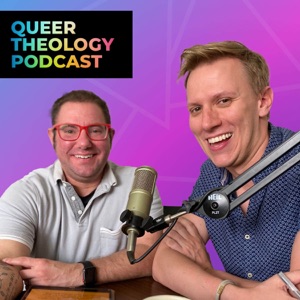
Queer Theology

The longest running podcast for and by LGBTQ Christians and other queer people of faith and spiritual seeker. Hosted by Fr. Shannon TL Kearns, a transgender Christian priest and Brian G. Murphy, a bisexual polyamorous Jew. and now in its 10th year, the Queer Theology Podcast shares deep insights and practical tools for building a thriving spiritual life on your own terms. Explore the archives for a queer perspective on hundreds of Bible passages as well as dozens of interviews with respected LGBTQ leaders (and a few cis, straight folks too). Join tens of thousands of listeners from around the world for the Bible, every week, queered.
- 789 - Economic Justice: Queering Matthew 20: 1-16
This week we queer Matthew 20:1–16, the familiar parable of the laborers in the vineyard, and uncover a lesson that is deeply concerned with labor, wages, economic justice, and generosity. This passage is often taught as a story about salvation and getting into heaven, but when we explore what emerges when we take Jesus’ words about workers, wages, and equality seriously, it shows again how the gospel is political. We also reflect on what it means to welcome people who join the work late, distinguish genuine participation from simply claiming allyship, and hold space for both the frustration of those who have carried the burden for a long time and the generosity of those ready to join. It’s a powerful reminder that the kingdom of heaven is here and now and we are invited to dream bigger and with more generosity where we are today. There is so much more that is possible! Resources: Learn more and join the Community at https://www.queertheology.com/community/ The post Economic Justice: Queering Matthew 20: 1-16 appeared first on Queer Theology.
Sun, 20 Sep 2026 - 21min - 788 - When Scripture Queers Itself
For this episode, we queer the text from the Wisdom of Solomon. This is a deuterocanonical Jewish text that reflects on wisdom as something active, relational, and continually calling us toward growth. This is one of those passages that just seems to queer itself by inviting us to seek wisdom with the ongoing work of learning, internalizing, and living out what we discover as we seek wholeness and integration in our sexuality, gender, spirituality, relationships, and justice work. Another aspect of this text that is so vivid, is the personification of Wisdom as a woman who seeks, awakens, and invites desire. Resources: Learn more and join the Community at https://www.queertheology.com/community/ The post When Scripture Queers Itself appeared first on Queer Theology.
Sun, 13 Sep 2026 - 06min - 787 - There Are No Insiders and Outsiders: Isaiah 56 and Romans 11
We queer two powerful biblical texts—Isaiah 56 and Romans 11—to explore who gets to belong, what salvation means, and what Scripture has to say about immigrants and outsiders. We unpack the Bible’s repeated call to welcome and care for immigrants, challenge the ways anti-immigrant and white nationalist Christianity distort that message, and reflect on what it means to live out faith through activism, solidarity, organizing, and mutual aid. Together, we consider Paul’s vision of a community without insiders and outsiders and Isaiah’s declaration that God’s house is a house of prayer for all peoples. Rather than salvation as simply something that happens after death, we explore salvation as the work we do together here and now—building communities of justice, mutual care, and belonging. Resources: Learn more and join the Community at https://www.queertheology.com/community/ The post There Are No Insiders and Outsiders: Isaiah 56 and Romans 11 appeared first on Queer Theology.
Sun, 06 Sep 2026 - 08min - 786 - Queering Ruth: Chosen Family and Belonging
In this episode, we look at Ruth 1:1–18 and the powerful, often-overlooked queerness of Ruth and Naomi’s relationship. Rather than reading the passage primarily as a lesbian love story, we consider how Ruth’s radical commitment to Naomi challenges traditional ideas about family, loyalty, and belonging. There is a celebration of chosen family and the freedom to build deep, lifelong commitments with people whether or not those relationships are romantic or sexual. and imagines a queer vision of community where friendship, co-parenting, shared homes, work, gardens, caregiving, and end-of-life companionship can all be forms of profound love. We also consider how Ruth’s story challenges biblical ideas about who belongs among God’s people, highlighting Ruth’s choice to join Naomi’s people. What does it look like when we get to create families and communities rooted not in prescribed roles, but in chosen commitment, mutual care, and expansive love? Ruth 1:1 – 18 During the days when the judges ruled, there was a famine in the land. A man with his wife and two sons went from Bethlehem of Judah to dwell in the territory of Moab. The name of that man was Elimelech, the name of his wife was Naomi, and the names of his two sons were Mahlon and Chilion. They were Ephrathites from Bethlehem in Judah. They entered the territory of Moab and settled there. But Elimelech, Naomi’s husband, died. Then only she was left, along with her two sons. They took wives for themselves, Moabite women; the name of the first was Orpah and the name of the second was Ruth. And they lived there for about ten years. But both of the sons, Mahlon and Chilion, also died. Only the woman was left, without her two children and without her husband. Then she arose along with her daughters-in-law to return from the field of Moab, because while in the territory of Moab she had heard that the Lord had paid attention to his people by providing food for them. She left the place where she had been, and her two daughters-in-law went with her. They went along the road to return to the land of Judah. Naomi said to her daughters-in-law, “Go, turn back, each of you to the household of your mother. May the Lord deal faithfully with you, just as you have done with the dead and with me. May the Lord provide for you so that you may find security, each woman in the household of her husband.” Then she kissed them, and they lifted up their voices and wept. But they replied to her, “No, instead we will return with you, to your people.” Naomi replied, “Turn back, my daughters. Why would you go with me? Will there again be sons in my womb, that they would be husbands for you? Turn back, my daughters. Go. I am too old for a husband. If I were to say that I have hope, even if I had a husband tonight, and even more, if I were to bear sons— would you wait until they grew up? Would you refrain from having a husband? No, my daughters. This is more bitter for me than for you, since the Lord’s will has come out against me.” Then they lifted up their voices and wept again. Orpah kissed her mother-in-law, but Ruth stayed with her. Naomi said, “Look, your sister-in-law is returning to her people and to her gods. Turn back after your sister-in-law.” But Ruth replied, “Don’t urge me to abandon you, to turn back from following after you. Wherever you go, I will go; and wherever you stay, I will stay. Your people will be my people, and your God will be my God. Wherever you die, I will die, and there I will be buried. May the Lord do this to me and more so if even death separates me from you.” When Naomi saw that Ruth was determined to go with her, she stopped speaking to her about it. Resources: Journey Into the Bible part of Spiritual Study Hall Learn more and join the Community at https://www.queertheology.com/community/ The post Queering Ruth: Chosen Family and Belonging appeared first on Queer Theology.
Sun, 30 Aug 2026 - 09min - 785 - Stay, Go, or Find Another Way
In this episode, we tackle the complicated question of when to stay, when to take a break, and when to leave a religious tradition. Our own journeys are very different, but there are definitely similarities. There was a point when we started questioning Christianity, stepping away from church, wrestling with doubt, and finding more expansive ways of understanding faith. Fr. Shay shares how coming to terms with his queerness, experiencing exclusion in evangelical spaces, and taking time away from church ultimately led him toward a deeper, more embodied Christian faith and ordained ministry. Brian reflects on his own gradual drift from Christianity, his return through queer activism and progressive Christian communities, and the experiences that eventually led him to convert to Judaism. We get into the difference between dabbling and committing to a spiritual tradition, the value of finding a community and story that can sustain you, and how to recognize when a faith tradition is asking you to become more fully yourself or asking you to leave. Resources: Learn more and join the Community at https://www.queertheology.com/community/ The post Stay, Go, or Find Another Way appeared first on Queer Theology.
Sun, 23 Aug 2026 - 51min - 784 - a Moving Beyond Affirmative Ministry with Queer Theology: Brent Saccucci Interview of Brian
Brian was recently interviewed by Brent Saccucci (@brentsaccucci) from the University of Lethbridge to talk about Queer Theology and how it differs from affirmative ministry and we’re going to share that interview with y’all! In this interview, Brian challenges the idea that queer people need to justify their existence within faith traditions and explains the difference between affirmative faith and queer theology. Always at the heart of our work is our belief that we need to move beyond debating whether queerness is “okay” and instead ask what queer perspectives can reveal about God, Scripture, sacredness, and justice. Brian shares how a radically expansive understanding of God, not as a man in the clouds, but as love, connection, awe, queer resilience, justice, and the miraculous fact that we find one another at all, is so sacred. Resources: Learn more about Brent and connect with him at https://www.learningwithbrent.com/ Learn more and join the Community at https://www.queertheology.com/community/ The post a Moving Beyond Affirmative Ministry with Queer Theology: Brent Saccucci Interview of Brian appeared first on Queer Theology.
Sun, 16 Aug 2026 - 51min - 783 - The Sin of Sodom & Gomorrah?
Because we’re the QueerTheology Podcast, of course we’re going to dive into Isaiah 1:10–18. This is a familiar and powerful passage. Just the words, “Sodom and Gomorrah” evoke a reaction because of their use in evangelical Christian religion. But we invite you to challenge common assumptions about their so-called “sin.” We explore how Isaiah shifts the focus away from ritual and religious performance and toward justice for the oppressed, care for the vulnerable, and accountability for those whose faith causes harm. We reflect on what it means to reclaim a progressive Christian witness in a culture where harmful expressions of faith often dominate the public conversation, and why sharing life-giving, justice-centered theology matters now more than ever. Resources: Learn more and join the Community at https://www.queertheology.com/community/ The post The Sin of Sodom & Gomorrah? appeared first on Queer Theology.
Sun, 09 Aug 2026 - 06min - 782 - Toward Pride With Rev. Don Abram
This episode features a powerful conversation between Rev. Don Abram and Brian on reimagining care as an abundant resource rather than a scarce commodity. Don Abram (@towardpride) is a Chicago-based social innovator and founder of Toward Pride, leading work that advances the well-being of Black LGBTQ+ communities through partnerships with civic, cultural, and community institutions. Don shares how his Christian faith shapes a vision of both interpersonal and structural care, calling individuals and institutions alike to move beyond affirmation toward active advocacy for LGBTQ+ communities. Brian and Don discuss Toward Pride’s Institutional Church Continuum from ‘antagonizing’ to ‘advocating’ churches and the organization’s evolution from Pride in the Pews to Toward Pride, and why religion must be understood as a social determinant of health. This conversation calls us to think beyond debates over theology and instead consider how faith, public policy, healthcare, education, and housing intersect to either harm or help marginalized communities. Resources: Learn more about Rev. Don Abram and Toward Pride at https://www.towardpride.org/what-we-do Learn more and join the Community at https://www.queertheology.com/community/ The post Toward Pride With Rev. Don Abram appeared first on Queer Theology.
Sun, 02 Aug 2026 - 48min - 781 - Taking Ownership of Your Faith Life
In this episode, Fr. Shannon reflects on growing up in a high-control evangelical religion where every aspect of faith and how he was supposed to show up, was laid out for him. It was a long journey to untangle those deeply ingrained beliefs, but when we explore how harmful messages and unrealistic expectations can shape anyone’s spiritual life, not just those from high-control religious spaces, then we can see why taking ownership of our faith is so crucial. Rather than waiting for perfect circumstances, we should seek to embrace opportunities for healthy, life giving spiritual growth and discover a faith that is truly our own. Resources: Learn more and join the Community at https://www.queertheology.com/community/ The post Taking Ownership of Your Faith Life appeared first on Queer Theology.
Sun, 26 Jul 2026 - 10min - 780 - Hard Passages
What do you do when you come across difficult passages in the Bible? In this episode, Fr. Shannon explores how to engage with challenging texts, especially those often used to condemn LGBTQ people, as well as passages that portray God as violent, or seem to support slavery, or take a negative view of sex and the body. While some see these verses as a reason to abandon the Bible altogether, Fr. Shannon offers a different perspective for those who want to remain rooted in the Christian tradition. He shares three practical ways to grapple with hard passages honestly, thoughtfully, and with faith. Resources: Journey Through the Bible – How to Read the Bible as a Text for Liberation, part of Spiritual Study Hall Learn more and join the Community at https://www.queertheology.com/community/ The post Hard Passages appeared first on Queer Theology.
Sun, 19 Jul 2026 - 15min - 779 - Bridging the Rivers of Difference with Dr. Catherine Meeks
Fr. Shannon is joined by author Catherine Meeks on the pod this week to talk about self-interrogation, discernment, and what it means to move beyond being an ally toward becoming a committed co-resistor and fellow pilgrim in the work of collective liberation. Catherine Meeks, PhD, is the founder of the Turquoise & Lavender Institute for Transformation and Healing and a nationally recognized leader in racial healing and spiritual transformation. She is the author of “Bridging the Rivers of Difference” as well as “The Night Is Long but Light Comes in the Morning” and”The Quilted Life”. A regular contributing columnist for Baptist News Global, she is widely known for her decades of work advancing dialogue, reconciliation, and community-based healing, and is a recipient of the President Joseph R. Biden Lifetime Achievement Award. In this thoughtful conversation, she shares the vision behind the Turquoise and Lavender Institute and discusses why healing must extend beyond race to encompass the many ways we divide ourselves. Drawing from decades of work in racial healing, she talks about her new book, and invites us to imagine a new path forward rooted in solidarity rather than competition among marginalized communities. Dr. Meeks explains the dangers of the “oppression Olympics,” the impact of internalized oppression, and the essential inner work required for lasting social change. Her message is a powerful invitation to cultivate both personal and communal healing in service of the common good. Resources: https://www.turquoiseandlavender.com/ Buy Bridging Rivers of Difference: a Proclamation of Unity in Resistance by Catherine Meeks, PhD Learn more and join the Community at https://www.queertheology.com/community/ The post Bridging the Rivers of Difference with Dr. Catherine Meeks appeared first on Queer Theology.
Sun, 12 Jul 2026 - 51min - 778 - Bottoming for Jesus with Michael R. Speciàle
Brian is joined by his longtime friend, Michael R. Speciàle (@speciale.mr) on this pod this week for an interview that is funny, provocative, and moving. Michael is a writer, performer, and cultural strategist based in Los Angeles. He grew up between Portland, Oregon and Vancouver, Washington, converted himself to the Mormon Church at fifteen, faithfully served a mission in Paraguay, and left the Church at twenty-three. Two decades later, that experience became the catalyst for “Bottoming for Jesus” which is his debut solo work. The conversation is an exploration of faith, sexuality, belonging, and the search for purpose. Drawing from his experience converting to Mormonism as a teenager, serving as a missionary, and later embracing his queer identity, Michael reflects on the performances we all give to find acceptance, the ways religion and desire can intertwine, and the lingering impact of religious trauma. Brian and Michael discuss queer hospitality, hookup culture, creative healing, and the surprising ways friendship shaped both of their lives. They also unpack the show’s irreverent title, its liturgical structure, the role of Judy Garland as a queer patron saint, and Michael’s powerful reimagining of atonement and repentance as practices of self-acceptance rather than shame. Michael invites listeners to consider what holes they’re trying to fill, and what it might mean to finally come home to themselves. Resources: Follow Michael on IG: https://instagram.com/speciale.mr, https://instagram.com/familyaffairs.studio, https://instagram.com/bottomingforjesus Learn more about the show “Bottoming for Jesus” at https://bottomingforjesus.com https://familyaffairs.studio/edinburgh/bfj https://tickets.zoofestival.co.uk/event/124:2011/ Learn more and join the Community at https://www.queertheology.com/community/ The post Bottoming for Jesus with Michael R. Speciàle appeared first on Queer Theology.
Sun, 05 Jul 2026 - 56min - 777 - Holding Boundaries When Your Family Won’t Change
In this episode, Fr. Shannon reflects on the grief and complexity of navigating a strained relationship with family after coming out. After a recent trip home, he shares the painful realization that no amount of patience or perfectly crafted theological arguments can change people who are unwilling to change. It’s ok to grieve the family relationships we hoped for while still honoring our own needs through healthy boundaries. AND recognizing that boundaries can be reassessed and reaffirmed over time. Most importantly, Fr. Shannon reminds us that Chosen Family and supportive community are essential lifelines. While this journey is messy, painful, and deeply personal, you don’t have to walk it alone. Resources: Soul Safe on-demand workshop Learn more and join the Community at https://www.queertheology.com/community/ The post Holding Boundaries When Your Family Won’t Change appeared first on Queer Theology.
Sun, 28 Jun 2026 - 23min - 776 - Conversion Therapy Dropout with Timothy Shraeder Rodriguez
Timothy Schraeder Rodriguez (@timothy.s.rodriguez) joins Brian on pod this week to discuss his debut memoir, “Conversion Therapy Dropout,” and his journey through eight years of conversion therapy, evangelical megachurch culture, sobriety, and spiritual reconstruction. Tim spent almost a decade in gay conversion therapy- all while working behind the scenes at some of the most influential Evangelical Christian megachurches. After embracing his identity as a gay Christian and stepping away from church work, he co-founded Church Clarity, an organization that helps queer people find affirming faith communities. Born in the Midwest, he now calls New York City home, where he continues his work as a writer, digital strategist, and advocate for queer people of faith. In this conversation, Tim shares how he was drawn into the ex-gay movement, the hidden realities of conversion therapy today, and the challenges of navigating faith, sexuality, and belonging. He talks about the lasting impact of religious shame, the connection between queer identity and recovery, the search for affirming spiritual community, and the ongoing fight against Christian nationalism and anti-LGBTQ theology. Brian and Tim reflect on resilience, chosen family, the transformative power of queer community, and why no one should have to choose between their faith and who they are. Resources: Order “Conversion Therapy Dropout” at https://www.broadleafbooks.com/store/product/9798889835431/Conversion-Therapy-Dropout Church Clarity Learn more and join the Community at https://www.queertheology.com/community/ The post Conversion Therapy Dropout with Timothy Shraeder Rodriguez appeared first on Queer Theology.
Sun, 21 Jun 2026 - 56min - 775 - Laughing Through Religious Trauma with Kevin James Thornton
We’re so excited to welcome comedian, author, and internet storyteller Kevin James Thornton (@kevinjamesthornton) to the Podcast this week to talk about his new memoir, Big Gay Baby: On Beginnings, Endings, and Being Unapologetically Yourself. Kevin reflects on the accidental TikTok videos that connected thousands of people through shared experiences of growing up in fundamentalist Christianity, the role humor plays in surviving and healing religious trauma, and the long, messy process of discovering who he is beyond the expectations of church and family. We explore queer identity, faith, heartbreak, creativity, community, and the surprising freedom that can come from starting over at any age. From evangelical youth group skits and Rocky Horror screenings to comedy, art, and life after religion, Kevin is funny, tender, and deeply resonant for anyone navigating endings, new beginnings, or the ongoing journey of becoming themselves. Resources: Learn more about Kevin at https://www.kevinjamesthornton.com/ Order Kevin’s book: https://www.hachettebookgroup.com/titles/kevin-james-thornton/big-baby/9780306836763/ Follow Kevin on Social: IG and TikTok @kevinjamesthornton Learn more and join the Community at https://www.queertheology.com/community/ The post Laughing Through Religious Trauma with Kevin James Thornton appeared first on Queer Theology.
Sun, 07 Jun 2026 - 51min - 774 - Reclaiming Ritual
In this episode, Fr. Shannon reflects on how we can reconnect with spiritual practices after being hurt by faith communities or religious experiences. Following a personal experience that left him with hurt feelings (see episode 642!), he realized the importance of intentionally creating space for meaningful spiritual rituals. Fr. Shannon explores how many queer people, after stepping away from faith because of harm, often find themselves missing the sense of ritual, connection, and meaning those practices once provided. Rather than returning to traditions that caused pain, he offers thoughtful and practical ideas for building new, life-giving spiritual practices. Whether you have a religious background or are exploring spirituality for the first time, this guidance is for creating practices that are meaningful, nourishing, and affirming, while also helping to cultivate a spirituality that challenges us in healthy ways while sustaining our well-being. Resources: Learn more and join the Community at https://www.queertheology.com/community/ The post Reclaiming Ritual appeared first on Queer Theology.
Sun, 14 Jun 2026 - 15min - 773 - Can We Trust Our Experiences With The Divine?
On this week’s episode, Fr. Shannon responds to listener questions that touch on some of the core themes of his (and Brian’s!) work and ministry. He explores what Jesus meant by the “narrow path,” reframing it not as a difficult and exclusionary road toward a distant heavenly reward, but as the daily work of building community, loving our neighbors, and helping bring about the kingdom of Heaven here on Earth. He also answers a questions about the idea of false prophets and the ways fear-based religion can disconnect us from our own bodies, intuition, and sense of The Divine. Fr. Shannon reflects on the sacred work of learning to trust yourself and recognize that God may speak to different people in different ways, encouraging y’all to lean more deeply into the places where you experience truth, connection, and liberation. Resources: Learn more and join the Community at https://www.queertheology.com/community/ The post Can We Trust Our Experiences With The Divine? appeared first on Queer Theology.
Sun, 31 May 2026 - 20min - 772 - Prophetic Queer Plays with Jason Tseng
Brian is joined by long-time friend, Jason Tseng (they/them), @queeriously on the pod this week for a joyful and inspiring conversation about queer spirituality, storytelling, and moving through the world as a queer Christian. Jason, a queer, non-binary Chinese-American playwright based in New York City, talks about the different stories from their life that led to writing plays, including Fear and Wonder. They talk about how their gayness transformed and informed their understanding of the sacred. Brian and Jason discuss how important it is to reclaim queer spirituality by paying attention to what actually feels sacred in our lives. Jason is a Creative Partner of Flux Theatre Ensemble Plays developed by Judson Arts, Boise Contemporary Theatre, Playwrights Foundation, Pride Plays / Woolly Mammoth, and Artist at Play. They are also the artist behind the Queer Saints Project, a reclamation of queer spirituality rooted in Judson Memorial Church. Resources: Jason Tseng Substack: Fear and Wonder See Fear & Wonder https://www.fluxtheatre.org/productions/fear-wonder Learn more and join the Community at https://www.queertheology.com/community/ The post Prophetic Queer Plays with Jason Tseng appeared first on Queer Theology.
Sun, 24 May 2026 - 62min - 771 - The Radical Simplicity of Micah 6:1-8
This week we queer one of our favorite passages, Micah 6:1–8, and explore one of the Bible’s clearest calls to justice: “do justice, embrace faithful love, and walk humbly with your God.” It often feels like messages of the prophets continue to resonate so deeply today, especially in a world where faith is often reduced to rule-following and anxiety-inducing checklists. We unpack how this passage recenters us on what truly matters: not perfection, but practicing justice, mercy, and humility in the everyday moments of our lives. There is so much richness beneath this seemingly simple message that calls to the larger story of liberation and collective memory that shapes the prophet’s words. Resources: Listen to the next episodes in the series and join the Queer Bible Study at https://www.queertheology.com/community The post The Radical Simplicity of Micah 6:1-8 appeared first on Queer Theology.
Sun, 17 May 2026 - 09min - 770 - Can You Fall Out of God’s Favor?
In this episode, Father Shannon shares a deeply personal and recent story about being denied Communion by a Catholic priest despite identifying as Catholic himself and serving as an ordained priest in the Old Catholic tradition. Reflecting on the pain and rejection that surfaced in this encounter, Fr. Shannon explores how bad theology hurts people. He also reflects on how healing is never linear, and even if you have done the work to heal old wounds, they can still open up again. There is so much institutional rejection in Christian spaces but it’s important to remember that no priest, pastor, or church authority can separate queer and trans people from God. And, as always, the importance of a supportive community, spiritual practices that nourish us, and the liberating truth that the kin-dom of God is already alive among queer and trans communities, is something you can wholeheartedly believe. For anyone navigating religious trauma, exclusion, or the ongoing journey of healing and reclaiming faith; you are welcome at God’s table. You belong and are loved. Resources: Listen to the next episodes in the series and join the Queer Bible Study at https://www.queertheology.com/community The post Can You Fall Out of God’s Favor? appeared first on Queer Theology.
Sun, 10 May 2026 - 21min - 769 - All Are Gathered In: Isaiah 56:1, 6-8 & Romans 11:1-2a, 29-32
We queer two chapters in this week’s episode and explore God’s expansive vision of belonging and justice that is the throughline between them. Both passages challenge insider/outsider binaries and emphasize that God’s covenant community is open to all. Especially, in these passages, immigrants and those historically excluded. They also call people into active participation in justice, mercy, and communal care. And this tension is pertinent today as we witness modern anti-immigrant rhetoric often justified by Christianity. arguing that such views contradict the text’s clear ethic of inclusion. Salvation does not need to be seen as a distant, individual reward, but as a present, collective practice of building communities rooted in equity, solidarity, and care for the marginalized. A call to live out our faith through tangible acts of justice here and now. Resources: Listen to the next episodes in the series and join the Queer Bible Study at https://www.queertheology.com/community The post All Are Gathered In: Isaiah 56:1, 6-8 & Romans 11:1-2a, 29-32 appeared first on Queer Theology.
Sun, 03 May 2026 - 08min - 768 - Everyone Wants a Village… but Nobody Wants to be the Villager
In this episode, we explore the idea that everyone needs a village or that everyone wants to build community. The thing is, when it comes to actually being the Villager.. no one wants to put in the effort. Or they think it needs to be a big effort. Or cost alot. Or look perfect. But that is not the case! Building meaningful community in a world that often prioritizes convenience and individuality can be tough. The truth is that not everyone in your community has to be your best friend to still show up and care. Even if there can be pressure to make community look polished or perfect, it’s those low-stakes, real-life connections (think messy houses, popcorn hangs, and shared responsibility) that are real community building. Support can often look like small, everyday acts of showing up that can add up to something much bigger. Remember- building a village isn’t about doing everything, it’s about doing something, together. Resources: Listen to the next episodes in the series and join the Queer Bible Study at https://www.queertheology.com/community The post Everyone Wants a Village… but Nobody Wants to be the Villager appeared first on Queer Theology.
Sun, 26 Apr 2026 - 29min - 767 - Finding Eternal Life Now: Mark 10:17-31
In this week’s episode we queer Mark 10:17–31 and look at some of Jesus’ most challenging teachings. The ones that really make you think about how difficult it would be to let go of wealth, privilege, and certainty in order to follow a more expansive, justice-centered vision of love. There is often a tendency to explain away hard passages about money while taking other scriptures literally. But is that what was intended in this passage? We also explore complicated ideas about eternal life, moving beyond rigid, afterlife-focused theology to consider how “eternal life” might be experienced here and now- in moments of connection, vulnerability, and collective care that draw us into something bigger than ourselves. Those rituals that connect us outside or inside church and really make us feel part of a community. If we can reimagine a faith rooted in embodied justice and shared humanity, one that ultimately calls us deeper into love, what a more expansive faith that is. Resources: Listen to the next episodes in the series and join the Queer Bible Study at https://www.queertheology.com/community The post Finding Eternal Life Now: Mark 10:17-31 appeared first on Queer Theology.
Sun, 19 Apr 2026 - 19min - 766 - Queer Bible Study: Colossians 1:1–2
Fr. Shannon brings us this week’s episode and it is the first in a series on the books of Colossians. In this first episode on book 1 of Colossians, he invites us into the deeply human world of letter writing and explores how this ancient text started as a letter to a real community navigating complex questions of identity, faith, and belonging. What does it mean to be “in Christ” while also rooted in a particular place, culture, and political reality? This is a question we can still resonate with and can set the stage for honest, thoughtful wrestling with the Bible, with tradition, and with ourselves. Resources: Listen to the next episodes in the series and join the Queer Bible Study at https://www.queertheology.com/community The post Queer Bible Study: Colossians 1:1–2 appeared first on Queer Theology.
Sun, 12 Apr 2026 - 24min - 765 - How Easter Inspires Us To Work For The Reconciliation of All Things
It’s Easter Sunday, so we dive into the messy, complicated, and deeply meaningful questions surrounding resurrection, belief, and what it all means in the world today. We explore the literal vs. metaphorical resurrection of Jesus and broader questions about God, suffering, and the reconciliation of all things. There is an element in the Easter resurrection story that rather than offering neat answers, embraces the tension of faith that doesn’t always fit into tidy boxes. Wrestling with doubt, grief, activism, and hope in a world marked by injustice and uncertainty can feel so difficult. But the invitation of the resurrection story opens for all of us to choose our level of engagement to lead to the reconciliation of all things. We can reimagine resurrection not as a distant theological concept, but as a lived, communal practice rooted in love, resistance, and the ongoing work of making things right that lead toward a more connected, compassionate, and hopeful way of being. Resources: Learn more and join the Community at https://www.queertheology.com/community The post How Easter Inspires Us To Work For The Reconciliation of All Things appeared first on Queer Theology.
Sun, 05 Apr 2026 - 35min - 764 - Searching for Divine Approval Through Sex with Jonah Wheeler (@ShowOffJonah)
Brian shares part of his interview with Jonah Wheeler on the podcast this week. Together they explore the complex intersections of sex, spirituality, and personal history, unpacking how formative experiences, particularly around desire, power, and validation, shape the ways we show up in intimate encounters. Jonah shares an experience from his early 20s that becomes a lens for examining “daddy issues,” internalized religious frameworks, and the search for divine approval through sex. He muses how these revealing moments of vulnerability and surrender can mirror spiritual longing while also exposing the ways we project meaning onto our partners. The conversation traces the shift from compulsive, unconscious patterns toward a more intentional and self-aware approach to intimacy- highlighting how naming our desires can create space for agency, consent, and emotional sustainability. Reframing sex not just as physical connection, but as a site of self-discovery, transcendence, and the ongoing work of offering ourselves the validation we once sought from others (or from God!) can be a spiritual experience. Resources: Hear more of this conversation at Permission to Desire podcast Learn more and join the Community at https://www.queertheology.com/community The post Searching for Divine Approval Through Sex with Jonah Wheeler (@ShowOffJonah) appeared first on Queer Theology.
Sun, 29 Mar 2026 - 15min - 763 - When Safety is at Stake: Organizing in a Time of Crisis with Samantha Boucher
This week, Fr. Shannon sits down with Samantha Boucher, (@sceboucher) a trans activist and political organizer with deep roots in Appalachia, to explore how growing up in a rural, conservative community shaped her approach to justice, belonging, and advocacy. Samantha shares her journey from disaster response and intelligence work into national politics, becoming the first openly trans federal campaign manager, and now leading efforts to advance trans rights through heartland-focused organizing. They dive into the cultural divide between urban and rural America, the importance of messaging that resonates across moral frameworks, and why building relationships in faith communities and small towns is critical to lasting change. Samantha also discusses urgent work supporting trans individuals facing displacement as well as practical ways allies can take action. Despite escalating challenges and political vitriol, Samantha encourages that there is still reason for hope grounded in community, courage, and connection. Resources: Operation Lifeboat https://www.translifeboat.org/ Learn more and join the Community at https://www.queertheology.com/community The post When Safety is at Stake: Organizing in a Time of Crisis with Samantha Boucher appeared first on Queer Theology.
Sun, 22 Mar 2026 - 51min - 762 - Pleasure is Political
In this episode, Brian explores a provocative idea: what if your orgasms were a form of activism? In a world that often tries to make people (especially queer folks, women, and non-monogamous people!) feel small, ashamed, or powerless, reclaiming pleasure can be a radical act of resistance. Brian looks at how shame around sex has historically been used as a tool of control and why separating love from sexuality diminishes our aliveness. Tending to your erotic life can fuel both personal healing and political courage. In his own experiences from activism, relationships, and coaching, he argues that pleasure isn’t escapism or indulgence. It’s energy. Connection. And a big reminder of what we’re fighting for. If the world feels heavy right now, we invite you to consider that cultivating desire, intimacy, and even your solo sex life might be one of the most powerful ways to stay fully alive and engaged. Resources: If you want to keep up on new episodes of Permission to Desire, you find the links to subscribe in your favorite podcast player here: https://pod.link/1876076895 Learn more and join the Community at https://www.queertheology.com/community The post Pleasure is Political appeared first on Queer Theology.
Sun, 15 Mar 2026 - 16min - 761 - The Story of Bob: an Interview with Steven C. Law
For this episode, Fr. Shannon talks with author Steven C. Law to explore the life and legacy of Rev. Robert W. Wood, a WWII veteran, United Church of Christ pastor, and author of the groundbreaking 1960 book, “Christ and the Homosexual.” Steven is a writer whose work bridges faith and cultural engagement. His commitment to compassionate storytelling enriches “The Story of Bob” with insight and empathy. Drawing from intimate interviews and extensive research, Law brings to life Bob’s journey and activism that helped lay the foundation for greater acceptance. Steven shares how he met Bob at a moment of profound grief, how that pastoral visit became a six-year writing journey, and why Bob’s story of faith, secrecy, love, and moral courage still speaks powerfully today. He reflects on queer theology before it had a name, the cost of living in a heteronormative church culture, and the sacred risk of finally telling the truth about the love of your life. Chapters 00:00 Introduction to Steven Law’s Journey 05:37 Transition from Preaching to Literature 11:00 The Impact of GLBTQ Experiences on Theology 16:30 Bob’s Story: A Journey of Faith and Identity 27:14 The Search for Meaning in the Aftermath of War 27:51 Faith and Judgment: A Personal Struggle 33:13 The Journey to Acceptance and Ministry 44:53 Moral Development and Personal Conviction 50:40 Love, Loss, and Legacy Resources: The Story of Bob by Steven C. Law Learn more and join the Community at https://www.queertheology.com/community The post The Story of Bob: an Interview with Steven C. Law appeared first on Queer Theology.
Sun, 08 Mar 2026 - 59min - 760 - When Jesus Came Out – Queering the Transfiguration
In this episode, we answer a listener question and then queer Matthew 17:1–9 for the second Sunday in Lent. The Transfiguration as a powerful coming out story and when we reflect on Jesus taking his closest friends up the mountain, revealing something radiant and vulnerable about his identity, and asking them to hold that truth tenderly for a time, it’s an experience that resonates deeply with queer and trans journeys of self-disclosure. This is the moment of courage for Jesus and encourages us to also claim who we are even when the road ahead is uncertain or costly. The Transfiguration becomes not just a spectacle, but an intimate revelation, a holy transformation, and good news for anyone navigating identity, fear, and faith. Resources: Learn more and join the Community at https://www.queertheology.com/community The post When Jesus Came Out – Queering the Transfiguration appeared first on Queer Theology.
Sun, 01 Mar 2026 - 18min - 759 - Bible Nerd Starter Pack
In this solo episode, Fr. Shannon is sharing his curated list of favorite books about theology, prayer, memoir, the Bible, and in-depth study- which is perfect for anyone looking to deepen their faith with a queer and justice-centered lens. He reflects on the texts that have shaped his theology and imagination and highlights transformative prayer resources. He also offers his go-to Bible study tools for serious Biblical-themed nerding out, resources that have stretched, grounded, and inspired his faith. Whether you’re brand new to Queer Theology, ready to go deeper, or need some reading inspo, this episode is packed with thoughtful recommendations to add to your reading list! Fr. Shay’s Must-Read List: Black Liturgies by Cole Arthur Riley Liturgies from Below by Claudio Carvalhaes The Divine Hours by Phyllis Tickle What Is the Bible? by Rob Bell A Black Theology of Liberation by James Cone Trans-Gendered: Theology, Ministry, and Communities of Faith by Justin Tanis Radical Love: Introduction to Queer Theology by Patrick S. Cheng Radical Reinvention by Kaya Oakes Take This Bread by Sara Miles Binding the Strong Man by Ched Myers The New Interpreter’s Bible Commentary The Jewish Annotated New Testament Resources: Learn more and join the Community at https://www.queertheology.com/community The post Bible Nerd Starter Pack appeared first on Queer Theology.
Sun, 22 Feb 2026 - 14min - 758 - Queering Lent
A guided audio experience for this time of reflection and renewal as we work toward collective liberation. Signup at queertheology.com/lent The post Queering Lent appeared first on Queer Theology.
Mon, 16 Feb 2026 - 02min - 757 - Torah as Liberation with Rabbi Danya Ruttenberg
In an inspiring episode, Rabbi Danya Ruttenberg (@rabbidanyaruttenberg) returns to the podcast to explore what it means to treat our lives, and our world, as sacred texts in a time of rising fascism, burnout, and moral confusion. Shaped by decades of organizing, she challenges the false divide between “religious” and “moral” behavior, reminding us that any authentic spiritual life must be rooted in dignity, accountability, and collective liberation. Drawing on Torah, the prophets, and centuries of Jewish wisdom, Danya invites us to reframe sacred text- not as unquestionable doctrine, but as a call to wrestle with, resist empire, and build just systems that protect the most vulnerable. She shares how spiritual practice expanded her activist imagination beyond the limits of our hyper-individualistic culture and why solidarity is the only way home. This is your invitation to fight with those texts, fight for one another, and remember that liberation isn’t symbolic, it’s collective, embodied, and urgently needed now! Takeaways We have a moral and religious obligation to care for one another. Moral and ethical obligations should align with religious beliefs. The prophets were angry about the disconnect between ritual and ethical behavior. Every human being deserves dignity and respect. Engagement with ancient texts can lead to personal transformation. The Torah serves as a guide for creating a just society. Collective liberation is essential for progress. Finding one’s identity involves exploration and community engagement. Life itself is a sacred text worthy of investigation. Solidarity across differences is crucial in today’s world. Chapters 00:00 Introduction to Life as a Sacred Text 04:19 Moral and Religious Obligations 08:12 Engaging with Ancient Texts 15:14 The Journey Through Torah 20:39 Torah as Liberation 23:54 Activism and Ancient Wisdom 33:56 Collective Liberation and Solidarity 35:50 Finding One’s Identity 39:15 Life as a Sacred Text Resources: https://www.lifeisasacredtext.com/ Learn more about Rabbi Ruttenberg at https://danyaruttenberg.net/ Learn more and join the Community at https://www.queertheology.com/community This transcript was generated by AI and may contain errors or omissions. The post Torah as Liberation with Rabbi Danya Ruttenberg appeared first on Queer Theology.
Sun, 15 Feb 2026 - 52min - 756 - In The Beginning We Were Good
We’re going back to the beginning for this episode as we dive into Genesis 1–3 to unpack how dominant Christian narratives of “the fall” and “original sin” have shaped theology, politics, and our sense of human worth. Reflecting on our evangelical upbringings, we explore how starting the story with human failure robs us of agency and fuels passivity which can be religious or political! But what if we contrast that with an alternative framework rooted in original goodness or original blessing? The narrative changes and so does how we approach conversations about scripture, ritual, social justice, and the stories we tell about ourselves and about the world. How we interpret these ancient texts deeply affects how we treat ourselves, one another, and our collective responsibility to create a more just and compassionate future. Takeaways The concept of original sin has shaped many religious teachings. Traditional narratives often emphasize humanity’s flaws over its potential for goodness. Agency is crucial; waiting for salvation can lead to passivity. Shifting perspectives can empower individuals and communities. Stories we tell ourselves influence our understanding of the world. Recognizing inherent goodness can change how we view ourselves and others. Accountability is important, but so is recognizing humanity in all people. Political narratives can mirror religious ones in their impact on agency. Interrogating historical narratives is essential for progress. A new story can lead to a better future for all. Chapters 00:00 Exploring Genesis: The Foundation of Faith 08:27 Agency and Salvation: A Shift in Perspective 11:44 From Original Sin to Original Blessing 18:11 The Power of Ritual and Community 25:15 Reimagining Stories: The Path to a Better Future Resources: Learn more and join the Community at https://www.queertheology.com/community This transcript was generated by AI and may contain errors or omissions. 1 (10s): Welcome to the Queer Theology Podcast. I’m Brian G Murphy. 2 (13s): And I’m father Shannon, T l Kearns. We’re the co-founders of Queer Theology dot com and your hosts from 1 (17s): Genesis, revelation. The Bible declares good news to LGBTQ plus people, and we want to show you how 2 (23s): Tuning each week on Sunday for conversations about Christianity, queerness and transness, and how they can enrich one another. We’re glad you’re here. 3 (32s): Hello. Hello. Welcome back to the Queer Theology Podcast. Today we’re gonna kind of talk about Genesis one through three, but obviously that is a, that is a large swath of scripture, so we are not gonna read all of it, but I’ve been thinking a lot about how I grew up being taught kind of the purpose of, of Christianity, right? And, and how so much of it was rooted in the beginning of Genesis, and specifically in the idea of like the fall and original sin, right? This, this idea that everything was good and then humans screwed it up because, you know, we did bad things. 3 (1m 15s): And like that is why everything else happened after that. Like, that’s why we need Jesus. And, and there’s this sense that basically all of human history begins with the fall. And, and that really shapes then how, how faith plays out, how religion plays out and how church plays out. And, and so this idea, I feel like we spent a lot of time in my church growing up talking about Adam and Eve and the apple in the garden, right? The quote unquote fall and, and the entrance of sin into the world. I’m, I’m curious for you, Brian, like what, did you have a similar experience with these first couple Chapters of Genesis? 3 (2m 2s): Or like how, what was the, the vibe in your growing up? 1 (2m 5s): Oh, yeah. I definitely grew up believing that Adam and Eve were like real people and that like everything was perfect. There was no death. They lived in harmony with God. And like had they not fucked up, had th
Sun, 08 Feb 2026 - 29min - 755 - After the Arrest: Faith Under Occupation
In this episode, we return to our roots and queer the passage, Matthew 4:12–23 by exploring Jesus’s turn toward public ministry in the wake of John the Baptist’s arrest and what that moment of political repression reveals about courage, solidarity, and collective action. In light of the state violence and community resistance and ongoing organizing and protests in Minneapolis, we reflect on Jesus stepping into an already-existing movement, calling others to follow, and proclaiming a kingdom that disrupts unjust systems. We look at what is deemed “criminal” and the power of showing up, building local networks, and plugging into work that’s already happening in your community. We invite y’all to consider how faith, justice, and everyday acts of community care are deeply intertwined and how the light that dawns in dark places is something we choose to carry together. Takeaways The passage in Matthew 4 highlights the call to action in the face of injustice. Resistance is often catalyzed by witnessing the arrest or harm of others. Community organizing is essential for effective resistance against systemic issues. Criminality is often framed by those in power to suppress movements for justice. Building community infrastructure is crucial for sustained activism. Engaging with local movements can amplify existing efforts and support. Small actions collectively contribute to larger movements for change. Finding common ground with neighbors can foster community resilience. The importance of showing up and being present in community efforts. Action is the antidote to fear and overwhelm in the face of injustice. Chapters 00:00 Exploring Matthew 4: The Call to Action 02:47 Reflections on Resistance and Community Organizing 05:42 The Role of Criminality in Social Justice 08:23 Building Community and Infrastructure 11:11 Engaging with Local Movements 13:55 The Power of Small Actions 16:39 Finding Common Ground in Community Resources: Learn more and join the Community at https://www.queertheology.com/community This transcript was generated by AI and may contain errors or omissions. 1 (10s): Welcome to the Queer Theology Podcast. I’m Brian G 2 (12s): Murphy. And I’m father Shannon, T l Kearns. We’re the co-founders of Queer Theology dot com and your hosts from 1 (17s): Genesis, revelation. The Bible declares good news to LGBTQ plus people, and we want to show you how 2 (23s): Tuning each week on Sunday for conversations about Christianity, queerness and transness, and how they can enrich one another. We’re glad you’re here. 1 (32s): Hello. Hello. Hello. Welcome back. We are going to be digging into another Bible passage as we going back to our roots and querying a text. Today we’re gonna be looking at Matthew four 12 through 23. We’ve got some good words to say about it. So at first, I’ll read it from the common English Bible. Now, when Jesus heard that John was arrested, he went to Galilee, he left Nazarus and settled in Capernaum, which lies alongside the sea in the area of Zein and nep. This fulfilled what Isaiah, the prophet said, land of Zebulon and land Nepali alongside the sea, across the Jordan Galilee of the Gentiles. The people who lived in the dark have seen a great light, and a light has come upon those who lived in the region and in the shadow of death. 1 (1m 16s): From that time, Jesus began to announce, change your hearts and lives. Here comes the kingdom of heaven. As Jesus walked alongside the Galilee sea, he saw two brothers, Simon, who was called Peter and Andrew throwing fishing nets into the sea because they’re fishermen, come follow me. He said, and I’ll show you how to fish for people. Right away, they left their nets and followed him. Continuing on, he saw another set of brothers James, the son of Zebedee, and his brother John. They were in a boat with Zebedee. Their father repairing their nets. Jesus called them and immediately they left the
Sun, 01 Feb 2026 - 20min - 754 - Butt Sex, Baptism, and the Divine with Rev. Alba Onofrio
In this episode, Brian is joined by the inimitable Reverend Sex @reverand_sex (Alba Onofrio), executive director of Soulforce (@souforceorg), for a conversation about queer faith, spiritual violence, and the liberative possibilities of sex-positive theology. Rev. Alba Onofrio is a theologian and spiritual activist rooted in the U.S. South, engaged in human rights work for over two decades throughout the U.S. and Latin America. As a queer, feminist Christian pastor, their ministry moves at the intersections of religion, gender, and sexuality to heal the wounds of spiritual violence and weaponized religion. Also known as Reverend Sex and co-founder of the Sexual Liberation Collective, their global education work seeks to eradicate shame and fear around bodies and sex, reclaiming pleasure and desire as sacred centers of knowledge, healing, and spiritual practice. As Executive Director and Spiritual Strategist of Soulforce, Rev. Alba has published liberatory theological resources uncovering the ideologies of white Christian Supremacy. Their work has been translated into seven languages and shared around the world. Brian and Rev. Alba talk about Soulforce’s evolution from direct action to global culture-change work and unpack the realities of white Christian supremacy. They get into how it is important to name the lasting harm, and healing, around weaponized religion. Rev. Alba shares how moving beyond deconstruction into reconstruction opens up conversations about consent, pleasure, bodily autonomy, and finding the divine everywhere from drag worship to kink spaces, while also highlighting Soulforce’s projects like Shameless Theology and an upcoming book on spiritual violence. Resources: Learn more about Soulforce at: https://soulforce.org/ Learn more about Rev. Sex | Alba Onofrio https://www.reverendsex.com/about Learn more and join the Community at https://www.queertheology.com/community/ This transcript was generated by AI and may contain errors or omissions. 1 (10s): Welcome to the Queer Theology Podcast. I’m Brian G Murphy. 2 (13s): And I’m father Shannon, T l Kearns. We’re the co-founders of Queer Theology dot com and your hosts from 1 (17s): Genesis, revelation. The Bible declares good news to LGBTQ plus people, and we want to show you how 2 (23s): Tuning each week on Sunday for conversations about Christianity, queerness and transness, and how they can enrich one another. We’re glad you’re here. 1 (33s): Reverend Alba Onofrio is a theologian and spiritual activist rooted in the US South, engaged in human rights work for over two decades throughout the US and Latin America. As a queer feminist Christian pastor, their ministry moves at the intersections of religion, gender, and sexuality to heal the wounds of spiritual violence and weaponized religion. Also known as Reverend Sex and Co founder of The Sexual Liberation Collective. Their global education work seeks to eradicate shame and fear around bodies and sex, reclaiming pleasure and desire as sacred centers of knowledge, healing, and spiritual practice. As Executive Director and Spiritual Strategist of Soulforce, Reverend Alba has published liberatory Theological Resources on uncovering the theologies of white Christian Supremacy. 1 (1m 16s): Their work has been translated into seven languages and shared around the world. And as you will hear In this episode, Soulforce shares a special place in my heart as it is one of the places in which I came back to faith. And what I learned there has informed much of my work and activism and spirituality since then. And so I’m so excited for you to hear this conversation with Reverend Sex. Abba, thank you so much for being here where it’s really exciting to have the Reverend Sex on the Queer Theology Podcast. So thank you for being here. 3 (1m 47s): It is a pleasure and a delight. I’ve been waiting for my invitation with Baited Breath forever, so I’m glad to be here with y
Sun, 25 Jan 2026 - 50min - 753 - Lesbian Nuns, Punk Rock, and God with Margot Douaihy
Fr. Shannon is joined this week by author Margot Douaihy (@NeonMargot), and this is very exciting for him since he is a huge fan of her Sister Holiday series! Margot is a professor of creative writing at Emerson College as well as the author of the award-winning, nationally bestselling Sister Holiday series, as well as the poetry collections “Bandit/Queen: The Runaway Story of Belle Starr, Scranton Lace, and Girls Like You.” Her debut mystery, “Scorched Grace,” won The Pinckley Prize in Crime Fiction and was named a Best Crime Novel of the Year by the New York Times, Guardian, and others. In this conversation, Margot reflects on her Maronite Catholic upbringing, her queerness, and how those threads come together in her noir mystery series, which features a devout, tattooed, riot-girl lesbian nun navigating crime, desire, justice, and faith in New Orleans. She discusses subverting the crime genre, queering narratives of law and order, desire and celibacy, found family, and the sacred possibilities of storytelling. There is so much holiness in storytelling, and Margot’s work shows why art and community matter more now than ever. Resources: Learn more about Margot at https://www.margotdouaihy.com/ Buy her books: https://www.margotdouaihy.com/scorched-grace Learn more and join the Community at https://www.queertheology.com/community/ This transcript was generated by AI and may contain errors or omissions. (10s): Welcome to the Queer Theology Podcast. I’m Brian G Murphy. And I’m father Shannon, T l Kearns. We’re the co-founders of Queer Theology dot com and your hosts from Genesis, revelation. The Bible declares good news to LGBTQ plus people, and we want to show you how Tuning each week on Sunday for conversations about Christianity, queerness and transness, and how they can enrich one another. We’re glad you’re here. Hello and welcome back to the Queer Theology Podcast. This week we have a special guest, Margot Dhe, And I cannot wait for you to hear this interview. Margot is the author of one of my favorite trilogies of books, the sister holiday series. It’s an incredible, incredible series, and we’re gonna talk a lot more about that on the podcast this week. (54s): And in general, I just think you’re gonna love this conversation with Margot. So here is Margot’s official bio, and then we will jump into the interview. Margot dw, he lives in North Hampton, Massachusetts and is a professor of creative writing at Emerson College. She’s the author of the award-winning nationally bestselling Sister Holiday series. In addition to the poetry collections Bandit Queen, The Runaway Story of Belle Starr, Scranton Lace and Girls Like You, Her debut Mystery Scorched Grace, won the Pinkly Prize in crime fiction and was named a Best Crime Novel of the Year by the New York Times Guardian and others. Welcome, Margot. Welcome to the Cariology Podcast. I am so, so thrilled to have you here. (1m 36s): It’s gonna be so fun. Thank You. Thank you so much. I am just a huge admirer and fan of yours and thank you. The community that you nurture and care take with and among and co-create. I just think we need more, more community and kind of affirmation of Queer Theology and just expansive ways of thinking about the structures that give us comfort and grace Yeah. In life. And I’ll say it, especially now. Yeah. So yeah, I’m, I’m just very grateful for the work that you do, Shea. Well, Thank you. Appreciate that. And likewise, likewise. (2m 17s): And we’re gonna, we’re gonna talk about the, what do we do now a little bit later, but I, I would love to maybe start out with, for folks who are not familiar with you and your work, we’re gonna talk about the sister holiday series here in just a minute. But I, I’m wondering if you can maybe just share a little bit about your life and also maybe, maybe a bit about your spiritual journey, howe
Sun, 18 Jan 2026 - 46min - 752 - Reclaiming the Wisdom That Christian Patriarchy Tried to Bury with Angela Herrington
We’re excited to welcome @angelajherrington back to the podcast to talk about her new book and overcoming Christian patriarchy. For over a decade, Angela has helped women break free from the grip of Christian patriarchy and reconnect with the wisdom they were taught to silence. She is a trauma-informed coach, strategist, and author, who has walked alongside thousands through deconstruction, spiritual burnout, and the messy, beautiful work of building a life that feels whole and true. Her work brings together spiritual insight, nervous system awareness, and grounded practices that create lasting change. In this episode, Fr. Shay talks with Angela about her new book, “Embracing the Old Witch in the Woods: Liberating Feminine Wisdom from Christian Patriarchy” and how it is building on her first book about faith deconstruction. Angela explores how Christian patriarchy and nationalism shape our inner lives, limit our sense of self, and disconnect us from embodied wisdom. She discusses archetypal feminine wisdom beyond gender binaries, the power of intuition and embodiment after high-control religion, grief over missed developmental stages, and the healing potential of reconnecting with these feminine archetypes. This conversation offers a compassionate invitation to self-nurturing, wholeness, and reclaiming wisdom that was never meant to be lost. Resources: Learn more about Angela Herrington at https://angelajherrington.com/ Buy Embracing the Old Witch in the Woods: Liberating Feminine Wisdom from Christian Patriarchy by Angela Herrington Learn more and join the Community at https://www.queertheology.com/community/ This transcript was generated by AI and may contain errors or omissions. 1 (10s): Welcome to the Queer Theology Podcast. I’m Brian G Murphy. 2 (13s): And I’m father Shannon, T l Kearns. We’re the co-founders of Queer Theology dot com and your hosts from 1 (17s): Genesis, revelation. The Bible declares good news to LGBTQ plus people, and we want to show you how 2 (23s): Tuning each week on Sunday for conversations about Christianity, queerness and transness, and how they can enrich one another. We’re glad you’re here. Hello and welcome back to the Queer Theology Podcast. Today we have a special guest in Angela Harrington. I’m really excited for you to hear this conversation. So, here’s a little bit about Angela before we jump in. For over a decade, Angela Harrington has helped women break free from the grip of Christian patriarchy and reconnect with the wisdom they were taught to silence. She is a trauma informed coach, strategist, and author who has walked alongside thousands through deconstruction, spiritual burnout, and the messy beautiful work of building a life that feels whole and true. 2 (1m 3s): Her work brings together spiritual insight, nervous system awareness, and grounded practices that create lasting change. So let’s get into it. Welcome, Angela. Well, Angela, welcome back to the podcast. I’m so thrilled to have you back to talk about your new book. Thanks for being here. 3 (1m 19s): Yeah, thanks for having me. 2 (1m 21s): So it’s been, it’s been, I think, probably at least a year, maybe even more since we had you on to, to talk about your first book. And I, I’m wondering for, for folks who missed that interview, we’re gonna link it in the show notes, but would you just tell us just a brief, brief bit about your first book and maybe anything that you’ve noticed in, in the time since that book came out? 3 (1m 47s): Yeah. So the first book really honed in on supporting people who already constructing, deconstructing your faith without losing yourself was just really timely and, and really important for me. And I think that it served, I think it served as a guide for a lot of people who weren’t sure if, if they wanted to hang onto their faith or not hang onto their faith, but they were sure that they were tired
Sun, 11 Jan 2026 - 46min - 751 - Building Routines That Actually Serve Us
It’s a New Year and in this first episode of 2026, we reflect on highlights from 2025. From book releases and big life transitions, to moves, new jobs, and shifting rhythms. What has kept us grounded has been our approach to goals and intentions that have evolved as needed. It’s why we keep saying rituals and intentions are important, y’all! Going into this year we feel that community matters more than ever. We also feel that it’s important to build more meaningful lives and one of the ways to start doing that is by naming our longings and goals. If you want some help with that, we’re bringing back the Queerness Every Day Challenge, a simple, daily practice to help you start the year with greater intention around spirituality, queerness, and connection. Takeaways Shannon released two books in 2025, marking a significant achievement. Brian also published his first book, focusing on relationships and spirituality. Shannon transitioned to a full-time job, requiring adjustments in her routine. Both hosts emphasize the importance of setting intentions for the new year. They discuss the challenges of maintaining personal well-being amidst professional demands. Brian reflects on the importance of community and local connections. Shannon is focusing on improving her local community involvement in 2026. They explore different approaches to goal setting and personal growth. The conversation highlights the need for intentionality in daily life. The Queerness Every Day Challenge offers a way to reflect on spirituality and identity. Chapters 00:00 Reflecting on 2025: Personal Highlights 02:27 Navigating New Beginnings: Career Changes and Adjustments 05:30 Intentions for 2026: Setting Goals and Priorities 08:12 Rituals and Reflections: New Year Practices 10:46 Community and Connection: Building Local Relationships 13:32 Creative Pursuits: Balancing Work and Passion 16:31 The Importance of Intentionality: Aligning Goals with Values 19:18 Embracing Change: Acknowledging Longings and Desires 21:59 The Queerness Every Day Challenge: A New Year Initiative 24:56 Looking Ahead: Future Plans and Community Engagement Resources: Learn more and join the Community at https://www.queertheology.com/community/ This transcript was generated by AI and may contain errors or omissions. Grow Therapy (5s): If you are feeling bogged down by the impossible expectations or the noise of New Year, new me, take a second to pause. Grow Therapy gives you space to slow down, check in, and start the new year from a more grounded place. Whether it’s your first time in therapy or your 50th grow makes it easier to find a therapist who fits you not the other way around. They connect you with thousands of independent licensed therapists across the US offering both virtual and in-person sessions, nights and weekends. You can search by what matters like insurance, specialty, identity or availability, and get started in as little as two days. And if something comes up, you can cancel up to 24 hours in advance at no cost. There are no subscriptions, no long-term commitments. You just pay per session. Grow helps you find therapy on your time, whatever challenges you’re facing. Grow Therapy is here to help grow. Accepts over a hundred insurance plans, including Medicaid in some states sessions average about $21 with insurance, and some pay as little as $0 depending on their plan. Visit grow therapy.com/book now today to get started. That’s grow therapy.com/book now. Grow therapy.com/book now. Availability and coverage vary by state and insurance plan. 0 (1m 25s): Welcome 2 (1m 25s): To the Queer Theology Podcast. I’m Brian G Murphy. 3 (1m 28s): And I’m father Shannon, T l Kearns. We’re the co-founders of Queer Theology dot com and your hosts from Genesis, 2 (1m 33s): Revelation. The Bible declares good news to LGBTQ plus people, and we want to show you how 3 (1m 38s): Tuning in each week on Sunday for conversations about
Sun, 04 Jan 2026 - 28min - 750 - Queering the 10 Commandments
In this episode, we respond to a listener question about how to challenge harmful uses of the Hebrew Scriptures without falling into anti-Semitism or Christian supersessionism. As Christians, we can’t rely on the New Testament to “fix” or dismiss the Old Testament and we unpack common misunderstandings about Judaism and the Hebrew Bible. We also queer the Ten Commandments by reading this foundational text through lenses of justice, liberation, and community rather than control or exclusion. Despite how we have been taught, the commandments can function as a framework for loving God and loving our neighbor. That doesn’t mean we get to ignore the fact that we need to wrestle honestly with the parts that feel troubling to us in modern times, to engage the text critically, contextually, and faithfully. Rather than discarding the Ten Commandments as outdated or weaponizing them against marginalized people, we show how lingering with the tension can open up richer, more life-giving interpretations that support the queer community flourishing. Resources: Learn more and join the Community at https://www.queertheology.com/community/ The post Queering the 10 Commandments appeared first on Queer Theology.
Sun, 28 Dec 2025 - 19min - 749 - The Lamp the Light the Path, Psalms 119:105-112
This week, we respond to a thoughtful listener question from Tumblr about whether progressive Christians can understand the Bible as uniquely authoritative, or whether it should be treated as inspired work alongside other great works of literature and poetry. We look at how different Christian traditions approach scripture, why “authority” depends on community and context, and how revelation can be understood without requiring inerrancy or literalism. We have to have a more nuanced engagement with scripture that challenges false dichotomies between taking the Bible seriously and reading it critically. In the second half of the episode, we queer Psalm 119:105-112, unpacking how poetry, song, and metaphor function within the Bible. We invite you to consider what it means for God’s word to be “a lamp to our feet and a light for our journey,” not as the path itself, but as something that illuminates the way as we navigate faith, queerness, relationships, and life. Resources: Our resources have moved! You can find the workshop contents within our free resources at my.queertheology.com This transcript was generated by AI and may contain errors or omissions. 1 (9s): Welcome to the Queer Theology Podcast. I’m Brian G Murphy. 2 (13s): And I’m father Shannon, T l Kearns. We’re the co-founders of Queer Theology dot com and your hosts from 1 (17s): Genesis, revelation. The Bible declares good news to LGBTQ plus people, and we want to show you how 2 (23s): Tuning each week on Sunday for conversations about Christianity, queerness and transness, and how they can enrich one another. We’re glad you’re here. 1 (33s): Hello. Hello. Hello. Welcome back to the Queer Theology of Podcast. 2 (36s): This week we’ve got a listener question from Tumblr and they ask, are there progressive non literalist ways of talking about the Bible as uniquely authoritative and communicative of revelation? Or are the scriptures only inspired in a relativized sense alongside great works of literature, poetry, et cetera? 1 (57s): Oh, I love this question. So this 2 (1m 1s): Is a great 1 (1m 2s): Question. Yeah, it get really gets at the heart of what we’re talking about on this podcast and in our work. I think it’s important to first name that there are gonna be a bunch of different answers to this question. Certainly if you survey all Christians, like conservative fundamentalist Christians are gonna have a different idea than other folks. Like there’s a whole range, like if you, if you survey fundamentalist Christians, if you survey Mormons, if you survey Catholics, if you survey progressive Christians, if you survey, you know, black preachers, if you survey whoever, we’re all gonna have different ideas about this. And also then, like, I think within each of those people are gonna have different ideas that there will probably be other L-G-B-T-Q, progressive Christians who think differently about this. 1 (1m 55s): And Shay And I actually think slightly differently about this, you know, or we might not. So I just wanna name that. And there’s not, so it’s not about like trying to find like the objective truth of this is gonna be impossible, which I know is an unsatisfying or might be an unsatisfying answer, especially as someone who comes from a, from a tradition that taught that there was always one correct answer for everything about God and religion and faith. And as someone from just sort of like a secular perspective, like really math and science just like gets me going. And so like there’s a formula, like a squared plus B squared equals C squared, right? Like you can like add things up or divide things out and get, get like the answer. 1 (2m 37s): And so figuring out like what the answer to this is is gonna be tricky. There’s always gonna be some nuance and some, some room for personal interpretation. Shay, where would you start? Yeah, 2 (2m 47s): I think the phrase t
Sun, 21 Dec 2025 - 19min - 748 - Queering Hanukkah
As we come to the beginning of Hanukkah, Brian invites us to reimagine the Festival of Lights as a celebration of resistance, resilience, and the sacred spark within every queer body. When queering Hanukkah, we can explore how the Hanukkah story itself is rooted in defiance against erasure, and how its rituals can be reclaimed as affirming practices that honor queer joy, creativity, and survival. Resources: Learn more about Rituals for Resistance & Resilience here Join us and be part of Queering Advent! Find more info here. This transcript was generated by AI and may contain errors or omissions. 1 (9s): Welcome to the Queer Theology Podcast. I’m Brian G. Murphy, 2 (13s): And I’m Father Shannon TL Kerns. We’re the co-founders of queer theology.com and your hosts from Genesis, 1 (18s): Revelation. The Bible declares good news, LGBTQ plus people, and we want to show you how 2 (23s): Tuning each week on Sunday for conversations about Christianity, queerness and transness, and how they can enrich one another. We’re glad you’re here. 1 (33s): A few days ago, I texted one of my friends who was also Jewish and asked if he wanted to come over for a lot ’cause and food and candles on the first native Hanukkah with some other friends. Wait, when does Hanukkah start? He asked, yes, I’m terrible for not knowing. He added, but you know what? Not knowing when Hanukkah starts is also a quintessentially Jewish experience for many Jews. It, it starts tonight, by the way, now if you know me, you know that I’m a big fan of counting holidays. I like to count the days of land count, the days of the Ooma count, the days of Advent, and of course, count the Knights of Hanukkah. It might be that that soothes some part of my A DHD brain, but for me, there’s also something deeply grounding about the practice of paying attention to the passing of time. 1 (1m 13s): Maybe you count the days since a partner or friend or a family members passing. Maybe you count the days of your sobriety. Maybe you count the days until your gender affirming surgery. I’m a bit obsessed with the idea that everything can be spiritual, that the divine is already at your fingertips. In our rituals for resistance and resilience workshop, I outline seven steps to transform a routine into ritual. Sure, you can pray the rosary or go to Shabbat services, but if that’s, but if those don’t resonate with you, perhaps you could take some inspiration from counting the days of Advent or Hanukkah and create your own sacred countdown or other type of spiritual practice. In Hanukkah, we remember two things. The more feel good story that we remember is that after the temple in Jerusalem was taken back by the Jews from occupation under this lucid empire in the second century, b, c, E, there was hardly any oil left that could be used to light the menorah, which is a seven branched candelabra that burned daily in the temple. 1 (2m 9s): Out of all the oil that was left, there was only enough for one night, but it would take seven more days to make and sanctify more oil. Still, they lit the menorah anyway, and somehow miraculously it burned for eight nights long enough to replenish the oil and keep it burning. A few years ago, my rabbi gave a talk on Hanukah. She shared how she started her rabbinet in the midst of the AIDS crisis and as a lesbian rabbi, she was one of the few clergy who would visit many gay men, sick or dying of aids. While we lost a devastating number of L-G-B-T-Q people to the AIDS epidemic, many survived against incredible odds. There’s a clip that I can’t get out of my head of Peter Staley organizing with Act Up in the 1990s where he says, I’m going to die from this, and yet over 30 years later, he’s still here. 1 (2m 59s): The world has tried over and over and over again to snuff out queer people, neglect our healthcare conversion therapy, shame us into silence. Burn books abou
Sun, 14 Dec 2025 - 06min - 747 - Moving Past Terrible Theology
In this episode, we dig into why leaving harmful churches isn’t enough, you also have to unlearn the bad theology you absorbed along the way. We talk about how lingering fear, shame, reactivity, or discomfort around sex, Scripture, or Christian community can reveal where old beliefs are still running the show, even for folks who’ve left evangelicalism, Catholicism, or grew up in progressive spaces without learning how to engage the Bible for themselves. We get into what unlearning actually looks like and why arguing on evangelical terms keeps you stuck. You gotta be able to rebuild your faith (or recognize when to walk away from it) with grounding, nuance, and liberation. We also answer listener questions about the 1946 documentary and where to begin when returning to faith after fear. Resources: Join us and be part of Queering Advent! Find more info here. This transcript was generated by AI and may contain errors or omissions. 1 (9s): Welcome to the Queer Theology Podcast. I’m Brian G. Murphy. 2 (13s): And I’m Father Shannon TL Kerns. We’re the co-founders of queer theology.com and your hosts from 1 (17s): Genesis, revelation. The Bible declares good news, LGBTQ plus people, and we want to show you how 2 (23s): Tuning each week on Sunday for conversations about Christianity, queerness and transness, and how they can enrich one another. We’re glad you’re here. 1 (33s): Hello. Hello. Hello. So good to be back in your eras with you today. On today’s episode, we’re gonna talk about the importance of not just leaving bad churches or leaving bad faith entirely, but also unlearning your path theology and this like danger of what could happen if you don’t take the time to un unload, unlearn. And you just sort of like try and pat it aside and pat it set aside and for, and forget about it for a while. We’ll also have a listener question that we will get to at the end of the episode. If you would like to have your question featured on the podcast, you can go to cardiology.com/listen. You can also leave us a voice message or send us a text message to 2 4 0 2 0 0 0 9 2 2. 1 (1m 19s): That’s 2 4 0 2 0 0 0 9 2 2. Okay, and with that said, Shea, what are we talking about this episode and why? 3 (1m 30s): Yeah, so I mean, I think one of the things that we see really, really often, and it’s especially prevalent among former evangelicals or folks who grew up in kind of evangelical or Catholic spaces, but it’s also, we see it in kind of a different way in folks that grew up in progressive and mainline spaces. So we can maybe talk about both of those things, but is folks who you know, are pretty sure that they know what they don’t believe and they have left homophobic or transphobic churches, maybe they’ve even left the church entirely, and yet they haven’t actually unpacked or unlearned the things that they internalized growing up. 3 (2m 13s): And so what happens often is that their faith then becomes either a response to those things of like, well, I don’t believe that, right? Like, I’m just, I don’t believe in hell, I don’t believe whatever. And yet underneath kind of all of those feelings, there is still a sense of fear or shame or anxiety. And so I just talk about like why it’s so, so, so important that not only you leave those spaces, but that you also unlearn the theology, right? Like you have to unpack what is it that I was taught? What are other ways to understand that? 3 (2m 54s): And you don’t have to necessarily stay a Christian or stay in the church or like even believe any of those other ways, but you have to do the work of understanding them so that those hard emotions don’t keep acting out in your life. 1 (3m 12s): Yeah, I sometimes say it’s like you seem scared of a God that you don’t believe in, and I, I’m sure I’m not the first person to say that. And so I wanna find up,
Sun, 07 Dec 2025 - 37min - 746 - Preview: Queering Advent
Queering Advent is a guided audio experience for this time of waiting, dreaming, and preparing as we hope for and work toward liberation and salvation. Rituals and liturgical seasons like Advent are invitations for us to re-center on what is most important to us. This winter, journey with us through Advent to deepen your awareness of and commitment to the connections between queerness and faith. Learn more and register at queertheology.com/advent An Advent practices that enriches your December, rather than stresses you out Brian & Shannon will offer a deeper reflection each Sunday of Advent—a mix of teaching, queer insights, and questions to consider. Then, during the week, you’ll get a short audio guide—shorter readings, reflections, prompts, and experiments— delivered right to your podcast app or available in our community hub. So that you move through this season with intentionality and contemplation. Feel steadied and reassured in these trying times. And a greater inspiration for how our faith can speak a good word to your personal life and our communal systems. All for $25 — that’s just one dollar for each day of Advent. Register here: queertheology.com/advent This transcript was generated by AI and may contain errors or omissions. 0 (0s): Hello. Hello. We are just a few days into Advent, and I wanted to make sure that you knew about Queering Advent, a daily guided audio exploration of Advent so that in this time of winter waiting, you might be able to draw closer to the Divine, also to draw your queerness and your faith closer to one another as part of Queering Advent. Each day there are short audio reflections on weekdays, they’re five minutes or less, and then on Sundays it’s a little bit longer of a conversation between myself and Shannon on the different themes of Advent. You get them in a private audio feed that you can put in the podcast player of your choice. 0 (41s): So if you’re listening to this podcast, you already know how that works. You don’t have to remember any logins. You don’t have to sit at your computer. There are no screens to stare at. Just a daily dose of queer Faithful Reflections, meditations, and even some challenges and inspirations. We would love to have you be part of it. It’s just $25. That’s $1 for each day of Advent. You can learn more at queer theology.com/advent. And now I would like to share with you a preview of what you’ll find inside of Queering Advent. 1 (1m 12s): Welcome to Queering Advent. 0 (1m 21s): After I came out, it took my parents many years for them to come around and be affirming, and in those in-between years, I spent a lot of time waiting, waiting for them to accept me, waiting for them to say the right things, waiting for them to ask meaningful questions about who I am and the life that I’m really living. When I think about it, I also spent some time waiting on myself before I even came out waiting to be sure that this was true, waiting on the right explanation to confirm for myself that it was okay to be queer, waiting for the right time to tell my friends and families and coworkers and people that I knew from church waiting to feel comfortable being perceived as queer out in public, and even since I’ve been out as queer for over half my life at this point, which is wild to think about, and even still, I find myself in these periods of waiting to settle into my identity, to feel comfortable as a polyamorous person of faith to uncover new areas of shame that I still carry in my body to weight. 0 (2m 29s): For those to be excised and to feel completely comfortable. Psalm one 30 says, I cry out to you from the depths, Lord, my Lord, listen to my voice. Let your ears pay close attention to my request for mercy. If you kept track of sins, Lord, my Lord, who would stand a chance, but forgiveness is with you. That’s why you are honored. I hope, Lord, my whole being hopes and I wait for God’s
Thu, 04 Dec 2025 - 04min - 745 - An Advent Reflection for Uncertain Times
Father Shannon kicks off the Advent season with a solo episode where he reflects on the meaning of Advent as both a spiritual and practical season of preparation. During this time of rising threats for trans, non-binary folks, and immigrants, uncertainty and fear hangs over us. Fr. Shannon offers some grounding reflections about community, care, safety, resistance, and showing up for one another. You’re encouraged to bring your journal to this one! The Christian story calls us to co-create a more just and compassionate world, and we encourage listeners not only to reflect, but to take action in their communities. Takeaways: We’re asking this question not out of a sense of doomsday prepper. What do I need to do right now, right where I am? Creating the kind of community I long to live in. Building a world that will protect the most at risk. The importance of personal responsibility in community building. Resilience is key in facing challenges. Safe spaces are essential for vulnerable populations. Community building requires active participation. We must think about our actions in the present moment. Creating supportive environments is a collective effort. Resources: Join us and be part of Queering Advent! Find more info here. This transcript was generated by AI and may contain errors or omissions. Amazon Music (1s): Ever notice how ads always pop up at the worst moments when the killer’s identity is about to be revealed? During that perfect meditation flow on Amazon music, we believe in keeping you in the moment. That’s why we’ve got millions of ad-free podcast episodes, so you can stay completely immersed in every story, every reveal, every breath. Download the Amazon music app and start listening to your favorite podcast, ad free, included with Prime. 2 (43s): Welcome to the Queer Theology podcast. I’m Brian G. Murphy. 3 (46s): And I’m Father Shannon TL Kerns. We’re the co-founders of queer theology.com and your hosts 2 (51s): From Genesis, revelation. The Bible declares good news to LGBTQ plus people, and we want to show you how tuning 3 (57s): Each week on Sunday for conversations about Christianity, queerness and transness, and how they can enrich one another. We’re glad you’re here. Hello. Hello and welcome back to the Queer Theology Podcast Today, you’ve got a solo Father Shannon episode. It is the beginning of Advent, and I just have a couple of thoughts and reflections that I wanted to share with you as we get this Christian season started. Advent has arrived. I kind of can’t believe that we are already at this point in the year. Hopefully you are already ready to go with your advent practice and that you’re raring to, to kick it off. 3 (1m 39s): I know for me, it sometimes takes me a bit to, to get into the season, but I, I find that advent is a, is a really important and reflective time. A time when we prepare, not only for Christmas of course, but also we reenter the Christian story. You know, advent is the beginning of the Christian calendar, and we begin anew to replay this ancient story, the story of Jesus, the story of the Christian people, a story that still resonates and resounds today, and, and whether or not you still consider yourself a Christian, whether or not you’ve ever celebrated or observed Advent before. 3 (2m 25s): I think that there’s a lot that we can get out of the themes of Advent and thinking through kind of this cycle of the Christian life, the cycle of the spiritual life, the cycle of the stories that we tell about ourselves and our communities. And I’ve been thinking a lot about the themes of advent, particularly in these days. You know, advent is often thought of as a time of preparation. And you know, right now, as I am recording this, we’re, we’re getting ready to enter into this season. And, you know, the threats against trans and non-binary people in particula
Sun, 30 Nov 2025 - 09min - 744 - Called to Treason, Matthew Chapters 14-16
This episode dives into Matthew Chapters 14-16 and the rich political, communal, and spiritual tensions woven throughout. We unpack the death of John the Baptist, the feeding miracles, Jesus walking on water, debates about purity, the encounter with the Canaanite woman, and Peter’s declaration of Jesus as Messiah. These stories are especially revealing as they challenge Empire, center outsiders, and call followers into risky, justice-oriented solidarity. We get into what treasonous acts we may be called to take up when confronting power, and what it really means to “take up your cross” today. Resources: Join our online community at Sanctuary Collective Community If you want to support the Patreon and help keep the podcast up and running, you can learn more and pledge your support at patreon.com/queertheology This transcript was generated by AI and may contain errors or omissions. Mochi Health (1s): A mochi moment from Sadie who writes, I’m not crying, you’re crying. This is what I said during my first appointment with my physician at Mochi, because I didn’t have to convince him I needed a GLP one, he understood and I felt supported, not judged. I came for the weight loss and stayed for the empathy. Thanks, Sadie. I’m Myra Ammo, founder of Mochi Health. To find your mochi moment, visit join mochi.com. Sadie is A mochi member compensated for her story. 2 (40s): Well, 3 (40s): To the Queer Theology podcast, I’m Brian G. Murphy. 4 (43s): And I’m father Shannon, TL Kerns. We’re the co-founders of queer theology.com and your hosts 3 (47s): From Genesis to Revelation. The Bible declares good news to LGBTQ plus people, and we want to show you how tuning 4 (53s): Each week on Sunday for conversations about Christianity, queerness and transness, and how they can enrich one another. We’re glad you’re here. 3 (1m 2s): Today we’re doing a deep dive on three chapters of Matthew, Matthew 14, 15 and 16. This episode feels particularly important right now as it talks about confronting the powers that be in the places we live. And spoiler alert contains a bit of a call to treason in these charged political times. How our faith calls us to engage with society, community, government, and the world around us feels especially important. This episode originally aired as part of a larger series looking at the entire book of Matthew. If you’re interested in checking out more of that, the first episode of the series does a lot of context setting for the whole book of Matthew. 3 (1m 48s): That episode re aired just a few episodes ago, so you could scroll back for that. The whole series was episodes 4 72 through 4 79. So if you’re looking for those in the podcast app, scroll back to find those. And with that, let’s dive into Matthew chapter 14, 15, and 16. We are back and we are officially entering the second half of this eight part, eight week series on the gospel of Matthew. I hope that you are loving it and not sick of it yet. We’ve covered a lot of ground and there’s still so much to go. Shea and I, Shea was in Los Angeles for a few weeks, so we were in the same place at the same time. 3 (2m 28s): And we were chatting after recording last week’s episode that like even eight weeks, it feels like not enough time. Like last week’s episode, we walked away being like, oh, there was like 25 more things that we wanted to say about just those passages. And so thankfully inside of Sanctuary Collective, we have some space to discuss, discuss some more and go into, into more detail. So if you are digging the series and you want more of it, join us in Sanctuary collective community to find out all about that. And now let’s dig into part five. Shea, what, what the heck’s going on? Yeah. So today we are gonna take a look at chapters 14 through 16. 3 (3m 12s): Once again, not enough time. We’re gonna have to go really broad strokes
Sun, 23 Nov 2025 - 44min - 743 - Still Scared About Sex and the Bible?
We’re diving into one of their most asked-about topics: sex, relationships, and faith. Building on years of listener questions like, “Is it okay to masturbate?” “What does the Bible say about premarital sex, polyamory, or kink,” we explore why so many of us seek definitive answers and how that impulse comes from an evangelical mindset that treats the Bible like a rulebook. As always we invite y’all to move beyond arguing Bible passages toward a deeper, embodied understanding of faith, sexuality, and ethics that is grounded in consent, respect, and self-awareness. Queerness, desire, and faith are not at odds. God’s love is not conditional, and living faithfully means embracing complexity, doing inner work, and claiming your inherent goodness. Resources: Join our online community at Sanctuary Collective Community If you want to support the Patreon and help keep the podcast up and running, you can learn more and pledge your support at patreon.com/queertheology This transcript was generated by AI and may contain errors or omissions. 1 (10s): Welcome to the Queer Theology Podcast. I’m Brian G. Murphy. 2 (13s): And I’m Father Shannon TL Kerns. We’re the co-founders of queer theology.com and your hosts from 1 (17s): Genesis, revelation. The Bible declares good news, LGBTQ plus people, and we want to show you how 2 (23s): Tuning each week on Sunday for conversations about Christianity, queerness and transness, and how they can enrich one another. We’re glad you’re here. 1 (32s): Alright, for this episode, our little two part series on sex and relationships, we want to take a look at a lot of the questions that we’ve gotten over the years about sex and dating and how that intersects with Christianity. A few years ago, my, one of my, my then boyfriend, we were having a conversation about sex and, and queer theology.com and he said, wait, people like strangers on the internet ask you if it’s okay to masturbate and then like what you say back to them matters to them. And I was like, yep, that is, that is something that happens. And so today we wanna look at sort of like broadly at questions like, what does the Bible say about sex? 1 (1m 15s): Is it okay to masturbate? Is it okay to have premarital sex? Is polyamory okay? Is kink okay? Like, is like insert x, y, Z thing that you might want to do with yourself, with and or with someone else inside and or outside of, of the bedroom in some form of like vaguely sexual and or romantic and or kinky context. And I think that, right? Like say Shea, you have a, a master’s in divinity from Union Theological Seminary in the city of New York, like one of the, you know, premier seminaries in the world. And so like, I’m sure you could give us like a verse by verse breakdown or like an issue by issue breakdown of like, here’s like what the Bible says or, or doesn’t say about masturbation or sex before marriage or sex outside of marriage. 1 (2m 1s): And we’ve actually gone through a lot of those in our tricky questions about sex workshop, which like looks at each one of those questions that are all user, all listeners submitted questions about sex that we really sort like a one question at a time. But what I want to explore today is like what the, sort of like what happens after that af after you sort of, because I’m sure you’ve had a lot of these conversations. What happens when you tell someone your perspective on what the Bible says about X, Y, z sex related things? So like the, like, then, then where does that leave them? I, 3 (2m 40s): I think that this is so fascinating, right? Because in many ways this is the same conversation that we have around the collaborative passages. Yeah. Right? Yep. And, and so we’ve got a workshop on that one too, collaborating the clobbers, which which looks at each of those versus and takes them one by one. And, and what we have found in both cases is that like the, t
Sun, 16 Nov 2025 - 17min - 742 - Gender is a Calling with Justin Sabia Tanis
In this episode, Fr. Shannon talks with the Rev. Dr. Justin Sabia-Tanis. He is an assistant professor and director of the Social Transformation program at United Theological Seminary. He earned his Ph.D. from the Graduate Theological Union in Interdisciplinary Studies in addition to a Master of Divinity degree at Harvard Divinity School and a Doctor of Ministry from San Francisco Theological Seminary. We explore Justin’s journey as a transgender man of faith, his groundbreaking contributions to trans theology, and the evolution of queer and trans thought within the church and academia. Justin shares the inspiration behind his influential book on trans theology, and reflects on the growing richness and diversity of trans religious scholarship. The conversation also delves into the intersections of art, spirituality, justice, and education, highlighting how creative expression and community-centered leadership can transform theology and the world. Find more of Rev. Dr. Justin at: https://www.unitedseminary.edu/academics/faculty/justin-sabia-tanis/ Grab a copy Trans-Gender: Theology, Ministry, and Communities of Faith Injustice at Every Turn A Report of the National Transgender Discrimination Survey Resources: Join our online community at Sanctuary Collective Community If you want to support the Patreon and help keep the podcast up and running, you can learn more and pledge your support at patreon.com/queertheology This transcript was generated by AI and may contain errors or omissions. 1 (10s): Welcome to the Queer Theology Podcast. I’m Brian G. Murphy. 2 (13s): And I’m Father Shannon TL Kerns. We’re the co-founders of queer theology.com and your hosts from 1 (17s): Genesis, revelation. The Bible declares good news, LGBTQ plus people, and we want to show you how 2 (23s): Tuning each week on Sunday for conversations about Christianity, queerness and transness, and how they can enrich one another. We’re glad you’re here. 3 (33s): Hello and welcome back to the Queer Theology Podcast Guest series. Today we are so excited to have the reverend Dr. Justin Ana, who is an assistant professor and director of the Social Transformation Program at United Theological Seminary. He earned his PhD from the Graduate Theological Union in interdisciplinary studies, in addition to a master of divinity degree at Harvard Divinity School and a doctor of ministry from San Francisco Theological Seminary. As a pastor, he served congregations in Boston, Honolulu, and San Francisco, and was a director of Leadership Development for Metropolitan Community Churches. He is now with the United Church of Christ. 3 (1m 13s): In his prior work, he served as managing director at the center for L-G-B-T-Q and gender studies and religion, CLGS, and directed communications for the Hawaii Equal Rights Marriage Project, the National Center for Transgender Equality and out in equal workplace advocates. He has taught at the University of Arizona, Pima Community College, IFF School of Theology, and Pacific School of Religion. He now lives in Minnesota with his husband Henry and their two dogs. Well, Justin, thank you so much for, for being willing to have this conversation and, and do this podcast today. You are one of the, I think, very first like trans theology books I ever read. 3 (1m 55s): So it’s super fun to to be in conversation and to introduce more people to you and your work. So thanks for being here. 4 (2m 2s): It’s wonderful to be here. Great to have continue our conversation. 3 (2m 6s): Yeah. I would love to just start by asking you a, to tell us a little bit of your story, a little bit of who you are and how you got to where you are now. 4 (2m 18s): Sure. So I’m a, a transgender man, identify queer. I’m currently the director of the social transformation program and an assistant professor at United Theological Seminary of Between Cities, cities, which is exciting for me. So how I got here, or b
Sun, 09 Nov 2025 - 47min - 741 - The First Gospel
For this episode, we’re diving into the Gospel of Mark. We unpack why Mark was likely the first Gospel written, who it was written for, and what was happening politically under Roman occupation. Drawing on scholarly interpretation, we look into how Mark’s storytelling and its urgency, as well as its focus on common people, challenge the Empire and center the marginalized. This perspective also redefines discipleship as active resistance through themes like repentance, liberation, and community transformation, showing how Mark’s “good news” remains a radical call to action for today’s world. Resources: Join our online community at Sanctuary Collective Community If you want to support the Patreon and help keep the podcast up and running, you can learn more and pledge your support at patreon.com/queertheology This transcript was generated by AI and may contain errors or omissions. 1 (10s): Welcome to the Queer Theology Podcast. I’m Brian G. Murphy. 2 (13s): And I’m Father Shannon TL Kerns. We’re the co-founders of queer theology.com and your hosts from 1 (17s): Genesis, revelation. The Bible declares good news, LGBTQ plus people, and we want to show you how 2 (23s): Tuning each week on Sunday for conversations about Christianity, queerness and transness, and how they can enrich one another. We’re glad you’re here. Welcome back to the Ology podcast. This week we are gonna do a deep dive into the gospel of Mark, and I am so excited. This is 1 (40s): Me too. 2 (41s): This is where I get to be like super nerdy and this is my favorite stuff in the world. And so, yeah, so I’m excited to dive in. I, I feel like we’ve talked about this a lot, but I know that for me, I was not raised with looking at the historical context at all of the Bible where even reading the gospels right, we like try to jam all four of them. 1 (1m 7s): Yep. Yeah. Together 2 (1m 8s): Into one coherent narrative. And so we are not gonna do that on this, this podcast. We’re really gonna dig, take a deep dive into looking at just what does Mark say and why does Mark say it and all of those things. And I’m, I’m super excited. Brian, why are you excited to talk about the gospel of Mark? I 1 (1m 28s): Mean, for a lot of those same reasons, I think before I, so I studied film production in college, but I also studied religion in college. And when I added religion as a second area of focus, my parents were like, when we said double major or minor, we meant like math or business, not another, not useless, but not another soft area of study. So I am, I stu, this is like my jam. I studied religion in undergrad. One of my classes that I took was actually just the entire name of the class was called Jesus. So I kept saying I have to go to Jesus class. And I think my friends all semester long thought that I was like, it was actually like religion 4 0 3, like the world of the New Testament or something like that. 1 (2m 11s): And they were, and it was like, no, it was like religion 4 0 3 colon, Jesus. So I’m really excited to sort of like be nerdy about that. I also, like you, I think before, before studying this had a similar approach of the gospels of like, they all tell different parts of the same story and we can sort of like smush them all together to get a coherent picture. And you know, even just sort of like a, an activity pageant at church has the gospel of Matthew and the gospel of Luke smush together and there’s no births and they’re totally, totally different, but they get smushed together in our popular imagination and there’s no birth story in in Mark, which we’ll get to. 1 (2m 54s): But, so I’m excited about that just from like a nerdy sort of like I get to dive into this world of academia that I I that I find it fascinating and hopefully make it interesting for y’all. But I think also on a personal level that this sort of work of seeing the gospels for w
Sun, 02 Nov 2025 - 37min - 740 - Angelic Troublemakers: Edafe Okporo
We had the pleasure of speaking with activist and author, Edafe Okporo. Edafe was born in Warri, Nigeria. He migrated to the United States in 2016 as an asylum seeker and is now a refugee of the United States. He is a global gay rights activist, the founder of Refuge America, and one of the country’s most visible voices on the issue of displacement. We spoke about the issues of detainment for immigrants in the US, especially difficult for trans people seeking asylum and LGBTQ people. Edafe’s story is inspiring and powerful, reminding us that our work for equality must include marginalized people in the immigrant community. Edafe is the author of the book “ASYLUM: A Memoir and Manifesto.” He brings a personal commitment to his refugee work and the premise of his book- that home is not where you feel safe and welcome only but also how you make others feel safe and welcome. Learn more about Edafe: Web: https://www.edafeokporo.com/ Linktree: https://linktr.ee/edafeokporo IG: https://www.instagram.com/edafeokporo Order your copy of ASYLUM, A Memoir & manifesto: https://www.edafeokporo.com/book To learn more about the immigration detention system in the U.S: https://www.freedomforimmigrants.org/ https://www.refugeamerica.org/ Resources: Join our online community at Sanctuary Collective Community If you want to support the Patreon and help keep the podcast up and running, you can learn more and pledge your support at patreon.com/queertheology This transcript was generated by AI and may contain errors or omissions. Rubrik (0s): AI agents are everywhere automating tasks and making decisions at machine speed. But agents make mistakes. Just one rogue agent can do big damage before you even notice. Rubrik Agent Cloud is the only platform that helps you monitor agents, set guardrails, and rewind mistakes so you can unleash agents not risk. Accelerate your AI transformation@rubrik.com. That’s R-U-B-R-I k.com. American Giant (30s): With the state of today’s economy, it is more important than ever to invest in products that last for years to come. As the season shift and get cooler, make sure your closet is stocked with durable layers that stand the test of time. From American, giant American giant’s, clothes work harder and are wearable season after season, their greatest hoodie ever made is made of the highest quality materials that are cut and sewn right here in the United States. So your investing right back into your local community. Choosing American Giant means taking a stand for American manufacturing and hardworking Americans, something other mega corporations don’t care about. From fleece to knit, all in a range of colors. For versatile daily wear, American Giant delivers everyday pieces designed for everyday life. Feel the difference of quality made to last close from American Giant. Get 20% off your first order with Code Staple twenty@americangiant.com. That’s 20% off your first order@americangiant.com with code Staple 20. 3 (1m 40s): Welcome to the Queer Theology Podcast. I’m Brian G. Murphy. 4 (1m 43s): And I’m Father Shannon TL Kerns. We’re the co-founders of queer theology.com and your hosts 3 (1m 47s): From Genesis, revelation. The Bible declares good news, LGBTQ plus people, and we want to show you how 4 (1m 53s): Tune in each week on Sunday for conversations about Christianity, queerness and transness, and how they can enrich one another. We’re glad you’re here. Hello and welcome back to the Queer Theology Podcast. This week we are continuing our series on angelic troublemakers. Last week we talked to a veteran of the fight, and this week we’re talking to someone who’s newer. We’re delighted to be interviewing Afi Ro AFI is the author of the book Asylum, a memoir and manifesto. And in it he brings a personal commitment to his refugee work and the premise of the book that home is not where you feel safe and welcome
Sun, 26 Oct 2025 - 43min - 739 - Celebrating Jewish Empowerment and Teaching the Masses with Milli Not So Vanilli
For this interview, we are excited to talk with Millie, more well known as Milli Not So Vanilli on social media. She is a 34-year-old Jewish mother and “accidental” TikTok creator. We learn how her grandmother has inspired her to speak out and how she is her greatest source of inspiration; her grandmother had been a Holocaust survivor and her grandfather was a victim of McCarthyism. We discuss how important it is for Christians to learn about their own history, to learn about Jewish history, and why this will help end prevalent misconceptions about Judaism and Jews. She also explains how anti-Semitism is accepted and widespread throughout Christian belief teachings and what Christians can do to unlearn and reframe these damaging beliefs in order to be a good ally for Jews. Millie reminds us how important and relevant this work is today and what you can do now to be a Christian without spreading anti-Semitic rhetoric. Millie celebrates Jewish diversity and advocates for a more inclusive and accepting Jewish community. She believes in Jewish empowerment through knowledge and awareness of Jewish history and believes a better understanding of Jewish history and who Jews are as a people is the best way to fight antisemitism. Learn more about Millie at: IG: https://www.instagram.com/milli_not_so_vanilli/ TikTok: https://www.tiktok.com/@milli_not_so_vanilli https://linktr.ee/milli_not_so_vanilli Links from the episode: https://www.myjewishlearning.com/ https://www.rabbisandralawson.com/ Resources: Join our online community at Sanctuary Collective Community If you want to support the Patreon and help keep the podcast up and running, you can learn more and pledge your support at patreon.com/queertheology This transcript was generated by AI and may contain errors or omissions. 1 (10s): Welcome to the Queer Theology Podcast. I’m Brian G. Murphy. 2 (13s): And I’m Father Shannon TL Kerns. We’re the co-founders of queer theology.com and your hosts from 1 (17s): Genesis, revelation. The Bible declares good news, LGBTQ plus people, and we want to show you how 2 (23s): Tuning in each week on Sunday for conversations about Christianity, queerness and transness, and how they can enrich one another. We’re glad you’re here. 1 (33s): Sanctuary Collective is an online community of LGBQ, Christians and straight cisgender supporters from all over the world. 2 (39s): We encourage one another, laugh together, form friendships and learn too. 1 (43s): When you join the community, you get access to workshops, courses, and quarterly worship experiences, 2 (48s): But more than that, you get access to a network of people who get it and who will journey with you. To find out more, go to queer theology.com/community. 1 (57s): I am so excited about our guest today, Millie, who on TikTok is Millie? Not so. Vanilli is, I think the TikTok who trained the TikTok algorithm into sending me in deep, deep, deep into the world of Jewish TikTok. And I am so thankful for her. I have learned so much from her. Many, many videos about Judaism and antisemitism on her TikTok and on her Instagram, and we had a really beautiful conversation with her. Millie is a 34-year-old Jewish mother and accidental TikTok creator. Her grandparents are her greatest source of inspiration. Her grandmother, having been a Holocaust survivor and her grandfather, a victim of McCarthyism. 1 (1m 41s): Millie, celebrates Jewish diversity and advocates for a more inclusive and accepting Jewish community. She believes in Jewish empowerment through knowledge and awareness of Jewish history and believes a better understanding of Jewish history and who Jews are as a people is the best way to fight antisemitism. Pako up. You are in for a real Treats today. Hello, Millie, and thank you so much for joining us on the podcast today. I’m really excited to dive into your backgrounds and your experiences as a creator on TikTok. 3 (2m 14s): Yeah, tha
Sun, 19 Oct 2025 - 42min - 738 - God is a Black Woman with Dr. Christena Cleveland
We’re revisiting our interview episode with the remarkable Dr. Christena Cleveland. Dr. Cleveland is an author, activist and a founder and director of the Center for Justice + Renewal as well as its sister organization, Sacred Folk. Tune in as Fr. Shay talks with Dr. Cleveland about her journey to find the Black Madonna and the Sacred Feminine, what that means for her view of the white, male god and her evangelical upbringing, and how wisdom and the Sacred Divine can be found within ourselves. Grab a copy of her book: God Is a Black Woman Liberating the Mind Body course Dr. Cleveland Patreon: https://www.patreon.com/cscleve Website: https://www.christenacleveland.com/ https://www.justiceandrenewal.org/ Resources: Join our online community at Sanctuary Collective Community If you want to support the Patreon and help keep the podcast up and running, you can learn more and pledge your support at patreon.com/queertheology This transcript was generated by AI and may contain errors or omissions. (9s): Welcome to the Queer Theology Podcast. I’m Brian G. Murphy. And I’m Father Shannon TL Kerns. We’re the co-founders of queer theology.com and your hosts from Genesis, revelation. The Bible declares good news, LGBTQ plus people, and we want to show you how Tuning each week on Sunday for conversations about Christianity, queerness and transness, and how they can enrich one another. We’re glad you’re here. I’m so, so, so excited. Dr. Christina Cleveland PhD is a social psychologist, public theologian, author and activist. She’s the founder and director of the Center for Justice and Renewal, as well as its sister organization, sacred Folk, which creates resources to stimulate people’s spiritual imaginations and support their journeys toward liberation. (50s): An award-winning researcher and, and former professor at Duke University’s Divinity School. Christina lives in Boston, Massachusetts. Today I’m this episode Father Shea talks with her about her extensive work as well as her book, God as a Black woman looking at her pilgrimages to visit black Madonna’s. And so much insight in this one. I cannot wait for you to, to hear it. Enjoy. Well, we’ve already read your fancy bio, but I would love to start by asking, like if we were at a cocktail party, a fun cocktail party, and someone asked you to introduce yourself and what you do, how do you, how do you explain yourself and your work? (1m 33s): I usually tell people that I’m an artist who stimulates spiritual imaginations, and I’m someone that curates and gathers adventurous people who wanna go beyond what they think they know about spirituality. Hmm. That’s amazing. I love that. I, I am obsessed with your book. It’s so, so, so good. And one of the things that I, I was really struck by is like, you write so beautifully about finding God in the particularity of your and her experience as a black woman. And then you also open that up to sharing how finding that is not just for black women. (2m 17s): And I, and I think so often people assume that theologies from the particulars are just for people who share those particulars. And I wonder if you can start out by sharing a little bit more about why it matters that people who aren’t from those particulars learn from seeing God in this way. Hmm. Well, I can tell you why it’s been so important for me to learn from theological viewpoints that are really different from my own. I don’t think I could have gone on my journey, to be honest, without Palestinian liberation theology about seven or eight years ago when I was first getting connected to liberation theology. (2m 59s): Of course, I was reading the Black Liberation theologians, both male and female and non-binary. But it was so powerful for me to hear, like read Nama Te, who was talking about Samson as the first suicide bomber. And just that just stimulated my,
Sun, 12 Oct 2025 - 43min - 737 - Faith and Identity: Miryam Kabakov on Building Inclusive Orthodox Communities
We welcome Miryam Kabakov to the podcast this week. Miryam is a national leader who has worked for more than three decades on the inclusion of LGTBQ+ individuals in the Orthodox world. She is Executive Director and co-founder of Eshel, @eshelonline, a national organization that supports LGBTQ+ Orthodox individuals and their families. Prior to being a leader at Eshel, Miryam was the New York and National Program Director of AVODAH: The Jewish Service Corps, Director of LGBT programming at the JCC Manhattan, Social Worker at West Side Federation for Senior and Supportive Housing, and was the first social worker at Footsteps. She founded the New York Orthodykes, a support group for lesbian, bisexual and transgender Orthodox women, and is the editor of “Keep Your Wives Away From Them: Orthodox Women, Unorthodox Desires,” a collection of writings about the challenges and joys of LBT Orthodox Jews and winner of the Golden Crown Literary Award. In this conversation, Miryam shares her journey of growing up in a modern Orthodox community while grappling with her LGBTQ identity with Brian. She discusses the challenges of acceptance within her family and the broader Orthodox community, and how these experiences led her to found Eshel, an organization dedicated to supporting LGBTQ Jews. Miryam emphasizes the importance of community, rituals, and the ongoing work to create inclusive spaces within Orthodox Judaism. She also reflects on the evolving landscape of LGBTQ acceptance in religious contexts and the power of obligation and connection in fostering supportive environments. Takeaways Miryam’s upbringing in a modern Orthodox community shaped her understanding of faith and queerness. The importance of community in navigating LGBTQ identity within Orthodox spaces. A-Shell was founded to create supportive environments for LGBTQ Jews and their families. Coming out is a continuous journey, especially in Orthodox contexts. Family acceptance can take time, but patience is key. Creating inclusive rituals is essential for LGBTQ individuals in Orthodox life. The future of queer Judaism holds hope for greater acceptance and understanding. Obligation to care for one another is a core value in Jewish tradition. Retreats provide a safe space for LGBTQ individuals to connect and share experiences. Communication and connection are vital for bridging gaps between communities. Chapters (04:38) Growing Up Orthodox and LGBTQ: A Personal Narrative (08:58) The Formation of A-Shell: Building Community (13:31) Navigating Dual Identities: Coming Out Experiences (18:05) Creating Inclusive Spaces: The Work of A-Shell (22:31) Ritual Innovations in the Orthodox Community (24:11) Navigating Orthodox Jewish Law and Queer Identity (27:36) The Intersection of Gender and Ritual (29:26) Faith and Acceptance in Queer Identity (32:27) Challenges of Inclusivity in Orthodox Communities (34:24) Retreats: A Safe Space for LGBTQ+ Jews (37:12) The Attraction of Orthodoxy for Queer Individuals (40:57) The Power of Obligation and Community Support Resources: Learn more about Miryam and Eshel here: www.eshelonline.org Follow Eshel on IG @eshelonline Join our online community at Sanctuary Collective Community If you want to support the Patreon and help keep the podcast up and running, you can learn more and pledge your support at patreon.com/queertheology This transcript was generated by AI and may contain errors or omissions. (10s): Welcome to the Queer Theology Podcast. I’m Brian G Murphy. And I’m father Shannon, T l Kearns. We’re the co-founders of Queer Theology dot com and your hosts from Genesis, revelation. The Bible declares good news to LGBTQ plus people, and we want to show you how Tuning each week on Sunday for conversations about Christianity, queerness and transness, and how they can enrich one another. We’re glad you’re here Today on the podcast, we have a really special interview. Miriam
Sun, 05 Oct 2025 - 50min - 736 - Throwback: The End. Or is it? Matthew 26-28
In this week’s throwback episode, we return to the final episode of our eight-part series on Matthew. And here is where we come to crucifixion and resurrection.. The End… but really, the Beginning! It’s important for us to call out and recognize in these texts the significant polemic against the Jewish leaders, even if most of Matthew’s audience still considered themselves to be Jewish. The context is crucial here for us to not continue the anti-semitic rhetoric that “the Jews killed Jesus”, but underline that the Roman Empire killed Jesus. We have stories of the anointing of Jesus, the last supper, his betrayal, the trial, and subsequent punishment of death. From the story of the resurrection, we really look at who Jesus entrusted the continued work of discipleship. It is not to perfect angels that this work is given to continue, but to the doubting, flawed, messy, complicated people. How can we embrace that same call to follow Jesus today? Resources: Journey Into the Bible part of Spiritual Study Hall Join our online community at Sanctuary Collective Community If you want to support the Patreon and help keep the podcast up and running, you can learn more and pledge your support at patreon.com/queertheology This transcript was generated by AI and may contain errors or omissions. (1m 56s): Welcome to the Queer Theology Podcast. I’m Brian G Murphy. And I’m father Shannon, T l Kearns. We’re the co-founders of Queer Theology dot com and your hosts From Genesis to Revelation. The Bible declares good news to LGBTQ plus people, and we want to show you how tuning Each week on Sunday for conversations about Christianity, queerness and transness, and how they can enrich one another. We’re glad you’re here. Hello. Hello. And welcome back to the Queer Theology Podcast. Can you believe that we are at the final, the final section of our deep dive into the gospel of Matthew? I can hardly believe it, to be honest. (2m 37s): This has been a ride. Yeah. You know, before we dive into these final things, I just wanna say, you know, Brian, you And I have talked about how over the years of doing the lectionary that revisiting these texts, even texts that we were super, super familiar with, that we learned and discovered new things about the stories about ourselves because that we were different from the time that we had revisited them. And I, And I have to say that doing this deep dive and reading this kind of in order all along, like I’ve learned so many new things, even though I already, I felt like I already knew a lot. And I’m wondering what this experience has been like for you. (3m 17s): It you feeling that too? Like what’s, what’s kind of standing out for you? Yeah, I also feel like I am learning new things. Finding new things. You know, I think that a few weeks ago I said something like, it just scripture’s kind of like a, like a, a fruit where you, or an orange where you can, like, there’s always sort of like more that you can, you can squeeze out of it. And so returning to some of these texts, some, some of that we’ve covered on the podcast, some that we, that I just sort of know outside of the podcast in my own personal life, I definitely am finding new, like completely new information about them as I’m, you know, reading commentaries on it and reading my, like looking at the notes in the study bible and, and learning from you. (3m 58s): I’m like, oh, I, like, there’s a, there’s some some facts that I didn’t know that enriched my understanding of the text. And then there’s an element of just sort of like experiencing the text in a different way and relating to it in a different way. And, and maybe like, I knew everything, quote, you knew everything, but different things are sticking out to me or I’m making new and different connections from the text to my own life. And I think there’s also be
Sun, 28 Sep 2025 - 67min - 735 - The Devil and His Many Names
What was your upbringing regarding your belief in Satan or the Devil? How were you taught (or scared) growing up about the fallen angel, the demon, the serpent, Beelzebub, and the many other names? In this throwback episode, we will discover where our idea of Demon or Satan comes from and see how your beliefs or ideas about the devil line up with what scripture says. Satan in the Hebrew Bible: Numbers 22:22 Satan in the Garden of Eden as the serpent: Ezekiel 28:12-19 Where the term “fallen archangel” come from: Isaiah 14:12 Pop-cultural resources about The Devil: Inferno by Dante Aligheri Paradise Lost by John Milton The Canterbury Tales by Geoffrey Chaucer Screwtape Letters by CS Lewis A few images depicting Satan Florence Baptistry mural Detail of Satan from Hans Memling’s Triptych of Earthly Vanity and Divine Salvation Devilish propaganda William Blake’s depiction of Lucifer in Paradise Lost Resources: Join our online community at Sanctuary Collective Community If you want to support the Patreon and help keep the podcast up and running, you can learn more and pledge your support at patreon.com/queertheology This transcript was generated by AI and may contain errors or omissions. (10s): Welcome to the Queer Theology Podcast. I’m Brian G Murphy. And I’m father Shannon, T l Kearns. We’re the co-founders of Queer Theology dot com and your hosts From Genesis, revelation. The Bible declares good news to LGBTQ plus people, and we want to show you how tuning Each week on Sunday for conversations about Christianity, queerness and transness, and how they can enrich one another. We’re glad you’re here. Hey Friends, and welcome back to Queer Theology Podcast. You know, we’ve been doing this work for a really long time and over the years we’ve amassed just a trove of episodes. And so we are gonna throw it back today to one of our favorite episodes, which is part of a larger series, which is called The Scary Things Series, scary Things You Might Have Learned in Church. (53s): And today’s episode is The Devil and His Many Names we’ve found from lots of talking to lots of folks over the years that a lot of people are really afraid of Satan and the devil and demons and have heard a lot of different things about those entities. And so we wanted to tackle them and talk about them and talk about why you might not need to find them. So scary. So thanks for tuning in and enjoy this throwback episode. Welcome to the second episode of Scary Things that You might have been taught at church. Today we are gonna be looking at Satan and I did all the research on this episode. (1m 34s): And so this episode is sort of, I’m Coplay as the host of You’re Wrong About Maintenance Space. Two of my favorite podcasts Shay has. Normally we have, we both know what we’re talking about, but I’ve, I’ve given Shay no information and I’m going to take us on a journey And I will either be very excited at how this goes or it will be a dumpster fire train wreck. So hopefully, hopefully this goes. Well, Shay, before we get started, there’s this famous quote, the greatest trick the devil, devil devil ever pulled was convincing the world he didn’t exist. Do you know who said that? (2m 16s): CS Lewis from screw tape letters. That is what I thought. It is not in CS Lewis’s screw tape letters. Oh, interesting. So actually where it is most popularly, I that’s exactly what I thought so too, it’s from the Usual suspects. Kaiser Soce says it in the 1995 film, but actually it was first said in Quakerism Explains by John Wilkinson in 18 36, 1 of the artifices of Satan is to inducement to believe that he does not exist. And then a number of other people throughout the years said different versions of it. And eventually it ended up in the 1995 film, the Usual Suspects, and then it got implanted into bor and MA’s memori
Sun, 21 Sep 2025 - 49min - 734 - Queering Isaiah 58: Communal Restoration and Justice
We are queering the whole chapter of Isaiah 58 in this week’s episode. There is so much in this chapter, especially when we look at themes of justice, community, and personal reflection. It’s especially interesting to look at how this chapter resonated with our younger selves and how we view it today. There is emphasis on the importance of treating marginalized individuals with care and the communal nature of faith. We feel called in this chapter to foster growth and imagination, focusing on our own unique gifts that come with queerness. Takeaways Isaiah 58 calls for justice and community care. Personal faith should reflect how we treat others. Communal restoration is a key aspect of faith. Revisiting scripture can lead to personal growth. Navigating privilege is essential in faith discussions. Sabbath is a time for rest and reflection. Imagining a better world is crucial for progress. Articulating a collective dream is necessary for change. Community support is vital for individual growth. Engagement with scripture fosters deeper understanding. Chapters (02:59) Personal Reflections on Faith and Justice (06:02) The Communal Nature of Faith (09:12) Revisiting Scripture: Growth and Reflection (12:07) Navigating Privilege and Safety (14:49) The Importance of Sabbath and Rest (18:04) Imagining a Better World (21:03) Articulating Our Collective Dream (24:00) Conclusion: Community and Next Steps Resources: Join our online community at Sanctuary Collective Community If you want to support the Patreon and help keep the podcast up and running, you can learn more and pledge your support at patreon.com/queertheology This transcript was generated by AI and may contain errors or omissions. Welcome to the Queer Theology Podcast. I’m Brian G Murphy. And I’m father Shannon, T l Kearns. We’re the co-founders of Queer Theology dot com and your hosts From Genesis to Revelation. The Bible declares good news to LGBTQ plus people, and we want to show you how Tune in each week on Sunday for conversations about Christianity, queerness and transness, and how they can enrich one another. We’re glad you’re here. (2m 49s): Hello, Hello, Hello and welcome back to the Queer Theology Podcast. Today we’re gonna go back to our roots yet again, and we’re gonna queer a passage from scripture. Today we’re gonna be looking at Isaiah 58, the whole chapter. Shay’s gonna read it for us in just a moment from the common English Bible. If you would like to pull up your Bible and read along, we would love to have you otherwise. Here is Isaiah 58. Shout loudly. Don’t hold back. Raise your voice like a trumpet. Announce to my people, their crime, the house of Jacob, their sins. They seek me day after day, desiring knowledge of my ways, like a nation that acted righteously, that didn’t abandon their God. They ask me for righteous judgements, wanting to be close to God. (3m 30s): Why do we fast? And you don’t see why afflict ourselves, and you don’t notice yet on your fast day, you do whatever you want and oppress all your workers. You quarrel and brawl, and then you fast. You hit each other violently with your fists. You shouldn’t fast as you’re doing today. If you wanna make your voice heard on high. Is this the kind of fast I choose? A day of self affliction, of bending one’s head, like a read and of lying down in morning clothing and ashes? Is this what you call a fast day acceptable to the Lord? Isn’t this the fast I choose? Releasing wicked restraints and tying the ropes of a yolk, setting free the mistreated and breaking every yolk, isn’t it sharing your bread with the hungry and bringing the homeless poor into your house, covering the naked. (4m 14s): When you see them and not hiding them and not hiding from your own family, then your light will break out like the dawn and you’ll be healed quickly. Your own righteousness will
Sun, 14 Sep 2025 - 24min - 733 - Love Beyond Monogamy
This week we’re celebrating Brian’s new book, “Love Beyond Monogamy,” which comes out this month! In this book, he explores the themes of polyamory, spirituality, and the importance of love in various forms. Brian shares insights on how the book addresses both monogamous and non-monogamous audiences, emphasizing the sacredness of ALL relationships. The conversation also touches on the societal stigmas surrounding queerness and non-monogamy, and Brian reads an excerpt from the book that illustrates his perspective on spirituality and connection. This book is not just for poly folks or queer folks, it has so much for everyone. Takeaways The book is about polyamory and spirituality. It addresses love in all its forms, not just romantic. Spirituality is a key theme in understanding relationships. The book aims to celebrate connections beyond monogamy. Brian emphasizes the importance of pre-orders for authors. Polyamory is often misunderstood as solely about sex. The book is for both monogamous and non-monogamous readers. Brian shares personal experiences with queerness and spirituality. The book includes a reading about finding God in community. Brian hopes the book will serve as a healing balm for readers. Chapters (01:17) Exploring the Essence of the Book (04:57) The Role of Spirituality in Relationships (08:24) Reading Excerpt: The Polyamorous God (13:11) Dreams and Aspirations for the Book (15:43) The Gifts of Polyamory (21:15) Addressing Skepticism Towards Polyamory (24:26) Logistics and Upcoming Events Resources: Get Brian’s book, Love Beyond Monogamy: How Polyamory Can Enrich Your Spirituality, Faith, and Relationships Join our online community at Sanctuary Collective Community If you want to support the Patreon and help keep the podcast up and running, you can learn more and pledge your support at patreon.com/queertheology This transcript was generated by AI and may contain errors or omissions. (9s): Welcome to the Queer Theology Podcast. I’m Brian G Murphy. And I’m father Shannon, T l Kearns. We’re the co-founders of Queer Theology dot com and your hosts from Genesis, revelation. The Bible declares good news to LGBTQ plus people, and we want to show you how Tuning each week on Sunday for conversations about Christianity, queerness and transness, and how they can enrich one another. We’re glad you’re here. Hello. Hello. Welcome back to The Queer Theology Podcast. This is a conversation I have been very much looking forward to because today we are gonna talk all about Brian’s new book, Love Beyond Monogamy, which comes out on September 18th. So as you are listening to this, if you’re listening to it the day it comes out or around the day it comes out, there is still time to pre-order. (55s): And I, I just wanna say, I, I know we’ve said this a million times, we’re gonna keep saying pre-orders are so, so, so, so important, especially for books from marginalized authors. So if you even feel like you might have the most passing of interest In this book, go and pre-order it, it would also be great if you could recommend that your local library picks up a copy. And also that your local bookstore stocks it. We love supporting indie bookstores, so order it from there. And today we’re gonna, we’re gonna kind of dive into to talking about this book. So Brian, I wanna start with probably every author’s worst nightmare of a question, which is like, if you had to describe this book in just a couple of sentences for folks that maybe this is the first time they’re hearing about it, they don’t really know what it’s about. (1m 47s): Like what is this book and who do you think it’s for? Yeah, when I stood out to write the book, I set out to write a book about polyamory in spirituality, And I called it Love Beyond Monogamy. And then when I finished the book, so then in my mind I was, I was sort of like focusing on like
Sun, 07 Sep 2025 - 28min - 732 - Strangers & Solidarity – Hebrews 13:1-8, 15-16
We’re going back to our roots and queering scripture for this week’s episode! We look at Hebrews 13:1-8, 15-16 where we explore themes of faith, community, and the importance of engaging with marginalized groups, particularly those who are incarcerated. We reflect on the radical message of this passage, and how it emphasizes the call to hospitality and solidarity. We also discuss the complexities of building relationships with those who are different from us, but the absolute necessity of doing so. We must be willing to be vulnerable, trust others, and practice embodied love in our interactions with others. Takeaways The lectionary provides a framework for exploring faith and community. Hospitality is a divine encounter that can change lives. Solidarity with the incarcerated requires deep empathy and understanding. Trust and vulnerability are essential in building relationships. Engaging with marginalized communities can be uncomfortable but necessary. Solidarity is not just about charity; it’s about deep relationships. Practicing love means showing up for others in tangible ways. The messiness of life is part of the journey of faith. We must be willing to step outside our comfort zones. Engagement with others can lead to transformative experiences. Chapters (02:43) Radical Hospitality and the Divine in Strangers (05:29) Solidarity with the Incarcerated: A Call to Action (08:04) Practicing Vulnerability and Trust in Community (10:47) The Cost of Solidarity: Embracing Messiness (13:48) Transformative Relationships: Beyond Charity (16:42) Engaging with the Uncomfortable: A Journey of Faith Resources: Join our online community at Sanctuary Collective Community If you want to support the Patreon and help keep the podcast up and running, you can learn more and pledge your support at patreon.com/queertheology This transcript was generated by AI and may contain errors or omissions. (9s): Welcome to the Queer Theology Podcast. I’m Brian G Murphy. And I’m father Shannon, T l Kearns. We’re the co-founders of Queer Theology dot com and your hosts from Genesis, revelation. The Bible declares good news to LGBTQ plus people, and we want to show you how Tuning each week on Sunday for conversations about Christianity, queerness and transness, and how they can enrich one another. We’re glad you’re here. Hello. Hello. Hello. Today is Sunday, August 30th, and the reason why that date matters is because we are kicking it old school style here in the podcast, and we’re gonna get back to our roots and queer, one of the passage, us from this week’s lectionary. If you have been a listener for only the past few years, you might not know that for the first like eight or so years, we went through the Christian Lectionary every week for those eight, eight years. (56s): So it’s a three year cycle. So we went through it almost entirely three times. Obviously we had a lot aqua to do, so we’ve been doing topics and deeper dives into whole books and interviews and things like that for the past few years. But we just really love the Bible. And there’s something about pulling up the week and seeing what speaks to us. This is also practice that Jews do through the weekly Torah portion. They, they, we go through the first five books of the Bible, the, the Torah, the first five books, ofm, Moses, Genesis, EXUS, Leviticus, numbers, and Deuteronomy on a yearly cycle. And so there’s something about like, it’s, it’s kinda like akin to pulling tarot cards where you just sort of, you pull the card and you see what comes up for you in that moment. And so this week we’re looking at Hebrews 13, one through eight, 15 through 16. (1m 41s): We’ll be reading from the common English Bible as is our practice. Keep loving each other like family. Don’t neglect to open up your homes to guests because by doing this, some have been hosts to a
Sun, 31 Aug 2025 - 22min - 731 - Come & See: Radical Devotional
Fr. Shannon has a new book coming out soon, “Come and See: An Invitation to a Radical Encounter with Jesus,” which is a devotional aimed at youth and young adults. We talk about the role of traditional devotionals in shaping young people’s faith, especially how our experiences with devotionals have impacted us. We get into the limitations of these devotionals and their practices, and the importance of understanding how limiting they can be- especially since they often leave out the Bible’s context. Shannon shares his motivations for writing the book, emphasizing accessibility, justice, and the need for young people to engage with scripture meaningfully. This book is aimed for a younger audience, but anyone can engage with this as a means for deepening a personal understanding of scripture and faith. Takeaways Devotionals are often seen as a proxy for faith. Many youth devotionals lack depth and context. Understanding the Bible requires recognizing its complexity. Devotionals can reinforce harmful theology if not critically engaged. There are various ways to engage with spirituality beyond devotionals. Shannon’s book aims to provide tools for understanding scripture. The book encourages readers to ask questions and wrestle with faith. ‘Come and See’ is designed to be accessible for young people. The book includes journaling prompts for reflection and discussion. Engaging with the Bible can be a communal experience. Chapters (00:53) Devotionals: A Personal Journey (10:36) Alternatives to Traditional Devotionals (14:05) Introducing ‘Come and See’ Devotional (17:41) Understanding the Bible: Context Matters (21:09) Target Audience for ‘Come and See’ Resources: Pre-order “Come And See: An Invitation to a Radical Encounter With Jesus” by Fr. Shannon TL Kearns Check out books about faith and the Bible that we recommend Rituals for Resistance and Resilience Join our online community at Sanctuary Collective Community If you want to support the Patreon and help keep the podcast up and running, you can learn more and pledge your support at patreon.com/queertheology This transcript was generated by AI and may contain errors or omissions. (9s): Welcome to the Queer Theology Podcast. I’m Brian G Murphy. And I’m father Shannon, T l Kearns. We’re the co-founders of Queer Theology dot com and your hosts from Genesis, revelation. The Bible declares good news to LGBTQ plus people, and we want to show you how Tuning each week on Sunday for conversations about Christianity, queerness and transness, and how they can enrich one another. We’re glad you’re here. Hello. Hello. Hello and welcome back today. I’m so excited because we are talking about Shannon’s new book and See An Invitation to a Radical Encounter With Jesus. This is a Devotional, specifically intended for youth and young adults. And along the way, I think we’re gonna talk about some of our own experiences with Devotionals, maybe some of the highlights and some of the horror stories in our growing up era and how we approach Devotional and other sort of contemplative practices around scripture and faith. (1m 4s): So that’s, that’s where we are today. Shannon, like Devotionals, gimme your sort of history with Devotionals and, and youth, youth Devotionals in particular, I suppose. Oh man. I feel like Devotionals were such a popular thing when I was in elementary and high school. Yeah. And I feel like, especially in high school, right? I feel like we came of age, and I’m a little bit older than you, but I, so I really came of age in the moment when contemporary Christian pop culture was really, really, really hitting its sth, right? Like yeah, there were, you know, the stadium tours and the merch and the branded everythings, and, and, and like, there were huge Christian bookstores like all around, even in the kind of small town that I gre
Sun, 24 Aug 2025 - 27min - 730 - Exploring Interfaith with Reverend Mark E. Fowler
Rev. Mark E. Fowler from the @tanenbaumcenter joins us this week and discusses his journey from a Presbyterian upbringing to becoming an interfaith minister. Rev. Fowler guides Tanenbaum to the fulfillment of its mission to promote justice and build respect for religious difference by transforming individuals and institutions to reduce prejudice, hatred, and violence. He is a graduate of the One Spirit Interfaith Seminary, is an ordained Interfaith/Interspiritual minister, and is a Dean of second-year students at One Spirit Interfaith Seminary. In this episode, he explores the concepts of interfaith and interspirituality, emphasizing the importance of community and understanding among different faiths. Rev. Fowler shares insights from his work at the Tannenbaum Center, which focuses on combating religious prejudice and promoting justice. He reflects on personal experiences with spirituality, the impact of wounds from religious traditions on peoples’ spiritual journeys, and the intersection of faith and activism. Takeaways Reverend Mark Fowler emphasizes the importance of community in interfaith work. Interfaith work involves knowing one another as neighbors and supporting each other. Interspirituality transcends traditional interfaith concepts, focusing on shared humanity. Tannenbaum Center aims to combat religious prejudice and promote justice. Personal experiences with religion can shape one’s spiritual journey significantly. Wounds from past religious experiences can influence current spiritual exploration. Christian privilege can be an invisible barrier to understanding religious diversity. Engagement in interfaith work can lead to healing and community building. Joy can be found in spending time with family and friends. The importance of investigating the relationship between culture and religion. Chapters (04:23) Understanding Interfaith and Interspirituality (09:13) Personal Journey and Spiritual Background (18:21) The Role of Tannenbaum Center in Interfaith Work (27:31) Navigating Privilege and Spiritual Identity (33:12) Finding Joy and Community Resources: Tanenbaum Center: https://tanenbaum.org/ Mark E. Fowler on LinkedIn: https://www.linkedin.com/in/mark-fowler-9468b36 Follow Tanenbaum Center on IG: @tanenbaumcenter Join our online community at Sanctuary Collective Community If you want to support the Patreon and help keep the podcast up and running, you can learn more and pledge your support at patreon.com/queertheology This transcript was generated by AI and may contain errors or omissions. (9s): Welcome to the Queer Theology Podcast. I’m Brian G Murphy. And I’m father Shannon, T l Kearns. We’re the co-founders of Queer Theology dot com and your hosts from Genesis, revelation. The Bible declares good news to LGBTQ plus people, and we want to show you how Tuning each week on Sunday for conversations about Christianity, queerness and transness, and how they can enrich one another. We’re glad you’re here. Hello. Hello. I’m excited to bring you another guest interview on the Queer Theology Podcast. Today we are talking to Reverend Mark E Fowler, who is the Chief Executive Officer of Tannenbaum, a secular non-sectarian nonprofit, providing thought leadership, innovative trainings and comprehensive solutions that foster respect for religious and non-religious beliefs and practices. (52s): Its mission is to promote justice and build respect for religious difference by transforming individuals and institutions to reduce prejudice, hatred, and violence. As CEO, Reverend Fowler is responsible for all of tenant bomb’s departments, the design and implementation of all tenant bomb trainings and the expansion of tenant bomb programs nationally and internationally. Reverend Fowler is a sought after keynote speaker and facilitator in all of tenant bomb’s core program areas, and has addressed organizations globally on issues of equa
Sun, 17 Aug 2025 - 39min - 729 - Throwback: The First Gospel – Mark
We’re showcasing another throwback episode for this week and this one is the beginning of a series we did on the Gospel of Mark. Mark is one of our favorite books of the Bible. There is so much richness to the history in Mark and for this first episode in the series, we look at the context and time in which this gospel was written. We had such a good time diving deep into this sacred story, and trying to pull out new insights for today. There is so much relevance that can be carried into our own lives from these ancient texts. Resources: Listen to the full series on Mark Week 2: What’s the Deal With the Pigs? Week 3: Healing and Oppression Week 4: When Empires Crumble Join our online community at Sanctuary Collective Community If you want to support the Patreon and help keep the podcast up and running, you can learn more and pledge your support at patreon.com/queertheology The post Throwback: The First Gospel – Mark appeared first on Queer Theology.
Sun, 10 Aug 2025 - 37min - 728 - Rural God, City God
We have both found ourselves living in really different communities – Brian in New York City, and Shay in rural Kansas. That got us to thinking about the contrasting religious experiences of living in urban and rural settings and reflecting on how these environments shape understandings of community, spirituality, and the presence of the Divine. There has been a theme of going to the desert or the quiet of the country to hear God, but what if paying attention and tuning in helps us find God in everyday city life as well? We emphasize the need for connection and community in both urban and rural contexts, ultimately leading to a deeper understanding of faith and presence in diverse spaces. Takeaways We are living in two very different places. The spaces we inhabit shape our religious imagination. Cities are often seen as sites of wickedness compared to gardens. Urban areas provide more safety nets than rural communities. There is a sense of community in rural areas that can be lacking in cities. Religiosity can feel overt and uncomfortable in rural settings. Community hospitality is often stronger in smaller towns. Finding God requires training our attention to the divine in everyday life. Paying attention to the details can reveal the presence of God. Both urban and rural settings have unique challenges and opportunities for faith. Chapters (02:20) Exploring Urban vs. Rural Spirituality (05:03) The Role of Community in Different Spaces (11:32) Finding God in Everyday Life (16:57) Attention and the Divine in Our Environments Resources:. Say Yes by Andrea Gibson Join our online community at Sanctuary Collective Community If you want to support the Patreon and help keep the podcast up and running, you can learn more and pledge your support at patreon.com/queertheology This transcript was generated by AI and may contain errors or omissions. (9s): Welcome to the Queer Theology Podcast. I’m Brian G Murphy. And I’m father Shannon, T l Kearns. We’re the co-founders of Queer Theology dot com and your hosts from Genesis, revelation. The Bible declares good news to LGBTQ plus people, and we want to show you how Tuning each week on Sunday for conversations about Christianity, queerness and transness, and how they can enrich one another. We’re glad you’re here. Hello there. And welcome to August. If you’re in the Northern hemisphere, I hope that you are staying cool. It’s blistering here where I am not sure about where you are, Shannon, of how hot it’s where you are, yet it’s blistering there too. He’s nodding his head. And for our southern hemisphere friends, I hope you’re enjoying your winter. I saw on a update from someone that we follow in Australia and he was saying it’s like five degrees Celsius there. (54s): So that’s, that’s wild. ’cause I’m like, that sounds delightful to me right now. And so before we started recording this, Shannon And I were just sort of like catching up on our lives and it occurred to us that We are living in two very different places and we were just sort of like reflecting on the sort of like what it, what it means to like be somewhere. So I am at, at the time of this recording, I’m living in New York City and it’s a population of like around, I forget like 9 million, 8 million. And Shannon is living in independent, Shannon is living in a small town in Kansas, which is a population of about 8,000. So wildly different experiences. (1m 36s): And I think that like, I don’t know, there’s like something about, we both live in America obviously, and there’s something about like real America and like what is real America when people say that they probably actually mostly mean like suburban red states. And I’m obviously in a blue state, but not in the suburbs and neither is really in the suburbs. And we’re just thinking about lik
Sun, 03 Aug 2025 - 25min - 727 - The Journey of a Queer Disabled Advocate with Andrew Gurza
Andrew Gurza (@andrewgurza) joins Brian this week on the podcast to talk about sex, disability, and his new book, “Notes From a Queer Cripple.” Andrew is an award winning Disability Awareness Consultant and the Chief Disability Officer and Co-founder of Bump’n, a sex toy company for and by disabled people. Andrew uses they/he pronouns and identifies proudly as disabled. He is also the host of Disability After Dark: The Podcast Shining a Bright Light on Disability Stories. In this conversation, Andrew shares their journey as a queer disabled person, discussing their experiences with sexuality, disability advocacy, and the importance of creating inclusive spaces. They delve into their work as a speaker and author, emphasizing the need for open discussions about sex and disability. The conversation highlights the challenges faced in the community, the impact of critiques, and the joy of connecting with others through shared experiences. Takeaways Andrew has been a disability consultant for 14 years. They emphasize the importance of discussing sex and disability openly. Andrew’s book is a love letter to queer disabled people. They advocate for the inclusion of disabled sexuality in mainstream conversations. Andrew’s experiences with sex work have transformed their relationship with intimacy. They believe that disabled people deserve to explore their sexuality freely. Andrew’s journey includes creating a sex-positive community for disabled individuals. They highlight the need for more accessible spaces for disabled people to express their sexuality. Andrew’s work aims to challenge societal norms around disability and sexuality. They encourage others to see the beauty in their bodies and desires. Chapters (02:40) Talking About Sex and Disability (05:37) The Journey to Disability Advocacy (08:29) The Book: Notes from a Queer Cripple (11:19) Sex Work and Intimacy (14:09) The Importance of Connection (17:01) Embracing Sexuality and Body Positivity (19:50) The Power of Humor in Disability Advocacy (22:52) The Influence of Queer Media (25:10) Creating Inclusive Spaces for Disabled Queer People (28:32) The Impact of the Deliciously Disabled Party (31:07) Navigating Critiques and Misunderstandings (34:35) The Complexity of Disability and Sexuality (37:21) The Importance of Community and Support (40:19) Final Thoughts on Sexuality and Disability Resources:. Notes From a Queer Cripple by Andrew Gurza Learn more about Andrew Gurza https://www.andrewgurza.com/about Join our online community at Sanctuary Collective Community This transcript was generated by AI and may contain errors or omissions. (9s): Welcome to the Queer Theology Podcast. I’m Brian G Murphy. And I’m father Shannon, T l Kearns. We’re the co-founders of Queer Theology dot com and your hosts from Genesis, revelation. The Bible declares good news to LGBTQ plus people, and we want to show you how Tuning each week on Sunday for conversations about Christianity, queerness and transness, and how they can enrich one another. We’re glad you’re here. Hello. Hello. Hello and welcome back to another episode of the Queer Theology Podcast. Today we’ve got a really exciting interview with Andrew Gza. Have been a fan and follower of Andrew Online. I think I first saw him through the website, hammer Rose, and I’ve been following his Twitter and his Instagram listening to his podcast for many, many, many years now. (50s): And so I’m just like a little, little bit of a fanboy over this interview. Andrew Gurza is an award-winning disability awareness consultant uses they he pronouns and identifies proudly as disabled. Their work has been featured on A-B-B-C-C-B-C Daily Extra Gay Times, uk, Huffington Post, the Advocate Everyday feminism mashable out.com, and several anthologies. He was a subject of an award-winning national film board of Canada documentary called Picture This. Andrew has
Sun, 27 Jul 2025 - 43min - 726 - What We Learned From Reading The Bible Every Week for 600 Weeks
We’ve hit another milestone on the podcast – 600 episodes!! That’s 600 weeks of looking at the Bible, faith, God (and a lot of other things!) through the lens of queer theology. We’ve grown. The community has grown. The world has changed. And all that will continue. But what will still remain, is that there is so much richness to be discovered in scripture. In this reflective episode, we celebrate 600 episodes and discuss the evolution of our faith, the power of sacred texts, and the changing landscape of queer and trans Christian spaces. We explore personal growth through spiritual practices, the moral challenges of today’s society, and the relevance of queer theology in a world that continues to grapple with issues of faith and identity. Under it all, the continuing thread we find is the importance of community and the ongoing journey of understanding our own spirituality. Takeaways The podcast has been running for 12 years, reflecting on faith and spirituality. Polypossibilities cohort explores the intersections of polyamory and spirituality. The power of sacred texts continues to resonate in new ways. Queer and trans Christian spaces are evolving, facing both progress and regression. Personal growth is deeply tied to spiritual practices and community engagement. Moral moments in society call for reflection and action. The relevance of their work highlights both positive and negative aspects of faith today. Surprises from the journey include a deeper engagement with traditional practices. The importance of community in exploring spirituality and identity. Looking ahead, the hosts are excited for future episodes and continued exploration. Chapters (01:21) Reflecting on 12 Years of Podcasting (02:11) The Evolution of Faith and Spirituality (04:55) The Power of Sacred Texts (08:00) Navigating Queer and Trans Christian Spaces (11:04) Personal Growth Through Spiritual Practices (14:54) Moral Moments in Today’s Society (18:11) Surprises from 600 Episodes (23:25) Looking Ahead to Future Episodes Resources:. Register for Poly Possibilities at queertheology.com/poly-possibilities Join our online community at Sanctuary Collective Community If you want to support the Patreon and help keep the podcast up and running, you can learn more and pledge your support at patreon.com/queertheology This transcript was generated by AI and may contain errors or omissions. (9s): Welcome to the Queer Theology Podcast. I’m Brian G Murphy. And I’m father Shannon, T l Kearns. We’re the co-founders of Queer Theology dot com and your hosts from Genesis, revelation. The Bible declares good news to LGBTQ plus people, and we want to show you how Tune in each week on Sunday for conversations about Christianity, queerness and transness, and how they can enrich one another. We’re glad you’re here. Hello? Hello. Hello. Before we dive into this episode, which spoiler alert is our 600th episode, which is just mind blowing to me. You can’t see Shea, but he’s shaking his head in disbelief. Just a quick reminder that we are running a three week poly possibilities cohort that starts next week. (52s): It starts on Tuesday, July 29th, three Tuesday evenings Eastern time, Wednesday mornings, Australia, Japan time, and various time zones. Depending on where in the world you are, it’s gonna be looking at the intersections of obviously polyamory and spirituality and really with an eye towards what a polyamorous perspective, how that can enrich all of our types of relationships as well as our spiritual and faith lives. And so this is great for you, certainly if you’re a polyamorous or non-monogamous person of faith, but also, even if you are not polyamorous or not open in an open relationship of some sort, but you just wanna learn from the wisdom of polyamory, we would love to have you, you can learn more and register at Queer Theology dot com slash poly possibiliti
Sun, 20 Jul 2025 - 27min - 725 - Finding God Outside the Walls of Church with Troy Weekes from Alphabet Soup
We’re joined this week by Troy Weekes (@troyweekesmusic) from “Alphabet Soup” to talk about the show, his music, and faith. From Harlem New York, Troy has been singing since the age of three and performing since the age of fourteen. He is also a songwriter, actor, dancer, and MC/Event Host. He is currently working on his first EP project, under the new genre and style that he created called *Soul & B. He can sing gospel, neo-soul, and R&B, but he did not feel like one or the other is exactly where he fits in. When not working on his own project, Troy can be seen performing with his band, Ji-Groove. and hosting events all across America. “Alphabet Soup,” an unfiltered reality of queer dating in NYC, where raw emotions, intimate texts and authentic relationships unfold without scripts or filters is now airing on Peacock. In this conversation, Troy shares his journey as a reality TV star on ‘Alphabet Soup,’ discussing the importance of vulnerability, navigating sexuality, and the role of faith in his life with Brian. He emphasizes self-love, authenticity, and the power of community, while also touching on his music career and aspirations for the future. Troy’s insights provide a powerful message of hope and resilience for the LGBTQ community and beyond. Takeaways Troy emphasizes the importance of being vulnerable in reality TV. He discusses the challenges of navigating sexuality and relationships. Faith plays a significant role in Troy’s life and identity. Troy identifies as pansexual and shares his experiences in dating. He highlights the importance of self-love and authenticity. Troy’s music is a blend of R&B, neo-soul, and gospel. He aims to create a community for LGBTQ couples. Troy believes in the power of manifestation and positive thinking. He shares insights on overcoming personal challenges and societal pressures. Troy encourages others to embrace their true selves and pursue their passions. Chapters (02:57) Reality Show Dynamics and Vulnerability (05:55) Navigating Sexuality and Relationships (08:41) Faith and Spirituality in Troy’s Life (11:42) Polyamory and LGBTQ+ Identity (14:37) Reactions to the Show and Personal Life (17:24) Troy’s Musical Journey and Live Experience (19:46) The Art of Performance: Blending Music and Comedy (21:03) Spirituality and Vulnerability in Art (22:58) Building Community: Love and Support for LGBTQIA Couples (25:02) Authenticity in Relationships and Reality TV (26:01) Messages of Self-Love and Personal Growth (29:09) Overcoming Challenges and Embracing Change (33:37) Creating a Legacy: Music, Fragrance, and Future Projects (35:58) Finding Joy in Living Authentically Resources:. Follow Troy on Instagram @troyweekesmusic Learn more about Troy at https://www.mta.info/agency/arts-design/collection/troy-weekes-music Watch “Alphabet Soup” on Peacock: https://www.peacocktv.com/watch-online/tv/alphabet-soup/6837618235516302112 Join our online community at Sanctuary Collective Community If you want to support the Patreon and help keep the podcast up and running, you can learn more and pledge your support at patreon.com/queertheology This transcript was generated by AI and may contain errors or omissions. (9s): Welcome to the Queer Theology Podcast. I’m Brian G Murphy. And I’m father Shannon, T l Kearns. We’re the co-founders of Queer Theology dot com and your hosts from Genesis, revelation, the Bible declare good news to LGBTQ plus people, and we want to show you how Tune in each week on Sunday for conversations about Christianity, queerness and transness, and how they can enrich one another. We’re glad you’re here Today. We are joined by Troy Weeks from the New Reality TV show on Peacock and Amazon Prime Alphabet Soup to talk about the show, his music, and his faith From Harlem, New York. Troy has been singing since the age of three and performing since the age
Sun, 13 Jul 2025 - 41min - 724 - Throwback: Scary Things
We get a lot of questions about hell, the rapture, and end times. So awhile back, we did a series on Scary Things. For this week, we have another throw back episode from this series. For this one, we’ll focus on the Rapture and the End of the World. We’re talking all about end times, the rapture, and other “scary” things from the Bible. We are certain that no matter the religion or faith you were brought up in, you’ve probably heard something or another about the end of the world and in this episode, Brian and Fr. Shay talk about what they were taught, whether they believe in the rapture, and a hilarious (twisted?) rapture-themed practical joke from Shay’s childhood. Resources:. Listen to all the Scary Things episodes: https://www.queertheology.com/podcast/424/ Join our online community at Sanctuary Collective Community If you want to support the Patreon and help keep the podcast up and running, you can learn more and pledge your support at patreon.com/queertheology This transcript was generated by AI and may contain errors or omissions. (9s): Welcome to the Queer Theology Podcast. I’m Brian G Murphy. And I’m father Shannon, T l Kearns. We’re the co-founders of Queer Theology dot com and your hosts from Genesis, revelation. The Bible declares good news to LGBTQ plus people and we want to show you how Tuning in each week on Sunday for conversations about Christianity, queerness and transness, and how they can enrich one another. We’re glad you’re here. Hello, hello. Hello. As you can tell from the title of this episode, we are coming to you today with another Throwback episode. There’s just so many gems that we want to share some more of them with you. And this one in particular we picked because it touches upon some themes that we’ve been seeing a lot of inside of the sanctuary community and the discussions that folks have been having, the questions that they’ve been asking, the ways in which they’ve been responding to stuff that’s going on in the world and in their lives, as well as some of the comments we’ve gotten on our Instagram, some emails that we’ve received recently that this sort of like idea of hell or disappointing God or being punished because of something we’ve done wrong looms large over many of us. (1m 13s): And that is true for folks that even into intellectually don’t believe that there’s a hell or intellectually don’t believe that God is punishing them. Still, we are finding that sometimes there’s like some lingering fear going on, or just like not sure how to respond to people. If there’s a well-meaning parent or friend or uncle who is like really concerned about the fate of your eternal soul that can sort of like question of like, is God mad at me? Is God gonna punish me now or after I die? Is something that like looms large for folks? And so we wanted to highlight this series that we did a few years ago called like Scary Things that You may have Learned in Church. It’s a four part series. We’re going to air the first episode for you right now as a Throwback. (1m 54s): If you would like to listen to the remainder of that series, you can go to Queer Theology dot com slash Scary Things and we’ll have them all linked in one place for you. There. Also, inside of our Learning Community hub, we have an A place to discuss the podcast. I mean, these episodes also live in there. That’s in the free for all area. So if you would like to discuss this episode of the one other ones that you listen to with us, with other folks who are also listening to it, going over to my greati com and create a free account while you’re there, you can also sign up for Spiritual Study Hall and or Sanctuary Collective if you want to get access to the community or get access to sort of our like OnDemand library resources. It’s sort of like a masterclass for spiritual nerder
Sun, 06 Jul 2025 - 29min - 723 - Post Shame & Sacred Intimacy with Adam MacLean
We’re joined on the podcast this week by Adam MacLean (@adammacattack) who is the founder of PostShame.org and #PostShame, online tools designed to help people examine their past for things they worry might leak on the internet, and then proactively share those stories themselves. By doing so, they transform these stories into narratives of strength and leadership, offering support to others struggling with similar challenges. He is also the host of the podcast “Find Your Light with Adam MacLean”, where he navigates difficult conversations around shame, leadership, and self-acceptance. In these discussions, Adam integrates his expertise in holding space for others, helping listeners work through challenges related to the body, mind, and spirit—particularly within the realms of sacred intimacy. In this conversation, Brian and Adam delve into the complexities of shame, particularly within the LGBTQ community. They explore the concept of post-shame, the impact of the internet on personal narratives, and the distinction between guilt and shame. Adam shares his personal journey, including his experiences with spirituality and 12-step programs, and how these intersect with his queerness. The discussion also touches on the significance of rituals in creating meaning and community, culminating in reflections on marriage and personal transformations. In this conversation, Adam and Brian explore the complexities of shame, relationships, and the impact of online culture on personal identity. They discuss the PostShame process, which helps individuals confront their pasts and navigate the challenges of public scrutiny. The dialogue delves into the nuances of sexuality, consent, and the importance of context in conversations about intimacy. They also touch on the experiences of men in today’s society, the distinction between erotic and pornographic expressions, and the significance of gender affirmation in personal journeys. Takeaways Dissolving shame is essential for self-acceptance. The internet amplifies the experience of shame. Guilt is about actions, while shame is about self. Community plays a crucial role in healing from shame. Rituals can help create meaning in our lives. Personal narratives can be transformed through sharing. Spirituality can be redefined outside traditional structures. Queerness and theology can coexist harmoniously. Self-expression is a radical act of love. Marriage can mark a significant shift in relationships. We can only make commitments in our relationships. Online shaming is not evenly distributed. The PostShame process helps individuals reclaim their narratives. Navigating shame involves understanding context and consent. Sexuality and shame are often intertwined in complex ways. The distinction between erotic and pornographic is crucial. Healing can involve somatic practices and intimacy. Men often struggle with loneliness and connection. Trans experiences challenge traditional notions of gender. Dissolving shame is a shared mission for many. Chapters 03:05 – The Birth of Post-Shame and Personal Journey 07:11 – Understanding Guilt vs. Shame 10:09 – The Role of the Internet in Shaming 11:45 – Revisiting 12-Step Programs and Spirituality 14:55 – The Intersection of Queerness and Theology 19:19 – Rituals and Their Significance in Community 21:57 – Personal Reflections on Marriage and Rituals 31:46 – Interrogating Language and Relationships 33:14 – Moving Beyond Shame 34:28 – The PostShame Process 36:46 – The Impact of Online Shaming 38:07 – Navigating Sexuality and Shame 39:40 – Context and Consent in Conversations 42:46 – The Distinction Between Erotic and Pornographic 47:34 – Sacred Intimacy and Healing 50:27 – Male Loneliness and Connection 56:12 – Trans Experiences and Gender Affirmation Resources:. Learn more about Adam at https://www.postshame.org/adammaclean Join our online community at Sanctuary Collective Community If you want to support the Patreon and help keep the
Sun, 29 Jun 2025 - 57min - 722 - Throwback: Queerness Is A Cornerstone
We’re doing something that we haven’t done in awhile here which is to have a throwback episode for this week. We’re coming up on a huge milestone- 600 episodes!- and there’s probably a lot of episodes that some of y’all have not heard and we think that revisiting the Bible has power because you learn new things. So for this episode, we’ll revisit Queerness as a Cornerstone. This episode is filled with so much good stuff and we’re excited for you to dive in. We have a listener question from Bella about how to talk about your faith without making other people uncomfortable. How do we disconnect sharing our faith from some people’s ideas about evangelising people. We also queer this week’s passage from 1 Peter 2:2-10. We talk about what it means and feels like to be nourished by God’s word and how the experience of queerness and transness can be a touchpoint for the entire church. So stay tuned and enjoy this episode. In this episode, we talk about: Brian talks about learning Danish and cooking Fr. Shay talks about cooking monstastic soups Shout out to a new Patreon supporter A question from Bella about how to talk about your faith Fr. Shay talks about the pressure to evangelize that he grew up with Brian shares about how progressive folks sometime move too far in the other direction Fr. Shay talks about disconnecting sharing from conversion Invitation to Sanctuary Collective We queer a text from 1 Peter 2:2-10 Brian talks about the joy of being nourished by God’s Word Fr. Shay talks about what it means to taste that the Lord is good Brian delves into the power of learning to trust your body Fr. Shay talks about the power of those rejected to build something incredible Resources:. Join our online community at Sanctuary Collective Community If you want to support the Patreon and help keep the podcast up and running, you can learn more and pledge your support at patreon.com/queertheology This transcript was generated by AI and may contain errors or omissions. (9s): Welcome to the Queer Theology Podcast. I’m Brian G Murphy. And I’m father Shannon, T l Kearns. We’re the co-founders of Queer Theology dot com and your hosts from Genesis, revelation. The Bible declares good news to LGBTQ plus people, and we want to show you how Tuning each week on Sunday for conversations about Christianity, queerness and transness, and how they can enrich one another. We’re glad you’re here. Hello. Hello. Hello. It’s Brian. For right now, you’re getting just me. She’ll be tuning in in a way, in just a moment. We’re doing something that we haven’t done in a little while, which is we’re going to have a Throwback episode for you today. We’re coming up on 600 episodes of this podcast in I think just a few weeks, which is, this is a lot of episodes. (54s): And so unless you’ve been listening diligently every single week for the past, I dunno, 12 years, And I know that there are some folks who have been around all that time. So like, shout out to you and thank you for going on this journey with us. There’s probably a lot of episodes that you have not heard or that you heard a while ago and have since forgotten. And we think that there are some real gems in there, and in the same that we think that revisiting the Bible has power ’cause you like learn things new. And again, I think similarly hope that revisiting this podcast episode will speak to y’all in a new and a fresh way today. So that’s like the philosophical, nice sounding reason for why we’re doing it. The other reason is just a practical matter, Shannon And I have both had been having to work more at our other jobs as we’ve been having to work less at radiology because the funding is just not where it used to be. (1m 40s): And so if you would, so it’s just like hard to schedule times when we’re both available
Sun, 22 Jun 2025 - 20min - 721 - Tips for Churches at Pride
Pride brings out many people trying to show their support for the LGBTQ+ community and an interesting conversation about how churches show up at Pride inspired this week’s episode. In this conversation, we explore the role of churches supporting and engaging with the LGBTQ community during Pride Month. We have some practical insight on how churches can show genuine involvement, service, and inclusivity, while showing up meaningfully at Pride events and beyond. Takeaways Pride Month is celebrated globally, creating a sense of connection among queer individuals. Churches should actively participate in Pride events to show support for the LGBTQ community. Involvement should be led by queer and trans individuals within the church community. Churches must avoid centering themselves and instead focus on the needs of the queer community. Aesthetic presentation at Pride events matters; churches should invest in their displays. Service and support should be prioritized over recruitment at Pride events. Churches can provide tangible support, such as water stations for marchers. Engagement with the queer community should extend beyond Pride Month. Ongoing education and training are essential for creating inclusive church environments. Churches should explore diverse ways to incorporate queer culture into their programming. Chapters (00:56) Churches and Their Role in Pride Events (04:00) Guiding Principles for Religious Groups at Pride (07:08) Tangible Support and Service to the Queer Community (10:02) Engaging with the Community Beyond Pride Month (12:59) Creating Inclusive Spaces Year-Round (15:56) Ongoing Education and Awareness for Inclusivity (19:10) Broader Engagement with Queer Culture (22:07) Building Lasting Relationships with the Community Resources:. Join our online community at Sanctuary Collective Community If you want to support the Patreon and help keep the podcast up and running, you can learn more and pledge your support at patreon.com/queertheology This transcript was generated by AI and may contain errors or omissions. (9s): Welcome to the Queer Theology Podcast. I’m Brian G Murphy. And I’m father Shannon, T l Kearns. We’re the co-founders of Queer Theology dot com and your hosts from Genesis, revelation. The Bible declares good news to LGBTQ plus people, and we want to show you how Tuning each week on Sunday for conversations about Christianity, queerness and transness, and how they can enrich one another. We’re glad you’re here. Hello and happy third week of Pride. It kind of feels like advent, where you’re like lighting the candles every, every Sunday of Advent, like marking, marking the weekends of, of pride. And I know in different parts of the country, not everyone or the world, not everyone celebrates Pride month in June, so people do it in August, September, October, but I, I know lots of people around the world are, are celebrating pride this month. (55s): And so it’s, it does feel kind of cool that like every weekend as it goes on, like somewhere in the world it is, it’s pride somewhere. It’s sort of like a, a pride is sort of rolling across the world. And so there’s, there’s something, I dunno, mystical, magical, but feeling connected to, to queer folks everywhere. And so keeping with a Pride month theme a few days ago inside of our online community Sanctuary Collective, one of the members posed a question. So the community that sparked some really interesting discussion in the comments there. And so we thought that we would sh bring that to y’all for today’s podcast episode. So Hannah, inside of Sanctuary Collective was asking about how churches can show up at Pride. Her church for the first time ever was going to be active in three different pride events they were doing, being a part of services and being the table, being in a table at the Pride in the Park celebration. (1m 44s): And so
Sun, 15 Jun 2025 - 23min - 720 - Complicated Communities
Communities can be complex. We delve into the complexities of relationships, the nature of goodness, and the challenges of community dynamics. We explore the idea of labeling people as “good” or “bad,” and emphasize the importance of understanding inherent goodness and the health of individuals. We also touch on the necessity of boundaries within communities and the role of compassion in navigating difficult relationships. Ultimately, we are advocates for a nuanced approach to community building and self-reflection, and encourage y’all to embrace the complexities of human interactions. Takeaways The distinction between good and bad people is not helpful. Everyone imagines themselves as the good person in their narrative. Understanding inherent goodness can help navigate complex relationships. Communities should create spaces for health and healing. Boundaries are essential for maintaining healthy relationships. It’s important to differentiate between beliefs and actions in community dynamics. Compassion for others can coexist with the need for boundaries. Self-reflection is crucial in understanding our impact on others. Navigating relationships with family can be particularly complex. Embracing the gray areas of life can lead to healthier communities. Chapters (00:00) Exploring Relationships and Polarization (07:00) Understanding Goodness and Health (13:57) Navigating Community and Boundaries (20:51) Compassion and Complexity in Relationships Resources:. Join the Queerness Everyday Challenge Join our online community at Sanctuary Collective Community If you want to support the Patreon and help keep the podcast up and running, you can learn more and pledge your support at patreon.com/queertheology This transcript was generated by AI and may contain errors or omissions. (9s): Welcome to the Queer Theology Podcast. I’m Brian G Murphy. And I’m father Shannon, T l Kearns. We’re the co-founders of Queer Theology dot com and your hosts from Genesis, revelation. The Bible declares good news to LGBTQ plus people, and we want to show you how Tuning each week on Sunday for conversations about Christianity, queerness and transness, and how they can enrich one another. We’re glad you’re here. Welcome back to the Queer Theology Podcast. We’re excited to join you today for another conversation. In one of those kind of weird synchronicity moments, both Brian And I had similar notes of things that were on our mind that, that we wanted to talk about. And so we’re gonna, we’re gonna talk through this idea, and one of the things that I’ve been thinking a lot about lately, I’ve been hanging out with a lot of folks who normally I wouldn’t hang out with and have been kind of thrown into a relationship with them, and it’s causing me to like really challenge a lot of my thinking And I, some of my own biases and, and preconceived notions about like, I don’t know, for lack of a, of a better term, like quote unquote good people and bad people. (1m 21s): And, And I think that, like, I, I don’t know, as I look at the world, I see like so much Polarization, right? And I think especially in online communities, but not just online communities, there’s a, there’s a lot of impulse to, to name people as good or bad or right or wrong, or like, these are my people and those are not my people. And, and I’ve just been in these, in these situations with people and forming relationships with people that are like complicating that notion of, of quote unquote good people and bad people or problematic people and whatever the opposite of problematic people is. (2m 3s): Yeah. Yeah. And then at the same time, I’ve been reading this book called Cherished Belonging by Father Gregory Boyle. He’s the founder of Homeboy Industries, which is the largest gang intervention program in the world. And it’s this book
Sun, 08 Jun 2025 - 26min - 719 - Celebration & Resistance: Let’s Talk About Pride Month!
It’s Pride month and we’re sharing some of our thoughts about it in this week’s episode. There are a lot of complexities with Pride Month and we especially want to explore the dual nature of celebration and resistance within the LGBTQ community. With recent funding cuts to arts organizations, the challenges of sustaining movements without corporate support, and the importance of balancing joy with activism, it can seem like there isn’t much to celebrate. But sometimes you have to mix that joy with the hard work and really lean into community engagement. Takeaways Pride Month embodies both joy and exclusion. Funding cuts to arts organizations threaten queer activism. The nonprofit industrial complex complicates funding for movements. Local and small-scale initiatives are crucial for sustainability. Joy can be a form of resistance against oppression. Celebration and activism can coexist meaningfully. Spirituality provides grounding for activism and community. Historical context enriches our understanding of current movements. Art and community are essential for resilience. Collective joy fuels the fight for justice. Highlights: (02:25) The Impact of Funding Cuts on Arts and Activism (05:41) The Complexity of Funding Movements (08:02) Balancing Joy and Resistance in Activism (12:45) The Dual Nature of Pride: Celebration vs. Resistance (16:18) Spirituality and Activism: Finding Balance Resources:. Join the Queerness Everyday Challenge Join our online community at Sanctuary Collective Community If you want to support the Patreon and help keep the podcast up and running, you can learn more and pledge your support at patreon.com/queertheology This transcript was generated by AI and may contain errors or omissions. Welcome to the Queer Theology Podcast. I’m Brian G Murphy. And I’m father Shannon, T l Kearns. We’re the co-founders of Queer Theology dot com and your hosts from Genesis, revelation. The Bible declares good news to LGBTQ plus people, and we want to show you how Tuning each week on Sunday for conversations about Christianity, queerness and transness, and how they can enrich one another. We’re glad you’re here. All right, y’all. It is June 1st. It is the first day of L LGBTQ Pride Month, and there’s a lot going on in the world and with pride and in our little brains, and I’m sure in your brains and in your hearts, and we, as we were getting ready to record, we just we’re like noticing that there are like lots of truths that are all true at the same time. 00:00:54 That like, for many of us, pride month is a time of joy and Celebration and inclusion and sort of like festivities and partying. It’s also true that for many of us, pride is a place where we have felt excluded or unsafe or unseen for. It’s also true that like corporations have been sort of throwing money at Pride to sort of use the LGB, the LGBTQ community as consumers and to sort of get us to buy their business. And maybe there’s this sort of pinkwashing and corporate washing of pride that’s like not great. It’s also true that lots of corporations pulling out all their support from L-G-B-T-Q people and organizations is not a great sign. 00:01:38 It’s also true that Pride got its start over 50 years ago as a remembrance of the Stonewall Rebellion uprising. It’s a protest march. So there’s like this history of, of resistance that is part of pride. It’s also true that pride oftentimes features artists and musicians and creative types of all sorts that like come together to create beautiful political soothing, subversive, entertaining art. And that was all sort of like swirling around in our heads as we’re like getting ready to head into pride month and thinking about like, what does Pride Month mean now this year in 2025 with everything we’ve got going on in our local lives, in the USA globally wit
Sun, 01 Jun 2025 - 19min - 718 - Queering Prayer
We’re exploring the multifaceted nature of prayer by reflecting on our personal journeys and our evolving understanding of spirituality. There are so many emotional complexities tied to prayer. It can be powerful and so connective to community when we really look at it. And when you are able to queer prayer, this can help break down boundaries and really let you reimagine what prayer can do. Takeaways Shannon shares his evolving journey with prayer. Prayer can be a means of personal transformation. The emotional impact of prayer can linger long after beliefs change. Community plays a crucial role in spiritual practices. Collective prayer can create real-world change. The allure of traditional prayer can be comforting but also damaging. Engaging with diverse prayers can expand one’s spiritual practice. It’s important to reflect on the theologies we carry. Building community requires intentional action and vulnerability. It’s never too late to form meaningful connections. Chapters (03:46) Revisiting Prayer and Theology (06:35) The Emotional Landscape of Prayer (09:44) Community and Collective Prayer (12:36) The Allure and Challenges of Prayer (15:24) Expanding Notions of Prayer (18:36) The Power of Shared Experiences (21:34) Building Community Through Prayer (24:42) The Role of Action in Spirituality (27:34) Invitation to Connection and Growth Resources:. Join the Queerness Everyday Challenge Join our online community at Sanctuary Collective Community If you want to support the Patreon and help keep the podcast up and running, you can learn more and pledge your support at patreon.com/queertheology This transcript was generated by AI and may contain errors or omissions. Welcome to the Queer Theology Podcast. I’m Brian G Murphy. And I’m father Shannon, T l Kearns. We’re the co-founders of Queer Theology dot com and your hosts from Genesis, revelation, the Bible declare good news to LGBTQ plus people, and we want to show you how tuning Each week on Sunday for conversations about Christianity, queerness and transness, and how they can enrich one another. We’re glad you’re here. Welcome, welcome, welcome back to the Queer Theology Podcast. We are excited to talk about Queering Prayer today. I feel like, I don’t know about you, Brian, but I have had a journey with prayer over the course of my life of different Yeah. Like ways that I believed prayer worked or didn’t work, or how it made me feel or didn’t make me feel. 00:00:56 And I’ve been, I’ve been working with, with some folks lately who have a very different view of prayer than I currently do, but it’s very similar to the view that I grew up with, which is making me like, I don’t know, revisit some, some thoughts on prayer. And so thought this would be interesting. So I, I, I’ll, I’ll start by sharing, you know, like I grew up in a tradition that really believed that prayer worked, and it was everything from like praying that God would make it sunny on the day of our, like church picnic to God would provide a parking spot to, like, prayer would make God forgive us our sins and, and get us into heaven. 00:01:40 And so it was very and Really quickly, like not to be too like pedantic, but like you, I already have questions. Like you said, we believe that prayer worked, right? Like, And I feel like a lot is hanging on and maybe, maybe I’ll get to that, but like I look a lot is hanging on the word worked. Yes. Yeah. Yeah. I mean, it was, it was this sense of like, you, you prayed and you asked for things and God would do it, but that, and then even when it, like you didn’t get the answer that you wanted, God was still doing something right. It was this very like, twisted logic around. It was Like, God, the answer is he God always answers. It’s just like, yes, no, or not yet. Yeah, exactly.
Sun, 25 May 2025 - 30min - 717 - We Need a Nap
Besides just being BUSY at the moment, we’re both feeling the anxiety of the daily current news. And it is exhausting, y’all. So, yes, while we do need a good nap, we also get into the themes of rest, self-care, and community engagement amidst the challenges of modern life in this episode. There is a tension between the need for personal rest and the demands of activism, and as with most things in life, it is important to find balance. We also talk about the value of micro rituals in daily life, even if they are much more micro than you would like them to be. We’re holding another round of the Queerness Every Day Challenge and it’s a great opportunity for folks to participate in small, meaningful practices that connect queerness and spirituality, especially amidst the busyness! Takeaways Both hosts express a shared feeling of being emotionally and spiritually drained. The conversation highlights the importance of self-care amidst life’s demands. There is a tension between the need to rest and the need to engage in activism. Marginalized individuals often have less ability to rest due to survival pressures. Quality engagement with community can be more rejuvenating than passive consumption. Micro rituals can help maintain connection to spirituality and self-care. The busier one is, the more they need to engage in self-care practices. Finding a minimum viable ritual can help maintain spiritual practices during busy times. Community connections are vital for emotional support and rejuvenation. The Queerness Every Day Challenge encourages small, meaningful daily practices. Chapters (07:18) Balancing Self-Care and Activism (13:28) Quality Engagement vs. Passive Consumption (19:27) Micro Rituals for Daily Life (22:27) The Queerness Every Day Challenge Resources:. Join our online community at Sanctuary Collective Community If you want to support the Patreon and help keep the podcast up and running, you can learn more and pledge your support at patreon.com/queertheology This transcript was generated by AI and may contain errors or omissions. Welcome to the Queer Theology Podcast. I’m Brian G Murphy. And I’m father Shannon, T l Kearns. We’re the co-founders of Queer Theology dot com and your hosts from Genesis, revelation, the Bible declare good news to LGBTQ plus people, and we want to show you how tune In each week on Sunday for conversations about Christianity, queerness and transness, and how they can enrich one another. We’re glad you’re here. Hello. Hello. Hello. Welcome back, Shannon. And I just, before we hit record right now, or I asked Shannon, what do you wanna talk about on the podcast today? And I wish we were already recording so I could have a screenshot of the face he made and he said, napping. 00:00:50 And, you know, God, that hit me. So that was, felt just like, felt so real And I was like, yeah, let’s talk about that. Like, and so we’re not gonna talk only about napping, but I think, and, and let us know if this resonates with you, that like, we’re both kind of like literally tired a lot of the time, emotionally tired, sometimes feeling like spiritually drained and despondent. I mean, I think like for all the obvious reasons that everyone is feeling. And then also we, we probably each have our own sort of like, particular versions of that in our own lives. You know, this is something that happens at all points throughout history and throughout our lives. And also like at this particular moment, it feels maybe it’s more acute for many of us. 00:01:34 And also, right, like I still gotta pay the bills And I still have like family and friends that I care about and who care about me. And I still want to like experience joy and connection and community. And I still wanna, like, I don’t wanna give up and just crawl into a hole. I want to continue to fight to make the world a better place. And so like, we
Sun, 18 May 2025 - 24min - 716 - Grief, Demons, Agnostics at Church: Listener Q&A
We tackle a series of questions from listeners on this week’s episode! The questions focus on the intersection of faith, identity, and community for LGBTQ+ individuals. We discuss the challenges faced by transgender individuals in church settings, the misconceptions surrounding sin and sexuality, the experiences of agnostics in religious spaces, and the nuanced understanding of the Holy Spirit in the lives of queer individuals. We also get into grief, demons and the importance of personal agency and community in navigating these topics. Takeaways No, it’s not a sin and you’re not going to hell. Conservative views often equate same-gender relationships with addiction. It’s important to find an affirming community. God didn’t make a mistake in creating trans individuals. We co-create our identities with God. Agnostics are welcome in many progressive churches. Defining God can vary greatly among individuals. Community and rituals can be meaningful without belief in God. The Holy Spirit’s role is often misunderstood in evangelicalism. The working of the spirit is a mystery, not a certainty. Activism can inspire students to take action and create change. Transcendence can be felt in everyday experiences, such as dance and community. The concept of demons and possession is often tied to mental health and societal issues. Rituals can provide comfort and connection in times of grief. Praying for the departed can be a personal and meaningful practice. Understanding the historical context of spiritual beliefs is crucial. Personal agency should not be undermined by the concept of demonic influence. Grief is a non-linear process that requires compassion and understanding. Community support is vital in navigating spiritual and emotional challenges. Rituals can help honor the memory of loved ones and facilitate healing. Chapters (1:04) Agnostics and Their Place in Church (8:21) Navigating Church as a Transgender Individual (15:57) The Role of the Holy Spirit in LGBTQ+ Lives (26:05) Exploring the Concept of Demons and Possession (31:28) Praying for the Departed: Grief and Rituals Resources: What’s the Deal with the Pigs? Want to submit a question? Go to queertheology.com/listen to submit your own. Join our online community at Sanctuary Collective Community If you want to support the Patreon and help keep the podcast up and running, you can learn more and pledge your support at patreon.com/queertheology This transcript was generated by AI and may contain errors or omissions. (9s): Welcome to the Queer Theology Podcast. I’m Brian G Murphy. And I’m father Shannon, T l Kearns. We’re the co-founders of Queer Theology dot com and your hosts From Genesis, revelation. The Bible declares good news to LGBTQ plus people, and we want to show you how tuning In each week on Sunday for conversations about Christianity, queerness and transness, and how they can enrich one another. We’re glad you’re here. Hello. Hello. Welcome back to the Queer Theology Podcast. This week we’ve got a q and a episode. You all have been sending in questions through our Google Voice number, and we’re super excited to tackle some of them today. We’ve got some really great and interesting questions, and we’re just gonna take ’em one by one. And if you would like to submit your question for a future episode of the podcast, you can go to Queer Theology dot com slash podcast and there will be instructions on that page with how to submit your question. (1m 4s): Our first question is an anonymous one from Tumblr. For anyone who is still on Tumblr, you can submit questions to us there. We, I think Tumblr is still in existence as of the recording of this episode. So this question is, can a agnostics go to church? I wrote a whole novel of a question with backstory and everything, but deleted it because that’s the crux of my question. I realized I was
Sun, 11 May 2025 - 38min - 715 - Maybe Doubting Thomas Was The Only Reasonable One
Fr. Shannon shares a sermon exploring the story of Doubting Thomas from the Gospel of John for this episode. He delves into themes of fear, doubt, and faith, emphasizing the importance of acknowledging doubt as a natural part of faith, particularly in the face of suffering and uncertainty. May we be a little more like Thomas in the sense that it feels like he was being reasonable. And may we embrace our doubts and continue to show up for our communities, promoting peace and justice despite challenges. Takeaways Doubt is a natural part of faith. Thomas’s demand for proof is reasonable. Historical context is crucial for understanding scripture. Fear can lead to isolation and doubt. Jesus offers peace in times of fear. Community support is vital during struggles. Faith can coexist with questions and uncertainty. Showing up for others is an act of faith. We are loved despite our doubts. Our actions for justice matter, even when we doubt. Chapters (03:46) Exploring Fear and Doubt (06:32) Historical Context of the Gospel of John (09:46) Thomas’s Reasonable Doubt (12:36) Faith Amidst Suffering and Questions (15:25) Benediction and Reflection on Doubt Resources: Join our online community at Sanctuary Collective Community If you want to support the Patreon and help keep the podcast up and running, you can learn more and pledge your support at patreon.com/queertheology This transcript was generated by AI and may contain errors or omissions. (9s): Welcome to the Queer Theology Podcast. I’m Brian G Murphy. And I’m father Shannon, T l Kearns. We’re the co-founders of Queer Theology dot com and your hosts from Genesis, revelation. The Bible declares good news to LGBTQ plus people, and we want to show you how Tuning each week on Sunday for conversations about Christianity, queerness and transness, and how they can enrich one another. We’re glad you’re here. Hello and welcome back to the Queer Theology Podcast. Today we’re gonna do something a little bit different, and I’m gonna offer a sermon based on John 20 verses 19 through 31. You’ll recognize this. This is the passage famously known as the Doubting Thomas passage, and this is a new take on it. (50s): So let’s start by reading John 20. It was still the first day of the week. That evening while the disciples were behind closed doors because they were afraid of the Jewish authorities, Jesus came and stood among them. He said, peace be with you. After he said this, he showed them his hands and his side. When the disciples saw the Lord, they were filled with joy. Jesus said to them, again, peace be with you as the Father sent me so I am sending you. Then he breathed on them and said, receive the Holy Spirit. If you forgive anyone’s sins, they are forgiven. If you don’t forgive them, they aren’t forgiven. Thomas, the one called Didymus, one of the 12, wasn’t with the disciples. When Jesus came, the other disciples told him, we’ve seen the Lord, but he replied, unless I see the nail marks in his hands, but my finger in the wounds left by the nails and put my hand into his side. (1m 38s): I won’t believe after eight days, his disciples were again in the house and Thomas was with them. Even though the doors were locked, Jesus entered and stood among them. He said, peace be with you. Then he said to Thomas, put your finger here. Look at my hands. Put your hand into my side. No more disbelief. Believe Thomas responded to Jesus, my Lord and my God. Jesus replied, do you believe because you see me happier? Those who don’t see and yet believe, then Jesus did. Many other miraculous signs in his disciples presence, signs that aren’t recorded in the scroll, but these things are written so that you will believe that Jesus is the Christ God’s son, and that believing you will have life in his name. (2m 23s): I was kind of a nervous kid. Ma
Sun, 04 May 2025 - 17min - 714 - Putting Women Back In The Story with Rev. Dr. Wil Gafney
We’re honored to have religious scholar, preacher, teacher, and activist, Rev. Dr. Wil Gafney on the pod this week. Rev. Dr. Gafney is a biblical scholar whose work focuses on translation of the scriptures for congregations and lay readers, womanist and feminist biblical interpretation and women who prophesied in ancient Israel and the ancient Afro-Asiatic world and their reception in rabbinic literature. She is the author and translator and wrote “Womanist Midrash: A Reintroduction to Women of the Torah and of the Throne” and its sequel, “Womanist Midrash: A Reintroduction to Women of Joshua Judges, Samuel and Kings.” She co-edited “The Peoples’ Bible” and “The Peoples’ Companion to the Bible.” Dr. Gafney is an Episcopal priest canonically resident in the Diocese of Pennsylvania and licensed in the Diocese of Texas and a former Army chaplain and congregational pastor in the AME Zion Church. Her lectures and sermons are widely sought after in academic and Jewish and Christian congregational spaces in the US and in the UK. In this conversation, Dr. Gaffney discusses the Womanist Midrash project, exploring the intersection of womanism and biblical interpretation. She emphasizes the importance of context in understanding scripture, the role of translation, and the significance of centering marginalized voices in religious narratives. Dr. Gaffney also introduces the Women’s Lectionary project, which aims to highlight women’s stories in the biblical text, and addresses the challenges of biblical illiteracy in contemporary faith communities. Takeaways Midrash fills the spaces between the letters and gaps in the story. Womanism is invested in the wellbeing of the entire community. Biblical interpretation is not just about facts but about the stories that shape identity. Translation is inherently interpretative and should be approached with awareness. The Queen of Sheba’s story reveals the richness of shared religious traditions. Understanding context is crucial for interpreting biblical texts. The Women’s Lectionary project aims to center women’s voices in scripture. Marginalized voices enrich the understanding of biblical narratives. Biblical illiteracy can be addressed through guided reading programs. Engaging with scripture can be both devotional and academic. Chapters (00:00) Introduction to Womanist Midrash (03:03) The Intersection of Womanism and Midrash (06:04) The Role of Translation in Biblical Interpretation (09:06) Exploring Biblical Stories: The Queen of Sheba (11:54) Understanding Context in Biblical Narratives (14:56) The Women’s Lectionary Project (17:56) The Impact of Centering Marginalized Voices (20:59) Navigating Biblical Illiteracy (23:56) Conclusion and Resources Resources: Learn more about Rev. Dr. Wil Gafney at https://www.wilgafney.com/ Womanist Midrash Volume 2 by Rev. Dr. Wil Gafney Join our online community at Sanctuary Collective Community If you want to support the Patreon and help keep the podcast up and running, you can learn more and pledge your support at patreon.com/queertheology This transcript was generated by AI and may contain errors or omissions. (9s): Welcome to the Queer Theology Podcast. I’m Brian G Murphy. And I’m father Shannon, T l Kearns. We’re the co-founders of Queer Theology dot com and your hosts from Genesis, revelation. The Bible declares good news to LGBTQ plus people, and we want to show you how Tune in each week on Sunday for conversations about Christianity, queerness and transness, and how they can enrich one another. We’re glad you’re here. Okay. Full fanboy disclosure alert. Shannon And I have been wanting to get today’s guest on the podcast for many, many years, and today is finally the day. I’m so excited to share this conversation with you with Dr. Will Gaffney. We had a really powerful conversation about sacred stories and sacred communities and the intersectio
Sun, 27 Apr 2025 - 48min - 713 - The Revolution Starts Here
For this episode of the podcast, Fr. Shannon has a sermon for Easter to share with y’all as our sort of virtual community and congregation of sorts! And there isn’t a coffee hour after, but if you would like to join in discussions, come on into our community at Sanctuary Collective. In this sermon, Fr. Shannon explores the significance of the resurrection of Jesus, emphasizing its relevance to our daily lives and the transformative power it holds for individuals and communities. This call is to revolution and to live out the principles of justice and love in the present. We encourage you all to actively participate in creating a better world, rooted in the hope and empowerment that the resurrection brings. Takeaways Easter is often viewed as a future promise rather than a present reality. The resurrection of Jesus has implications for how we live today. Women played a crucial role in the resurrection story, becoming the first evangelists. The resurrection signifies a shift in community dynamics and relationships. The movement of Jesus continues to inspire hope and action against oppression. Living out the resurrection means engaging in justice and community service. The promise of resurrection is a message of hope for the marginalized. Fear should not prevent us from living fully and courageously. We are invited to participate in the work of creating a better world. Embracing our fears can lead to transformative action. Chapters (03:44) Easter’s Impact on Daily Life (06:31) The Role of Women in the Resurrection (09:30) The Shift in Community Dynamics (12:25) Living Out the Resurrection Today (15:29) Embracing Fear and Living Fully Resources: Join our online community at Sanctuary Collective Community If you want to support the Patreon and help keep the podcast up and running, you can learn more and pledge your support at patreon.com/queertheology This transcript was generated by AI and may contain errors or omissions. (9s): Welcome to the Queer Theology Podcast. I’m Brian G Murphy. And I’m father Shannon, T l Kearns. We’re the co-founders of Queer Theology dot com and your hosts From Genesis, revelation. The Bible declares good news to LGBTQ plus people and we want to show you how Tuning each week on Sunday for conversations about Christianity, queerness and transness, and how they can enrich one another. We’re glad you’re here. Alright. Happy Easter y’all. So a little piece of Queer Theology podcast history is when we first started this podcast a million years ago, episodes used to come out, I think on like Tuesday or th on, I think it was on Tuesday, and we had this idea that like folks who were preaching that coming Sunday as we were going through the lectionary could sort of use it and be inspired by it and incorporate that into their sermons if they wanted to. (1m 2s): And what we quickly found was that some pastors were listening to it, but there are a lot of non pastors, a lot of just like regular Christians were listening to it in lieu of what were in addition to going to their church services that it became sort of a Sunday sermon for them that they listened to on Tuesday. I know some folks would say, I actually wait until Sunday to listen to it because it’s kind of become my queer church. That whether they don’t have a, maybe you don’t have a church in your area that feels inclusive and affirming or you that so you don’t go to one at all or you do go to one, but there’s just sort of like they’re affirming, but maybe it’s not like as queer forward as you would like, and so you would like a little extra queerness in it. And so sort of like in that style as an homage to that, Shannon has a sermon for Easter that he’s going to preach for you and share for you today as our sort of like virtual community and congregation of sorts. (1m 57s): And this is a podcast, so there isn’t a coffee
Sun, 20 Apr 2025 - 18min - 712 - Exclusive First Look at “No One Taught Me How To Be A Man”
Fr. Shannon’s book, “No One Taught Me How to Be a Man,” is out April 15th and he can’t wait to share it with y’all! In this episode, we delve into the complexities of masculinity, particularly from a trans perspective, and discuss the societal expectations and pressures that men face. Shannon emphasizes the need for a new understanding of masculinity that is inclusive and healthy, addressing the crisis many men experience today. This discussion is especially important as we head into a new era of men defined by evangelical Christian beliefs. Takeaways This book is about unlearning harmful masculinity. Trans perspectives can offer new insights on masculinity. Many men feel a sense of not being enough. There is a crisis in masculinity affecting men’s health. Healthy masculinity can improve relationships. Men often struggle with societal expectations. The book aims to provide practical steps for change. Courage is needed to redefine masculinity. Men’s closest relationships reflect their overall behavior. The conversation about masculinity is ongoing and necessary. Chapters (02:08) Exploring Masculinity: A Trans Perspective (06:44) The Crisis in Masculinity (12:47) The Need for New Masculine Models (17:02) Identifying Male Suffering (19:25) Romance and Relationships in Masculinity Resources: Join our online community at Sanctuary Collective Community Grab your copy of No One Taught Me How To Be A Man at https://www.queertheology.com/books/ If you want to support the Patreon and help keep the podcast up and running, you can learn more and pledge your support at patreon.com/queertheology This transcript was generated by AI and may contain errors or omissions. (9s): Welcome to the Queer Theology Podcast. I’m Brian G Murphy. And I’m father Shannon, T l Kearns. We’re the co-founders of Queer Theology dot com and your hosts From Genesis, revelation, the Bible declare good news to LGBTQ plus people, and we want to show you how tuning Each week on Sunday for conversations about Christianity, queerness and transness, and how they can enrich one another. We’re glad you’re here. Hello. Hello. Hello. I am so excited for today’s episode of the Queer Theology Podcast because if you listen to this on the day comes out, it means that Shannon’s newest book, No One Taught Me How To Be A Man is coming out in just two days. We’re gonna share a bit of a sneak peek. I think this is an exclusive sneak peek the first time it’s been Anything from the book has been shared at length publicly, so you’re in for a treat and we’re gonna just like jam on masculinity and the book and more. (1m 2s): So I’m really excited about that. Shannon, before we dive into your book, your, your, your selection in just like a sentence or two. What is this book and who is it for and what do you hope to accomplish with it? Yeah, this is a book about masculinity mostly for cisgender men, but for trans and queer men of all stripes to think about what are the things that we might need to unlearn in order to be healthier men for ourselves and for all of the people around us. So it looks at like different models of masculinity and what they’ve taught us and what in those lessons might be good and what in those lessons might be bad. And so I’m really hopeful that it opens up a conversation for men who have been thinking that their masculinity or the way that they embody their masculinity might need, need to change, but they’re not quite sure how to navigate that. (1m 53s): I love it. And would you share a, like a selection from your book with us? Yeah, so this is, this is the introduction of the book, so it’s a, it’s a way to kind of let you know a little bit more about what I was thinking and who this book is for. When I posted online that I was writing a book about masculinity, someone commented, I’m sorry, you have nothing to add
Sun, 13 Apr 2025 - 26min - 711 - Cry it Out with Rev. Ben Perry
This week we are joined by Rev. Benjamin Perry on the podcast. Benjamin is author of “Cry, Baby: Why Our Tears Matter,” and an award-winning writer. His work focuses on the intersection of religion and politics. They hold a degree in psychology from SUNY Geneseo and a Masters of Divinity from Union Theological Seminary. He is married to Erin Mayer, they live in Maine with his brother and best friend. They are the editor of the Queer Faith photojournalism series, curator of an art exhibit by the same name, and a passionate advocate for building Church that lives into God’s blessed queerness. His two proudest achievements are skydiving with his grandmother and winning first prize in his seminary drag show. In this conversation, Benjamin discusses their journey as a queer minister and author, exploring the intersections of queerness, spirituality, and social justice. They share insights on the importance of emotional expression, particularly through crying, and the need for progressive voices in the face of rising Christian nationalism. The discussion also delves into Benjamin’s book, which examines the cultural stigma around crying and advocates for a world where emotional vulnerability is embraced. We explore the multifaceted nature of crying, discussing its physiological and social implications, the shame surrounding masculinity and emotional expression, and the intersection of queerness and vulnerability. Benjamin emphasizes the importance of grief and emotional balance in a world filled with anger and anxiety, advocating for a deeper understanding of our emotional lives and the connections they foster. Takeaways I have to come out as queer and Christian. I joke that I professionally fight with evangelicals. Crying is a deeply human experience. We need more prophetic voices. The answer to hypocrisy can’t be silence. I didn’t cry for more than a decade. What would a world shaped by more open weeping look like? I made myself cry every day for months. I became a person who cried more easily. We need to create moral clarity. Crying serves as a physiological release and a social signal. Emotional tears contain higher concentrations of stress-related proteins. Crying can create unexpected connections between individuals. Public crying often invites empathy rather than judgment. Shame around crying is often rooted in societal norms and expectations. Men experience a double shame regarding their emotional expression. Crying can be a radical act of vulnerability and authenticity. Grief is a natural response to love and loss. Balancing grief and anger is essential for emotional health. Crying can be a deeply queer act, challenging societal norms. Chapters (01:56) Introduction to Benjamin Perry (04:54) Spiritual Journey and Queerness (15:10) Intersection of Religion and Politics (27:15) Exploring the Book ‘Cry Baby’ (32:55) The Complexity of Crying (36:00) Crying as a Connection Tool (44:59) Crying and Queerness (51:00) Grief, Rage, and Emotional Balance Resources: Learn more about Rev. Benjamin Perry at https://www.benjaminjperry.com/ Cry, Baby: Why Our Tears Matter by Rev. Benjamin Perry Join our online community at Sanctuary Collective Community If you want to support the Patreon and help keep the podcast up and running, you can learn more and pledge your support at patreon.com/queertheology This transcript was generated by AI and may contain errors or omissions. (9s): Welcome to the Queer Theology Podcast. I’m Brian G Murphy. And I’m father Shannon, T l Kearns. We’re the co-founders of Queer Theology dot com and your hosts From Genesis, revelation, the Bible declare good news to LGBTQ plus people, and we want to show you how Tuning in each week on Sunday for conversations about Christianity, queerness and transness, and how they can enrich one another. We’re glad you’re here. Hey there. Before we get into this week’s epi
Sun, 06 Apr 2025 - 59min - 710 - Failing At Gender
We delve into the complex interplay between church teachings, gender identity, and masculinity. As we explore the subtle (or not so subtle!) messages received in church environments regarding gender roles, we look at the impact of gender segregation and the challenges of navigating masculinity in a world filled with conflicting expectations. Shannon’s book, “No One Taught Me How to Be a Man,” comes out April 15, so this conversation emphasizes the importance of redefining masculinity and gender identity. We are advocating for a more inclusive understanding of gender that allows for personal expression and self-discovery not confined, or defined, by Christian ideas of what are masculine or feminine. Takeaways Messages about gender in church are often subtle and sneaky. Gender segregation in church settings reinforces patriarchal structures. Navigating masculinity involves conflicting societal expectations. The solution to masculinity isn’t to double down on traditional roles. Self-discovery in gender identity is a personal journey. Trans experiences can teach valuable lessons about masculinity. Gender expression should be intentional and authentic. It’s important to hold gender identities loosely and explore them. Conversations about gender should be inclusive and open-ended. The journey of understanding gender is ongoing and evolving. Chapters (04:25) The Impact of Gender Segregation (10:38) Navigating Masculinity and Expectations (18:24) Redefining Masculinity and Gender Identity (26:41) The Journey of Self-Discovery and Gender Expression Resources: Order Shannon’s new book, No One Taught Me How to Be a Man Join our online community at Sanctuary Collective Community If you want to support the Patreon and help keep the podcast up and running, you can learn more and pledge your support at patreon.com/queertheology This transcript was generated by AI and may contain errors or omissions. (9s): Welcome to the Queer Theology Podcast. I’m Brian G Murphy. And I’m father Shannon, T l Kearns. We’re the co-founders of Queer Theology dot com and your hosts From Genesis, revelation. The Bible declares good news to LGBTQ plus people, and we want to show you how tuning In each week on Sunday for conversations about Christianity, queerness and transness, and how they can enrich one another. We’re glad you’re here. Hello. Hello. Welcome back to the Queer Theology Podcast. This week we are gonna be talking about church and theology and gender. So exciting, exciting things. We’re getting ready for the release of my new book. No One Taught Me How to Be a Man, but a trans man’s experience reveals about masculinity. (50s): It comes out in just two weeks from when we’re recording this on April 15th. So it, it’s available for pre-order now if you wanna get that. And so we thought it would be a good time to talk about church and gender and all of those fun things. So Brian, I’m curious for you, like when you think about church and gender, especially growing up, what kind of messages did you get? I, I, I feel like I know your ans my your answer to this of like, the messages that you got at home were very different from the messages that you got at church. Yeah. And so I wonder if you could just talk about that a little Bit. Well, I think the messages I got at church were subtle and sneaky. (1m 32s): It wasn’t until, I don’t know, when I was maybe like in high school or college that my mom pointed out to me. Oh yeah. Like they start segregating Sunday school by gender starting in fifth grade. And from that point on, boys are never taught by women. Like, and the, in the group, in the groups, in the combined group settings, like a man is always teaching. And then when you have like your breakouts, it’s like men lead the men’s, the boys groups and women lead the, the girls groups. And it had just like, not occurred to me that
Sun, 30 Mar 2025 - 33min - 709 - The Power to Change Our Story with Elizabeth Jarrett Andrew
We’re joined by author Elizabeth Jarrett Andrew (@elizabethjarrettandrew) on the podcast this week. Elizabeth is the author of “Swinging on the Garden Gate: A Memoir of Bisexuality & Spirit” and the chapbook, “A Map to Mercy,” due out in 2025. She is also the author of three books on writing. She is a founding member of The Eye of the Heart Center for Creative Contemplation, where she teaches writing as a transformational practice and hosts an online writing community. In this engaging conversation, Elizabeth shares her journey as a queer contemplative Christian and how her spiritual path intertwines with her identity and creative work. She discusses the importance of spiritual direction in her personal growth, the practice of rewriting one’s narrative, and the role of creativity in spiritual exploration. Elizabeth emphasizes the value of community and rituals in tapping into creative energy, and offers insights on how anyone can approach writing as a spiritual practice, regardless of their perceived creative abilities. We totally agree with Elizabeth’s understanding that there is power in creativity and personal practices in fostering change in a complex world. Takeaways Identifying as a queer contemplative Christian shapes my worldview. Coming out is a lifelong process of spiritual growth. Spiritual direction provides a safe space for exploration. Rewriting our narratives is essential for personal integrity. Creativity is a fundamental aspect of the spiritual journey. Rituals help connect with creative and spiritual energy. Writing can be a private, transformative practice. The process of writing is often more important than the product. Community support is vital for spiritual and creative growth. Sharing personal stories requires discernment and care. Be intentional about who you share your writing with. Writing is a process that requires multiple drafts. Our identities are multi-dimensional and complex. Revising our stories adds depth and richness. The journey of publishing can be challenging yet rewarding. Sexuality can be a sacred aspect of our identity. Faith and sexuality can coexist harmoniously. We are interconnected and part of a larger community. Creativity is essential in times of uncertainty. Personal practices can lead to meaningful change. Chapters (03:18) Exploring Queerness and Spirituality (07:20) The Role of Spiritual Direction in Personal Growth (10:38) Rewriting Your Narrative: A Spiritual Practice (14:36) Creative Work as a Spiritual Journey (16:43) Rituals for Tapping into Creativity (19:27) Writing as a Spiritual Practice for Everyone (23:20) The Process of Sharing Your Story (30:42) Swinging on the Garden Gate: A Memoir of Identity (34:18) The Journey of Publishing and Reissuing a Memoir (39:08) Sexuality as a Seat of Sacred Knowing (42:06) Faith and Identity: Lessons from Bisexuality (45:00) The Next Horizons of Queerness and Faith (47:57) The Power of Creativity in Challenging Times Resources: Learn more about Elizabeth Jarrett Andrew and her work at https://www.elizabethjarrettandrew.com/ https://www.spiritualmemoir.com/ Eye of the Heart Center for Creative Contemplation Elizabeth’s online writing community Be part of the workshop, The Politics of Jesus by joining the Sanctuary Collective Community If you want to support the Patreon and help keep the podcast up and running, you can learn more and pledge your support at patreon.com/queertheology This transcript was generated by AI and may contain errors or omissions. (9s): Welcome to the Queer Theology Podcast. I’m Brian G Murphy. And I’m father Shannon, T l Kearns. We’re the co-founders of Queer Theology dot com and your hosts From Genesis Drug Revelation. The Bible declares good news to LGBTQ plus people, and we want to show you how tuning In each week on Sunday for conversations about Christianity, queerness and transness, and how they can enrich one another. We’re glad you’r
Sun, 23 Mar 2025 - 52min - 708 - The Politics of Jesus
We’re getting into the hot topic of faith, politics, and the intersection of both in this episode! There has always been an intricate relationship between politics and faith. We discuss how our upbringing shaped some of our views on patriotism, activism, and the current political landscape, especially in relation to Christian nationalism. We also talk about how faith and activism go hand in hand and the challenges of reconciling our faith with activism. The conversation wouldn’t be complete without getting into how the legacy of Jesus is a source of inspiration for social justice work. Takeaways Politics and faith are deeply intertwined in personal experiences. The church’s engagement with politics has evolved over time. Christian nationalism has influenced many church communities. Activism can reignite a sense of spirituality and purpose. The tension between faith and politics is a common struggle. Historical context is vital in understanding current political dynamics. The legacy of Jesus can inspire social justice efforts. Navigating moral implications of political actions is crucial. Community support is essential for those exploring faith and activism. Understanding the complexities of faith can lead to deeper connections with activism. Chapters (05:34) Personal Experiences with Church and Politics (10:38) The Shift from Faith to Activism (15:46) Navigating the Tension Between Faith and Politics (20:23) The Legacy of Jesus and Activism Resources: Be part of the workshop, The Politics of Jesus by joining the Sanctuary Collective Community If you want to support the Patreon and help keep the podcast up and running, you can learn more and pledge your support at patreon.com/queertheology EPISODE TRANSCRIPT The post The Politics of Jesus appeared first on Queer Theology.
Sun, 16 Mar 2025 - 24min - 707 - Turning Pain Into Glitter with Jamie Kushner Blicher
We’re joined this week by Brian’s longtime friend, inspirational artist, and glitter enthusiast, Jamie Kushner Blicher. Jamie started creating mixed-media pieces in high school and continued to do so throughout her college years at New York City’s Fashion Institute of Technology. She creates abstract pieces by filling the same tool that brings many families hope and rainbow babies with ink (sterile IVF needles). Since 2016, Jamie has been using her art to help bring calm and happiness to others who have gone through, or are still going through, their infertility journeys. In this conversation, Jamie shares her journey through infertility and how it led her to create art as a form of therapy. She discusses the importance of community, the power of creativity, and how her experiences have shaped her artistic process. Jamie emphasizes the significance of sharing stories and supporting one another through difficult times. Takeaways Art can serve as a powerful form of therapy. Creativity allows for personal expression and healing. Community support is essential during challenging times. Sharing stories can foster connection and understanding. Different experiences should be embraced, not stigmatized. Finding joy in small things can help navigate tough situations. Art can be a medium for honoring difficult journeys. It’s important to let those facing challenges lead the conversation. Creating art can be a meditative and freeing process. The future of art can focus on specific communities and needs. Chapters (00:35) Who is Jamie Kushner Blicher? (06:15) Art as Therapy: The IVF Journey (09:40) The Power of Art and Community (11:10) Navigating Parenthood and Art, and Channeling Stories Through Art (14:40) Spirituality and Community Support (20:45) The Artistic Process (23:13) Sharing Art and Personal Stories (27:40) Future Aspirations for Glitter Enthusiast (32:22) Messages for Those Facing Fertility Challenges (36:24) Connecting with Jamie and Closing Thoughts Resources: Website: https://glitterenthusiast.com/ IG – @glitterenthusiast Join the Sanctuary Collective Community If you want to support the Patreon and help keep the podcast up and running, you can learn more and pledge your support at patreon.com/queertheology PODCAST TRANSCRIPT The post Turning Pain Into Glitter with Jamie Kushner Blicher appeared first on Queer Theology.
Sun, 09 Mar 2025 - 39min - 706 - Roundup: Reading, Watching, Writing, Listening
This week, we’re catching up on our personal lives and discussing some pretty significant milestones we’ve achieved. We also talk about our mental health journeys, and the importance of finding joy amidst the chaos of the world. Which can be really, really hard right now – we know! We’ve got an update on our upcoming book releases (exciting!) and how much we appreciate our community (ya’ll are so beautiful it makes us cry) and share some books and resources that are giving us inspiration and joy now. Takeaways It’s important to find joy in our lives despite external chaos. Mental health is a journey that requires intentional care. Writing can be both a deeply personal and collaborative process. Polyamory offers insights that can enrich spirituality and relationships. Books can serve as a bridge for understanding complex topics. Community engagement is vital for supporting queer art and literature. The process of writing a book can evoke a range of emotions. Devotionals can be grounded in progressive theology and justice. Curiosity can transform our understanding of others. Sharing personal stories can create deeper connections in community. Chapters (04:03) Finding Joy Amidst Chaos (06:47) The Journey of Writing: Books and Mental Health (12:13) Exploring Polyamory: Insights and Spirituality (15:43) The Process of Writing Together (17:53) Upcoming Releases: Books and Plays (22:40) Engaging with the Community: Mailing Lists and Support (25:39) Media Consumption: What We’re Reading and Watching Resources: Join the Sanctuary Collective Community If you want to support the Patreon and help keep the podcast up and running, you can learn more and pledge your support at patreon.com/queertheology PODCAST EPISODE The post Roundup: Reading, Watching, Writing, Listening appeared first on Queer Theology.
Sun, 02 Mar 2025 - 31min - 705 - It Comes Back to Community: An Interview with R. Scott Okamoto
We’re joined this week by R Scott Okamoto who is a writer and musician from Los Angeles. He is passionate about AAPI identity and politics, fly fishing, sex and sexuality, cooking, and religious deconstruction. Scott is the creator and host of the Chapel Probation Podcast and the author of Asian American Apostate: Losing Religion and Finding Myself at an Evangelical University. In this conversation, Scott shares his transformative journey from a conservative evangelical upbringing to becoming an advocate for LGBTQIA students at Azusa Pacific University. He discusses the challenges of deconstructing his faith, the importance of community support, and the impact of evangelical culture on identity. Scott emphasizes the need for critical thinking and openness in navigating personal beliefs and experiences. He discusses his journey of deconstruction from evangelicalism, the importance of community and storytelling, and the challenges of addressing systemic issues like racism within Christianity. He emphasizes the need for ongoing personal growth and the role of music and creative expression in finding joy and connection after leaving religious spaces. Takeaways Scott grew up in a conservative evangelical environment. His journey of deconstruction began after meeting LGBTQIA individuals. He became an advocate for LGBTQIA students at APU. Community support was crucial for students facing rejection. Evangelical culture often perpetuates harmful ideologies. Deconstruction is a complex and personal process. Critical thinking is often discouraged in evangelical settings. Sharing personal stories can foster understanding and empathy. Navigating faith and identity can be challenging for many. It’s important to embrace knowledge and openness in personal growth. Once you start moving, it’s hard to stop. Finding community is essential for continued growth. Deconstruction is not just a personal journey but a communal one. Storytelling can be a powerful tool for healing and connection. Christianity has a significant racism problem that needs addressing. Building relationships with diverse communities is crucial. It’s important to engage in uncomfortable conversations. Music can be a source of joy and connection after deconstruction. Creative projects can help explore complex topics like sexuality. Acknowledging suffering in others can lead to deeper understanding and empathy. Chapters (03:56) Journey of Deconstruction at APU (07:22) Community and Support for LGBTQIA Students (13:21) The Impact of Evangelical Culture on Identity (16:01) Navigating Deconstruction and Its Challenges (21:10) Encouraging Critical Thinking and Openness (28:12) Final Thoughts and Reflections (29:04) Navigating Deconstruction and Personal Growth (31:10) The Challenge of Moving Beyond Evangelicalism (33:27) Finding Community in Deconstruction (37:44) The Power of Storytelling and Connection (42:35) Addressing Racism in Christianity (47:51) Future Projects and Creative Endeavors Resources: Asian American Apostate: Losing Religion and Finding Myself at an Evangelical University by R Scott Okamoto Chapel Probation Podcast Learn more about Scott at https://www.rscottokamoto.com/ Join the Sanctuary Collective Community If you want to support the Patreon and help keep the podcast up and running, you can learn more and pledge your support at patreon.com/queertheology EPISODE TRANSCRIPT The post It Comes Back to Community: An Interview with R. Scott Okamoto appeared first on Queer Theology.
Sun, 23 Feb 2025 - 50min - 704 - From Shame To Pride
In this episode, we delve into the complexities of sex positivity within a spiritual context. We explore the damaging messages received from religious institutions regarding sexuality, the impact of purity culture, and the ongoing journey of self-discovery and healing. Our conversation emphasizes the importance of understanding one’s own desires, navigating shame, and fostering a community that embraces sex positivity. We also get into practical steps for healing and the significance of embodying a positive relationship with one’s body and sexuality. Takeaways The conversation highlights the absurd messages about sex from religious backgrounds. Purity culture can create lasting shame and confusion around sexuality. It’s essential to differentiate between healthy attraction and harmful lust. Healing from sexual shame is an ongoing process that requires self-reflection. Community support is vital in navigating sexual and spiritual journeys. Understanding one’s own values around sex is crucial for personal growth. Sex positivity can coexist with spirituality in a healthy way. The impact of societal norms on individual sexual expression is profound. Engaging in open conversations about sex can help dismantle shame. Embodying a positive relationship with one’s body is essential for overall well-being. Chapters (02:31) Exploring Church Messages on Sex (06:31) The Impact of Purity Culture (10:21) Navigating Shame and Sexuality (14:35) Understanding Lust and Attraction (18:30) Positive Experiences and Community (22:36) The Ongoing Journey of Self-Discovery (26:36) Practical Steps for Healing and Growth (30:26) Becoming a Beacon of Sex Positivity (34:42) The Interconnection of Body and Sexuality Resources: Join the workshop: Sex-Positive Sexuality Join the Sanctuary Collective Community If you want to support the Patreon and help keep the podcast up and running, you can learn more and pledge your support at patreon.com/queertheology EPISODE TRANSCRIPT The post From Shame To Pride appeared first on Queer Theology.
Sun, 16 Feb 2025 - 36min - 703 - Taking The Sting Out Of Paul (Colossians 3:1-17)
We’re going back to the Gospel of Paul and exploring Colossians 3:1-17 through a queer lens, discussing the implications of Paul’s teachings on identity, sexuality, and community. It is so important to understand the context of Paul’s letters and how they can be applied to contemporary issues of queer identity and spirituality. There is such a need for compassion, kindness, and the recognition of individual identities within the framework of faith, ultimately calling for a more inclusive and loving community. Takeaways The passage from Colossians has been used against queer individuals. Understanding the context of Paul’s letters is crucial for interpretation. Queer identities are integral to our understanding of spirituality. We must not let homophobic interpretations dictate our faith. Paul’s teachings call for a higher standard of behavior in community. Our identities matter to God and should be celebrated. Living out our values in relationships is essential for healing. Compassion and kindness are vital in our interactions with others. We are invited to build a new world that respects dignity and love. The journey of faith includes recognizing and valuing our unique experiences. Chapters (00:00) Exploring Colossians 3: A Queer Perspective (02:39) Understanding Paul’s Intentions (05:00) The Intersection of Identity and Faith (12:17) Queerness and the Divine (17:14) Living Out Our Values in Relationships (25:24) A Benediction for New Beginnings Resources: Join the workshop: Sex-Positive Sexuality Join the Sanctuary Collective Community If you want to support the Patreon and help keep the podcast up and running, you can learn more and pledge your support at patreon.com/queertheology EPISODE TRANSCRIPT The post Taking The Sting Out Of Paul (Colossians 3:1-17) appeared first on Queer Theology.
Sun, 09 Feb 2025 - 27min - 702 - The Sex and Spirit Connection
We’re back to explore the intricate relationship between spirituality and sexuality! We share our personal journeys, societal challenges, and the importance of integrating these aspects of identity to reframe how to view sexuality. We also delve into the complexities of desire, agency, and the political implications of sexual oppression. Shame and desire intertwine within theological contexts, which makes it all the more important to integrate one’s faith with their sexual identity and experiences. There is an unmistakable sacredness to sexuality and it can lead to transcendent experiences. Takeaways Sexuality and spirituality can be integrated for deeper insights. The journey of understanding one’s sexuality is often fraught with challenges. Desire is often suppressed by societal and religious narratives. Governments target sexual minorities to maintain control. Personal sexual healing is a form of political resistance. Communication about desires is crucial in relationships. Vulnerability is necessary for authentic connections. Queer joy and pleasure are vital, even in difficult times. The work on self can enhance community organizing efforts. Celebrating sexual autonomy is both personal and communal. The work of unhooking from shame is often theological. Desire and shame are deeply intertwined with spirituality. Our beliefs about bodies and sexuality shape our ethics. Integration of theology and ethics is crucial for a fulfilling life. Sexuality can be a pathway to experiencing the divine. The Bible contains rich sexual language that reflects divine relationships. Transcendence can be found in intimate connections with others. Experiences of sexuality can be sacred and holy. First sexual experiences can be meaningful in various ways. Gratitude for past experiences can lead to healing. Chapters (02:49) The Journey of Integrating Sexuality and Spirituality (06:00) Desire, Agency, and Control (08:52) Political Implications of Sexuality (11:55) Communication and Vulnerability in Relationships (15:11) The Intersection of Queerness and Spirituality (17:00) The Intersection of Sex, Shame, and Spirituality (19:52) Theological Contexts and Personal Experiences (25:47) Sexuality as a Path to Transcendence (30:04) Closing Reflections and Prayer Resources: Join the Sanctuary Collective Community If you want to support the Patreon and help keep the podcast up and running, you can learn more and pledge your support at patreon.com/queertheology EPISODE TRANSCRIPT The post The Sex and Spirit Connection appeared first on Queer Theology.
Sun, 02 Feb 2025 - 28min - 701 - The Danger of Shallow Forgiveness an interview with Kaya Oakes
We’re happy to welcome return guest Kaya Oakes back to the podcast for this episode to talk about her new book, “Not So Sorry: Abusers, False Apologies, and the Limits of Forgiveness.” Kaya Oakes is a journalist and author of six books. Her essays and journalism have appeared in many publications. She is also a faculty member in the College Writing Programs at UC Berkeley, where she teaches creative nonfiction, composition, and research writing. In this conversation, Kaya Oakes discusses her multifaceted identity as a teacher, writer, and cancer survivor, while exploring themes of forgiveness, the writing process, and the complexities of social justice. She delves into the nuances of apologies, the importance of empathy, and the often weaponized nature of forgiveness in queer and trans communities. Kaya also shares insights from her new book, emphasizing the need for specificity in apologies and the interconnectedness of forgiveness, repentance, and reparations. Takeaways Kaya Oakes identifies as a teacher and writer with a focus on gender and health. Her writing is often driven by personal obsessions and societal issues. The writing process for Kaya is spontaneous and research-driven, often starting with a question. Research is woven into the writing process, helping to answer complex questions. Forgiveness can be weaponized, especially in queer and trans communities. A good apology requires specificity and acknowledgment of harm done. Empathy is crucial for genuine forgiveness and understanding. Theological insights reveal that forgiveness is often oversimplified in Christian contexts. Forgiveness, repentance, and reparations are interconnected but often misunderstood. Finding joy in small things, like pets, can be a source of comfort. Chapters 00:00 Introduction and Background of Kaya Oakes 03:00 Writing Process and Creative Obsessions 05:59 Research and Writing Balance 08:56 Exploring the Theme of Forgiveness 11:58 The Complexity of Forgiveness in Queer and Trans Communities 15:05 Understanding Apologies and Their Impact 17:56 The Role of Empathy in Forgiveness 20:54 Theological Insights on Forgiveness 23:56 Untangling Forgiveness, Repentance, and Reparations 26:54 The Importance of Specificity in Apologies 29:57 Finding Joy in Everyday Life Resources: Previous episodes with Kaya Oakes: The Nones Are All Right: an Interview with Kaya Oakes The Defiant Middle with Kaya Oakes Interview episode with Rabbi Danya Ruttenberg: Growing Up Suburban Jewish and Finding Your Faith Not So Sorry: Abusers, False Apologies, and the Limits of Forgiveness by Kaya Oakes Learn more about Kaya at https://www.oakestown.org/ Join the Sanctuary Collective Community If you want to support the Patreon and help keep the podcast up and running, you can learn more and pledge your support at patreon.com/queertheology PODCAST TRANSCRIPT The post The Danger of Shallow Forgiveness an interview with Kaya Oakes appeared first on Queer Theology.
Sun, 26 Jan 2025 - 38min - 700 - Shame-Sex Attraction with Lucas Wilson
We are joined by author Lucas Wilson for this podcast episode to talk about his journey from being a former evangelical to a queer academic. Dr. Lucas Wilson is a SSHRC Postdoctoral Fellow at University of Toronto Mississauga, formerly the Justice, Equity, and Transformation Postdoctoral Fellow at University of Calgary. He is the editor of Shame-Sex Attraction: Survivors’ Stories of Conversion Therapy. He is currently working on two interrelated monograph projects that examine evangelical homophobia and transphobia in the U.S. discussing the intertwining of his faith and queer identity. In this conversation, he delves into the history and reality of conversion therapy, emphasizing the ongoing struggles faced by survivors. Lucas also reflects on the motivation behind his book, contrasting his academic work with personal narratives, and highlights common themes such as shame and secrecy in the stories of conversion therapy survivors. Our discussion aims to raise awareness about the continued existence of conversion therapy practices, despite legal prohibitions. Lucas also highlights the importance of sharing queer stories and finding hope beyond the struggles faced in high-control religious environments. Takeaways Luke identifies as an ex-vangelical and conversion therapy survivor. His academic work focuses on queer history and the New Christian Right. Conversion therapy is often misunderstood as only occurring in specific settings. The term ‘conversion practices’ encompasses a broader range of experiences. Many queer individuals have undergone some form of conversion practices. Shame is a central theme in the experiences of conversion therapy survivors. Secrecy and silence are prevalent in the narratives of those affected. Luke’s book aims to shed light on the ongoing reality of conversion therapy. The collection includes diverse stories from various queer identities. Despite legal bans, conversion therapy practices continue to exist underground. Conversion therapy is a complex issue with many personal stories. Shame can persist even after leaving high-control religious groups. Academia can provide a space for critical thinking and self-discovery. Understanding Christian theology is essential to grasping US politics. The influence of evangelicalism on contemporary issues is significant. Stories of conversion therapy survivors often highlight resilience and hope. Not all stories have neat, happy endings; discomfort is part of the journey. Community support is crucial for those recovering from conversion therapy. Future projects aim to amplify queer voices and experiences. Personal joy can be found in simple pleasures, like enjoying grapes. Chapters (02:27) Faith and Queer Identity Intertwined (08:42) Understanding Conversion Therapy (12:51) The Motivation Behind the Book (15:30) Contrasting Academic and Personal Narratives (17:49) Common Themes in Conversion Therapy Stories (22:08) The Ongoing Reality of Conversion Therapy (23:07) The Impact of Conversion Therapy (25:37) Shame and Self-Reflection (26:07) Academic Awakening and Relearning (30:20) The Role of Christian Theology in History (31:52) Understanding Evangelical Influence on Politics (38:41) Finding Hope Beyond Conversion Therapy (43:27) Future Projects and Community Engagement Resources: Follow Lucas on social media: IG: @lukeslamdunkwilson Threads: @lukeslamdunkwilson X/Twitter: @wilson_fw LinkedIn: https://www.linkedin.com/in/lucas-wilson-2a0753b1/ TikTok: @lukeslamdunkwilson Facebook: https://www.facebook.com/luke.wilson.96 Join the Sanctuary Collective Community If you want to support the Patreon and help keep the podcast up and running, you can learn more and pledge your support at patreon.com/queertheology EPISODE TRANSCRIPT The post Shame-Sex Attraction with Lucas Wilson appeared first on Queer Theology.
Sun, 19 Jan 2025 - 50min - 699 - Taking Another Look at Paul: An Interview with John Dominic Crossan
We’re excited to have return guest, John Dominic Crossan, on the pod this week to talk about his new book, “Paul the Pharisee: A Vision Beyond the Violence of Civilization.” We discuss the importance of matrix as a tool for understanding the context and background of texts and why that is so important when we look at Paul. Crossan emphasizes the role of metaphor in shaping our lives and how dismissing metaphor as less than literal impacts our theology. He explores the differences between ascension and resurrection and why they matter. He talks about how his book explores this distinction between ascension and resurrection, emphasizing the importance of focusing on the community of the human race rather than privileged individuals. Takeaways Understanding the context and background of texts is crucial for interpreting and applying ancient documents to new situations. Paul’s significance and importance can be better understood by placing him in the historical and cultural context of the Roman Empire. Metaphor plays a powerful role in shaping our lives and creating reality. It is important to be aware of the metaphors we live by and their implications. Ascension and resurrection are two different concepts. Ascension is about special privilege for an individual, while resurrection is about the liberation of the human race from death. The Easter images in Western and Eastern Christian traditions depict different understandings of resurrection, with the Eastern tradition emphasizing the liberation of the human race. The focus should be on the community of the human race rather than privileged individuals. The evangelical conception of salvation should shift towards caring for the world and recognizing the role of evolution in running the world. Paul’s belief in resurrection shaped the behavior and community of early Christians. Reading Paul in the context of Roman imperial theology and studying Virgil’s Aeneid can provide a better understanding of the New Testament. Paul’s vision of cosmic justice and the implications of evolution are relevant for our world today. Chapters (04:03) Reevaluating Paul: Importance and Significance (11:14) The Power of Metaphor in Shaping Reality (14:37) Ascension vs. Resurrection: Different Concepts (24:28) Easter Images: Western and Eastern Perspectives (29:18) Focusing on the Community of the Human Race (30:28) Challenging the Evangelical Conception of Salvation (31:31) Recognizing the Role of Evolution in Running the World (33:47) Taking Responsibility for the World (35:12) Paul’s Vision of Resurrection and Cosmic Justice (44:52) Understanding Paul in the Context of Roman Imperial Theology (52:39) The Relevance of Paul’s Vision of Cosmic Justice and Evolution Resources: Paul the Pharisee: A Vision Beyond the Violence of Civilization by John Dominic Crossan Join the Sanctuary Collective Community If you want to support the Patreon and help keep the podcast up and running, you can learn more and pledge your support at patreon.com/queertheology The post Taking Another Look at Paul: An Interview with John Dominic Crossan appeared first on Queer Theology.
Sun, 12 Jan 2025 - 57min - 698 - Heading to the UnYeshiva with Judaism UnBound
A while back, we sat down with the hosts of the podcast, Judaism Unbound. So for this episode, we’re sharing that interview with y’all! In this interview, we talk about how to queer theology, share some of our favorite bible stories and discuss how to do this work well. We also touch on how other theologies, religions, and faith practices can enrich and impact our lives in a deeply meaningful way. Resources: Learn more and join the course https://www.judaismunbound.com/2025-courses/p/queering-theology Listen to the Judaism Unbound podcast. Join the Sanctuary Collective Community If you want to support the Patreon and help keep the podcast up and running, you can learn more and pledge your support at patreon.com/queertheology EPISODE TRANSCRIPT The post Heading to the UnYeshiva with Judaism UnBound appeared first on Queer Theology.
Sun, 05 Jan 2025 - 59min - 697 - Exploring Spirituality Through Storytelling with Marques Hollie
Brian interviews Marques Hollie for this episode of the podcast. Marques Hollie (they/he), is an operatically-trained vocalist, ritual leader, and theatre-maker, who has been telling and singing stories for as long he can remember. Following a course of study in homiletics, liturgy, Torah exegesis, and the canon of Jewish stories, Marques received ordination as a Maggid (sacred storyteller). Currently, he is a student at the Reconstructionist Rabbinical College. Marques shares his journey as a queer clergy person who intertwines storytelling with spirituality. They discuss their experiences of coming out, exploration of faith, and how these elements have shaped their identity. We delve into the power of personal narratives, the significance of storytelling in understanding sacred texts, and the broader implications of these stories in personal transformation and community connection. Takeaways Marques identifies as a queer clergy person who merges storytelling and music. The journey of queerness and faith is deeply intertwined for Marques. Storytelling can reveal deeper meanings in sacred texts. Personal narratives allow individuals to see themselves in larger stories. Queer sacred storytelling offers unique perspectives on tradition. The process of conversion to Judaism can be lengthy and reflective. Storytelling is a powerful tool for personal transformation. Everyone lives within their own stories, regardless of profession. Understanding the agendas behind texts can reshape our interpretations. Connection to sacred texts can be found through personal experiences. Midrash offers a possibility for diverse interpretations. Storytelling is a powerful tool for connection and education. Claiming one’s identity can transform personal and professional paths. The journey to becoming a rabbi can be unexpected and profound. Interfaith relationships challenge traditional boundaries in Judaism. Jewish leadership is evolving to be more inclusive. Creative energy thrives in liminal spaces of transition. Engaging with art and literature can deepen spiritual understanding. The importance of community in navigating personal journeys. Finding joy in simple pleasures can be a source of strength. Chapters (02:58) The Journey of Queerness and Faith (05:57) Exploring the Intersection of Storytelling and Spirituality (09:03) The Power of Personal Narratives (11:58) Queer Sacred Storytelling and Its Impact (15:02) Finding Connection in Sacred Texts (18:01) The Role of Storytelling in Personal Transformation (20:54) The Broader Implications of Storytelling (23:58) Conclusion and Reflections on Storytelling (31:03) Exploring Midrash and Queer Perspectives (32:40) The Art of Storytelling in Jewish Tradition (35:14) The Journey to Rabbinical Identity (39:58) Navigating Interfaith Relationships and Rabbinical School (45:05) The Evolution of Jewish Leadership (49:45) Finding Joy in Liminal Spaces and Creative Energy Resources: Learn more about Marques Hollie at https://www.marqueshollie.com/ Join the Sanctuary Collective Community If you want to support the Patreon and help keep the podcast up and running, you can learn more and pledge your support at patreon.com/queertheology EPISODE TRANSCRIPT The post Exploring Spirituality Through Storytelling with Marques Hollie appeared first on Queer Theology.
Sun, 29 Dec 2024 - 1h 02min - 696 - Imagining New Worlds an interview with Eliot Schrefer
In this conversation, we speak with author, Eliot Schrefer, about his journey as a writer. We discuss his identity, influences, and the importance of queer representation in literature. He delves into his latest book, ‘The Brightness Between Us,’ and reflects on the creative process of adapting stories for film. Eliot emphasizes the significance of storytelling in providing hope and connection for LGBTQ+ youth, while also expressing his determination to keep producing this much needed content in the face of pushback from groups that want to ban books. Takeaways Eliot’s journey to writing was influenced by his mother’s struggles as a writer. He discovered his passion for writing later in life after realizing it was his true calling. Young adult literature often lacked representation of LGBTQ+ experiences during Eliot’s youth. Eliot’s latest book explores themes of love and identity in a sci-fi setting. The creative process involves drawing inspiration from various sources while creating something original. Queer representation in literature is crucial for the mental health of LGBTQ+ youth. Eliot’s work has been positively received, with a growing demand for LGBTQ+ narratives. The adaptation of his book into a film is an exciting opportunity for broader reach. Eliot believes in the power of stories to provide hope and connection. He continues to be inspired by the need for inclusive narratives in today’s world. Chapters (00:00) Introduction to Eliot and His Journey (02:57) Eliot’s Path to Becoming a Writer (06:01) Influences and Inspirations in Young Adult Literature (09:05) Exploring Eliot’s Latest Book: *The Darkness Outside* (12:05) The Creative Process: From Inspiration to Storytelling (14:53) The Importance of Queer Representation in Literature (17:48) Adapting Books for Film: The Journey Ahead (20:46) Finding Joy and Inspiration in Writing (24:05) Closing Thoughts and Future Connections Resources: Preorder The Brightness Between Us by Eliot Schrefer Learn more about Eliot Schrefer at https://www.eliotschrefer.com/ Join the Sanctuary Collective Community If you want to support the Patreon and help keep the podcast up and running, you can learn more and pledge your support at patreon.com/queertheology EPISODE TRANSCRIPT The post Imagining New Worlds an interview with Eliot Schrefer appeared first on Queer Theology.
Sun, 22 Dec 2024 - 29min - 695 - Queer Affirming Therapy an interview with Ann Russo
We’re joined by Ann Russo, a queer therapist, who shares her journey of growing up in a queer household and navigating the complexities of identity, religion, and acceptance. She discusses the challenges faced by LGBTQ individuals in religious spaces, the importance of support systems, and the impact of religious trauma. Ann emphasizes the need for therapists to be transparent and knowledgeable about LGBTQ issues and offers insights into finding the right therapist. Our conversation highlights stories of transformation and the significance of intergenerational relationships within the queer community. Takeaways Ann Russo identifies as a queer therapist passionate about the intersection of identity, trauma, and spirituality. Growing up in a queer household in the 80s was challenging due to societal prejudice and fear of violence. Ann initially resisted her queerness, wanting to ‘pray the gay away’ until she embraced her identity in high school. Religion was not a positive force in Ann’s upbringing, leading to curiosity about its teachings later in life. Ann immersed herself in conservative Christian spaces to understand the messaging against LGBTQ individuals. The transition from fear to acceptance involved social justice activism and creating safe spaces for LGBTQ youth. Religious trauma can create barriers for LGBTQ individuals seeking acceptance in progressive religious spaces. Support systems, including chosen family and older queer mentors, are crucial for healing and acceptance. Finding a therapist who understands the intersection of queerness and religion is essential for LGBTQ individuals. Transformation stories highlight the resilience of LGBTQ individuals and the importance of community support. Chapters (00:00) Introduction to Queer Identity and Therapy (03:02) Growing Up in a Queer Household (05:47) The Intersection of Religion and Queerness (09:01) Navigating Religious Spaces as a Queer Person (12:00) Transitioning from Fear to Acceptance (15:03) Understanding Religious Trauma (17:54) The Importance of Support Systems (21:13) Finding a Therapist for LGBTQ Issues (23:56) Stories of Transformation (27:10) The Role of Intergenerational Relationships (30:06) Closing Thoughts and Resources Resources: Learn more about Ann Russo’s work at https://www.annrusso.org/ Accessible therapy at https://www.amrtherapy.com/ Join the Sanctuary Collective Community If you want to support the Patreon and help keep the podcast up and running, you can learn more and pledge your support at patreon.com/queertheology EPISODE TRANSCRIPT The post Queer Affirming Therapy an interview with Ann Russo appeared first on Queer Theology.
Sun, 15 Dec 2024 - 43min - 694 - The Importance of Visibility An Interview with Chris Tompkins
In this interview, author, advocate, and therapist Chris Tompkins shares his personal journey of self-discovery as a gay man raised in a religious environment. He discusses the challenges of reconciling his identity with his faith, the impact of religious trauma, and the importance of awareness in parenting to support LGBTQ+ children. Chris talks about why he wrote his book, “Raising LGBTQ Allies,” and emphasizes the need for open conversations and practical strategies for parents to create a supportive environment for their kids, ultimately leading to a more inclusive society. Takeaways Chris was raised in a religious family with conflicting beliefs. He experienced religious trauma and internalized homophobia. His coming out journey was deeply intertwined with love and acceptance. Chris emphasizes the importance of awareness in parenting. Parents can inadvertently perpetuate fear-based associations. Books and open conversations can help educate children. Creating safe spaces for discussions is crucial. Understanding societal messages is key to supporting LGBTQ+ kids. Chris’s book aims to help parents change harmful narratives. Healing from religious trauma is a journey that requires introspection. Chapters (02:40) Chris’s Journey of Self-Discovery (10:13) Reconnecting with Faith and Spirituality (16:32) Understanding Religious Trauma (22:30) The Importance of Awareness in Parenting (27:54) Supporting LGBTQ+ Kids: Practical Strategies (35:00) Conclusion and Resources Resources: Learn more at https://www.aroadtriptolove.com/ Raising LGBTQ Allies: A Parent’s Guide to Changing the Messages from the Playground by Chris Tompkins Join the Sanctuary Collective Community If you want to support the Patreon and help keep the podcast up and running, you can learn more and pledge your support at patreon.com/queertheology EPISODE TRANSCRIPT The post The Importance of Visibility An Interview with Chris Tompkins appeared first on Queer Theology.
Sun, 08 Dec 2024 - 39min - 693 - The Cool Christians an Interview Jeff Hiller (Somebody Somewhere)
We’re kicking off our winter guest series with an interview with Jeff Hiller, a hilarious actor and comedian in NYC, best known for his role as Joel in the Peabody Award-winning HBO show ‘Somebody Somewhere.’ If you haven’t watched this show yet, be sure to check it out! In this conversation, Jeff Hiller discusses his role in the show, exploring themes of authenticity, community, and the intersection of queerness and faith. Jeff reflects on his character Joel, who navigates life in a small town while fostering connections and grappling with personal ethics. We talk about the evolution of queer representation in media and the importance of finding joy in everyday moments. Takeaways ‘Somebody Somewhere’ is about authenticity and real life. Joel’s character reflects the complexities of queerness in small towns. Faith in the show is portrayed as a source of community, not oppression. The journey of faith for Joel is more about ethics than belief. Jeff’s personal experiences shaped his understanding of community and queerness. The representation of queer characters has evolved significantly in media. There is a need for more diverse queer representation on screen. Joy can be found in simple, everyday moments. The show challenges traditional portrayals of faith and queerness. Community and kindness are central themes in both the show and Jeff’s life. Chapters (00:00) Introduction to Jeff Hiller and Somebody Somewhere (02:49) Exploring Joel’s Character and Authenticity (06:03) Faith, Community, and Queerness in Small Towns (09:03) The Journey of Faith and Ethics (11:59) Personal Experiences with Queerness and Community (15:03) The Evolution of Queer Representation on Screen (18:03) Joy in Everyday Life and Closing Thoughts Resources: Follow Jeff on IG @boomboomhiller Watch Season 3 of Somebody Somewhere on HBO Join the Sanctuary Collective Community If you want to support the Patreon and help keep the podcast up and running, you can learn more and pledge your support at patreon.com/queertheology EPISODE TRANSCRIPT The post The Cool Christians an Interview Jeff Hiller (Somebody Somewhere) appeared first on Queer Theology.
Sun, 01 Dec 2024 - 24min - 692 - The Misunderstood Mystical Meaning of Advent
As we head into the Christmas season, we invite y’all to really explore the meaning and significance of Advent. There is so much richness and depth to this tradition and (especially now!) it is a moment to reflect on what our role in this world is. We discuss the themes of waiting, anticipation, and introspection that characterize this season, as well as the importance of recognizing the realities of the world and dreaming of a better future. There is so much potential for personal and communal transformation during Advent. Takeaways Advent is a time of preparation leading up to Christmas. It involves themes of waiting, anticipation, and introspection. Advent invites us to reflect on what is not working in the world. The season encourages dreaming about justice and peace. Rituals during Advent help make visible what is not yet tangible. Advent is a liminal space for personal and communal transformation. The end of the year is a time for intention setting and reflection. Queering Advent allows for a deeper connection to spirituality. The journey through Advent can be inclusive for all backgrounds. Community engagement during Advent enhances the experience. Chapters (00:00) The Significance of Advent (10:12) Advent as a Time for Reflection and Introspection (18:11) Queering the Advent Experience Resources: Join the Sanctuary Collective Community and be part of our Queering Advent event Soul Safe and Rewrite Your Story are both on-demand workshops available in Spiritual Study Hall If you want to support the Patreon and help keep the podcast up and running, you can learn more and pledge your support at patreon.com/queertheology EPISODE TRANSCRIPT The post The Misunderstood Mystical Meaning of Advent appeared first on Queer Theology.
Sun, 24 Nov 2024 - 20min - 691 - How To Handle Fraught Situations
It’s that time of year when we often see family and need to navigate complex family dynamics. During the holiday season, this is particularly true for queer individuals. We talk about the importance of setting boundaries, and the necessity of prioritizing personal comfort over traditional expectations. We’re big proponents of self-care! And that can definitely look like setting clear boundaries that make you feel safe and happy during a time that can be fraught with anxiety and discomfort. Takeaways The holiday season can evoke feelings of angst and anxiety for many individuals, especially around family dynamics. Setting firm boundaries can help mitigate holiday-related stress. Even after coming out, feelings of discomfort around family can persist. Juggling multiple family traditions can increase holiday stress. It’s important to prioritize personal comfort over traditional expectations during the holidays. Choosing to spend the holidays in a way that feels good is not selfish. Self-care and introspection are crucial during the holiday season. It’s okay to not participate in family traditions that feel uncomfortable. Small changes can lead to a more positive holiday experience. The process of navigating family dynamics is ongoing and requires experimentation. Chapters (00:00) Navigating Family Dynamics During the Holidays (05:59) The Impact of Identity on Family Interactions (11:01) Choosing Personal Comfort Over Tradition (14:52) Self-Care and Reflection During the Holiday Season Resources: Join the Sanctuary Collective Community and be part of our Queering Advent event Soul Safe and Rewrite Your Story are both on-demand workshops available in Spiritual Study Hall If you want to support the Patreon and help keep the podcast up and running, you can learn more and pledge your support at patreon.com/queertheology EPISODE TRANSCRIPT The post How To Handle Fraught Situations appeared first on Queer Theology.
Sun, 17 Nov 2024 - 19min - 690 - The Messy Scandal of Ruth
We’re queering the Book of Ruth in this episode of the Queer Theology Podcast. And y’all, this one can get really scandalous! We delve into its themes of agency, chosen family, and the complexities of tradition. Then we also discuss how the narrative can be interpreted through a queer lens, highlighting the scandalous elements often sanitized in traditional readings. Sometimes you gotta engage with scripture in a way that acknowledges the messiness and complexities to really get to the good stuff! As we head into Advent, this can be a time of deep reflection and looking at scripture through a queer lens can be a liberating practice. Takeaways The Book of Ruth contains themes of agency and vulnerability. Ruth’s actions can be seen as scandalous yet empowering. Chosen family is a significant aspect of the narrative. The story challenges traditional interpretations of relationships. Sanitizing scripture does a disservice to its complexity. Queer readings of scripture can reveal deeper meanings. Tradition is often rooted in messy and complicated stories. Engaging with scripture requires acknowledging its messiness. Community journeys can enhance spiritual reflection. Advent offers a time for introspection and preparation. Chapters (00:00) Introduction and Context of the Conversation (01:12) Exploring the Book of Ruth (03:30) Queering the Text: Scandal and Agency (06:56) Chosen Family and Queer Relationships (11:51) The Messiness of Tradition and Scripture (15:35) Invitation to Engage with Scripture (16:42) Queering Advent: A Community Journey Resources: Join the Sanctuary Collective Community and be part of our Queering Advent event If you want to support the Patreon and help keep the podcast up and running, you can learn more and pledge your support at patreon.com/queertheology TRANSCRIPT The post The Messy Scandal of Ruth appeared first on Queer Theology.
Sun, 10 Nov 2024 - 21min
Podcasts similar to Queer Theology
 El Partidazo de COPE COPE
- Herrera en COPE COPE
- La Linterna COPE
- Es la Mañana de Federico esRadio
- La noche de Cuesta esRadio
- Hondelatte Raconte Europe 1
- Au Coeur du Crime Europe1
- Affaires sensibles France Inter
- LEGEND Guillaume Pley
- El colegio invisible OndaCero
- La Rosa de los Vientos OndaCero
- Les grands dossiers de l'Histoire par Franck Ferrand Radio Classique
- Espacio en blanco Radio Nacional
- Enquêtes criminelles RTL
- Entrez dans l'Histoire RTL
- Le grand récit RTL
- Les Grosses Têtes RTL
- L'Heure Du Crime RTL
- Parlons-nous RTL
- El Larguero SER Podcast
- SER Historia SER Podcast
- Todo Concostrina SER Podcast
- Un Libro Una Hora SER Podcast
- HISTORIAS DE LA HISTORIA VIVA RADIO