Nach Genre filtern


Some Very Famous People You've Never Really Heard Of, Byte Sized Biographies of the famous, the infamous and the quirky in less than hour. Think of that doorstop sized bio or history related book that you will never read made accessible in an hour. These are people that you may think you know a lot about but really don't, remarkable human beings you have never heard of and incidents covered in new and different detail, all fascinating.
- 362 - Malcolm X: A Pilgrimage to Reinvention (Part One)
Malcolm X’s legacy is one of personal growth and transformation, unacceptable to some of his formerly devoted followers.
Wed, 16 Sep 2026 - 361 - Malcolm X: A Pilgrimage To Reinvention (Part Two)
Malcolm X's legacy is one of personal growth and transformation, unfortunately unacceptable to some of his formerly dedicated followers
Wed, 16 Sep 2026 - 360 - Jim Morrison: When the Music's Over. (Part One)
In June, 1965, recent UCLA film school graduate Jim Morrison, jobless and homeless, was residing on a Venice Beach rooftop. Within two years, the Doors song “Light My Fire,” was the #1 song in the US. Four years later, Morrison was found dead in a Paris bathtub, aged 27.
Wed, 12 Aug 2026 - 359 - Jim Morrison: When the Music's Over (Part Two)
In June, 1965, recent UCLA film school graduate Jim Morrison, jobless and homeless, was residing on a Venice Beach rooftop. Within two years, the Doors song "Light My Fire," was the #1 song in the US. Four years later, Morrison was found dead in a Paris bathtub, aged 27.
Wed, 12 Aug 2026 - 358 - The Pat Tillman Affair (Part One)
The treatment of former NFL player and Army Ranger Pat Tillman's friendly fire death is among the most shameful incidents in the history of the US military and government.
Thu, 16 Jul 2026 - 357 - The Pat Tillman Affair (Part Two)
The treatment of former NFL player and Army Ranger Pat Tillman's friendly fire death is among the most shameful incidents in the history of the US military and government.
Thu, 16 Jul 2026 - 356 - The Jeffrey Macdonald Murder Case (Part One)
Warning: This episode contains descriptions of graphic violence. After almost fifty years of litigation, the MacDonald murders remain one of America's most controversial murder cases.
Thu, 18 Jun 2026 - 355 - The Jeffrey MacDonald Murder Case (Part Two)
Warning: This episode contains graphic descriptions of violence. For close to fifty years, the Macdonald murders have remained one of America's most controversial cases.
Thu, 18 Jun 2026 - 354 - Bobby Sands and the IRA Plot To Kill Margaret Thatcher (Part One)
When ten incarcerated Irish Republicans starved themselves to death in a British prison, British Prime Minister Margaret Thatcher became the object of one of the most audacious assassination attempts in British history.
Sun, 10 May 2026 - 353 - Bobby Sands and the Ira Plot To Kill Margaret Thatcher (Part Two)
When ten incarcerated Irish Republicans starved themselves to death in a British prison, British Prime Minister Margaret Thatcher became the object of one of the most audacious assassination attempts in British history.
Sun, 10 May 2026 - 352 - Jan Baalsrud and World War II's Greatest Escape (Part One)
During his remarkable escape from the Nazis, through some of the most inhospitable parts of Norway, Jan Baalsrud proved that some human beings can just refuse to die.
Wed, 18 Mar 2026 - 351 - Jan Baalsrud and World War II's Greatest Escape (Part Two)
During his remarkable escape from the Nazis, through some of the most inhospitable parts of Norway, Jan Baalsrud proved that some human beings can just refuse to die.
Wed, 18 Mar 2026 - 350 - F. Scott Fitzgerald, Lost Paradise (Part One)
A literary sensation in his twenties, when he suddenly died of a heart attack in 1940, F. Scott Fitzgerald's last royalty check was $13.13.
Thu, 19 Feb 2026 - 349 - F. Scott Fitzgerald, Lost Paradise (Part Two)
A literary sensation in his twenties, when he suddenly died of a heart attack in 1940, F. Scott Fitzgerald's last royalty check was $13.13.
Thu, 19 Feb 2026 - 346 - Bob Marley, Reggae Superstar and Legend (Part One)
Listen to this February 5, 2020 flashback episode about Bob Marley, homeless at age 20 in one of the poorest cities of the Third World, he became a popular music phenomenon and 20th century icon. Bob Marley performing in July of 1980 Bob Marley's mother's home, Trench Town, Kingston, Jamaica Bunny Wailer, one of Marley's earliest collaborators Peter Tosh, another Marley associate, performing in 1978 The I Threes, performing with Marley, Rita, his wife, center
Fri, 05 Sep 2025 - 345 - Bob Marley, Reggae Superstar and Legend (Part Two)
Listen to this February 5, 2020 flashback episode about Bob Marley, homeless at age 20 in one of the poorest cities of the Third World, he became a popular music phenomenon and 20th century icon. Marley, performing last outdoor show, Dublin, Ireland, July 6, 1980 Marley, publicity photo Marley's son, Ziggy Bob Marley, mausoleum complex entrance, Nine Mile, Jamaica
Fri, 05 Sep 2025 - 344 - D. B. Cooper and the Only Unsolved Air Hijacking in US History (Part One)
This special flashback episode, from March 16, 2018, discusses D. B. Cooper and the most infamous unsolved hijacking in US history. Some of the crew members from the plane Cooper hijacked Initial crude wanted poster circulated by the FBI Richard McCoy, wanted poster circulated after he escaped from a federal penitentiary Another potential D. B. Cooper, Robert Rackstraw.
Sat, 09 Aug 2025 - 343 - D. B. Cooper and the Only Unsolved Air Hijacking in US History (Part Two)
This special flashback episode, from March 16, 2018, discusses D. B. Cooper and the most infamous unsolved hijacking in US history. Northwest Orient Plane similar to the one DB Cooper hijacked. Money recovered on the shores of the Columbia River that was ultimately identified as part of Cooper's $200,000 Grave of Richard Mccoy, who many believe was D. B. Cooper
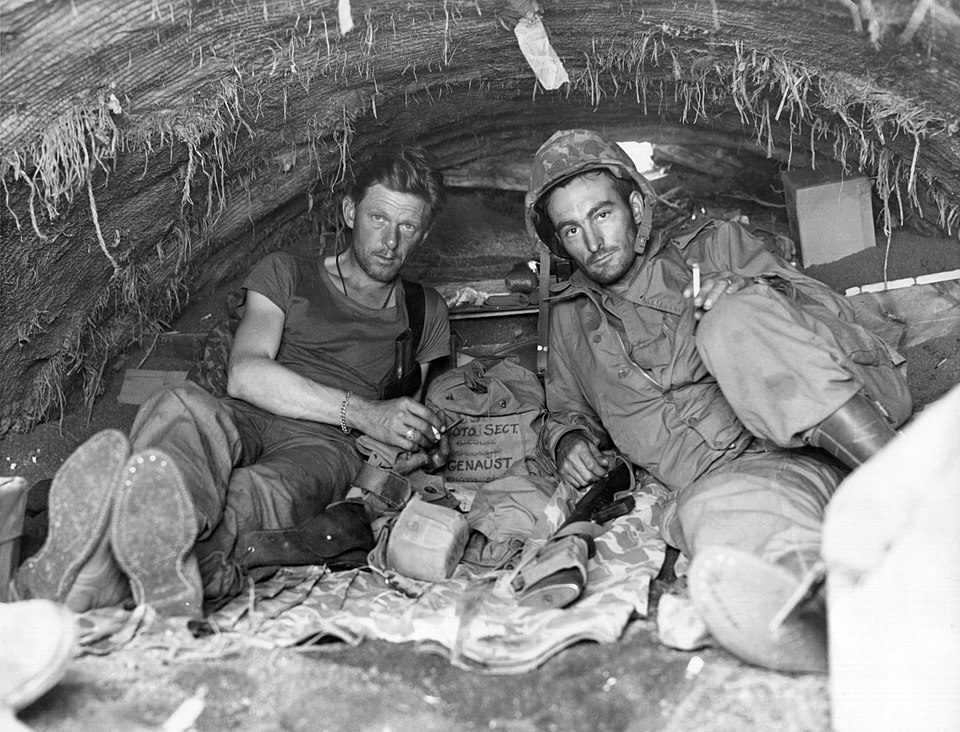
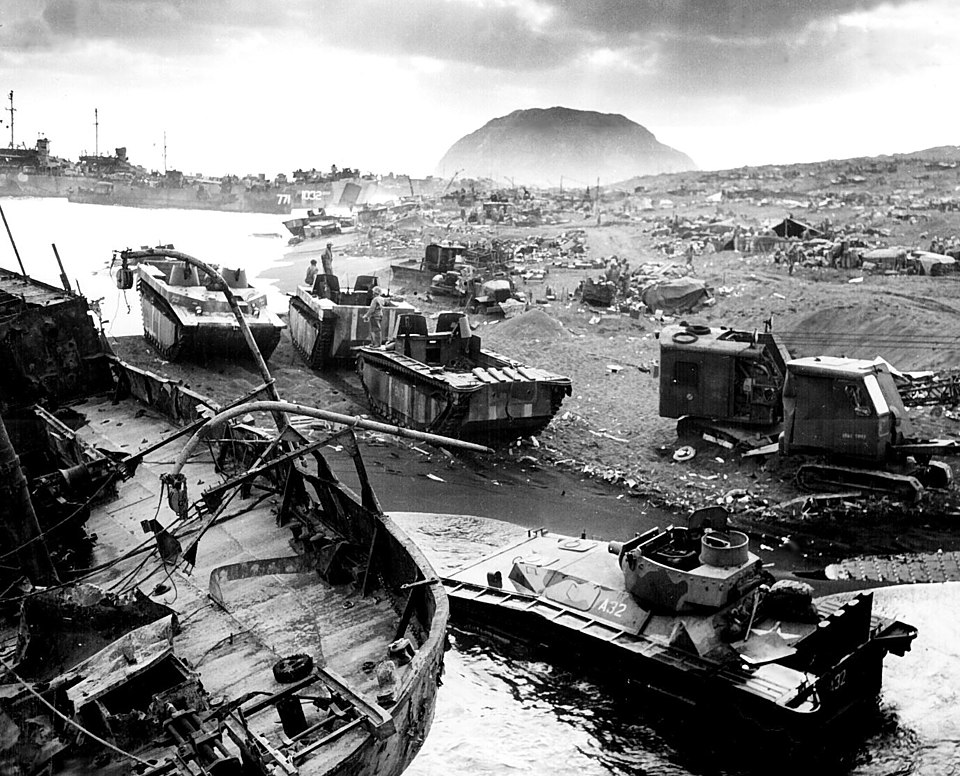
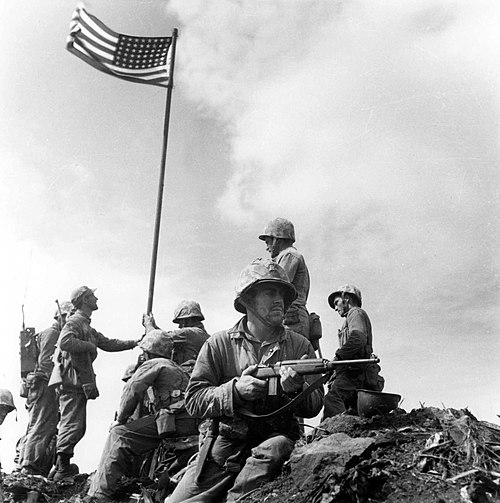
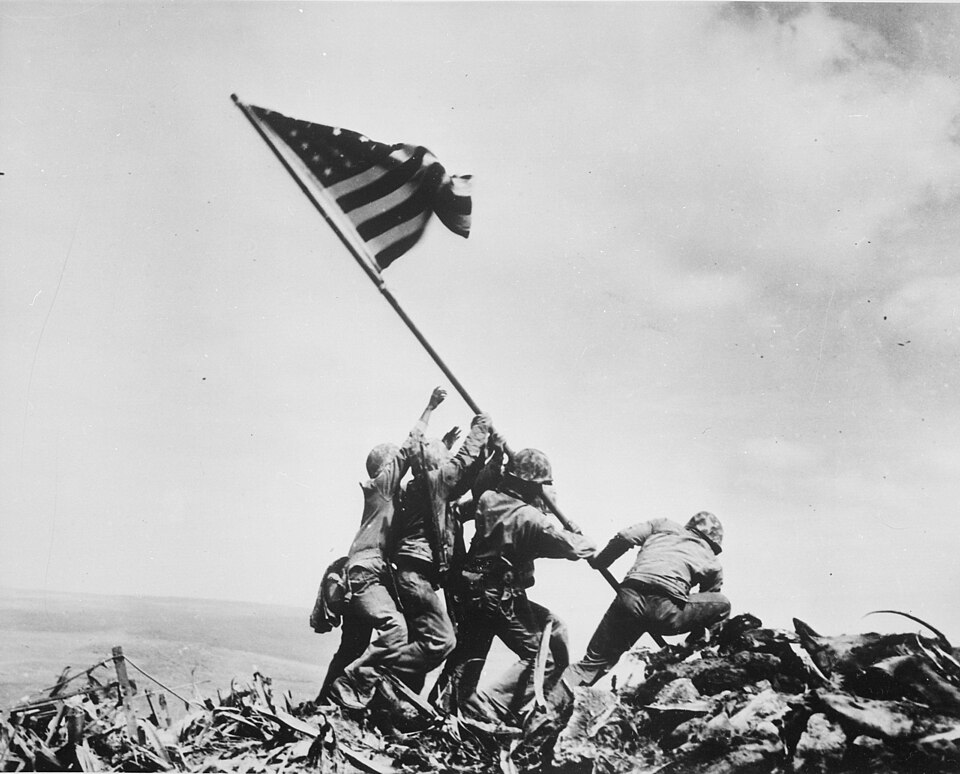
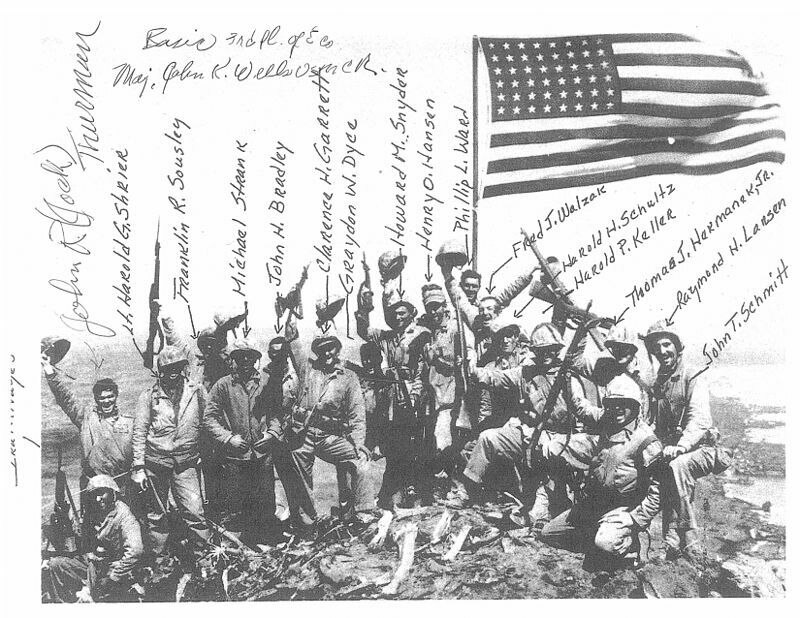
Sat, 09 Aug 2025 - 337 - Ira Hayes and the Flag Raisers of Iwo Jima (Part One)
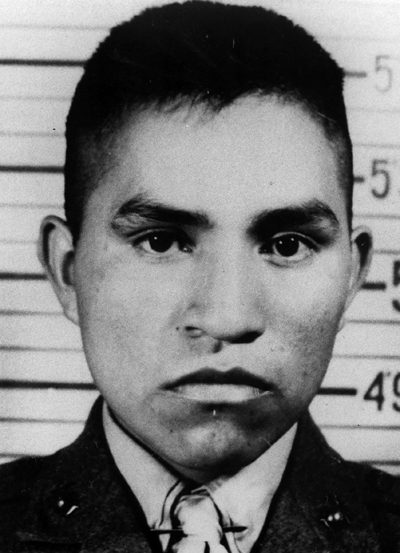
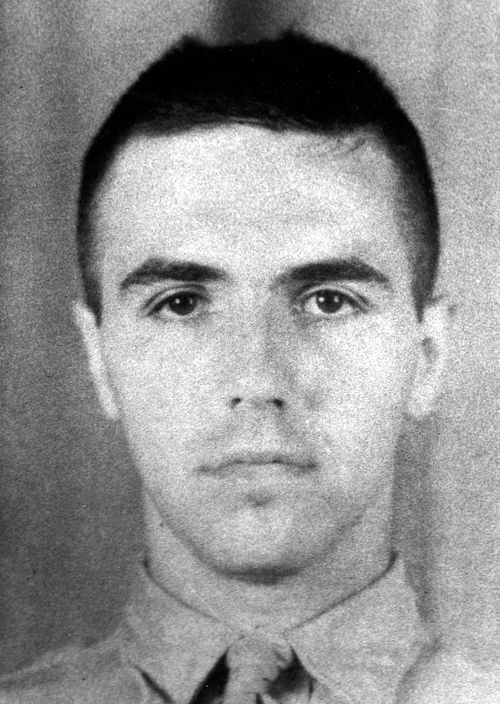
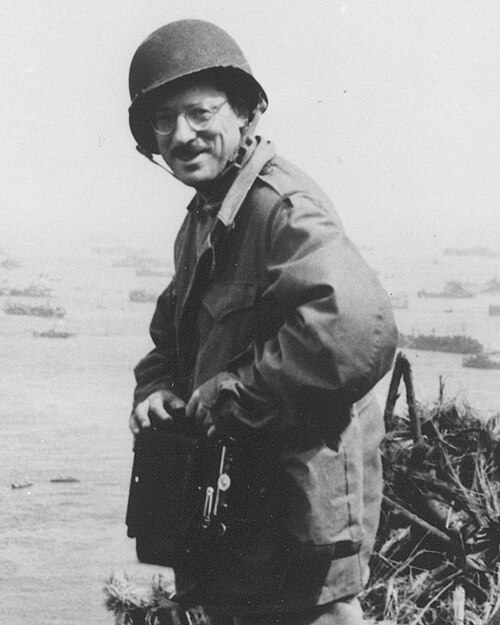
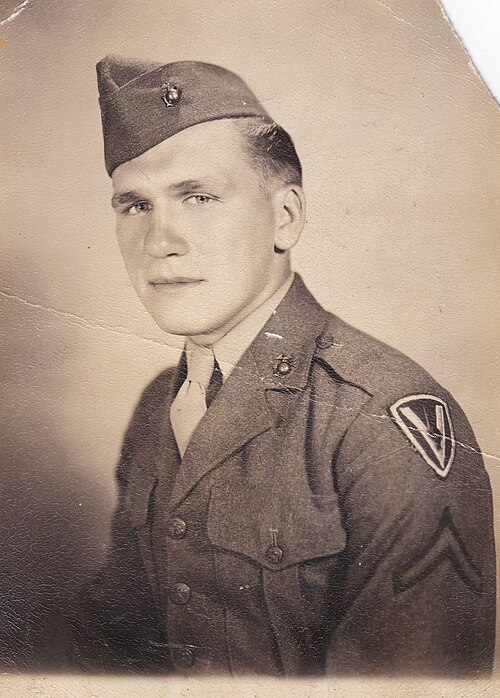
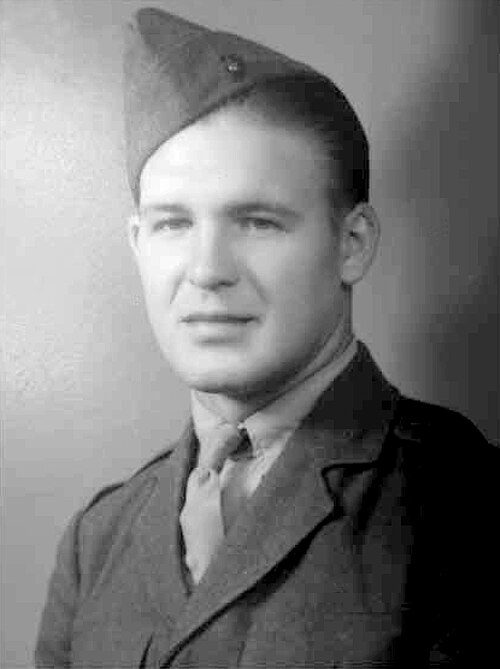
The incredible story of the Marines who raised the American flag over Iwo Jima and the iconic photo that changed their lives forever. Ira Hayes Rene Gagnon Joe Rosenthal on Suribachi Bill Genaust, left, on Iwo Jima Wreckage on Iwo Jima, Suribachi in the background First flag raising Second flag raising The Gung Ho photo
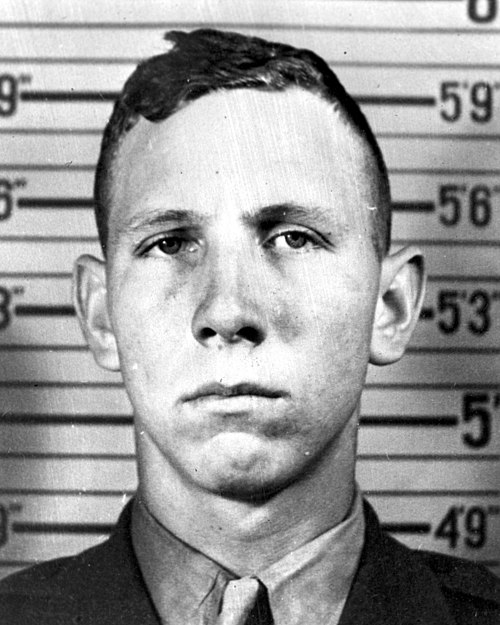
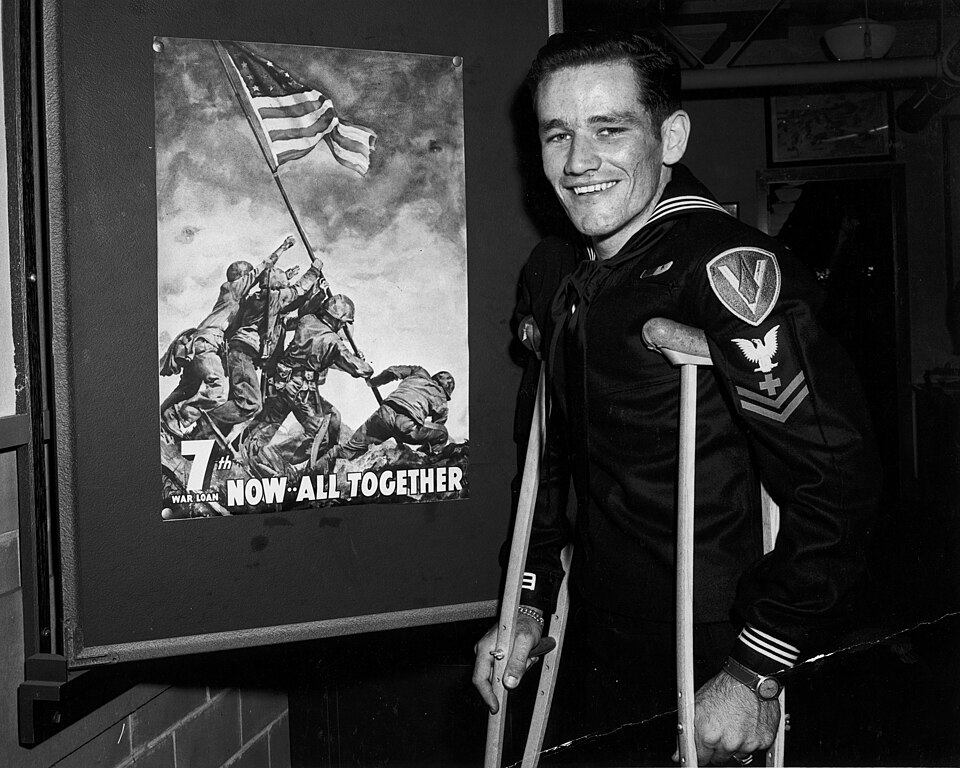
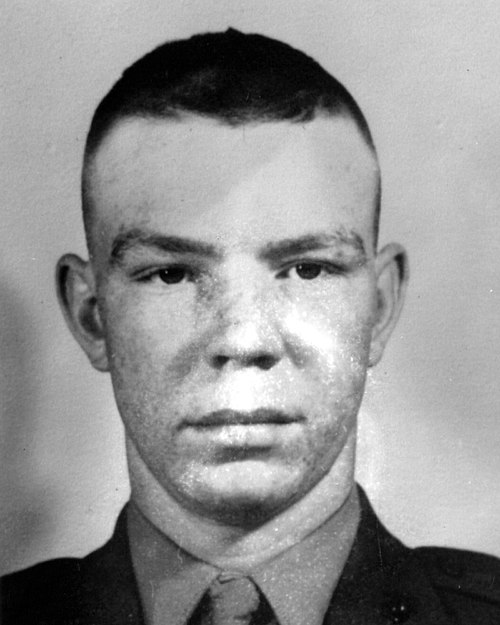
Fri, 23 Jan 2026 - 336 - Ira Hayes and the Flag Raisers of Iwo Jima (Part Two)
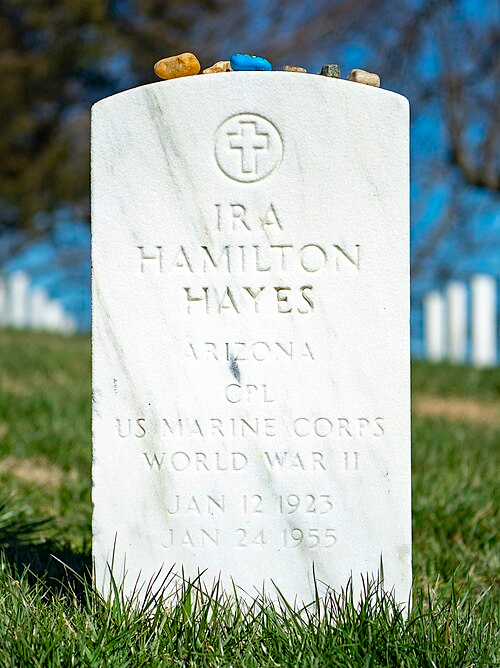
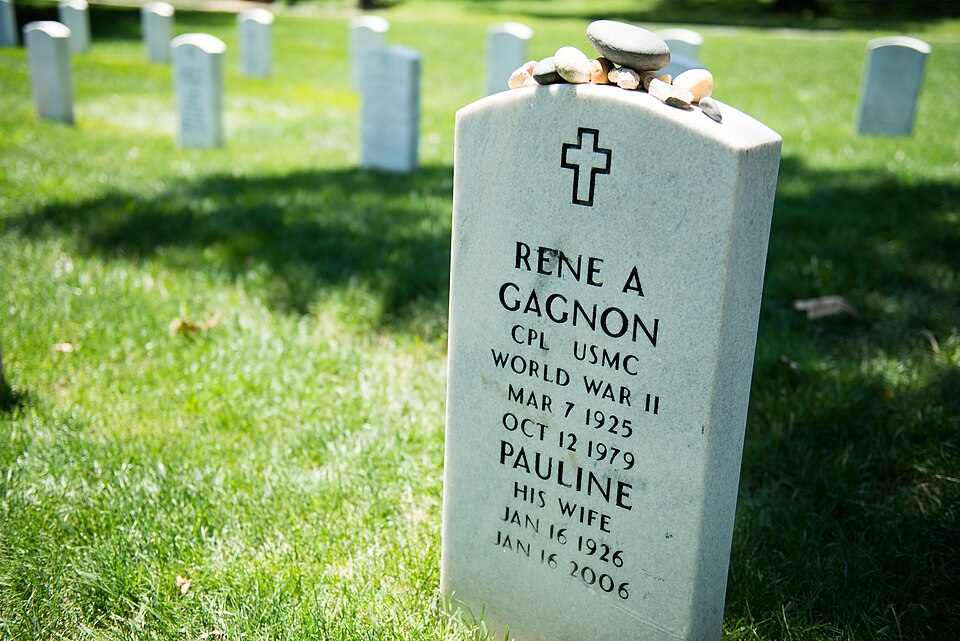
The incredible story of the Marines who raised the American flag over Iwo Jima and the iconic photo that changed their lives forever. Marine Harlon Block, his mother always knew. Navy Medic John Bradley, on the 7th Bond Tour, still on crutches Flag raiser Franklin Sousley, misidentified for seventy years Harold Schultz, flag raiser who never went public. Harold Keller, flag raiser, he also kept quiet for the rest of his life Grave of Ira Hayes, Arlington National Cemetery Rene Gagnon grave, Arlington National Cemetery
Fri, 23 Jan 2026 - 335 - J. D. Salinger and The Catcher in the Rye (Part One)J. D. Salinger, photo used on book jacket, The Catcher in the Rye Original book jacket cover, The Catcher in the Rye Cornish-Windsor Bridge, near Salinger's home The Catcher in the Rye, paperback book edition cover, designed by Salinger Jean Miller, 2013 J.D. Salinger: The Reclusive Genius Behind "The Catcher in the Rye" Discover the untold story of J.D. Salinger, the enigmatic author who captivated a generation with "The Catcher in the Rye." This bite-sized biography delves into Salinger's early life, his traumatic experiences in World War II, and the creative process behind his iconic novel. Learn how Salinger's masterpiece transformed American literature and why he retreated from the public eye at the height of his fame. From his privileged Manhattan upbringing to his struggles with PTSD, uncover the fascinating journey of a literary legend. This episode reveals Salinger's complex relationships, his battles with publishers, and the lasting impact of his work.Fri, 18 Apr 2025
- 334 - J. D. Salinger and The Catcher in the Rye (Part Two)J. D. Salinger, Time Magazine, 1961 Original dust jacket of The Catcher in the Rye, Salinger eventually demanded that his photo be removed. J. D. Salinger, on the streets of Windsor, Vermont, later in life. Joyce Maynard, later in life. J.D. Salinger: The Reclusive Genius Behind "The Catcher in the Rye" Discover the untold story of J.D. Salinger, the enigmatic author who captivated a generation with "The Catcher in the Rye." This bite-sized biography delves into Salinger's early life, his traumatic experiences in World War II, and the creative process behind his iconic novel. Learn how Salinger's masterpiece transformed American literature and why he retreated from the public eye at the height of his fame. From his privileged Manhattan upbringing to his struggles with PTSD, uncover the fascinating journey of a literary legend. This episode reveals Salinger's complex relationships, his battles with publishers, and the lasting impact of his work.Fri, 18 Apr 2025
- 333 - Gunther Lutjens: The Admiral Behind The Battleship Bismarck's Fateful Voyage (Part One)Admiral Gunther Lutjens Hitler on naval inspection tour of the "Deutschland," in 1934. Crew of Bismarck on deck, its 15 inch guns visible Spitfire reconnaissance photo near Bergen, Norway. Bismarck during the Battle of the Denmark Strait Gunther Lutjens: The Admiral Behind the Bismarck's Fateful Voyage Discover the untold story of Admiral Gunther Lutjens and the nine-day voyage of Nazi Germany's most powerful battleship, the Bismarck. This bite-sized biography delves into the naval strategies, political tensions, and dramatic sea battles that led to one of World War II's most epic maritime confrontations. From Hitler's rearmament plans to the sinking of the HMS Hood, uncover the forgotten details of this pivotal moment in naval history.Thu, 20 Mar 2025
- 332 - Gunther Lutjens: The Admiral Behind The Battleship Bismarck's Fateful Voyage (Part Two)Captain Ernst Lindemann HMS Prince of Wales Admiral John Tovey on the deck of the George V Swordfish Torpedo dive bomber Swordfish returning to the Ark Royal after attacking the Bismarck Ark Royal and Renown from HMS Sheffield Bismarck survivors being rescued by the Dorsetshire Hitler and Raeder, 1943 Gunther Lutjens: The Admiral Behind the Bismarck’s Fateful Voyage Discover the untold story of Admiral Gunther Lutjens and the nine-day voyage of Nazi Germany’s most powerful battleship, the Bismarck. This bite-sized biography delves into the naval strategies, political tensions, and dramatic sea battles that led to one of World War II’s most epic maritime confrontations. From Hitler’s rearmament plans to the sinking of the HMS Hood, uncover the forgotten details of this pivotal moment in naval history.Thu, 20 Mar 2025
- 331 - The Enigmatic Legacy of Jan Vermeer: From Obscurity to Artistic Mastery (Part One)
Today, no more than thirty-seven paintings are attributed to Jan Vermeer. Still, he remains one of the greatest artists who ever lived. Burial Marker for Vermeer, Oude Kirk, Delft The Astronomer in the Altaussee salt mine Two paintings at 2023 Rijksmuseum exhibit St. Praxedes Diana and her Companions Christ in the House of Mary and Martha The Procuress A Girl Asleep A Girl Reading a Letter by an Open Window, before restoration A Girl Reading a Letter, restored Cavalier and Young Woman The Milkmaid The Glass of Wine Girl Interrupted in her Music Young Woman With A Wine Glass The Little Street View of Delft This podcast explores the life and works of Dutch master Jan Vermeer. It delves into Vermeer's enigmatic biography, his meticulous artistic process, and the rediscovery of his genius centuries after his death. The episode covers Vermeer's early life in Delft, his marriage, and his struggle to support a large family through art and dealing. It traces the journey of several of Vermeer's most famous paintings, including "The Milkmaid" and "Girl with a Pearl Earring," through history and various collections. The podcast also touches on the impact of historical events like wars on the fate of Vermeer's works and the artist's enduring legacy in the art world. 0:00 Intro: Jan Vermeer's enigmatic life and legacy...
Tue, 18 Feb 2025 - 330 - The Enigmatic Legacy of Jan Vermeer: From Obscurity to Artistic Mastery (Part Two)
Today, no more than thirty-seven paintings are attributed to Jan Vermeer. Still, he remains one of the greatest artists who ever lived. Young Woman With A Water Pitcher Woman With a Lute The Music Lesson The Concert Woman in Blue Reading a letter Woman With a Pearl Necklace Woman with a Balance A Lady Writing Mistress and Maid Girl With a Pearl Earring Study of a Young Woman Girl With a Red Hat Girl With a Flute The Art of Painting The Geographer The Astronomer The Lacemaker The Love Letter A Lady Writing a Letter With Her Maid Allegory of the Catholic Faith Young Woman Standing a Virginal
Tue, 18 Feb 2025 - 329 - The Falcon and the Snowman: Unraveling America's Cold War Espionage Scandal (Part One)Christopher Boyce on Australian 60 Minutes Christopher Boyce, after his rearrest in the state of Washington. Timothy Hutton, who played Boyce in "The Falcon and the Snowman." Sean Penn, who played Daulton Lee in the "The Falcon and the Snowman." Arrested for selling secrets to the Russians, their incarceration and Christopher Boyce’s subsequent escape from a Federal prison was headline news. Ultimately, the Falcon and the Snowman spent decades behind bars. This podcast episode delves into the story of Christopher Boyce and Daulton Lee, known as the Falcon and the Snowman. It explores their backgrounds in affluent Southern California and how they became involved in selling classified information to the Soviet Union in the 1970s. The episode details Boyce's work at TRW, a defense contractor, and Lee's drug-dealing activities. It recounts their initial contact with Soviet officials in Mexico City and the development of their espionage operation. The podcast highlights the contrast between their privileged upbringings and their descent into criminal activities, offering insights into the motivations and circumstances that led to their infamous espionage case.Thu, 09 Jan 2025
- 328 - The Falcon and the Snowman: Unraveling America's Cold War Espionage Scandal (Part Two)Christopher Boyce, testifying before Congress, 1985 Australian Prime Minister Gough Whitlam Kathleen "Cait" Mills Boyce, 2003 Recent photo of Boyce in Oregon Cait and Chris Boyce on CNN, 2014 Arrested for selling secrets to the Russians, their incarceration and Christopher Boyce's subsequent escape from a Federal prison was headline news. Ultimately, the Falcon and the Snowman spent decades behind bars. This podcast episode delves into the story of Christopher Boyce and Daulton Lee, known as the Falcon and the Snowman. It explores their backgrounds in affluent Southern California and how they became involved in selling classified information to the Soviet Union in the 1970s. The episode details Boyce's work at TRW, a defense contractor, and Lee's drug-dealing activities. It recounts their initial contact with Soviet officials in Mexico City and the development of their espionage operation. The podcast highlights the contrast between their privileged upbringings and their descent into criminal activities, offering insights into the motivations and circumstances that led to their infamous espionage case.Thu, 09 Jan 2025
- 327 - Theodore Roosevelt – From New York Reformer to America's Youngest President (Part One)Theodore Roosevelt as a young man Campaign literature, 1900 Leon Czolgosz, McKinley assassin Roosevelt ranch house, South Dakota Roosevelt's first wife, Alice Roosevelt's second wife, Edith Roosevelt with his family Roosevelt in Rough Rider uniform Roosevelt, in store bought frontier wardrobe with Tiffany silver knife Theodore Roosevelt: Nobel Laureate, Medal of Honor Winner, Political Progressive, Executor of the Panama Canal, Best Selling Author, Conservationist and always the Man in the Arena. This podcast explores the life of Theodore Roosevelt, the 26th President of the United States. It covers his early years as a sickly child, his transformation into a robust young man, and his rapid political ascent. The episode details Roosevelt's roles as New York City Police Commissioner, Assistant Secretary of the Navy, and leader of the Rough Riders during the Spanish-American War. It highlights his progressive policies as Governor of New York and his unexpected path to the presidency following William McKinley's assassination. The podcast paints a vivid picture of Roosevelt's boundless energy, reform-minded approach to politics, and his impact on shaping America's role as a global power at the turn of the 20th century.Tue, 03 Dec 2024
- 326 - Theodore Roosevelt – From New York Reformer to America's Youngest President (Part Two)Theodore Roosevelt Home known as Sagamore Hill, Oyster Bay, NY Roosevelt speaking in 1910 Roosevelt in safari garb in Africa Photo from the book African Game Trails Roosevelt visiting Cambridge Roosevelt assassin, John Schrank, under arrest Mount Rushmore Theodore Roosevelt Grave, Oyster Bay, Long Island Theodore Roosevelt: Nobel Laureate, Medal of Honor Winner, Political Progressive, Executor of the Panama Canal, Best Selling Author, Conservationist and always the Man in the Arena. This podcast explores the life of Theodore Roosevelt, the 26th President of the United States. It covers his early years as a sickly child, his transformation into a robust young man, and his rapid political ascent. The episode details Roosevelt's roles as New York City Police Commissioner, Assistant Secretary of the Navy, and leader of the Rough Riders during the Spanish-American War. It highlights his progressive policies as Governor of New York and his unexpected path to the presidency following William McKinley's assassination. The podcast paints a vivid picture of Roosevelt's boundless energy, reform-minded approach to politics, and his impact on shaping America's role as a global power at the turn of the 20th century.Tue, 03 Dec 2024
- 325 - The Brief and Tragic Reign of Maximillian I, Emperor of Mexico. (Part One)Carlota, Empress of Mexico Maximillian I, Emperor of Mexico Schoenbrunn, Hapsburg palace, Vienna and Maximillian's boyhood home Maximillian and Charlotte, newlyweds Franz Josef, 1865 Miramare, Trieste The Novara Maximillian as Emperor Benito Juarez Like something out of a fairy tale, in 1864, a European power installed an Austrian nobleman as Maximillian I, Emperor of Mexico, ultimately resulting in tragedy, madness and execution. This episode unravels the ambitious plot by Napoleon III to install a European monarch in the New World, and the tragic consequences that followed. From Habsburg royalty to Mexican ruler, Maximilian's journey is filled with political intrigue, cultural clashes, and personal struggles. Learn how this idealistic prince found himself caught between European imperialism and Mexican nationalism, ultimately leading to his downfall. Perfect for history buffs and fans of untold stories, this bite-sized biography brings to life a chapter of history often overlooked in textbooks. Dive into the world of 19th-century politics, royal ambitions, and the clash of empires.Thu, 17 Oct 2024
- 324 - The Brief and Tragic Reign Of Maximillian I, Emperor of Mexico. (Part Two)Carlota, in Mexican garb Pope Pius IX Napoleon III and his wife, the Empress Eugenie, 1865 The chapel built on the Hill of the Bells, Maximillian's execution site in Queretaro Eduard Manet's, "Execution of the Emperor Maximillian," inaccurately depicting Maximillian in the center, wearing a sombrero. His executioners are symbolically wearing French infantry uniforms and the soldier loading his rifle is similar in appearance to Napoleon III. The painting was publicly banned in France. Maximillian's sarcophagus in the Hapsburg Imperial Crypt, Vienna. Maximillian I, death mask. Maximillian's embalmed corpse, photographed in Mexico. Carlota, 1914 Bouchout Castle, Belgium. Final home of Carlota. Like something out of a fairy tale, in 1864, a European power installed an Austrian nobleman as Maximillian I, Emperor of Mexico, ultimately resulting in tragedy, madness and execution. This episode unravels the ambitious plot by Napoleon III to install a European monarch in the New World, and the tragic consequences that followed. From Habsburg royalty to Mexican ruler, Maximilian's journey is filled with political intrigue, cultural clashes, and personal struggles. Learn how this idealistic prince found himself caught between European imperialism and Mexican nationalism, ultimately leading to his downfall. Perfect for history buffs and fans of untold stories, this bite-sized biography brings to life a chapter of history often overlooked in textbooks. Dive into the world of 19th-century politics, royal ambitions, and the clash of empires. Like, subscribe, and explore more fascinating figures you thought you knew – or never knew existed!Thu, 17 Oct 2024
- 323 - Frank Morris and the Anglin Brothers: The True Story of the Alcatraz Escape (Part One)Frank Morris John Anglin Clarence Anglin Allen West Ralph Roe Theodore Cole Doc Barker The true story Of Frank Morris, John and Clarence Anglin and their remarkable escape from Alcatraz Federal Penitentiary. Frank Morris and the Anglin brothers orchestrated one of the most daring prison escapes in history from Alcatraz, the notorious "escape-proof" island fortress. This episode delves into the fascinating backstories of these cunning inmates and the intricate planning behind their audacious 1962 breakout attempt. Discover how they exploited Alcatraz's weakening infrastructure, crafted makeshift tools, and devised an ingenious plan to fool guards with dummy heads. Uncover the untold story of how these determined convicts challenged the myth of Alcatraz's impenetrability and sparked a manhunt that continues to captivate the public imagination decades later. Whether you're a true crime enthusiast, history buff, or simply love tales of incredible ingenuity, this gripping account of the escape from Alcatraz will leave you spellbound. Don't miss this thrilling journey into one of America's most enduring mysteries!Wed, 25 Sep 2024
- 322 - Frank Morris and the Anglin Brothers: The True Story of the Alcatraz Escape (Part Two)Alcatraz with Angel Island in the background. Utility corridor behind the escapees' cells. The four dummy heads used during the escape. Escapee cell with fake grill removed. John Paul Scott Fort Point, Golden Gate, near where John Paul Scott washed ashore Alcatraz, with Little Alcatraz visible, lower left Alcatraz Lighthouse at night. The true story Of Frank Morris, John and Clarence Anglin and their remarkable escape from Alcatraz Federal Penitentiary. Frank Morris and the Anglin brothers orchestrated one of the most daring prison escapes in history from Alcatraz, the notorious "escape-proof" island fortress. This episode delves into the fascinating backstories of these cunning inmates and the intricate planning behind their audacious 1962 breakout attempt. Discover how they exploited Alcatraz's weakening infrastructure, crafted makeshift tools, and devised an ingenious plan to fool guards with dummy heads. Uncover the untold story of how these determined convicts challenged the myth of Alcatraz's impenetrability and sparked a manhunt that continues to captivate the public imagination decades later. Whether you're a true crime enthusiast, history buff, or simply love tales of incredible ingenuity, this gripping account of the escape from Alcatraz will leave you spellbound. Don't miss this thrilling journey into one of America's most enduring mysteries!Wed, 25 Sep 2024
- 321 - The Great Locomotive Chase: James Andrews' Daring Civil War Raid and the First Medal of Honor (Part One)The General today, on display, Southern Museum, Kenesaw, (formerly Big Shanty) Georgia. James J. Andrews General Don Carlos Buell General Ormsby Mitchel Plaque in Atlanta, Georgia denoting the spot where James J. Andrews was hanged on June 7, 1862 One of the most incredible stories of the Civil War Discover the thrilling true story of James Andrews, the Union spy who orchestrated one of the Civil War's most audacious missions. In 1862, Andrews led a group of Union soldiers deep behind enemy lines to steal a Confederate locomotive and wreak havoc on Southern supply lines. This episode uncovers the incredible details of their high-stakes heist, the nail-biting pursuit that followed, and the ultimate fate of these daring raiders. Learn how this forgotten hero's actions led to the first-ever Medal of Honor and why his story deserves to be remembered. Perfect for history buffs, Civil War enthusiasts, and anyone who loves tales of courage and cunning from America's past.Thu, 29 Aug 2024
- 320 - The Great Locomotive Chase: James Andrews' Daring Civil War Raid and the First Medal of Honor (Part Two)Rendition of the execution of seven of the Andrew's Raiders The General, refurbished for a celebration with some of the original raiders and William Fuller, conductor, leaning on post. Edwin Stanton, Secretary of War John Scott's Medal of Honor, awarded posthumously after Scott was hanged. The monument to Andrew's Raiders at Chattanooga National Cemetery, James J. Andrews grave is in the left forefront One of the most incredible stories of the Civil War. Discover the thrilling true story of James Andrews, the Union spy who orchestrated one of the Civil War's most audacious missions. In 1862, Andrews led a group of Union soldiers deep behind enemy lines to steal a Confederate locomotive and wreak havoc on Southern supply lines. This episode uncovers the incredible details of their high-stakes heist, the nail-biting pursuit that followed, and the ultimate fate of these daring raiders. Learn how this forgotten hero's actions led to the first-ever Medal of Honor and why his story deserves to be remembered. Perfect for history buffs, Civil War enthusiasts, and anyone who loves tales of courage and cunning from America's past.Thu, 29 Aug 2024
- 319 - Laurence Olivier and Vivien Leigh: A Tumultuous Hollywood Romance (Part One)Olivier in Wuthering Heights Jill Esmond Leigh and Marlon Brando in A Streetcar Named Desire Hattie McDaniel, Olivia De Havilland and Vivien Leigh in Gone With the Wind Vivien Leigh and Clark Gable, Gone With the Wind. Poster for one of the many revivals that made Gone With the Wind the most profitable film ever made. Publicly, perceived as one of the great romances of the 20th century, privately the Oliviers endured infidelity, severe mental illness and ultimately divorce. Discover the tumultuous love story of Hollywood legends Laurence Olivier and Vivien Leigh in this captivating episode. From their scandalous affair to their rise as cinema's power couple, we uncover the passion, drama, and mental health struggles behind their iconic careers. Learn how Olivier's Shakespearean ambitions and Leigh's breakout role in "Gone with the Wind" shaped their destinies. Delve into the golden age of Hollywood, exploring the making of classics like "Wuthering Heights" and the behind-the-scenes tensions of "Gone with the Wind." This bite-sized biography reveals the human side of these larger-than-life figures, offering a glimpse into their triumphs, tribulations, and lasting impact on film history. Perfect for history buffs, classic movie fans, and anyone fascinated by the untold stories of famous figures.Thu, 01 Aug 2024
- 318 - Laurence Olivier and Vivien Leigh: A Tumultuous Hollywood Romance (Part Two)Olivier in Rebecca with Joan Fontaine The Oliviers in Australia, the smiles would eventually fade Vivien Leigh, 1957 Olivier’s costume in Spartacus Olivier in, “The Entertainer,” with Joan Plowright Olivier and Joan Plowright visiting the Reagan’s in the White House in the 80’s Olivier’s grave in Westminster Abbey Publicly, perceived as one of the great romances of the 20th century, privately the Oliviers endured infidelity, severe mental illness and ultimately divorce. Discover the tumultuous love story of Hollywood legends Laurence Olivier and Vivien Leigh in this captivating episode. From their scandalous affair to their rise as cinema's power couple, we uncover the passion, drama, and mental health struggles behind their iconic careers. Learn how Olivier's Shakespearean ambitions and Leigh's breakout role in "Gone with the Wind" shaped their destinies. Delve into the golden age of Hollywood, exploring the making of classics like "Wuthering Heights" and the behind-the-scenes tensions of "Gone with the Wind." This bite-sized biography reveals the human side of these larger-than-life figures, offering a glimpse into their triumphs, tribulations, and lasting impact on film history. Perfect for history buffs, classic movie fans, and anyone fascinated by the untold stories of famous figures.Wed, 31 Jul 2024
- 317 - Butch and Sundance: Friendship, Crime, and the End of the Old West (Part One)Butch Cassidy's boyhood home, Circleville, Utah
Butch Cassidy, Wyoming prison mugshot
Telluride location of first Cassidy holdup, bank building was actually the white building to the right Montpelier, Idaho, site of Cassidy holdup
Sundance and Etta, shortly before they left for Argentina In 1969, the 20th Century Fox film, “Butch Cassidy and the Sundance Kid,” established these two outlaws as popular culture icons. But what was the truth about the lives, crimes and deaths of these two American legends? Discover the true story of Butch Cassidy and the Sundance Kid, beyond Hollywood's portrayal. This episode uncovers the real-life adventures of these infamous outlaws, from their humble beginnings to their daring train robberies. Learn how Robert Leroy Parker became the legendary Butch Cassidy, his friendship with the Sundance Kid, and the formation of the Wild Bunch. Explore the Old West's most notorious gang, their hideouts, and the relentless pursuit by lawmen and Pinkerton agents. Unravel the mysteries surrounding their fate and separate fact from fiction in this thrilling historical journey. Perfect for history buffs, true crime enthusiasts, and anyone fascinated by the legends of the American frontier.Sun, 23 Jun 2024 - 316 - Butch and Sundance: Friendship, Crime, and the End of the Old West (Part Two)Butch and Sundance's Argentine cabin today.
Posse containing Joe Lefors
The house used in the film "Butch Cassidy and the Sundance Kid," in which Katherine Ross lives and Paul Newman rides a bicycle during the song "Raindrops Keep Falling ON My Head."
Entrance to the Hole In the Wall near Kaycee, Wyoming
Location near Durango, Colorado where Newman and Redford jump into the river to escape the Lefors posse
Historical marker denoting the site of Fort Worth's Hell's Half Acre. In 1969, the 20th Century Fox film, "Butch Cassidy and the Sundance Kid," established these two outlaws as popular culture icons. But what was the truth about the lives, crimes and deaths of these two American legends? Discover the true story of Butch Cassidy and the Sundance Kid, beyond Hollywood's portrayal. This episode uncovers the real-life adventures of these infamous outlaws, from their humble beginnings to their daring train robberies. Learn how Robert Leroy Parker became the legendary Butch Cassidy, his friendship with the Sundance Kid, and the formation of the Wild Bunch. Explore the Old West's most notorious gang, their hideouts, and the relentless pursuit by lawmen and Pinkerton agents. Unravel the mysteries surrounding their fate and separate fact from fiction in this thrilling historical journey. Perfect for history buffs, true crime enthusiasts, and anyone fascinated by the legends of the American frontier.Sun, 23 Jun 2024 - 315 - The Heroes of Telemark: Norway's Secret War Against Hitler's Atomic Dreams (Part One)Norsk Hydro Plant, Vemork
Leif Trondstadt
Heavy water produced at Telemark British glider on tow rope
Reichskomisar Joseph Terboven
General Nicholas Van Falkenhirst
SS Officer Frederich Fehlis Shortly after the conquest of Norway by Nazi Germany, Allied intelligence determined that an electrical plant at Rjukan, Norway was providing a crucial element in a potential German atomic bomb. As a result, Norwegian commandos embarked on one of the most successful and heroic operations of World War II. Discover the untold story of the Norwegian heroes who sabotaged Hitler's atomic weapons program. This episode delves into the daring Operation Freshman and the subsequent Operation Gunnerside, revealing how a small group of resistance fighters and Allied commandos risked everything to destroy the Nazi heavy water production facility at Vemork. Learn about Leif Tronstadt, the brilliant chemist-turned-spy, and the brave men who skied across treacherous terrain to change the course of World War II. Uncover the high-stakes world of wartime espionage, cutting-edge science, and unsung heroism in this gripping tale of courage against overwhelming odds.Fri, 24 May 2024 - 314 - The Heroes of Telemark: Norway's Secret War Against Hitler's Atomic Dreams (Part Two)Leif Transtad with King Haakon VII, 1944
Lake Tinnsjo, sight of the SF Hydro sinking
The ferry SF Hydro
King Haakon VII congratulating Telemark commandos.
Shortly after the conquest of Norway by Nazi Germany, Allied intelligence determined that an electrical plant at Rjukan, Norway was providing a crucial element in a potential German atomic bomb. As a result, Norwegian commandos embarked on one of the most successful and heroic operations of World War II. Discover the untold story of the Norwegian heroes who sabotaged Hitler's atomic weapons program. This episode delves into the daring Operation Freshman and the subsequent Operation Gunnerside, revealing how a small group of resistance fighters and Allied commandos risked everything to destroy the Nazi heavy water production facility at Vemork. Learn about Leif Tronstadt, the brilliant chemist-turned-spy, and the brave men who skied across treacherous terrain to change the course of World War II. Uncover the high-stakes world of wartime espionage, cutting-edge science, and unsung heroism in this gripping tale of courage against overwhelming odds.Fri, 24 May 2024 - 313 - The Gardner Heist: When Isabella's Vision Met Modern Crime (Part One)
Discover the fascinating life of Isabella Stewart Gardner, a trailblazing art collector and socialite who left an indelible mark on Boston's cultural landscape. This episode delves into Gardner's journey from New York socialite to renowned art patron, her creation of the iconic Isabella Stewart Gardner Museum, and the shocking 1990 heist that rocked the art world. Learn how Gardner's unconventional personality and passion for art shaped her legacy, and uncover the mysteries surrounding the largest unsolved art theft in history. Perfect for history buffs, art enthusiasts, and anyone intrigued by untold stories of influential figures. Don't miss this captivating tale of wealth, culture, and intrigue in early 20th century America. Isabella Stewart Gardner
John Lowell (Jack) Gardner Jr.
Bernard Berenson in his Italian villa.
Botticelli, The Tragedy of Lucretia
Rembrandt, Storm on the Sea of Galilee
Rembrandt, Self-Portrait, damaged, not stolen. Titian, Rape of Europa
Vermeer, the Music Lesson
Manet, Chez Tortoni
Rembrandt, A Man and Woman in Black
Flinck, Landscape with Obelisk
John Singer Sargent, Isabella Stewart Gardner
Gardner Museum, Central CourtyardThu, 02 May 2024 - 312 - The Gardner Heist: When Isabella's Vision Met Modern Crime (Part Two)
Discover the fascinating life of Isabella Stewart Gardner, a trailblazing art collector and socialite who left an indelible mark on Boston's cultural landscape. This episode delves into Gardner's journey from New York socialite to renowned art patron, her creation of the iconic Isabella Stewart Gardner Museum, and the shocking 1990 heist that rocked the art world. Learn how Gardner's unconventional personality and passion for art shaped her legacy, and uncover the mysteries surrounding the largest unsolved art theft in history. Perfect for history buffs, art enthusiasts, and anyone intrigued by untold stories of influential figures. Don't miss this captivating tale of wealth, culture, and intrigue in early 20th century America. Like, subscribe, and explore more episodes of bite-sized biographies that bring forgotten legends to life. Gardner Museum security guard, Rick Abath
Myles Connor, later in life.
William Youngworth III, Late 90's.
Robert "Bobby" Donati, as a young man
Isabella Stewart Gardner, 1907
Gardner Museum, 1920
Robert Gentile
Ryan McGuigan
One of the three searches of Robert Gentile's property
Recent photo of the original Gardner building
Recent photo of Gardner 2012 addition.
Isabella Stewart Gardner, 1922, by John Singer Sargent
Gardner Family Mausoleum, Mt. Auburn Cemetery, Cambridge, MAThu, 02 May 2024 - 311 - Hiram Bingham, the Real Indiana Jones and the Lost City of Machu Picchu (Part One)
IN 1911, an American explorer, Hiram Bingham, re-discovered the Incan ruins at Machu Picchu, helping to popularize this site, which today is one of the seven modern wonders of the world. Hiram Bingham, at Harvard, with wife Alfreda Church built on the former site of the Coricancha, Cuzco, Peru Francisco Pizarro Capture of Atahualpa by Pizarro at Cajamarca Execution of Atahualpa by Pizarro, Cajamarca Sacsayhuaman fortress ruins, Cuzco
Mon, 25 Mar 2024 - 310 - Hiram Bingham, the Real Indiana Jones and the Lost City of Machu Picchu (Part Two)
IN 1911, an American explorer, Hiram Bingham, re-discovered the Incan ruins at Machu Picchu, helping to popularize this site, which today is one of the seven modern wonders of the world. Hiram Bingham, 1912 Machu Pichu, Hayna Picchu in the background Machu Picchu, photographed by Hiram Bingham Hiram Bingham, Air Corps during WWI Bingham, US Senator Bingham with other members of President's Coolidge's committee on Aviation . Hiram Bingham Grave, Arlington National Cemetery
Mon, 25 Mar 2024 - 309 - Charles Lindbergh, His Triumph and Tragedy (Part One)
The triumph, tragedy and bizarre secrets of one of the 20th century’s most prominent figures. Charles with his father.
Lindbergh as Air Cadet
Anne Morrow, as a young girl
Lindbergh, with The Spirit of St. Louis
The Spirit of St. Louis at the Smithsonian
Lindbergh and his plane, mobbed at Croyden, England, 1927
Anne Morrow Lindbergh
The former Lindbergh Estate in Hopewell, New Jersey, now a state facility for juvenile youth
Charles A. Lindbergh, Jr.
The Lindbergh baby, cover of Time.
Wanted poster, after the child's kidnapping
With Goering in Germany, 1936Tue, 20 Feb 2024 - 308 - Charles Lindbergh, His Triumph and Tragedy (Part Two)
The triumph, tragedy and bizarre secrets of one of the 20th century's most prominent figures. Bruno Richard Hauptmann John Condon on the witness stand
Lindbergh on the witness stand.
Gasoline can which contained ransom cash, found in Hauptmann's garage
Norman Schwarzkopf, Sr., New Jersey State Police, father of subsequent Desert Storm commander. Lindbergh in the Pacific, 1944
Charles and Anne Lindbergh, with JFK
Lindbergh, later in life, in the Philippines.
Lindbergh grave, Kipahalu, Maui, HawaiiTue, 20 Feb 2024 - 307 - Bruce Reynolds, Gordon Goody and the Great British Train Robbery of 1963 (Part One)
In 1963, two British criminals masterminded the robbery of 2.6 million pounds in cash from a Royal Mail Train, an amount worth 45 million pounds today. The robbery and its aftermath caused a nationwide sensation. Bruce Reynolds
Gordon Goody
Recent photo, Sears Crossing
Bridge #127, Bridego Bridge
Ronnie Biggs, mug shot
Ronnie Biggs, Bruce Reynolds and their sonsTue, 23 Jan 2024 - 306 - Bruce Reynolds, Gordon Goody and the Great British Train Robbery of 1963 (Part Two)
In 1963, two British criminals masterminded the robbery of 2.6 million pounds in cash from a Royal Mail Train, an amount worth 45 million pounds today. The robbery and its aftermath caused a nationwide sensation. Detective Tommy Butler
Leatherslade Farm Judge Edmund Davies, entering court
Plaque at Crewe railroad station commemorating Jack Mills and David Whitby
Charmain Biggs, in later years
Gordon Goody, later years
Grave of Bruce Reynolds, sculpted by his son Nick, Highgate CemeteryTue, 23 Jan 2024 - 305 - Charles Dickens, His Life and Work (Part One)
Acclaimed in his lifetime for his remarkable literary career, Charles Dickens’ private life was wracked by dysfunction, scandal and the cruelty he inflicted on his wife and his children. Charles Dickens, as a younger man
Catherine Dickens, 1838
Ebeneezer Scrooge and Marley's ghost, A Christmas Carol
Grip, the Raven. Barnaby Rudge
Freddy Bartholomew, in the original MGM version of David Copperfirld
Dickens, in later lifeMon, 18 Dec 2023 - 304 - Charles Dickens, His Life and Work (Part Two)
Acclaimed in his lifetime for his remarkable literary career, Charles Dickens' private life was wracked by dysfunction, scandal and the cruelty he inflicted on his wife and his children. Portrait of Dickens, 1850
Catherine Hogarth Dickens, 1852
Gerorgina Hogarth and Dickens daughter, Mamie
Charles Dickens, in hat, with family
Grave of Charles Dickens, Westminster Abbey
Catherine Dickens and daughter's grave, Highgate Cemetery, LondonMon, 18 Dec 2023 - 303 - William Bradford and the Voyage of the Mayflower (Part One)
The remarkable story of the courage and suffering of the passengers aboard the Mayflower and the establishment of the Plymouth Colony. Postcard of the Mayflower
On November 11, 1620, a 100 foot long cargo ship called the Mayflower entered what is today known as Provincetown Harbor, virtually on the tip of present day Cape Cod. This was the culmination of over two months at sea for 102 immigrants, originally from England, some of this contingent intent on establishing their own religious settlement in the New World, free from persecution from the British crown. Their Atlantic crossing was difficult, their time spent mostly below deck, lashed by gale driven waves that left them and their clothes and quarters in a miserably damp and chilly condition, their diet of hardtack, dried meat and watered down beer little comfort. Artist's rendition William Bradford
William Bradford was born in March of 1590, in Austerfield, Yorkshire, England. The exact date is unknown although he was baptized on March 19 of that same year. Many members of his family died when he was a child, and Bradford was orphaned by the age of seven. Sent to live with two uncles, he spent most of his time as a farm laborer and his leisure activity consisted of reading and studying the Bible and other classic philosophical tracts. Intellectually curious, he was exposed to various sermons of area preachers who radically suggested that the Church of England was still inappropriately influenced by Catholicism. Edward Winslow
Figuring he couldn’t just abandon the Billington boy, Bradford ordered ten armed men, including Edward Winslow, to load up the small sailing ship used during exploration, take Squanto and another native interpreter, Tokamahamon and head to eastern Cape Cod and Nauset territory. A storm forced the boat to come ashore at what is now Barnstable, Massachusetts, on the northern shore of the Cape, about halfway across the lower portion of the peninsula. Mayflower passengers praying during Atlantic crossing
The passengers were situated on the deck immediately located underneath the open air of the main deck. While they could hear waves and smell sea water, they were unable to view the horizon or the surface of the sea around them. Tossed practically on top of each other in makeshift compartments created by cloth curtains, the Separatist contingent strived to get along with each other, realizing that the stress of the voyage would only be increased by personality conflicts. Signing the Mayflower Compact
This premature landing outside of territory designated by British authorities presented an immediate problem. Since the Stranger contingent on board was inclined to dispute any attempts at the Separatists controlling the governance of the colonists once they landed, assertions were made that as a result of the ship landing in an undesignated territory, they were free to do as they wished and were not obliged to respect any other authority. To address this situation several charismatic individuals on board the ship composed an agreement that set out specifically what laws and guidelines should be followed by the community. Containing ideas generally...Tue, 14 Nov 2023 - 302 - William Bradford and the Voyage of the Mayflower (Part Two)
The remarkable story of the courage and suffering of the passengers aboard the Mayflower and the establishment of the Plymouth Colony. Artist's rendition of Samoset entering Plymouth Colony
On March 16, the inevitable occurred, although the incident did not unfold as the settlers previously feared. As described in a pamphlet entitled, “Mourt’s Relation,” a description of the first year of Plymouth Colony, co-written by William Bradford and another settler named Edward Winslow, with work suspended for a regularly scheduled meeting about specific plans for the defense of the settlement, the meeting participants became aware of a native looking down at their group from a nearby hill. This had happened previously, but whenever an inhabitant gestured or even attempted to make contact with these previous visitors, the natives fled. This time, however, the lone native began to purposefully walk directly towards the settlement. Without hesitation, he walked past the crude lane of houses and seemed headed directly towards the shelter that protected the colony’s women and children during such an emergency. Without overt hostility, some of the armed settlers got in his way and made it clear he could not enter the shelter. Instead of bristling or running away, this remarkably tall, long haired individual dressed only in an animal skin loin cloth stood to his full height, saluted and probably understanding the effect he would elicit cheerfully spoke the words, “Hello, English!” Fanciful artist's rendition of Pilgrim's landing
Sunday was of course another leisurely day, but on Monday, they began to reconnoiter the harbor in earnest. It was certainly deep enough for a ship the size of the Mayflower, and eventually, upon landing on shore they found large areas suitable for agriculture, fresh water in several streams and no obvious signs of any kind of recent habitation by natives. Additionally, although at least one sizable boulder was certainly situated in the area, there was no mention by Bradford in either of his two personal accounts of this excursion of a landing assisted by a large rock. This seems to have been an invention of subsequent residents, much to the delight of future chambers of commerce. Today, an elaborate, arched, templelike edifice encloses a rather unimpressive large rock embossed with the date of 1620, the alleged landing spot of America’s Pilgrims. Mayflower II, a reconstruction of the original ship
With the onset of Spring and milder weather, the establishment of at least an initial footprint of a settlement and the astonishing new relationship with a powerful local ally, Captain Christopher Jones decided that this was the appropriate time to sail back to England. After all of its cargo was removed and brought ashore, rocks were added for ballast and, on April 5, the Mayflower slowly made its way out of the harbor, an introspective moment for all of those left on shore. Because of the seasonably calm weather and westerly prevailing winds that propelled the ship instead of impeding the craft, It took only a month for the Mayflower to reach its home port and Jones’ residence on the outskirts of London at Rotherhithe. For a brief period he and his ship continued to participate in transporting goods like sugar between England and neighboring countries across the English Channel. But Jones’ health, permanently impaired by his Atlantic crossing with the Plymouth settlers, was undermined to the extent that he died on March 5,...Tue, 14 Nov 2023 - 301 - Nathan Leopold, Richard Loeb, Clarence Darrow and the Crime of the Century (Part One)
Long before Claus Von Bulow or OJ Simpson, in 1924, two Chicago teenagers committed what was called at the time, “The Crime of the Century,” only to be spared by the efforts of the greatest defense attorney in American history. Nathan Leopold
During their scouring of the Wolf Lake area, police detectives questioned the game warden of the forest preserve that was located nearby about any recurring visitors to the location. One of the names he revealed was that of Nathan Leopold, Jr a nineteen year old ornithologist and recent Phi Beta Kappa graduate of the University of Chicago, currently taking a class at the University of Chicago’s law school. On Sunday morning, May 25, two policeman were sent to Leopold’s home to pick up the teenager for questioning, the house coincidentally in the Kenwood section near both the Harvard School and Bobby Franks’ house. Leopold had plans for a date that Sunday and was initially resistant to coming down to the precinct, but the police assured him that their captain just wanted to ask some routine questions and if he brought his car he would be back in no time. Richard Loeb
Once Richard Loeb’s name was mentioned he also was brought to the LaSalle, placed in a separate room and questioned until the early morning hours. He claimed he left Leopold around dinnertime and mentioned nothing about picking up girls, an obvious contradiction that was certainly suspicious. The next morning, Leopold and Loeb found themselves in custody, in separate police stations, Leopold at Crowe’s headquarters in the Criminal Courts Building, Loeb at a nearby precinct house. Bobby and Jacob Franks
At the Franks’ house, as the dinner hour approached, Bobby Franks’ parents began to wonder where their son was. Jacob and Flora Franks were the type of typically wealthy family that populated the Kenwood neighborhood. Jacob Franks’ wealth initially stemmed from a pawn shop he inherited from his parents known as Franks Collateral Loan Bank. Franks eventually diversified his business interests, first into separate watch and watch case manufacturing companies and then into various real estate and stock investments which generated a net worth of at least 1.5 million 1924 dollars, equivalent to about 27 million dollars today. Graves of Bobby and Jacob Franks
Because of the incredible public and media interest generated by the death of Bobby Franks, the Franks family decided to hold a small, private funeral service in their home as opposed to what might become a public circus. The Franks family were converts to Christian Science from Judaism and the affair consisted of various readings and hymns before a police escort accompanied the Franks procession to Rosehill cemetery, the pallbearers all fellow students from the Harvard School. Clarence Darrow
Understanding his nephew’s predicament, Jacob Loeb decided to reach out to an even more prominent individual, Clarence Darrow. By 1924, Darrow was nearing the conclusion of one of the most illustrious and controversial legal careers in US history. Starting from a small law practice in the tiny Ohio town of Andover, Darrow eventually made his way to the city of Chicago where he became...Thu, 19 Oct 2023 - 300 - Nathan Leopold, Richard Loeb, Clarence Darrow and the Crime of the Century (Part Two)
Long before Claus Von Bulow or OJ Simpson, in 1924, two Chicago teenagers committed what was called at the time, "The Crime of the Century," only to be spared by the efforts of the greatest defense attorney in American history. Chicago Criminals Court Buildings
Clarence Darrow would not begin his summation until the afternoon of August 23rd, so anticipated throughout the city of Chicago that a mob descended on the courthouse hoping to push into the courtroom. This throng congregated in the stairwells, common areas and hallways leading to the sixth floor chamber where Darrow was scheduled to speak. Twice after the midday recess, the famed attorney attempted to begin his summation, only to stop, the noise of spectators emanating from the hallway outside of the court too boisterous, police and bailiffs struggling to push the crowd out of the courtroom’s proximity. Angrily, the judge contacted the city police chief directly, demanding that order be restored. Within minutes, additional police resorting to billy clubs eventually removed the source of this distraction. Crowe, Leopold, Loeb and Darrow before Judge Caverly
Leopold and Loeb, prison mug shots Leopold and Loeb would begin serving hard time at Joliet state prison, a forbidding stone edifice housing some of Illinois’ most hardened criminals. One immediate hardship was the end of the meals that they were able to order from a Chicago restaurant during their trial. Although they granted interviews upon their entrance to the prison, Loeb would never publicly speak again and Leopold waited twenty years before interacting with a journalist. This despite repeated press attempts to provide updates on the successive anniversaries of their incarceration. Possibly to separate the two prisoners, Leopold was quickly transferred to Stateville prison, a brand new maximum security facility. The formerly high profile prisoners were so isolated that Leopold only found out about the 1929 death of his father from a prison employee. Nathan Leopold, 1958
Despite his recent parole rejection, Leopold cooperated with the Saturday Evening Post on an April, 1955, four part series that was sympathetic. Even more eventful was the 1956 novel Compulsion written by Meyer Levin, a runaway best seller that was a very thinly disguised account of the Loeb and Leopold murder and an eventual film starring Orson Welles. Once again, Nathan Leopold was an American celebrity, although he hated the book and sued Levin and 20th Century Fox for invasion of privacy, an unsuccessful suit that dragged on for most of the rest of his life. Perhaps, attempting to tell his side of the story, in 1958, Leopold published Life Plus 99 Years, a sanitized autobiography also undertaken to persuade any future parole proceedings. A best seller, the book created an additional groundswell for Leopold’s release. This sentiment finally played out on February 13, 1958 when Nathan Leopold emerged from Stateville Prison, a free man.Thu, 19 Oct 2023 - 299 - Johnny Carson, The King of Comedy (Part One)
The dark reality behind the persona of one of America's most beloved public figures. Johnny Carson, in the Navy. Carson and his idol, Jack Benny Carson, hosting "Who Do You Trust?" Carson, with his three sons, 1955 Carson, publicity photo, 1957 Carson with Ed McMahon, shortly after their Tonight Show stint began Carson, early years of the Tonight Show
Mon, 25 Sep 2023 - 298 - Johnny Carson, The King Of Comedy (Part Two)
The dark reality behind the persona of one of America's most beloved public figures. Johnny's second wife Joanne, in 1960
On August 17, 1963, Carson, possibly feeling more secure professionally with more than a year under his belt at the new show, married his longtime girlfriend, Joanne Carson. This despite years of fighting publicly, acrimonious vacations in which one of them left and went home early and numerous friends and acquaintances advising them not to tie the knot. Even the ceremony and reception were odd. Only a tiny number of participants witnessed the actual marriage, the couple’s parents not even invited. The reception included only a few more individuals and was held at Johnny’s apartment, the guests mostly Tonight Show related staff like bandleader Skitch Henderson and producer Art Stark. Johnny's third wife, Joanna
Joanna Carson was a former fashion model who had spent much of her life in the rarified company of extremely wealthy, sophisticated, older men. Her companion before Johnny was the CEO and chairman of the Hertz Rent a Car corporation. Johnny, still essentially a scotch drinking steak and potatoes Midwesterner, began to acquire a more diverse outlook courtesy of his latest wife. Completely uninterested up to that point in travel, he began his annual pilgrimage to the Wimbledon tennis championships, featured prominently on the NBC broadcast back to the US. He typically followed that up with several weeks on the Cap D’Antibes along the French Riviera, enjoying the fact that he went mostly unrecognized. Instead of hard liquor he began to temper his alcohol intake with a fine Bordeaux or Montrachet. But one constant, despite a well appointed Bel Air residence on St. Cloud Road, the Carsons never threw parties and were rarely seen socially, their house again a secluded refuge to escape from public exposure. Johnny and frequent guest, Angie Dickinson
It was hard to feel sorry for Carson, whose womanizing was so blatant that when Joanna convened a meeting in her home of the women’s Beverly Hills charity that she participated in, Johnny would single out at least one of the participants and strongly come on to them. Upon signing the divorce papers, Johnny turned to his now ex-wife and said, “What I’ll miss most is not being able to talk to you.” Carson certainly made good on his word, never speaking with Joanna Carson again. Henry Bushkin, in 2014, discussing his relationship with Johnny Carson Joan Rivers got her big break on the Tonight Show, but ultimately was exiled
Joan Rivers also was exiled when, in 1987, she accepted an offer from Fox Television to host a late night talk show that would compete with Johnny. Rivers was already frustrated by NBC’s refusal to both offer her a contract as Johnny’s replacement host, and especially that she was not on an NBC list of stars to even be considered when and if Johnny retired. Although other hosts and comedians attempted to compete with Johnny and still remained in Carson’s good graces, most notably Joey Bishop, Joan Rivers made the unforgivable sin of negotiating with Fox, putting together her show and never even telling Johnny about it in advance. Her eleventh hour attempt to reach out to him on the eve of the...Mon, 25 Sep 2023 - 297 - Bernard Madoff and the Largest Fraud in Financial History (Part One)
The shocking story behind the biggest swindle in the history of Wall Street. Madoff, leaving Federal court during his prosecutionAgent Cacioppi was so taken aback by Madoff’s candor and unusual cooperation he called his office to determine what he should do next. Typically, a subject with Bernie’s sophistication and community stature would refuse to answer questions and stall, at least requesting time to speak with or even have an attorney present before answering any questions. Madoff’s admissions to the agents were an unexpected response. The agent was told to arrest Madoff and bring him to FBI offices at 26 Federal Plaza. Ruth MadoffUpon graduation from college, Madoff briefly attended Brooklyn Law School but unlike his brother Peter, who graduated from Fordham Law School, he dropped out after a year. He did pass the requisite exams to not only sell financial securities but to also operate his own securities brokerage firm, which he formed in 1960, calling it Bernard L. Madoff Investment Securities. By then, Madoff was already married to Ruth Alpern, the daughter of a successful accountant, Saul Alpern. Another occasional fable that Madoff spun was that his working capital came from his summer jobs installing sprinklers and as a lifeguard. He frequently left out the fact that his father in law not only lent him fifty thousand dollars, he also gave him a desk in his firm’s office and referrals of all of Saul’s client base. Bernie Madoff's brother, Peter MadoffBy the early seventies, several personal events greatly affected Madoff, the sudden and relatively early death of both of his parents and the inclusion of his brother Peter into his growing business entity. Between July 1972 and December 1974, Ralph and Sylvia would both die suddenly before their sixty-fifth birthdays an event that probably prompted the elder Bernie to take his younger brother under his business wing. Peter was a critical employee who became more operations and technology oriented, helping to keep the firm’s broker dealership on the cutting edge of upgraded technology in a securities market environment that was undergoing a technological revolution. And Peter would also assume the role of chief operations officer, a critical responsibility in any brokerage firm but even more so within Bernard L. Madoff investment securities. Andrew Madoff
Mark MadoffHis sons, Mark and Andrew, newly minted graduates of the University of Michigan and Wharton respectively were both now working for the firm, albeit on the broker dealer side of the business. Official mug shot on day of arrestAvellino claimed that all of the money was there and was in the hands of his money manager, Bernard Madoff. As soon as he had heard of the SEC inquiry, Madoff tried to get ahead of what he knew was coming. Not only an SEC demand for the return of the assets but a possible scrutiny of his trading history to determine whether or not he in fact was running a legitimate money management firm, with ongoing investment in the markets. To do this he tasked one of his employees, Frank DiPascali, the individual who already was...Wed, 16 Aug 2023 - 296 - Bernard Madoff and the Largest Fraud in Financial History (Part Two)
The shocking story behind the biggest swindle in the history of Wall Street. Harry Markopolis, testifying before Congress
But, if many of Madoff’s clients were happy to not question his returns and process, the cynical, highly competitive and data driven world of Wall Street always invited scrutiny of its biggest stars, even if this was the result of envy or alienation. In Harry Markopolos, one found an individual motivated by both market place rejection and a competitively brilliant grasp of financial marketplace analytics. In 1999, Markopolos was employed as a portfolio manager by Rampart Investment Management, a small Boston, Massachusetts options trading shop that managed a modest amount of money. Markopolos was quite familiar with Bernie Madoff, his firm having marketed a split-strike conversion product that he helped develop. Unfortunately, the product did not generate particularly good returns and was eventually scrapped, Markopolos additionally both intrigued and frustrated by repeated stories of the phenomenal performance generated by Bernie Madoff. If you’re so smart, why the hell can’t you do what Bernie does? His hard boiled, Boston sales compatriots constantly needled him. To a quant like Harry Markopolos this was the ultimate put down and challenge, but there wasn’t much he could substantively do about it. Rene-Thierry Magon de la Villehuchet
That changed when a senior co-worker named Frank Casey, returned from a New York sales call he had taken with Rene-Thierry Magon de la Villehuchet at Access International Advisers. Villehuchet not only managed money for some of Europe’s most high profile aristocrats he was literally a member of the French nobility himself. In his sixties, he was a client of Bernie Madoff’s since 1985, and rebuffed Casey’s sales pitch with glowing accounts of Madoff’s consistent high returns and reporting process that purported to send daily updates of all transactions performed on behalf of Access’s accounts. Casey then played the only sales card he had left, asking why Rene-Thierry allowed Madoff to hold the securities he purchased on Access’s behalf himself, as opposed to a third party custodian which was required for registered investment managers. Villehuchet’s answer was simple. Bernie Madoff wasn’t a registered money manager, so he was not required to do so and the Frenchman was dismissive of any of Casey’s concern, saying he trusted Madoff implicitly. The meeting quickly terminated with at least Villehuchet providing a copy of his returns and portfolio performance. Casey subsequently got seven years of such performance from Broyhill Securities’ All Weather Fund, another Madoff feeder fund and tossed this information on Markopolos’ desk. Madoff conspirator, Frank DiPascali
This article was quickly followed up by another piece in the much more formidable business publication, Barrons, written by Erin Arvedlund. Again, although not accusatory, it was certainly skeptical of Madoff with similarly specific questions. Madoff’s response to these articles was to have Frank DiPascali construct a fake in-house computer terminal that supposedly was a trading platform connected to other trading counter parties, in fact it was connected to another employee’s in house terminal, hidden in another part of the office, all of these simulated trades completely bogus. Another DiPascali creation was a supposed live screen of an account at the Depository Trust and Clearing Corporation, known as the DTC, where securities...Wed, 16 Aug 2023 - 295 - The Duke and Duchess of Windsor, Love and Scandal (Part One)
Long before Harry and Meghan, a much more serious crisis and scandal enveloped the British monarchy and the House of Windsor, the abdication of Edward VIII King George V and his family, The Prince of Wales, far left
The future Edward VIII, known within his immediate family by the nickname of David, was born on June 23, 1894. His father, George V, did not become the king until 1910, then anointing David, his eldest son, with the title of Prince of Wales, next in the line of royal succession. David was educated as a cadet at the Royal Naval College, went on to Oxford and also joined the Royal Navy. When war broke out in 1914 he was assigned to a safe but extremely tedious post at Allied headquarters in France. Although on paper Great Britain emerged victorious from the Great War, the cost in both casualties and expense was enormous. Across Europe, many royal dynasties were either rendered obsolete or even completely destroyed including the ruling houses of Germany, Austria-Hungary and Imperial Russia, the latter most disturbing as the Romanovs were literally exterminated by the Bolsheviks. Wallis, aged 10
Actually born Bessie Wallis Warfield, on June 19, 1896, Wallis’ parents came from prominent Maryland families. Unfortunately, Wallis’ father died of tuberculosis only months after her birth and her mother Alice’s family had disowned her as a result of the marriage, probably because her daughter was conceived out of wedlock. The infant and her mother then were supported by her deceased husband’s wealthy brother and her mother’s sister Bessie, until 1908 when Wallis’ mother remarried. Her uncle paid for a prep school education and Wallis was socially prominent and attractive enough to be designated as a Baltimore debutante, although the outbreak of World War I suspended such frivolity. Not wild about some of the suitors hanging around Wallis in Maryland, her mother decided it might be a good idea to send her to Pensacola, Florida, where her cousin, Corinne was married to an officer who was the commander of the Naval Air Station in Pensacola. Also feeling that Wallis was competitively trying to get married, her mother also figured that dropping her daughter into a brand new environment might slow Wallis down. The Prince of Wales, 1919
As early as the age of sixteen, discussion concerning an appropriate mate for the Prince of Wales began. An obvious candidate, the daughter of Kaiser Wilhelm, eighteen year old Viktoria Luise, rejected him as too young. He received some additional leeway when George V issued a 1917 proclamation allowing royalty to marry a non-royal subject, the first time even the potential for a commoner to achieve such status became possible. This edict, at the height of World War I, also originated the term , “the House of Windsor,” changing the dynasty name from Saxe-Coburg-Gotha, an attempt to obfuscate the British monarchy’s German connection and to encourage future relationships outside of the German nobility. Edward VIII's last public appearance as King, with his mother Queen Mary
Things came to a head in mid-November when Baldwin also informed Edward that if he insisted on the marriage, the government would resign. Edward responded by threatening to abdicate if he was not allowed to marry Wallis Simpson. On November...Mon, 10 Jul 2023 - 294 - The Duke And Duchess of Windsor, Love and Scandal (Part Two)
Long before Harry and Meghan, a much more serious crisis and scandal enveloped the British monarchy and the House of Windsor, the abdication of Edward VIII The Prince of Wales and Wallis Simpson, 1935
By mid-1934, even British high society insiders were aghast at what, “the little man,” as David was scornfully known as behind his back, had actually taken up with. When the Royal family deliberately deleted the Simpsons from the Royal guest list for the wedding of David’s brother, George, in November of 1934, the Prince of Wales personally interceded to get them reinvited. Probably thinking that a good offense is the best defense, Wallis showed up in expensive jewelry and a tiara that certainly her husband could not afford and could have only been gifted by David. Outraged, King George V then personally barred the couple from any subsequent, official Royal events but the relationship blatantly continued, with Wallis receiving cash and gifts, usually gems that today would be on the order of tens of millions of dollars. Edward's official letter of abdicationFinally, Edward called her back and personally told her that the abdication was inevitable. Wallis Simpson’s unromantic and blunt response, recorded by French secret police, was predictable. “You goddamned fool!” Inexplicably, Edward decided to give up his throne, allegedly over Wallis Simpson, without even involving her in the decision or even formally asking her to marry him during this time period or even subsequently. On December 11, he proceeded with his famous speech, explaining his decision to abdicate, allegedly over his relationship with Wallis Simpson. Even his subsequent departure from Britain was haphazard, Edward now officially the Duke of Windsor, winding up at an Austrian mansion owned by a Rothschild, a personal favor to Lord Brownlow. Because Wallis Simpson was still technically married, the Duke and Wallis would have to remain separated until the Simpson divorce was final. Chateau de la Croe, Cap D'Antibes, RivieraWith no diplomatic or professional responsibilities, the Windsors than turned to figuring out exactly where they wanted to live, eventually settling upon the the Chateau de la Croe, a large mansion sized estate on the Cap D’Antibes. Initially, this was where Wallis had wanted to get married, in May of 1938, they leased the property. Shortly thereafter they began the process of ingratiating themselves with whatever local members of French and American members of high society would accept their dinner invitations, the Duchess spending most of her time planning these dinner events. For a year and a half, life revolved around furnishing their new home and their socializing, events that always began with a formal introduction by servants of Wallis Simpson as Her Royal Highness. If the Duke and Duchess were living the lives of the idle rich this was essentially on someone else’s dime. The Duke and Duchess, 1963As the sixties dawned, shunned by the British aristocracy, no longer of much interest to anyone in the US other than facilitators of best dressed lists, on the eve of a generation more interested in personalities like the Beatles, the Windsors began to fade from public relevance. Other than the occasional White House invitation, they became politically invisible.Mon, 10 Jul 2023 - 293 - Ray Kroc, McDonald's Mastermind (Part One)
In July of 1954, an obscure milk shake mixer salesman walked into a fast food restaurant in San Bernardino, CA. The restaurant was operated by two brothers named McDonald, the result of this interaction profoundly changed American culture, business and nutrition forever. Ray Kroc, in the twenties
Ray Kroc first interacted with Prince Castle as the Chicago based account manager for Lily-Tulip and sensing the enormous potential of the Multimixer device, he secured the national distribution rights for the machine in 1939. For two years he rapidly increased sales, his customers mostly the corner drug stores and soda fountains that were a mainstay of urban America. Ray Kroc, chairman, McDonald's Corporation
Just as Kroc began to build national momentum for his sales distribution company, America entered World War II, a development that cut off two staples necessary for his continued growth. Civilian access to copper, a critical element of his Multimixer motors was halted, any supplies of this metal earmarked for military consumption. Sugar was also heavily rationed so that products like ice cream were virtually unavailable during wartime. Rather than shutting down, Kroc improvised, determined to tough it out until the end of the war. He found two additive products, consisting of mostly corn syrup and a chemical stabilizer that when mixed with chilled milk resulted in something that mimicked ice cream. Richard McDonald
The McDonalds were not even the first to market specialty hamburgers in southern California. In 1937, a Glendale, California owner of a drive-in restaurant , Robert Wian, invented a double decker hamburger sandwich slathered with various condiments and toppings that was so successful, he called it the Big Boy, and prompted a restaurant name change to Bob’s Big Boy, eventually another successful nationwide hamburger chain. The McDonalds brothers would impact the rapidly evolving American fast food landscape by implementing some concepts that were, at the time, revolutionary. Although quite successful, their drive-in restaurant incorporated the car-hop delivery system, in which individuals, usually teenaged females offered curb or parking lot service on a tray, which was popular with teenagers but turned their location into a hangout where the parking lot was filled with leather jacketed youngsters who took up space for hours and also alienated older families with children who did not like such an atmosphere. The Multimixer
It was in early 1954 that Kroc decided that at the very least, to try and buck up his sales numbers, he wanted to learn more about a restaurant run by two brothers in San Bernadino, California who had ordered ten Multimixers for their small Southern California location. He even asked his West coast rep how such a small restaurant could need enough machines to prepare as many as sixty shakes at a time and then decided he would go see for himself. If nothing else, this restaurant was generating orders from other hamburger joints that were trying to copy this business, called McDonalds, to duplicate their wild success. The Original McDonald's, San Bernadino. CA
As the carhop-hangout atmosphere dissipated, working class families began to...Fri, 09 Jun 2023 - 292 - Ray Kroc, McDonald's Mastermind (Part Two)
In July of 1954, an obscure milk shake mixer salesman walked into a fast food restaurant in San Bernardino, CA. The restaurant was operated by two brothers named McDonald, the result of this interaction profoundly changed American culture, business and nutrition forever. Joan Kroc
Despite four decades and many years of dealing with a virtual absentee husband and serious anxiety over their household debt, Eleanor Kroc was still hanging in on the marriage. That is until, in 1961, when Kroc said he wanted a divorce. Ethel settled for the house, the Lincoln automobile and 30,000 dollars a year in alimony. Part of Kroc’s decision to divorce stemmed from a relationship that began when he met a potential licensee at an upscale restaurant. The keyboard player and singer at this restaurant was a stunning blonde named Joan Smith. Kroc was so smitten that he could barely focus on the meeting, with Bob Zien, who owned this restaurant, the Criterion. Zien hired Joan Smith’s husband Rawley Smith to manage his first McDonalds and entered into a partnership with Smith when Zien purchased a second franchise. Because the Smith’s were then part of the McDonalds corporate family, they frequently interacted with Ray Kroc, who eventually verbalized his romantic feelings to Joan directly. They agreed to leave their spouses, Kroc and Joan relocating to Woodland Hills, CA in late 1961. They needed to cohabitate for six weeks to be able to get a quickie Nevada divorce but five weeks into the arrangement, Joan balked. Her daughter disliked Kroc immediately and her mother was appalled. Kroc had already sold his ownership of his Prince Castle distribution company to senior executives for 150,000 dollars, essentially a loan, and was committed to relocating to the West Coast, anyway, to personally spearhead McDonald’s West Coast expansion. Joan eventually had second thoughts about breaking off the engagement, but by then Kroc had moved on. Fred Turner, Ray Kroc's protege and succesor
Kroc’s McDonald’s operation was mushrooming in size and he realized both his own personal limitations and that he needed to assemble a corporate structure to manage such a fast growing entity. He already identified Fred Turner as an individual he wanted to include in his inner management circle. Ray Kroc, with Padres logo on shirt
Once he delegated the operation of McDonalds to Fred Turner, Ray Kroc became as much of a media personality and company spokesman as opposed to a serious hands on administrator, something he never really enjoyed anyway. He no longer had to worry much about business in any case. Padre's home during Kroc's ownership, The Jack Murphy Stadium
In 1973, a golden opportunity presented itself to Kroc that for him was the perfect outlet. Based on his mid-western middle class Chicago roots, Kroc loved baseball and the Chicago Cubs and once his net worth became considerable, he made several inquiries into actually buying the team. The long time owners, the Wrigley family were not interested in selling but in San Diego, the owner of baseball’s Padres, C. Arnholt Smith was battling his own bank’s failure, IRS demands for back taxes and fraud and embezzlement allegations. He quickly sold off the Padres to a group intent on moving the team to Washington, DC but when the city of San Diego sued to block the deal, Smith couldn’t afford...Fri, 09 Jun 2023 - 291 - Marie Antoinette, Deadly Splendor (Part One)
In 1770, the French people greeted Austrian Marie Antoinette as the beautiful and future French queen. Twenty-three years later they guillotined her as the most reviled woman in France. Marie Antoinette, as a young girl
In Europe, with most political powers ruled by monarchies, the best method of insuring a stable alliance with another ruling dynasty was through marriage. Maria Theresa aggressively forged alliances with the French Bourbons dynasty through marriages of her daughters Maria Amalia and Maria Karolina to the rulers of the Italian duchies of Parma and Naples. But her most ambitious union was reserved for her youngest daughter, Maria Antonia. Maria Theresa, Empress of Austria and Marie Antoinette's mother
Maria Theresa gave birth to sixteen children, unusually thirteen survived into at least early childhood, including the second youngest, Maria Antonia. As the house of Hapsburg was decidedly Roman Catholic all ten of the Empress’ daughters had the first name of Maria, an acknowledgement of the Virgin Mary. Maria Theresa was a workaholic who spent most of her days focused on the affairs of state, but she closely supervised the tutors and nannies who were responsible for her children’s upbringing and education. Her strong work ethic and stubborn determination were fortunate personality traits. Only months after her ascension, many of the European monarchs who had formally agreed with her father to recognize her as his heir renounced this agreement, perhaps sensing weakness. Frederick the Great’s 1740 invasion of the Austrian province of Silesia set off an eight-year war that eventually involved all of the great powers of Europe. It was not until 1748 that diplomacy resolved this conflict, and firmly established Maria Theresa as de facto Holy Roman Empress and Archduchess of Austria, but Prussia and Frederick remained hostile and within eight years another war broke out. The Seven Years War strengthened Austria’s profile in Europe but the immense cost of this conflict convinced the Empress that diplomacy was a much more reasonable way to maintain political power and preserve her domain. Louis XV
In Europe, with most political powers ruled by monarchies, the best method of insuring a stable alliance with another ruling dynasty was through marriage. Maria Theresa aggressively forged alliances with the French Bourbons dynasty through marriages of her daughters Maria Amalia and Maria Karolina to the rulers of the Italian duchies of Parma and Naples. But her most ambitious union was reserved for her youngest daughter, Maria Antonia. Approximately the same age as the heir to the French crown, the grandson of France’s King Louis XV seemed an obvious match and serious negotiations began between the two courts to make this wedding happen. A special tutor, the Abbe Jacques de Vermond was brought to Vienna’s Hofburg palace from France to improve the teenager’s language skills and overall social polish, underlining the serious nature of the discussion. A French dentist even surgically and painfully straightened her teeth. But this was only the beginning of a process demanded by Louis XV, that focused obsessively on the physical appearance of France’s potential queen. Louis’ womanizing exceeded that of even his royal contemporaries, the famous mistresses Madame Du Pompadour and Madame Du Barry among the dozens of women achieving notoriety during his fifty-nine-year reign.Thu, 18 May 2023 - 290 - Marie Antoinette, Deadly Splendor (Part Two)
In 1770, the French people greeted Austrian Marie Antoinette as the beautiful and future French queen. Twenty-three years later they guillotined her as the most reviled woman in France. The Comtesse de la Motte
The affair of the Diamond Necklace had its origin in a piece of jewelry that was commissioned by Louis XV in 1772 and meant as a gift for his mistress, the Madame Du Barry. He requested that the royal jewelers Charles Boehmer and Paul Bassenge create a diamond necklace that exceeded anything previously produced. On spec, the two men took great pains to assemble a creation that incorporated a great number of exquisite diamonds in a staggeringly large and ornate necklace. Called, “The Slave’s Collar,” and consisting of over 2800 carats of diamonds, the worth of this necklace today has been estimated to be as high as one hundred million dollars. Unfortunately, the King died before this accoutrement could be finalized, the jewelers now stuck with a very expensive piece of jewelry and an extremely small pool of potential buyers, the most obvious Louis XVI. But twice, in 1778 and again in 1781, for one reason or another both the King and Marie Antoinette declined to purchase the necklace. Unsold, this became the basis of an elaborate confidence scheme hatched by a socially and financially ambitious woman who called herself the Comtesse Jeanne de la Motte. The Cardinal de Rohan
By late 1784, Jeanne had ingratiated herself as the mistress of the Cardinal de Rohan, not only a member of the powerful de Rohan noble family but a former diplomat deployed in Vienna to the court of Maria Theresa. Unfortunately, his dissolute lifestyle and anti-Austrian bias earned him the antagonism of the Empress, who in turn delivered her opinion of the Cardinal to Marie Antoinette. Upon Louis XVI assuming the throne, De Rohan, most likely upon the urging of the Queen, was hastily recalled. Understanding that the Cardinal was desperate to improve his status within the French court, Jeanne de La Motte convinced De Rohan that she was well connected to especially Marie Antoinette. In fact, through a forger, fellow huckster and also feigned aristocrat Armand Retaux de Villette, Jeanne was able to access the French Court. She further convinced de Rohan that the Queen had officially acknowledged her and that Marie Antoinette held her in high esteem. De Rohan then began what he thought was a correspondence with the Queen, receiving letters in return that were actually forged by Retaux de Villette. Blinded by his ambition, De Rohan did not hesitate when Jeanne began asking for loans and even produced signed letters which requested that he help the Queen secretly acquire the, “Slave’s Collar,” to avoid public and even Louis XVI’s awareness of such an exorbitant purchase, an acquisition that might inflame hostility over royal expenditures even further. To add further credibility to the scheme, De La Motte and Retaux de Villette staged a nocturnal, secret liaison between the Cardinal and a woman he thought was Marie Antoinette. In fact, the two confederates hired a prostitute who resembled the queen, Nicole d’Oliva, the three arranging to meet the Cardinal in a remote corner of the gardens of Versailles. In the darkness, d’Oliva, dressed fashionably, approached the Cardinal, handed him a rose and breathlessly intoned, “You know what this means, the past will be forgotten” before quickly and stealthily retreating. A zirconium replica of the Slave's Collar
Convinced that...Thu, 18 May 2023 - 289 - Crockett, Bowie and Travis, Defenders of the Alamo (Part One)
An enduring American legend, hear what actually happened at the Battle of the Alamo David Crockett
By 1817, after emerging from the military, David situated his family in Lawrence County, Tennessee as one of the area’s first inhabitants. Making a living as a professional hunter, mostly of wild bears, Crockett also began to involve himself in local politics, serving as a county commissioner and eventually as a state appointed justice of the peace. He also served several terms in the state legislature and was eventually elected to the US House of Representatives in 1826. He was re-elected to a second term in 1828 but ran into trouble when he emphatically opposed Andrew Jackson’s plans to relocate native Americans, an especially unpopular stance in Jackson’s home state of Tennessee. Defeated for re-election in 1830, he was returned to Congress one more time in 1833. It was during this time period that Crockett co-wrote an autobiography entitled, “A Narrative of the Life of David Crockett of the State of Tennessee,” an attempt to take advantage of popularity generated by an 1831 play entitled, “The Lion of the West,” about a larger than life pioneer named Nimrod Wildfire, but obviously fashioned after Crockett. It was during his publicity tour promoting this book’s publication that a quote attributed to Crockett discussing his immediate political future appeared in numerous newspapers, “I told the people of my district that I would serve them as faithfully as I had done; but if not, they might go to hell, and I would go to Texas.” Jim Bowie
Bowie became nationally famous after an incident that occurred on September 19, 1827 known as the Sandbar Fight. The conflict, essentially a violent, murderous brawl between two competing business and political entities competing over elected offices and business interests in Central Louisiana resulted after a duel that occurred on a sandbar situated on what was then neutral territory along the Mississippi River, near Natchez, Mississippi. Initially two men, Samuel Wells and Dr Thomas H. Maddox, fought a formal duel that typically concluded with shots fired but no injuries. While these two individuals seemed content to bury the hatchet, several other members of each contingent had a history of animosity and violent interaction. A spontaneous gunfight broke out in which Jim Bowie was first wounded in the leg, sending him to his knees. Bowie then got up and unsheathed the large hunting knife he always carried for protection and lunged after the individual who shot him, Robert Crain. Bowie was knocked to the ground again when Crain hit him with the butt of his now empty pistol. Norris Wright, an individual who had previously tried to shoot Bowie on another occasion, then fired an errant pistol shot and followed that up with a sword cane attempt to stab Bowie in the chest. The thin blade apparently stuck in Bowie’s sternum, while he then mortally plunged his 9 by 1.5 inch knife into Wright’s mid-section, ripping upward. Wright bled out quickly while other assailants continued to stab and shoot at Bowie, but he successfully fought off his attackers, suffering two bullet wounds and seven knife wounds, including the sword cane that was impaled in his chest. In total, two men were killed, four injured, including Bowie who needed months to recuperate.News of this sensational episode spread initially through regional and then national newspapers, with the focus on Bowie, his outsized knife as well as aggrandizing tales of roping alligators on the bayou and similar exploits, transforming him into a frontiersman in the fashion of Daniel Boone. Subsequently, business boomed in the...Wed, 12 Apr 2023 - 288 - Crockett, Bowie and Travis, Defenders of the Alamo (Part Two)
An enduring American legend, hear what actually happened at the Battle of the Alamo. James Fannin
Fannin’s typically sluggish retreat left him out in the open and resulted in a March 19 battle near Coleto Creek only a few miles east of Goliad. Fannin’s men successfully repulsed repeated Mexican attacks but suffered many wounded troops that they could neither treat or transport. The following morning, with another Mexican attack imminent, Fannin surrendered with Urrea only promising that he would try to intercede with Santa Anna to spare any prisoners, although most of the Texians, who in a written agreement were officially categorized as prisoners of war, believed that they were to be pardoned. Knife allegedly used by David Crockett at the Alamo
While even some Mexican accounts have David Crockett inflicting dozens of casualties, many with his bare hands and a rifle butt, several eyewitnesses claimed he was actually captured alive and subsequently executed with the half dozen defenders Santa Anna personally ordered killed only minutes after the battle’s conclusion. Susannah Dickinson did say in several interviews that she saw Crockett’s mutilated body in the plaza, after the battle, his distinctive fur cap lying at his side. Sam Houston as a US Senator
Sam Houston emerged as the leading political figure in Texas, winning election over Stephen F. Austin as President of the Republic of Texas and ultimately Houston was elected to the US Senate. While loyal to the state of Texas, he personally opposed secession from the Union and died in 1863 before the end of the Civil War. San Jacinto Memorial column at the site of the battlefield
Charging out of wooded areas which concealed their initial advance, Houston’s troops, shouting Remember the Alamo and Remember Goliad inflicted a lopsided 18 minute victory, much of it spent massacring surprised and unarmed fleeing Mexican troops, over 600 killed and 700 taken prisoner. Santa Anna escaped for the moment; he was caught the following day, hiding along the river bank dressed in a private’s uniform and slippers. Only his value as the de facto ruler of the Mexico prevented his immediate execution. The Alamo today
Today, most of the former Alamo complex has been swallowed up by downtown San Antonio. The only remaining structures are the former mission chapel, familiar to most Americans and part of the Long Barrack, with two small courtyards in between. However, the distinctive oval roof line over the front entrance of the chapel building was not added until 1849. Initially, after the Texas revolution the military used the chapel as a warehouse, other parts of the complex were used by private interests for commercial purposes. The chapel eventually reverted back to the Catholic Church who sold it to the state of Texas.Wed, 12 Apr 2023 - 287 - Elvis Presley's Manager: Colonel Tom Parker (Part One)
The true story about the man who contributed mightily to the destruction of one of America’s greatest 20th century icons. Elvis and the Colonel, on set. According to Colonel Tom Parker personally, he was born in early 1900, in Huntington, West Virginia and began working in touring carnivals at a very young age. He served in the military, eventually developed and promoted his own carnival acts and graduated to first promoting and then managing country musicians until obtaining the exclusive management contract of Elvis Presley in 1954. While he was always able to obscure his true beginnings, his singular accent was ascribed to his origins in rural Appalachia. In fact, although slight, his accent was Dutch because Colonel Tom Parker was not born anywhere near West Virginia, he was not even born in the United States. He was born Andreas Van Kuijk on June 26, 1909, in Breda, The Netherlands, the seventh of eleven children of Maria and Adam Van Kuijk. Elvis, Jailhouse Rock, 1968, NBC special Initially conceived as a Christmas special by Tom Parker, both Elvis and the shows creative team of Steve Binder and Bones Howe agreed that they wanted a more stripped down return to Elvis’ musical roots and were able to convince Parker to generally accept moving away from Elvis singing Christmas carols, most likely because that was something Presley wanted no part of. Once they got that general agreement, Elvis made the creative decisions on his own with a great deal of input from Binder whose perspective Presley respected. The resulting special, with a tanned, refreshed Elvis in an especially remarkable leather outfit, among other wardrobes, performing an extended medley of some of his most popular or distinctive hits was the highest rated television show of the year, the program also a critical hit. Graceland With Elvis on the road and her husband engaging in various romantic adventures as a result of his newfound notoriety, Gladys Presley, already a heavy drinker, began to consume alcohol on a daily basis and abuse sleeping pills. Quite domineering in her relationship with Vernon, it is believed as she deteriorated physically, her husband, in Elvis’ absence began to be much more physically abusive. Her son’s fame was also troubling and overwhelming, her fear that an hysterical crowd might eventually harm or even kill Elvis. Depressed because her neighbors disliked her habit of raising chickens and feeding them on the front lawn of Graceland, Gladys never really adjusted to her family’s radical transformation, once telling her friend, “I wish we had stayed poor.” Elvis and Priscilla, shortly after the birth of his daughter. While in Germany, Presley also met Priscilla Beaulieu, a fourteen year old daughter of an Air Force officer stationed in Wiesbaden, Germany. Because of her youth, her relationship with Presley was extremely restrained until 1962, although her ability to then visit Elvis and ultimately live at Graceland while Priscilla attended a local Catholic High school, was conditional upon an agreement that the couple eventually marry. Joe Esposito, circa 2010 Because some of the Memphis Mafia especially Joe Esposito, were conduits to the Colonel, he was fully aware of Preley’s restlessness and...
Fri, 10 Mar 2023 - 286 - Elvis Presley's Manager: Colonel Tom Parker (Part Two)
The true story about the man who contributed mightily to the destruction of one of America's greatest 20th century icons. Elvis, Aloha From Hawaii The Colonel, understanding that the lack of international touring was a major irritant for Elvis, then devised an ingenious plan to circumvent his personal abhorrence of such a tour. He made a deal with various television networks all over the world for Elvis to appear in a live format for live international satellite transmission to countries including Hong Kong, Japan, South Korea, South Vietnam, the Phillippines and Australia. Because the Super Bowl would take place on the same day, January 14, 1973 and because special attention and additional material was to be supplied for the version shown in the United States, the American edition of the show appeared on April 4. Elvis became excited about this novel showcase, lost twenty-five pounds in the month leading up to the show and also cut way back on his pharmaceutical consumption, evident when he hit the stage in a specially designed American eagle jumpsuit, this preparation helping to produce an iconic appearance. The show was again NBC’s highest rated program of the year and the subsequent release of a live double album sold a half million copies in two weeks, startling numbers in the age of vinyl. Linda Thompson in 2018 Linda Thompson, the Tennessee beauty queen that became Elvis’ official girlfriend after his marriage dissolved, hoped that Presley’s ability to get himself into some semblance of normal sober shape might be a permanent transition. But only hours after the concert ended in the early morning, Presley was again so narcotically intoxicated he could not even get off of his hotel room balcony to accompany his entourage to the USS Arizona memorial. Thompson herself would personally witness Presley’s final harrowing descent and bizarre behavior that transformed him into a tragic monstrosity. The four engine jet that flew Elvis' entourage across America. Despite his resurgence, Elvis Presley’s spending habits, large payroll and maintenance of both Graceland and a succession of households in Bel-Air and Beverly Hills necessitated a great deal of cash. While his live shows were lucrative, they entailed transportation eventually aboard a Convair 880 four engine jet, named the Lisa Marie after his only daughter, which transported a large entourage of security and band members to most shows. The Las Vegas Hilton With financial necessity having forced Kirk Kekorian to sell the International to the Hilton Hotel Corporation, Presley spent his time at what was now the Las Vegas Hilton, isolated In his hotel suite, avoiding Colonel Parker, who he rarely spoke to, Parker spending most of his time at the gaming tables running up a debt that eventually reached thirty million dollars. Stories of Presley spontaneously shooting out television sets and streetlights were absolutely true, the paranoid singer usually armed with several handguns, once coming within inches of accidentally shooting Linda Thompson while she was using the bathroom. Elvis, Rapid City, South Dakota, only weeks before his death. By August of 1977, Elvis Presley, 6 feet tall, weighed 350 pounds, 175 pounds more than what he weighed only four and...
Fri, 10 Mar 2023 - 285 - The Untold Story of Crime Boss and Sixteen-Year Federal Fugitive, James (Whitey) Bulger (Part One)
For twenty years, Whitey Bulger terrorized Boston with the full collusion of the FBI. On the run for sixteen years, he was eventually arrested on June 22, 2011. Whitey, mug shot, early fifties. Between the ages of thirteen and eighteen Bulger was arrested ten times, for crimes ranging from larceny, drunk in public and assault and battery. Only once were charges ever pursued to the point of a criminal conviction and even then, Whitey was able to get the charge reduced on appeal. It is no wonder that he developed an arrogant disdain for the criminal justice system and a sense of invulnerability. Unfortunately, this mentality only increased the severity of his transgressions. In May of 1948, Bulger and two accomplices enticed a young female into Whitey’s car and attempted to rape her at a beach in Dorchester. The girl fought back and was kicked to the curb, but not before getting the license plate. All three teens were quickly arrested. Again, Bulger plead guilty to a lesser assault charge, paid a fine and avoided a serious prison term. Within two months, he was arrested again, this time for a drunken assault in a diner that turned into a brawl with the police who showed up to arrest him. Again, he plead guilty to the lesser charge of public drunkenness, paid a modest fine and walked away. Whitey, Alcatraz mug shot Despite Bill Bulger’s vehement and relentless involvement, including an eleventh hour visit to DC to the Director’s office for an unscheduled, in person request for a last minute reprieve, on November 13, 1959, Whitey was flown commercial, with federal marshals, from Baltimore to San Francisco. From there, in leg irons, he was placed on the small ship that transported him to the center of San Francisco Bay and the Rock. This was an especially isolating development for Whitey for in the late fifties transcontinental flight was a luxury the Bulger family certainly could not afford. He would have to rely on letters only, the occasional visit from his brother or other family members now an impossibility. John Martorano On May 27, 1981. In broad daylight, at a country club in Tulsa, Martorano followed Roger Wheeler to his car in the parking lot and as Wheeler got in Martorano pulled the door open, put a bullet right between Wheeler’s eyes and hopped into a getaway car driven by another Winter Hill mobster. Tulsa investigators quickly determined that criminals from Boston were probably involved, but when they and Oklahoma City FBI agents contacted Boston FBI, they got nowhere. Kevin Weeks Gradually, even the highest level coke and pot dealers were invited to the upstairs office of the Triple O’s Bar. There, Whitey would be waiting, usually with at least Kevin Weeks, a former bouncer that Whitey took under his wing, gradually relying on him as one of his top enforcers. Whitey, Atlanta mug shot In July of 1956, there was no cushy Club Fed where Whitey could serve out his time in relative penal comfort. Instead, he was sent to the Federal Penitentiary in Atlanta, a huge, forbidding edifice that had housed the likes of Al Capone, Mickey Cohen and Vito Genovese. By comparison Whitey Bulger was a two-bit, bank robber, not exactly intimidating at 5’10”, 150 pounds and other than a few...
Tue, 07 Feb 2023 - 284 - The Untold Story of Crime Boss and Sixteen-Year Federal Fugitive, James (Whitey) Bulger (Part Two)
For twenty years, Whitey Bulger terrorized Boston with the full collusion of the FBI. On the run for sixteen years, he was eventually arrested on June 22, 2011. Louis Litif, murder victim Litif got off with this stern warning but then made the mistake of telling Bulger that he was going to murder his bookmaker partner, a last straw. On April, he was invited to the Triple O’s where Bulger stabbed him repeatedly with an ice pick and Steve Flemmi shot him in the head. His body was found in the trunk of his car, in garbage bags, abandoned on a South End street. In another example of his macabre sense of humor Whitey explained to associates afterwards that Litif, known as a flashy dresser, was wearing green underwear after they stripped his body. Therefore, they made sure that they used green garbage bags, so that Louis would be found, color coordinated. Brian Halloran, murder victim Only a few months later, a Southie criminal named Brian Halloran tried to extricate himself from some serious criminal charges by going to the FBI, with details tying Bulger and Flemmi to the murders of Louie Litif and Roger Wheeler, even claiming to be an eye witness in both cases. Although Halloran was at least embellishing if not outright lying about his presence at the Wheeler slaying, he was close enough to Callahan to be able to secretly record potentially incriminating conversations. He pleaded to be allowed into the witness protection program and the agent handling his case figured he would run that by supervisor John Morris, to see what he thought. Morris immediately told Connolly who told Whitey Bulger. The Haunty, 799 3rd Street, South Boston With two bodies now buried in its basement, Whitey Bulger began referring to the Nee house as the Haunty. The cellar would have another permanent guest, Deborah Hussey, Steve Flemmi’s quasi-stepdaughter. Although he and Marion Hussey never married, he lived within the Hussey household and was perceived as the father in the family. That is, until Deborah Hussey revealed that Flemmi had molested her sexually, beginning when she was a young teenager. As an adult, Debbie developed a serious drug addiction and resorted to prostitution to feed her habit. Arrested on numerous occasions, she frequently named dropped both Flemmi and Bulger to the police. She also took to hanging around the Triple O’s and demanding drinks from the customers or hitting up Southie dope dealers for freebies, bragging that she had connections to Whitey, another big red flag. Bulger believed her to be a dangerous loose cannon and began pushing Flemmi to do something about it. In early January, 1985, Flemmi did. He got her to meet him by feigning guilt over what had happened between them and the general situation with her mother. He asked to make it up to her by taking her clothes shopping and telling her he was thinking of buying her her own place. Why don’t we drop by and take a look and see if you like it? The house in question was The Haunty. FBI agent John Connolly Ambitious, Connolly was fully aware that for the FBI, the American Mafia to the exclusion of all other organized crime entities was the paramount target of Federal law enforcement. Aware that Steve Flemmi already had provided information, Connolly set his sights on forming the same relationship with Whitey Bulger. Thus far in his brief FBI career in New York, Connolly...
Tue, 07 Feb 2023 - 283 - The Untold Story of Crime Boss and Sixteen-Year Federal Fugitive, James (Whitey) Bulger (Part Three)
For twenty years, Whitey Bulger terrorized Boston with the full collusion of the FBI. On the run for sixteen years, he was eventually arrested on June 22, 2011. The Massachusetts State Police Wanted poster for Whitey. Whitey did not limit himself geographically to South Boston. No longer able to access Marshall Motors because a jailed, cash strapped Howie Winter’s family needed to rent it out, in early 1980, in a location owned by confederate George Kaufman, he set up another headquarters at a garage on Lancaster Street, only blocks away from Jerry Angiulo’s North End office in a restaurant on Prince Street. Here Bulger routinely met with Ilario “Larry” Zannino, Angiulo’s number two man, among other bookies and criminals. An initially strategic spot for such interactions, the Lancaster location set off a law enforcement reaction that was practically a keystone cop imitation. When the Boston State Police received a tip that the garage was actually a chop shop, two investigators began surveillance from across the street. Stunned when they observed the entrance and exit of some of Boston’s most notorious mobsters, they realized bugging the garage would probably provide a mother lode of indictments. Jack O’Donovan, the head of the organized crime unit for the Massachusetts State Police had long suspected that the FBI was colluding with Bulger, and O’Donovan was intent on investigating and arresting Bulger himself. Final mug shot, after sixteen years on the run When Charley Gasko emerged from the elevator into the rear area of the apartment building he would not be meeting up with Josh Bond. Instead, he would be confronted by a half dozen FBI agents and various other law enforcement officials, guns drawn. They ordered him to get on the ground, but despite his age and relative frailty, his response underlined that this was not your typical 81 year old senior citizen, in fact it was not Charlie Gasko at all. It was America’s Most Wanted criminal, James J. (Whitey) Bulger. Catherine Grieg, mugshot after Santa Monica arrest. Minutes later he called his longtime companion, the alleged Carol Gasko, who was in fact Bulger’s longtime girlfriend and fellow fugitive, Catherine Grieg, his accomplice during Whitey’s 16 year odyssey. He told her that he had been arrested, that she should stay in the apartment and minutes later she was also brought down to the garage, both fugitives now in handcuffs. Josh Bond, property manager and Whitey's next door neighbor Bond, who also managed the Princess Eugenia, needed to reach Charles or Carol Gasko, the elderly, childless couple that occupied the northeast third floor corner apartment, #304. The property manager actually knew the Gaskos’ quite well, his own apartment was next door to theirs and he interacted with Charlie Gasko quite frequently. Bond heard the phone ringing in his earpiece but there was no answer. He hung up, not sure what to do. The reason for his call was that the Gasko’s storage unit at the rear of the building was broken into and he needed to know how the couple wanted to handle the situation. Come down and meet him, Josh, in the back of the building or just have Josh notify the police. Foteas "Freddy" Geas, indicted for the prison murder of Whitey Bulger, now...
Tue, 07 Feb 2023 - 282 - Harry Houdini, The World's First Entertainment Superstar (Part One)
Few personalities have achieved the worldwide fame and popularity of Harry Houdini. Successful in several different media ranging from vaudeville to motion pictures, this performer was also an astute businessman who incorporated both groundbreaking copyright implementation and sensational publicity to establish himself as the first 20th century entertainment superstar. Houdini, early publicity photo To garner publicity, Houdini now started to promote himself by slipping handcuffs in police stations after a meticulous search by detectives. In San Francisco, he stripped down to a veritable loin cloth to illustrate that he could not possibly be concealing a key or lock pick. Then police restrained him with at least ten of their own pairs off handcuffs, even going so far as fastening ankle shackles to the wrists with an additional set of cuffs. Houdini was then lifted up and placed in a nearby closet, emerging minutes later with each set of handcuffs removed and now attached together, the magician still practically naked. Publicity photos of Houdini’s scantily clad muscular frame, draped with all nature of restraints became commonplace. Because he could not perform in such a risqué costume, Houdini instead added the wardrobe obstacle of a straitjacket strapped over and under the numerous locks, cuffs and metal restraints he typically employed. This became another of the performer’s trademark routines. Houdini, with mother and wife. Although Houdini himself provided intense drama for his audience, he personally experienced one of the most dramatic moments of his own life when his mother, Cecelia, died on July 17, 1913. Although all such mother-son relationships are typically close, Houdini had an especially strong maternal bond. Having become a worldwide success, the rock that his family and especially his mother relied upon and an attentive son who lived up to his vow to his dying father, Harry Houdini’s interaction with his mother was a typically Old World relationship. Unlike his behavior with non-family members, which was egotistical, controlling and financially ruthless, Houdini even described himself as a Mama’s Boy and it is has been speculated that his entire career and especially his death defying stunts were nothing more than an attempt to arouse approval, attention but most importantly Cecelia’s concern. Houdini with Bess Houdini, 1913 However, the nineteen year old was anything but an overnight success. He first paired himself with an acquaintance factory co-worker and briefly with two of his brothers, most notably his younger brother, Theo, nicknamed Dash from his middle name of Dezo. Eventually, Dash would strike out successfully on his own, performing as Hardeen, but Harry Houdini’s co-performer by then was Wilhemina Beatrice Rahner, nicknamed Bess, who also became Houdini’s wife in mid-1894. Bess came from a German Catholic background, an unusual union within such a devoutly Jewish family. All of the relatives eventually accepted the marriage and Bess became an integral part of Houdini’s act. Houdini, milk can publicity photo What resulted was one of his most famous tricks, the milk can escape. Onstage, Houdini had audience members kick the four foot tall can to establish that it was in fact metallic and inflexible. The can was then filled with water while offstage Houdini changed into a bathing suit. When he returned,...
Sat, 07 Jan 2023 - 281 - Harry Houdini, The World's First Entertainment Superstar (Part Two)
Few personalities have achieved the worldwide fame and popularity of Harry Houdini. Successful in several different media ranging from vaudeville to motion pictures, this performer was also an astute businessman who incorporated both groundbreaking copyright implementation and sensational publicity to establish himself as the first 20th century entertainment superstar. Houdini, moments before jumping into the Charles River. To publicize commercial appearances, the escape artist also began the practice of jumping handcuffed from bridges spanning whatever river ran through the city where he was performing. On May 6, 1907, when Houdini jumped from a bridge in Rochester, New York, he also incorporated the new phenomenon of motion pictures, a two minute clip of this exploit is still easily found on the internet today. Underwater for no more than fifteen seconds, Houdini quickly emerged, holding the now removed restraints in the air. Not only was this particular jump witnessed by an estimated ten thousand spectators, Houdini cleverly was able to exhibit the film footage in subsequent performances in theaters and arenas, cutting edge stuff in 1907. A subsequent jump in New Orleans, included not only handcuffs but chains wrapped around his limbs and padlocked at his throat. This required only about thirty seconds, before Houdini emerged, holding all of the restraints triumphantly over his head, as a transfixed audience of thousands watched from a Mississippi levee. Weather conditions also were circumvented, Houdini once jumping twenty five feet off of Detroit’s Belle Isle Bridge at the end of November, into the freezing Detroit River. Similar successful jumps occurred into Pittsburgh’s Allegheny and Boston’s Charles Rivers but the danger involved in these attempts was evidenced when a head first dive into the ocean from an Atlantic City pier in front of 20,000 people resulted in Houdini slamming his head into the ocean floor. Houdini jumps off of Harvard Bridge into the Charles River. All of these escapades wound up routinely publicized on newspaper front pages all across America. Houdini, with President Teddy Roosevelt In Washington, DC, in January of 1906, he was placed in the former cell that confined Presidential assassin Charles J. Guiteau within the Murderer’s Row in the DC’s United States jail. Stripped of his clothing and thoroughly searched, he was then placed in Guiteau’s former cell, jail personnel leaving him there and returning to an exterior office. The cells were not only protected by sophisticated locks, they also featured a bar connected to the walls of the corridor, this bar also locked with a device that featured five tumblers and was unreachable from the inside of the cell. He emerged in two minutes, but then added the extra twist of opening the cells of all of the confined criminals and persuading them to exchange positions within the row, extricating his clothing from another cell and presenting himself to the warden in his office in a total of twenty-one minutes. Houdini, with Charlie Chaplin After observing the huge contracts obtained by such performers as Charlie Chaplin, his path became clear, especially when two young producers offered him a deal to star in an adaptation of Twenty Thousand Leagues under the Sea. Initially trumpeted as the highest amount of money to be paid for a performer in a motion...
Sat, 07 Jan 2023 - 280 - Oscar Wilde, From Literary Genius to Social Outcast (Part One)
In March of 1895, Oscar Wilde enjoyed fame and fortune as one of Britain’s foremost literary figures. Only four months later he was inprisoned for the crime of “gross indecency,” convicted of violating Britain’s laws against same sex relationships. Upon his release, he exiled himself to France, his career in ruins and never saw his family again. Oscar Wilde, college years At Oxford, Wilde continued his immersion in the classics. The school was definitely a step up in class, his fellow students having matriculated at Eton, Harrow or similarly upper class English preparatory environments. Many were also comparatively much wealthier than the modestly affluent Irish native. A later journalistic account described him as initially, naïve, embarrassed, with a convulsive laugh, a lisp and Irish accent. Wilde, in a typical outfit during his American tour. Wilde sailed for America, arriving in New York on January 2, 1882. Oscar, who received a great deal of attention in London’s society columns, and whose tour was widely publicized in both Britain and the US, was swamped by journalists, even before he was able to clear customs and disembark, the press actually hiring boats to interview Wilde offshore. Wishing to represent himself as an aesthete in appearance as well as philosophical perspective, Wilde greeted the press in a full length green topcoat, trimmed with fur on the cuffs and collars, a similarly colored and trimmed rounded green hat on his head, hair much longer then was typical. A large collared shirt with light blue tie was visible underneath this outer layer. He also wore a large seal ring with a classical Greek profile. Constance Wilde and son Cyril Oscar Wilde also remained focused on Constance Lloyd. In Dublin, for a series of lectures, he was invited to the home of relative’s of Constance’s mother, Adelaide Atkinson Lloyd. There, Oscar and Constance spent time together and socialized for the next few days, Constance attending both of Wilde’s Dublin lectures. On November 25, the couple were left alone in the drawing room of the Atkinson home, the same room where Constance’s father proposed to her mother. Here, also Oscar Wilde proposed to Constance Lloyd. She accepted immediately and was described as, “insanely happy.” Wilde and Douglas in 1893 But just as Wilde reached the heights of public popularity, his private life resulted in his complete personal ruin and professional destruction. Although his vow of celibacy applied to his relationship with his wife, it did not preclude Wilde from consorting sexually with men, on a frequent basis that included what were termed, “rent boys,” young, working class males typically in their late teens. Wilde was also emotionally involved with Lord Alfred Douglas, nicknamed Bosie, a student at Oxford when Wilde was introduced to him. The two began a tempestuous lengthy relationship that was also quite indiscrete. Calling card left at the Albemarle Club by the Marquess of Queensberry On February 28, 1895, Wilde entered a private club of which he was a member, the Albemarle Club. He was hailed by the doorman, who handed him an envelope, stating that the enclosed card was dropped off ten days earlier. Inside was a card embossed...
Tue, 22 Nov 2022 - 279 - Oscar Wilde, From Literary Genius to Social Outcast (Part Two)
In March of 1895, Oscar Wilde enjoyed fame and fortune as one of Britain's foremost literary figures. Only four months later he was inprisoned for the crime of "gross indecency," convicted of violating Britain's laws against same sex relationships. Upon his release, he exiled himself to France, his career in ruins and never saw his family again. Wilde and Douglas in Naples, 1897 Unfortunately, their reunion was so successful that both men began contemplating running off to Naples, the consequences be damned. Robert Ross and various other associates and friends of Wilde soon heard about this development and were all uniformly dismayed. Wilde was literally living off his wife’s allowance, funds that would be jeopardized if the news of his rekindled relationship with Bosie became known to her and especially her attorneys. Even so, he needed to borrow money just to get to Naples by train, leaving this important fact out of any discussions he had about his reasons for heading to Italy. Robert Ross Robert Ross’ belief that Wilde’s literary reputation would eventually be reconstituted occurred faster than even he anticipated. By the beginning of the 20th century, various critical analyses and biographies and accounts of Wilde’s life appeared to great interest. His plays never really disappeared for any length of time, their popularity in British regional theater continued and all of Wilde’s theatrical works returned to popularity internationally as the century progressed. By 1908, Ross had successfully repurchased all of Wilde’s copyrights that were sold off during Oscar’s bankruptcy proceedings. These rights were then returned to Wilde’s sons. The Ninth Marquess of Queensbery, John Sholto Douglas John Sholto Douglas, the ninth Marquess of Queensberry. Aggressively masculine and a sportsman, as opposed to his sons, the elder Douglas, is credited with creating what are known as boxing’s “Queensberry Rules,” the ten basic rules that govern boxing even today. Despite great wealth, Douglas was extremely hostile, and possibly mentally ill. Constance Wilde Holland's grave. The Wilde connection was added much later by her relatives Although his wife also restored a modest allowance of ten pounds a month upon hearing of his break with Douglas, Wilde received the news that she died on April 7, 1898 after a botched operation to relieve her paralysis. She was buried in Genoa, her gravestone using her newly assumed name of Holland with no mention of Oscar Wilde. Wilde deathbed photo. Note wallpaper. Finding Wilde borderline delirious and hearing that he had no more than days to live, Ross then went to the nearest Catholic church and brought back an Irish priest who quickly went through the official ceremony of converting Wilde to Catholicism. Ross also sent cables to Frank Harris and Alfred Douglas, warning them of Wilde’s current state. By the morning of November of November 30, Wilde had lost consciousness and was completely unresponsive. He died that afternoon. Wilde's tomb, Pere Lachaise Ross also transferred Wilde’s remains from Bagneaux to the more prestigious Parisian...
Tue, 22 Nov 2022 - 278 - Philippe Petit, The Man On Wire (Part One)
On August 7, 1974, a twenty-five year old man named Philippe Petit walked across a 200 foot wire between the twin towers of the World Trade Center, 1,350 feet above the ground, something that even the policeman who arrested him described as a once in a lifetime event. Notre-Dame Cathedral, Paris, site of Philippe Petit's 1971 coup On the night of June 25th and the early morning of June 26th ,1971 Philippe Petit and his associates ascended the towers of Notre Dame Cathedral. Blondeau tossed a fishing line attached to a tennis ball to Petit in the other tower. A thicker rope was attached to this initial line and then pulled across the gap between the two towers, this process repeated with thicker ropes until the heavy metal cable was attached to a rope and pulled across the open space. Petit and Blondeau worked all night, securing the wire until the early morning hours of Saturday. Then, to the amazement of the ever increasing group of tourists that gathered in the plaza in front of the cathedral, Petit, dressed in his typical all black clothing walked on to the cable and for three hours, juggled balls and pins, walked rapidly back and forth and even lay on his back as the crowd applauded below. Sydney Harbor Bridge, with pylons, site of Petit's 1973 coup Assisted by some local Australians he met in Nimbin, he persuaded a local wire distributor to give him the requisite cable in exchange for a performance of magic and juggling for the company’s employees. With huge padlocked doors impossible to pick or penetrate, Petit hacksawed his way in through barred gaps high above the ground and, with his newfound friends, reconnoitered both pylons at night. Eventually they were able to rig the bridge in preparation for the crossing scheduled to occur on June 3, 1973. At rush hour on the morning of June 3, Petit ascended the wire and crossed several times, pausing again to perform his trademark move of lying on his back for several minutes, supported only by the thin cable, almost three hundred feet above the ground. Petit at the Academy Awards It was three weeks before Petit took the subway downtown and, for the first time, got a look at the Twin Towers in person. Even he was humbled by the magnitude of both buildings, recalling later that the same word kept unconsciously repeating in his mind: Impossible! But, even on this first attempt at reconnaissance, Petit would access forbidden stairwells, avoid police and, when encountering construction workers, act as if he belonged. Although it took an hour, he finally emerged, alone on the top of one of the Twin Towers. Far from complete, the building did not even have a guardrail. It was 1,350 feet high and eventually contained 110 stories. Petit was still so intimidated that when he got to the edge of the structure he could barely look down and focused instead on the distance between the two towers. The World Trade Center, twin towers enveloped by fog. It is approximately 7 AM, soon the entire area will be crawling with workers and security. Petit knows it is now or never. He is utterly exhausted and has gotten virtually no sleep for two consecutive days. Later, Blondeau would call the wire the worst they had ever rigged together. Both he and Jean Francois Heckel were also terrified, believing that it was very possible that Petit could fall. But Petit had already made up his mind....
Sat, 22 Oct 2022 - 277 - Philippe Petit, The Man On Wire (Part Two)
On August 7, 1974, a twenty-five year old man named Philippe Petit walked across a 200 foot wire between the twin towers of the World Trade Center, 1,350 feet above the ground, something that even the policeman who arrested him described as a once in a lifetime event. Philippe Petit, entertaining the police who arrested him on August 7 After Philip and Jean Francois are booked and fingerprinted, they were handcuffed to chairs while paperwork is composed that specifically defines the charges of Criminal Trespass and Disorderly Conduct. In the details of the complaint, the headline reads “Man on Wire.” It only takes Petit a few minutes to charm most of his captors by balancing a policeman’s hat on his nose and flipping it on to his head repeatedly. Jean Francois Heckel, under arrest, August 7 . It is ultimately decided that both men are to be conveyed to a downtown hospital where Philippe is to be given psychiatric examination. The doctor in charge quickly pronounces him sane. He is taken back to a precinct house, where he is told that his sister is on the phone, a ruse to allow Annie to attempt to speak with him. An hour later, in front of a judge, the deal is made official. Ultimately, this little show will turn into a October 29 high wire walk across Central Park’s Turtle Pond, in front of 5,000 spectators. Both Jean Francois and Philippe are released and their cuffs removed. They are free to go, however Jean Francois was eventually officially deported. Barry Greenhouse Merely walking through the lobby, he heard his name being called and turning to the source of the voice he saw a very well dressed man with a striking handlebar moustache. The man ebulliently explained that he saw Philippe performing in Paris while the stranger was on vacation. He introduced himself, also responding to Philippe’s already probing questions telling the aerialist that he works on the 82nd floor of the South tower. His name is Barry Greenhouse, employed by the New York State Insurance Department and most importantly his office is on an upper floor. When Barry asked Philippe again what he is doing in the World Trade Center, Philippe invited him to dinner, realizing that Greenhouse may be the most valuable accomplice in his entire crew. At dinner, with Annie participating, Petit wheeled out his photo album scrapbook of his antics in Paris and Sydney and, thinking, based on Greenhouse amused reaction that the streetwise New Yorker probably has figured out what he is up to, Petit spells out his plan exactly, asking for the older man’s help. After asking some general questions, probably to see how serious Petit was, Greenhouse offered to assist in any way that he can. Annie Allix On the street below, Annie Allix was much more effusive. “I saw Philippe up there, it was extraordinary, it was so, so beautiful…It was like he was walking on a cloud.” Jean Louis Blondeau, 2009 Jean Louis and Jean Francois have already flown home, Heckel’s excited anticipation over potential future coups dampened by Jean Louis’ admonition that he will never work with Petit again and he believes that their friendship is irrevocably broken.
Sat, 22 Oct 2022 - 276 - Truman Capote, Dick Hickock, Perry Smith and In Cold Blood (Part One)
On November 14, 1959, two petty criminals, Dick Hickock and Perry Smith, crossed Kansas, murdered the Clutter family in the tiny hamlet of Holcomb, Kansas and unwittingly enabled a New York City writer named Truman Capote to achieve immortality for all three of them. Capote, as he would have dressed while visiting Holcomb and Garden City Kansas When Truman Capote arrived in Kansas, Smith and Hickock were not yet on law enforcement’s radar. Capote’s initial intent was to write about the reaction of the town and its inhabitants but he had at least enough self awareness to understand that it would be next to impossible for someone with both his New York and blatantly homosexual persona to ingratiate himself to the appropriate degree. Harper Lee, 1960, photo taken by Truman Capote Capote enlisted Harper Lee as his partner in journalism and set about trying to induce the locals, both law enforcement and private citizens, into sharing any valuable insight. His initial wardrobe of a pillbox style hat, long sheepskin coat and scarf that hung all the way to his feet did him no favors but Harper Lee seems to have helped him win over his most productive source and access to important information. Alvin Dewey, as a member of the Kansas Bureau of Investigation or KBI, the state agency with jurisdiction over the investigation and a resident of Garden City, was logically designated to coordinate the investigation with other assigned members of the KBI. Initially repelled by Capote, Dewey eventually was charmed especially by Harper Lee, who also became friendly with Dewey’s wife Marie, and it wasn’t long before Capote and Lee were getting regular invitations to dinner. Clutter house, 2009, much like it appeared in 1959 Arriving shortly after midnight on the morning of November 15, a full moon completely illuminated both the Clutter home, and the expansive series of barns, which Smith said excited Hickock, Dick thinking the proprietor of such a spread had to possess a great deal of money. With no need for headlights, Hickock shut them and the car engine off and parked behind a tree, allowing the two men to appraise the situation. Hickock mug shot Richard Eugene “Dick” Hickock was born on June 6, 1931 in Kansas City, Missouri. His parents, Walter and Eunice, were typically devout, hard working lower middle class Kansas Midwesterners who raised their family on a 44 acre farm in the small town of Edgerton. Walter Hickock worked as a mechanic by day and farmed his acreage during off hours. Industrious, he built the farm’s main family residence by himself. His oldest of two sons, Dick was popular in high school and lettered in several sports but Dick’s parents were unable to provide the financial means to send Dick to college after his graduation in 1949. Instead, he went to work for the Santa Fe Railroad and pursued another interest, women. Many surmise that the critical event in Hickock’s life was a serious car accident in 1950, in which he was almost killed, spent days in the hospital and emerged with disfigured facial features and possibly permanent brain damage. Married at age 19 to his 16 year old girlfriend who produced two children, Hickock seems to have undergone a personality change in which he suddenly began gambling, kiting checks and living beyond his means. He also managed to conceive a child with another woman, prompting a divorce from his...
Fri, 30 Sep 2022 - 275 - Truman Capote, Dick Hickock, Perry Smith and In Cold Blood (Part Two)
On November 14, 1959, two petty criminals, Dick Hickock and Perry Smith, crossed Kansas, murdered the Clutter family in the tiny hamlet of Holcomb, Kansas and unwittingly enabled a New York City writer named Truman Capote to achieve immortality for all three of them. The stolen license plate spotted by Las Vegas police that led to Smith and Hickock's arrest. This arrest was most likely the result of the efforts of KBI investigator Harold Nye, who, in the interim after the Wells revelation, had traveled to Las Vegas to question individuals who might have encountered Perry Smith while Smith stayed in the city prior to returning to Kansas. Nye also met extensively with members of the Las Vegas Police department and impressed upon them that Smith especially was known to frequent the city and that Smith and Hickock’s apprehension was extremely important. While the attentive Las Vegas patrolmen who spotted the stolen plate and vehicle deserve credit, most likely they were focused as a result of information transmitted throughout the department, the result of Harold Nye’s diligence. Reproduction of the bloodstain from Smith's boot and the boot itself, on display with the license plate, Finney County Sheriff's Department exhibit. Hickock and Smith, not wanting to drag a lot of miscellaneous items with them when they returned from Mexico and had to resort to hitchhiking, mailed a box to Post Office General Delivery in Las Vegas containing, among other things, the boots they wore the night they killed the Clutters. Their arrest occurred only a few minutes later and had the police nabbed them sooner these critical items that physically linked them to the murder scene might never have been recovered. Replacement gravestone, Dick Hickock, Mount Muncie Cemetery, original purchased by Truman Capote was stolen and is now in the custody of Kansas State Historical Society archives but not publicly displayed out of deference to the Clutter family. Hickock went first although no one was really sure how that was decided, perhaps alphabetically. He made a brief statement; “I don’t have any hard feelings. You’re sending me to a better place.” He then thanked the KBI agents for being there and was helped by guards up the thirteen steps of the gallows. There, while the 23rd Psalm was intoned by the prison chaplain, a hood was placed over his head, a noose tightened around his neck and the long hood. At 12:19 AM he was positioned exactly on the wooden platform and then the hangman, paid six hundred dollars for his effort, pulled a lever opening a small trap door, Hickock falling straight down until the rope snapped taut breaking his neck. A doctor present for this official purpose took 22 minutes to pronounce Hickock dead, after his heart stopped beating. Perry Smith grave next to Hickock's, Mount Muncie Cemetery, also a replacement, original now in the archives of the Kansas Historical Society Smith was next, driven to the gallows and arriving a little after 1 AM. In Capote’s book, he is supposed to have issued an apology but his last official words actually were: “I think it is a hell of a thing that a life has to be taken in this manner. I say this especially because there’s a great deal I could have offered society. I think capital punishment is legally and morally wrong. Any apology for what I have done would be meaningless at this time. I don’t have any...
Fri, 30 Sep 2022 - 274 - Operation Anthropoid and the Assassination of Reinhard Heydrich (Part One)
In 1942, the Czech government in exile decided to parachute two commandos into the former Czechoslovakia to assassinate Reinhard Heydrich, considered the most brutal and sinister Nazi in Occupied Europe. Code named Operation Anthropoid, this suicide mission remains one of the most heroic and remarkable stories of World War II. Himmler and Heydrich, Vienna, 1938 Nazi lore has it that Heinrich Himmler, appointed in 1929 as the head of the newly formed SS, was intent on developing a unit consigned with obtaining and organizing intelligence on both internal party members and external individuals of political and social interest, essentially an elite domestic spying apparatus. Heydrich’s dossier was given to Himmler by a Von Osten connection and the Reichsfuhrer was impressed enough to summon the former officer to headquarters in Munich. However, at the last minute the interview was cancelled, a development that Heydrich and Lina perceived as a sign that he had been eliminated from consideration. Heydrich, encouraged by Lina, decided to keep the appointment anyway and when he got to Munich, managed to wangle a 20 minute interview. As it turned out, the appointment was cancelled merely because of Himmler not feeling well and he was doubly irritated by having to deal with an official matter during his illness. Initially resolved to quickly dispense with this annoyance, the Reichsfuhrer brusquely informed the candidate that he had twenty minutes to describe how Heydrich would organize a potential internal party intelligence agency. It probably did not hurt that the six foot, blonde haired, blue eyed candidate exactly fit the Aryan physical prototype of the perfect SS man. Himmler was so surprised and impressed by Heydrich’s thoughtful and detailed response that he hired him on the spot. Reinhard Heydrich, 27 years old, was now the head of what eventually became known as the Sicherheitsdienst or SD, literally, in English, the Security Service. Heydrich as a Naval Cadet Reporting to the German naval port city of Kiel, Heydrich quickly was perceived as an outsider, especially when he showed up for training with a violin. This possession differentiated him from his lower class compatriots as pompous and even effeminate. His high-pitched voice, tall, gawky demeanor and lack of self confidence did little to endear him to his fellow cadets, another native of his hometown did him no favors by repeating the rumor that he was actually Jewish. A lesser individual might have crumbled under this type of adversity but instead Heydrich thrived on his loner status, becoming technically proficient in wireless operations and passing language exams in French, Russian and English. He completed his initial training, received promotions and excelled in athletic competitions that included fencing, horse riding and even membership in the naval pentathlon team. Heydrich’s naval career progressed positively during the twenties and resulted in a promotion to sub-lieutenant, an officer’s rank. Edvard Benes, President of Czechoslovakia To maintain his personal profile and also the national relevance and autonomy of his organization, Eduard Benes resolved that some bold and decisive action must be undertaken, even if it was symbolic, to reassert, even conceptually, the existence of the Czech resistance. He also hoped that the operation was so bold as to serve as a catalyst for a massive uprising of the Czech population. This concept precipitated the specific plot to assassinate Reinhard Heydrich, code named Anthropoid....
Wed, 24 Aug 2022 - 273 - Operation Anthropoid and the Assassination of Reinhard Heydrich (Part Two)
In 1942, the Czech government in exile decided to parachute two commandos into the former Czechoslovakia to assassinate Reinhard Heydrich, considered the most brutal and sinister Nazi in Occupied Europe. Code named Operation Anthropoid, this suicide mission remains one of the most heroic and remarkable stories of World War II On the evening of June 26, 1942, Heydrich hosted a concert featuring classical music composed by his father. Twelve hours later he would be fighting for his life after one of the two parachutists successfully detonated an anti-tank grenade near his limousine. Heydrich's convertible Mercedes-Benz limousine after the commando attack. But Kubas had also approached the car, undetected and he hurled the grenade towards the open interior of the vehicle. He missed badly, the device skittering against the rear right tire and exploding against the side and undercarriage of the Mercedes. Although inaccurate, the blast was intense enough to shatter the tram’s windows and send shrapnel into a group of passengers exiting the streetcar. St. Cyril and Thelonius Cathedral, where the commandos made their final stand against overwhelming Nazi force. It is not known where exactly Kubis and Gabcik hid in the first days after the assassination. But, understanding that it was only a matter of time before they would be located, Jan Zelensky arranged for seven of the fugitive commandos to be hidden in the expansive crypt of the Saint Cyril and Methodius Cathedral, Prague’s most prominent Czech Orthodox church. Heinz Pannwitz, Gestapo investigator Heinz Pannwitz, the local Gestapo official in charge of the investigation and manhunt decided that a change of strategy was in order. He got Frank to agree to announce that an amnesty would be provided to any citizen who provided valuable information about the assassins, as long as this occurred before June 18. If an arrest was not forthcoming by then, 30,000 Czechs would be detained and executed. Vent that led to the crypt at St. Cyril and Thelonius cathedral, bullet holes were made during the final standoff. The only other access was through a narrow opening leading to the exterior of the church, essentially for ventilation. Not wanting to instigate another mass suicide, Pannwitz attempted to reason with the remaining commandos inside. Announcements via loudspeaker blared that the defenders would be treated as POW’s if they surrendered. Petrek, and even Karol Curda, was sent up to the narrow opening, hoping to induce a peaceful conclusion. Upon hearing Curda’s voice, one of the defenders let loose with gunshots and yelled that they would never surrender. Pannwitz then tried having the city fire department flood the crypt, jamming large fire houses down the vent and releasing hundreds of gallons of water a minute as well as tear gas into the crypt, to no avail. The hoses were pushed out by the defenders, who also hurled Molotov cocktails at the firemen. Horst Bohme, ranking officer at Lidice, with Karl Hermann Frank and Himmler. The ranking officer on the scene in charge of the Lidice massacre, Horst Bohme,...
Wed, 24 Aug 2022 - 272 - Kempton Bunton and the Theft of Goya's Portrait of the Duke of Wellington (Part One)
In 1961, an unemployed cab driver, Kempton Bunton, pulled off one of the most remarkable art thefts of the 20th century. Or did he? Kempton Bunton, 1965 Bunton’s mother named him Kempton Cannon Bunton after a British jockey, Kempton Cannon, who won the Epsom Derby only days before her son’s birth, June 14, 1904, a victory she financially backed. When asked about his unusual name, Bunton also always replied, “It’s Kempton as in Kempton Park racecourse,” as if to underscore his interest in such an edgy activity. Francisco De Goya's portrait of the Duke of Wellington Arthur Wellesley, the First Duke of Wellington, became one of the most prominent military and political leaders of the British Empire during the first half of the nineteenth century. Despite spending approximately fifteen years in military posts that included the Netherlands and especially India, Wellesley remained an obscure commanding officer until his 1808 assignment to the Peninsula War, an extended conflict on the Iberian Peninsula combating Napoleonic occupation. This grueling struggle, combined with Napoleon’s disastrous 1812 invasion of Russia, depleted French military strength, and lead to France’s eventual capitulation. One of the key moments of the Peninsula War occurred when Wellesley, then the Earl of Wellington, achieved a decisive victory at Salamanca, which lead to the liberation of the capital, Madrid and the flight to Valencia of Joseph Bonaparte, titular king of Spain, and brother of Napoleon Bonaparte. The Earl entered the capital on August 12, 1812, at the head of his troops, the British hailed as liberators by Madrid’s grateful inhabitants. The Peninsula War dragged on laboriously until 1814 and the final collapse and abdication of Napoleon Bonaparte, but after Salamanca, Madrid was never reoccupied by French forces. Francisco De Goya As a celebrity, Wellington, in the capital, crossed paths with Francisco de Goya, the Spanish Court Painter and a prominent member of official society in his own right. Goya was able to get the British commander to sit for a sketch and two other eventual paintings, an equestrian study and a remarkable portrait of Wellington, in scarlet uniform, festooned with numerous colorful decorations and a remarkably lifelike expression. Over time, as the historical prominence of both men grew, this portrait achieved a special stature denoting the interaction of one of Europe’s greatest artists with one of the continent’s most accomplished statesman and military leaders, a truly rare collaboration. Britain's National Gallery, London The initial controversy and subsequent national retention of such a uniquely British artifact generated massive publicity and anticipation when it was announced that the painting would be placed on display at London’s National Gallery, beginning August 2, 1961. For two and a half weeks, crowds averaging well over five thousand patrons daily, an unusual increase over the normal number of the museum’s visitors, flocked to see the newly acquired painting. To accentuate the stature of and to insure maximum accessibility for the throng of visitors eager to see the portrait, Goya’s Duke of Wellington was displayed on a portable easel, not in one of the museum’s rooms with other paintings but by itself, in a common area, in the North Vestibule of the Gallery. It also was loosely secured on the easel to allow for...
Mon, 01 Aug 2022 - 271 - Kempton Bunton and the Theft of Goya's Portrait of the Duke of Wellington (Part Two)
In 1961, an unemployed cab driver, Kempton Bunton, pulled off one of the most remarkable art thefts of the 20th century. Or did he? Kempton Bunton, entering court in 1965 Although Bunton was initially only charged with one count of larceny, the prosecution submitted an indictment that was much more severe. He was now charged with two counts of larceny, one for the painting, one for the frame, that was never recovered, and one charge of menacing for submitting letters to Lord Robbins demanding money. In addition, he was charged with creating a public nuisance by depriving citizens of their right to see the painting and with additional menacing, implying the potential threat to permanently keep or even destroy the artwork in his letter to the Mirrror. Breaking out the frame and the portrait theft charges separately and prosecuting Bunton for inconveniencing the public, certainly seemed like a case of overcharging, however the prosecution might have been concerned about a jury’s reaction to an oddball like Bunton, especially where charity was supposedly involved and they may have wished to underline the gravity of the offence. London's Old Bailey On November 4, 1965, in the Central Criminal Court, Kempton Bunton’s trial began before Judge Carl Aarvold, a distinguished jurist eventually knighted for his public service. The court was known by its nickname, Old Bailey, the site of numerous famous and sensational court cases involving many famous defendants. Its marble floors, ornate décor and fine wooden walls evoked the image of a British courtroom popularized throughout the world in film and television. Lobby of Old Bailey Although Bunton was initially only charged with one count of larceny, the prosecution submitted an indictment that was much more severe. He was now charged with two counts of larceny, one for the painting, one for the frame, that was never recovered, and one charge of menacing for submitting letters to Lord Robbins demanding money. In addition, he was charged with creating a public nuisance by depriving citizens of their right to see the painting and with additional menacing, implying the potential threat to permanently keep or even destroy the artwork in his letter to the Mirrror. Breaking out the frame and the portrait theft charges separately and prosecuting Bunton for inconveniencing the public, certainly seemed like a case of overcharging, however the prosecution might have been concerned about a jury’s reaction to an oddball like Bunton, especially where charity was supposedly involved and they may have wished to underline the gravity of the offence. Courtroom Number One, Old Bailey Kempton Bunton had a spontaneous manner of testifying that incorporated unintentionally hilarious comments that convulsed the entire courtroom, including the judge, with raucous laughter. When asked if he had ever told his wife about the theft, Bunton replied emphatically and without hesitation, “No, then the whole world would know, if I told her.” When Cussen attempted to challenge Bunton’s assertion that he always intended to return the Goya, Bunton was practically exasperated, “Absolutely, it was no good to me otherwise. I wouldn’t hang it in my own kitchen if it was my own picture,” the comment again bringing down the house, an unemployed cab driver deriding one of the art world’s most esteemed paintings. Again and...
Mon, 01 Aug 2022 - 270 - Al Capone, the Real Scarface (Part One)
In 1929, Al Capone was worth an inflation adjusted 1.5 billion dollars. Al Capone as a child with his mother On January 17, 1899, Alphonse Gabriel Capone became the fourth child born into this family, and the second native American. Including the two born in Italy, the Capone family later consisted of nine children, eight surviving into adulthood. Al’s father was a barber by trade, eventually moving the family to a better home that also contained his shop. His father, unlike his mother, was literate and spoke English. Although relatively poor, the Capones seemed like just another ordinary, hard working couple putting their children through school and looking to make their way in the new world. There was nothing to indicate mental instability or dysfunction that eventually produced a remarkably anti-social progeny. Johnny Torrio From a young age, Donato “Johnny” Torrio was focused on organizing criminal activities involving gambling and loan sharking that he operated from behind a legitimate business, a neighborhood pool hall. Although not flamboyant, Torrio, born in Montepeloso, Italy, was a sharp operator who allied himself with Manhattan’s Five Points Gang and quickly began to branch out into more malevolent criminal activity involving prostitution, extortion and even narcotics. Torrio also kept a close eye on the neighborhood, always eager to find teenagers that he could depend on to run errands and generally handle tasks without asking too many questions. James "Big Jim" Colosimo This change was prompted by Johnny Torrio, by now himself relocated to Chicago and the brains behind the racketeering organization operated by James (Big Jim) Colosimo, a rags to riches gangster and restaurateur, who covertly ran a huge vice operation that dealt especially in brothels and prostitution. His Colosimo’s Café was one of the most popular and opulent restaurants in the city and Colosimo, sporting diamonds, wearing a white suit, tall and certainly carrying more than a few extra pounds was a literally larger than life figure. Torrio was the perfectly reserved and concealed manager who paid attention to day to day operations while Colosimo spent most of his time partying and taking advantage of his proximity to a large stable of obliging females. Dean O'Banion Warned by his gang buddies to stop provoking Torrio, O’Banion famously responded, “To hell with the Sicilians,” evincing a bravado that was recklessly foolhardy. Because, O’Banion was a heavyweight gangland figure with strong connections, the Outfit tread carefully but methodically forward. O’Banion also had a lucrative florist business that focused especially on the elaborate floral designs necessitated by any number of gangland deaths in Chicago. The shop was directly across from the Holy Name Cathedral, an immense downtown Chicago Catholic church and location that generated even more business. O’Banion actually supervised the business personally and was usually on the premises. On November 10, 1924, three men entered the store, ostensibly to pick up a sizable order. Exactly who these men were has always been the subject of rumor, but the best guess revolves around Frankie Yale, who O’Banion would not have suspected and two other men, John Scalise and Albert Anselmi, two individuals who eventually became the most feared hitmen in the Outfit but at that time were unknown, recent emigres from...
Wed, 13 Jul 2022 - 269 - Al Capone, the Real Scarface (Part Two)
In 1929, Al Capone was worth an inflation adjusted 1.5 Billion Dollars. Green Mill Cocktail Lounge, Chicago. Most speakeasies and night clubs serving illicit alcohol provided entertainment in some form, mostly jazz or a vocalist with a band. One of these entertainers named Joe E. Lewis was a regular performer at the Green Mill, a club that was owned by the Outfit. As compensation, Al Capone gave Jack McGurn a piece of the club’s profits and when McGurn found out that Lewis was not going to renew his contract and was going to earn more money at the Rendezvous, a North Side Gang operation, he confronted the singer-comedian and told him he couldn’t leave. Joe E. Lewis Lewis brushed him off, said his contract was up and that was that. He actually performed at the Rendezvous for a week, protected by a bodyguard who accompanied him to and from his hotel residence. Lewis then decided he didn’t need protection, that McGurn had only been trying to scare him. On November 9, 1927, seven days after he opened at his new club, three men showed up at Lewis’ Commonwealth Hotel room, burst in on the sleepy Lewis when he opened the door and pistol whipped him into unconsciousness. Then one assailant took a large knife to Lewis’ throat and mouth and even cut off part of the singer’s tongue. Although they could have merely shot the defiant entertainer, the thugs instead sent a terrible message to Lewis and any other performer who attempted to assert such independence. Joe E. Lewis managed to crawl into the hallway and was quickly taken to a hospital where he underwent extensive but successful surgery. He recovered but eventually became a stand-up comedian, his voice now a bullfrog like croak, no longer able to belt out night club standards. Ironically, most likely to counter the public outcry over the incident, Al Capone actually went out of his way to patch things up, claiming to Lewis personally that he knew nothing about the attack and that Joe should have come to him personally if he had a problem. Capone also got him back to the Green Mill, equaling his deal at the Rendezvous, and gave Lewis winning tips at dog and horse races controlled by the Outfit. Lewis’ career continued successfully well into the sixties, and a biographical film starring Frank Sinatra called the Joker Is Wild was produced in 1957, reiterating Lewis’ terrible ordeal and recovery. Al Capone, Philadelphia mug shot after firearms arrest While this investigation proceeded laboriously, in mid-1929, a curious incident occurred which only added to the mysterious lore surrounding Al Capone. In mid-May of 1929, Capone traveled to Atlantic City to participate in what became known as the Atlantic City Conference. Organized by Meyer Lansky, this gathering included almost all of American organized crime including Capone, Lucky Luciano, Frank Costello and many other gangsters from all over the US. The meeting was the first attempt by the American underworld to set up a national organization to oversee and make decisions to divide territory and adjudicate disputes without violence. Another underlying issue was a resolve to minimize the attention that Al Capone was generating, involving both the type of violence that occurred with the St. Valentines Day Massacre and Capone himself, who routinely sought out positive media coverage and made himself publicly prominent to the point of celebrity, behavior that created hostility from other prominent underworld figures who abhorred attention of any kind. Following the conference, which...
Wed, 13 Jul 2022 - 268 - Buddy Holly and The Day the Music Died (Part One)
On February 3, 1959, Buddy Holly was in the middle of the tour from hell and would do anything to avoid another three hundred mile, overnight bus ride that already had inflicted frostbite on another band member. That determination changed American popular music forever. Buddy Holly, early Brunswick Records publicity photo Charles Hardin Holley was born in Lubbock, Texas on September 7, 1936. The “e” in his surname would be dropped when Decca Records misspelled Holley on one of his first recording contracts. Nicknamed Buddy by his mother, as she considered “Charles,” too formal, he was the youngest of four siblings. The family was Baptist and deeply religious, attending church routinely but singing hymns from an early age probably developed Buddy’s interest in music. Despite Lubbock’s location in the heart of the bible belt, Holly was also intrigued by country and rhythm and blues popular tunes that were available via radio stations from larger midwestern radio stations. By the seventh grade, he was playing with another junior high school student, Bob Montgomery, in a duet called Buddy and Bob, mostly country music covers of artists like Hank Williams. Norman Petty Studios, Clovis, New Mexico 1957 began with Buddy getting a predictable release from his Decca contract. If you were out of Lubbock, Texas in 1957 and had just been dropped from a major label there wasn’t much of a Plan B. The best Buddy could come up with was heading to Clovis, New Mexico and the Norman Petty Studio to pay for his own demo and hope to interest a regional industry professional, in this case Norman Petty, in getting interested in representing Holly. Norman Petty was one of the many small time independents that operated on the fringes of 1950’s rock and roll. Less successful than the legendary Sam Phillips of Memphis’ Sun records who discovered Elvis, Carl Perkins, Johnny Cash and Jerry Lee Lewis, Petty still had a reputation for recognizing performers that he plugged either to record companies or radio stations. But in early 1957, he also was still looking to get involved with talent that would translate into national success. That’s why, when Buddy Holly returned to Petty’s studio in January of 1957 and cut a demo, Norman recognized that Holly had greatly evolved. He told Buddy to get some more material together, polish it up and come back in February and they would seriously concentrate on developing a single, exactly the result Holly was looking for. When he returned to Clovis on February 24, Buddy not only had three other backing musicians, Larry Welborn, Jerry Allison and Niki Sullivan, he also had Gary and Ramona Tollett as backup singers. Because Petty’s studio was close to a busy street with daytime noisy truck traffic, recording didn’t begin until after office hours. Petty wanted, “I’m Looking For someone To Love,” to be the “A” side of a single and when that was arduously completed over many hours, at 3 AM, it then took only four takes to record, “That’ll Be The Day.” Subsequently, Norman Petty claimed to have greatly influenced this session, Gary Tollett maintained that Buddy already had the arrangements down and all Petty did was arrange the microphones. Nevertheless, Petty then executed two of the more audacious moves in the history of Rock and Roll skullduggery. The first revolved around songwriting and publishing credits. Petty maintained that because he had provided the free use of his studio, had music connections in NY and was a known quantity in the business, his name should appear on the record as one of the songwriters. A known quantity, he explained, is better than some unknown kids from West Texas. He also offered to...
Wed, 15 Jun 2022 - 267 - Buddy Holly and The Day the Music Died (Part Two)
On February 3, 1959, Buddy Holly was in the middle of the tour from hell and would do anything to avoid another three hundred mile, overnight bus ride that already had inflicted frostbite on another band member. That determination changed American popular music forever. Buddy Holly and Waylon Jennings in a NY photo booth. In mid-January, when the three band members got to NY, Allsup and Bunch checked into a hotel, but Waylon Jennings stayed with Buddy and Maria. Time was of the essence and Buddy figured he needed as much time as possible to get Waylon up to speed. It was also during this time period that Maria informed Buddy that she was pregnant, news they kept even from Buddy’s parents. The Surf Ballroom, Clear Lake , Iowa After the equipment was offloaded, Buddy collared the Surf Ballroom’s manager Carroll Anderson and asked him about chartering a plane. Anderson knew of an associate named Jerry Dwyer, who operated a flying service out of a small regional airport in nearby Mason City. Dwyer was out at a Chamber of Commerce meeting, but Anderson was able to get a hold of a pilot who worked for Dwyer, 21 year old Roger Peterson, who immediately agreed to fly the charter. During an intermission before Dion and the Belmonts and Buddy Holly finished the show, word began to spread among the musicians that Buddy was going to fly. Initially, there were two seats on board and Holly figured that he would offer them to his two band members, Jennings and Allsup. But once the Big Bopper found out about the charter, he approached Jennings and asked if he could take his spot, as long as Buddy said it was okay. Waylon Jennings knew that JP Richardson was quite sick and he was also a headliner so he agreed to give up his seat. When Holly heard that Jennings had bailed on the flight, he figured Jennings was just too scared to fly. Laughing at his bass guitarist, he said, “I hope your bus freezes up!,” Jennings responded without thinking. “I hope your plane crashes,” a comment he would both keep private and feel guilty about for many subsequent years. The wreckage of Buddy Holly's plane, February 3, 1959 None of the nearby farmers noticed anything unusual until Cerro Gordo county sheriff deputies pulled up to the farm of Albert Juhl, who opened the gate to his property and watched as the two policeman rapidly headed west, quickly able to see the wreckage of the plane in the distance, lodged where it came to a stop against a barbed wire fence separating the Juhl farm from some adjoining properties. As they pulled up to the scene, the body of the pilot was visible in the wreckage, and what was eventually identified as the bodies of Valens and Buddy Holly were within twenty feet of the plane’s remains. JP Richardson was hurled from the crash over the barbed wire fence, lying forty feet away as small amounts of snow were swirled around the bodies and the wreckage, Buddy Holly's grave, Lubbock, Texas Back in Mason City, Buddy Holly’s brother arrived to pick up his brother’s body and take it back for burial in Lubbock, visiting the crash site before the plane wreckage was hauled off to a hangar at the airport. Ritchie Valens grave, San Fernando, California Valens was put on a train to Southern California. By the weekend,...
Wed, 15 Jun 2022 - 266 - Ted Kaczynski AKA The Unabomber (Part One)
Possessing a 167 IQ, admitted to Harvard University at age 16, a uniquely talented mathematician, this former Berkeley college professor became the subject of the longest and most expensive investigation in FBI history. Ted's high school yearbook photo. As a youngster, Ted did develop a precocious interest in reading, math and science, his mother reading to him articles from Scientific American that he could comprehend by the time he was six. He excelled in grade school but even at this young age was determined to avoid contact with others, usually spending time by himself in his room with the door shut, especially when visitors came to his home. Math Club in high school, second from left, standing. Kaczynski moved on to Evergreen Park Community High School. On paper, he might have seemed to be the model student. He joined the school band playing the trombone, and became a member of the math, coin, biology and German clubs. Classmates described him as the smartest kid in his class. But his inability to fit in socially and his self imposed isolation from any normal high school activities like sock hops and athletic events underlined his almost stereotypical profile as the quintessential nerd, complete with glasses, pencil pocket protector, slight physical stature, and painfully shy personality. With Ted, Sr. and David. Ted Kaczynski was born on May 22, 1942 in Chicago, Illinois. His father, Theodore, Ted, Sr. spent much of his adult working life as a sausage maker in a factory owned by a relative. The 1994 composite that intrigued the nation. The most distinct aspect of this particular attack was that, for the first time, an eyewitness observed the Unabomber in the act. An FBI sketch artist immediately put together a composite that was deemed unsatisfactory. Then a freelance artist was hired to try again. Both of these sketches were only used on a local Sacramento and very limited national basis, the FBI still insisting on not publicizing a potential serial bomber. The secretary also continually maintained that the two original sketches did not really resemble the man she saw. It would not be until 1994, when public awareness was already rampant and the FBI, still no closer to solving the case and knowing that the sketches they had were inaccurate, that a third sketch was developed and released, this time the much more familiar composite, which became a popular culture icon. This rendition, by veteran criminal sketch artist Jeanne Boylan featured a hooded, grim looking man, with curly hair, a strong chin and very large, aviator sunglasses. Her Unabomber would quickly become ubiquitous and greatly add to the criminal’s mystique.
Fri, 20 May 2022 - 265 - Ted Kaczynski AKA The Unabomber (Part Two)
Possessing a 167 IQ, admitted to Harvard University at age 16, a uniquely talented mathematician, this former Berkeley college professor became the subject of the longest and most expensive investigation in FBI history. Kaczynski's drivers license. But Kaczynski had another motive for heading to Chicago. Before he left Montana on a Greyhound bus, he constructed the first of his explosive devices. He meant to send it to a professor at RPI, but when he got to Chicago in late May of 1978, the box wouldn’t fit in a mailbox so he merely left it at the University of Illinois-at Chicago in between two parked cars, the device eventually returned to the professor believed to have mailed via the professor’s presumed return address at Northwestern University. But Kaczynski was disappointed when there was not any media mention of what happened with this device. After leaving the device he showed up at his parents’ house without any specific notice. Unabomber wanted poster. Because a fatality finally occurred, the FBI would not have sole jurisdiction in the ensuing investigation. The homicide division of the Sacramento police department also became involved but immediately found the situation frustrating. Despite their belief that the more publicity about the bomber that was released to the public the better, the Sacramento police were told that, no, the FBI did not want to alert the Unabomber to the fact that they knew of his existence. The local police felt that the FBI was more concerned with the fact that after ten years of bombings, the FBI had no idea who the perpetrator was. The Bureau’s explanation was illogical in that by stamping FC on each bomb the killer was trying to let them know that he was responsible for numerous attacks. This would not be the first FBI investigation that was driven as much by public relations as it was by criminal investigation. Within weeks Sacramento homicide found themselves being excluded from meetings and ignored. Both they and the FBI got nowhere in trying to even begin to figure out who killed Hugh Scrutton. David Kaczynski as an adult. In Schenectady, in mid-1995, David Kaczynski was now the assistant director of the Equinox Youth Shelter, an institution that catered to teenagers. In the summer of 1995, With the high profile of the Unabomber pervading popular media, his wife began suggesting that Ted might have something to do with the bombings. She read that the FBI maintained that the Unabomber grew up in Chicago, spent time in Berkeley and had at least recently travelled to Salt Lake City. Linda Patrik had never met Ted, but was aware of his extreme animosity towards her, had read his correspondence with David and had lengthy conversations with her husband, attempting to convince him that Ted was mentally ill. At first he dismissed the notion, but, as much out of curiosity, he eventually got a hold of the manifesto to see if it resonated in any way. At the same time, Linda got a copy of the initial portion of the manifesto online as the Union College library’s printed copies had been stolen. After the pair read even a small part of the screed, they were both alarmed. Subsequently, unable to dismiss Ted as the perpetrator of these acts, David then went back and documented when he had sent Ted money for loans. It turned out that the devices that killed Thomas Mosser and Gilbert Murray were sent within one month and three months respectively from when checks were sent to Ted.
Fri, 20 May 2022 - 264 - Jesse Owens, Hitler's Olympic Nemesis (Part One)
Adolf Hitler intended the 1936 Berlin Olympics as a coming out party for his Aryan Master Race. African-American Jesse Owens crashed the venue by winning four gold medals. Jesse Owens 1936 At the Penn Relays, he won the long jump and the 100 meter dash. Unfortunately for Eulace Peacock, the sprinter completely tore his hamstring during a preliminary heat, an injury so severe that Peacock was unable to make the 1936 Olympic Games. Jesse Owens and Ralph Metcalfe, Olympic trials, 1936 Owens qualified easily, winning the 100 and 200 meter sprint and the long jump competition at the Olympic trials at Randall’s Island. His chief American competition came from Ralph Metcalfe in the 100 and Mack Robinson in the 200, Robinson the older brother of future Brooklyn Dodger, Jackie Robinson. Eighteen black Americans qualified for the US Olympic team, two of them women, almost four times the number of African-American competitors at the 1932 Olympic games in Los Angeles. Jesse Owens wins 100 meters at Berlin. For a gold medal in the 100 meters, Jesse Owens would have to win four consecutive races, but the competition in Monday’s first two heats was minimal, several sprinters in the Big Ten much tougher competition. Jesse cruised easily to victory, in the first heat by seven yards and the quarter finals by four yards, breaking his own world record in a time of 10.2 seconds. While Owens victories were not a surprise, what was astonishing was the response of the crowd when his name was announced and after he crossed the tape in first place. Anticipating that a German crowd politically attuned to the current Nazi master race theories would ignore or even vent hostility toward a Black American, instead the massive crowd roared their approval. Hitler enters Berlin Olympic Stadium Elsewhere in the stadium, Two German athletes were generating their own excitement. Hans Woelke and Ottilie “Tilly” Fleischer won gold in the men’s shot put and women’s discus, respectively, the first track and field Olympic gold medals ever won by Germany. Afterwards, they were summoned to Hitler’s personal box, where both were personally congratulated by Hitler and Hermann Goering. Later in the afternoon, when three Finns swept the medals in the 10,000 meters distance race, they were also invited to Hitler’s box and congratulated. Hitler reviewing stand, Leni Riefenstahl visible to the right. But by the time the event concluded, and with the weather getting progressively colder with rain starting to fall, Adolf Hitler left the arena before the high jump medals ceremony and without a personal invitation to the black American Johnson. This did not go unnoticed especially by the American press who focused the first day’s coverage on the perceived snub. It also was noticed by Henri de Baillet-Latour, the President of the International Olympic Committee, who was hoping to lower the volume on politics and did not want Hitler to become the focal point of the current games. He is said to have either forbidden Hitler to personally congratulate winners or to have told Hitler that he needed to congratulate every winner, regardless of race or country of origin. The most popular interpretation...
Thu, 21 Apr 2022 - 263 - Jesse Owens, Hitler's Olympic Nemesis (Part Two)
Adolf Hitler wanted the 1936 Berlin Olympics to be a coming out party for his Aryan Master Race. Jesse Owens crashed the venue by winning four gold medals. Jesse Owens in the 1936 Olympic Long Jump Owens then had to hustle to the long jump competition which also began at 10:30 AM. Here he faced an athlete from Germany who was his first formidable foreign competition, a 22 year old German; Carl Ludwig “Luz” Long. Long was the current German and European record holder, not quite Owens equal but certainly dangerous if Jesse should falter. And, proving that he was human, Jesse did initially stumble during what should have been an easy qualification. He was charged with his first of three jumps when he typically jogged on the runway and through the landing area just to get a feel for the surface. This American warmup practice was unknown in Europe and despite even the head coach of the American track and field contingent getting into the face of the officials, the practice jump counted. The incident seemed to rattle Owens, his second jump was only 23 feet, 3 inches, short of what he needed to qualify for the next round and more than three feet shorter than his own world record. Avery Brundage, 1941 Conversely, and fortunately from Nazi Germany’s perspective, the head of the American Olympic Committee, Avery Brundage, was adamantly opposed to any interference in American Olympic participation due to politics. Brundage, a wealthy and dictatorial administrator, once famously stated that the Olympic Games belong to the athletes and not to the politicians. He officially travelled to Germany to assess the situation and after a series of carefully choreographed interactions with German officials, he was able to convince the IOC to agree to US participation. Jesse Owens cottage used during 1936 Olympics today. Although he was due to run in the finals of the 200 meters on Wednesday, August 5, Jesse Owens tried to throttle back some of the intensity of the previous 48 hours. He was already the biggest celebrity of the Olympic games and despite his attempt to sleep late on Wednesday morning, his brick guest house swarmed with fans and even athletes crowding around the windows trying to get a glimpse of the American track star. Jesse Owens publicity info for one of his clothing chain jobs Jesse would have to hustle for the next few years to make a living with more barnstorming tours and various promotional gigs associated with black clothing stores and dry cleaning establishments. With German Chancellor Willy Brandt at 1972 Olympics 1972 also brought another Olympics, this the ill-fated games at Munich which involved the terrorist murder of 11 Israeli Olympic athletes. Despite this tragic event and in spite of some controversy over whether the games should continue they did and Jesse Owens got caught up in mediating another racially charged situation. Tommie Smith and John Carlos, Mexico City protest, 1968. Jesse Owens travelled to the 1968 Olympics as a guest of the Mexican government, a consultant to the US Olympic Committee and a radio commentator...
Thu, 21 Apr 2022 - 262 - Pancho Villa and the Mexican Revolution (Part One)
Of the many political figures involved in Mexico's 1910 Revolution, Pancho Villa remains the most famous and charismatic. Pancho Villa on horseback. Like the history of Mexico itself, Villa’s early life and biography is obscured or disputed. Much of the information about Pancho Villa came from his own self-serving autobiography or biased journalism and glorifying newsreels from the time period. What is generally accepted is that Villa was born Doroteo Arango to a sharecropper father and domestic mother on June 5, 1878, in San Juan Del Rio, in the Mexican state of Durango. Porfirio Diaz In 1910, Mexican President Porfirio Diaz was re-elected to his seventh term as the political leader of the Mexican government. Diaz had served as President for 30 of the previous 34 years, so politically powerful that this entire time period is referred to historically as the Porfiriato. Although Mexico’s economy experienced expansion and prosperity during Diaz’s reign, much of the increased international trade, railroad construction and economic infrastructure was financed with European and American capital and benefited foreign entities and individuals and a small group of Mexican elites to the detriment of most of the Mexican population, who barely survived in squalor and deprivation. Huerta and Orozco Madero had no choice but to employ the reactionary general Victoriano Huerta as the head of the column that headed north to Chihuahua to challenge Orozco. He also personally requested that Villa join the general to oppose Orozco, an overture that Villa accepted. In command of 4800 federales, General Huerta accepted Villa’s men into his fighting force strictly out of necessity, considering Villa a glorified bandit. Villa and Zapata, with giant sombrero. Pancho Villa chose this window of opportunity to march his army within a few miles of Mexico City, pausing only to meet personally with Zapata. On December 4, 1914, at Xochimilco, one of the more remarkable meetings in Mexican history occurred when the two men met and came to an agreement as to carving up territory and future military strategy. Two days later, both men’s armies entered the capital, Villa providing Zapata’s forces with weapons and artillery. Obregon had already declared his opposition to Villa and after assassinating some of his longtime political enemies, Pancho decided to leave attacking Veracruz to Zapata and headed North, to consolidate his power in the region. Villa, with some of his troops Because Carranza had support throughout the country, Villa was forced to defend territory that he previously controlled. Both Villa and Zapata abandoned Mexico City, which was then immediately occupied by Obregon. The Carrancistas took everything of value and added more recruits from the poorest sectors of the city, the only alternative within the looted capital was starvation. Villa focused on a long term offensive with an objective of pushing all of the way to the Gulf of Mexico. Francisco Madero Francisco Madero was elected President of Mexico in October of 1911, Diaz having left the country for exile in France. ...
Thu, 17 Mar 2022 - 261 - Pancho Villa and the Mexican Revolution (Part Two)
Of the many political and military figures involved in Mexico's 1910 Revolution, Pancho Villa remains the most famous and charismatic. Felipe Angeles Villa formally requested that Felipe Angeles be permitted to officially join Villa’s military staff. Angeles was a traditional army officer with an expertise in artillery. He served during the Diaz government but was in France when the revolution broke out. Ultimately, he decided that the populist concepts of the revolution were more to his liking and felt Villa best embodied these ideas. John "Black Jack" Pershing, in Mexico Public outrage over Villa's Columbus, New Mexico attack prompted Woodrow Wilson to launch a rapidly deployed military expedition under the leadership of the commandant of Fort Bliss, Texas and experienced Apache antagonist, John “Black Jack” Pershing. Commanding six thousand men, split into two separate columns, Pershing crossed the border, without the permission or even cooperation of the Carranza government, which was sensitive to any American incursion. Fleeing south, Villa, attacked any appropriate smaller targets along the way but suffered a serious leg wound at Guerrero on March 28. Pershing’s force quickly located the Villistas and successfully attacked Guerrero but Villa escaped into the mountains where he hid for six weeks, recovering from his gunshot injury. Although Villa was no longer popular in Mexico, the American expedition was considered an invasion and an incident at Hidalgo Parral in which several American soldiers and numerous Mexicans were killed prompted an agreement between the two governments that the Pershing expedition would gradually withdraw Alvaro Obregon Although at the height of his military effectiveness and power, Pancho Villa was now confronted with fundamental logistical issues. Although the path to the capital was wide open, Carranza ordered the cut off of any resupply, especially of coal which limited the rebel general’s railway mobility. Foreign hostility caught up to Villa personally when the Wilson administration tailored an arms embargo designed specifically for the Villistas. Any attempt to patch up an agreement between Carranza and Villa failed and it became clear that Pancho would never make it to Mexico City before another general, loyal to Carranza, Alvaro Obregon. Obregon, approaching initially from the western state of Jalisco, marched unopposed into Mexico City on August 18, 1914. Carranza joined him two days later. Villa had no choice but to retreat northward back to the state of Chihuahua to regroup, resupply and recruit more soldiers. Columbus, New Mexico Post Office after the Villa attack. On January 19, 1916 a group of Villistas stopped a train heading to Chihuahua City, from the United States. They executed 17 American employees, an act that outraged US citizens living in the towns on the Mexican border. Although Villa denied involvement, officially the Carranza government apologized to the Wilson administration and vowed to bring the murderers and Villa to justice. One of the formerly most powerful political forces in Mexico was now a mere criminal. Villa’s response was even more audacious. He proceeded to cross the border near the tiny and isolated town of Columbus, New Mexico. At one in the morning, a firefight broke out between the Villistas and the US soldiers stationed in the town. The Mexican rebels looted...
Thu, 17 Mar 2022 - 260 - Leonard Seppala and the Alaskan Hero Dogs Balto and Togo (Part One)
In 1925, a diphtheria epidemic threatened to wipe out the town of Nome, Alaska. Hear the incredible story of the men and dogs who saved the day. Leonard Seppala and his team with Togo (far left) and Fritz (far right. Seppala was employed by Hammon Gold as its main dog driver and the supervisor of freight logistics into the remote areas and mining camps that the company operated. But Seppala was also known as the premier dogsled racer in the region having won numerous competitions that were a high profile Alaskan pursuit. A Norwegian and a friend of Jafet Lindberg, he emigrated to Nome in 1900, at the height of the Gold Rush that established the city. Nome, during the 1900 gold rush.
The establishment of a town in such a remote and forbidding location was actually an unplanned spontaneous event that resulted from gold being discovered in the area in mid-September, 1898. Rich deposits of the metal were discovered initially by three individuals who were eventually nicknamed the Three Lucky Swedes, Eric Lindblom, John Brynteson and Jafet Lindberg who was actually Norwegian. This group located these valuable sites in the Anvil Creek and Snake River waterways a few miles off of the coast of the Bering Sea. They legally registered their claims before word of the find became public knowledge elsewhere. However, news of this discovery quickly made it to the outside world and especially to the Klondike region where a previous 1897 gold rush had drawn over 100,000 potential prospectors. Balto
To fill out the new team of drivers Summers contacted another one of his employees, a dog driver who also worked for Leonard Seppala, Gunnar Kaasen. Summers told Kaasen to put together another team and head for the village of Bluff, about forty miles east of Nome. When he got to Bluff he was supposed to get the roadhouse keeper there, Charles Olson, to put together his own team and head 25 miles east to the town of Golovin and wait there. Kaasen was not completely surprised by Summer’s request to assemble a team. Before his boss Seppala left, he made precautionary recommendations to Kaasen as to how to position another subsequent team. Kaasen went along with these recommendations placing the dog Fox as one of the leads. But for the other dog he chose an animal that Seppala did not particularly hold in high esteem, an unusually colored Siberian who was solid black except for a white right paw. The dog’s name was Balto, named after an associate of Norwegian explorer Fritdtjof Nansen. At the time, Kaasen did not think about the choice very much. He had always liked working with the dog and figured that the animal could certainly get the job done. Once the run was completed and the serum got to Nome what difference would it make anyway? Gunnar Kaasen with Balto.
The serum relay remained a huge story across the United States with local journalists getting hired by national wire services to provide eyewitness accounts. Only hours after his actual arrival, Gunnar Kaasen reenacted his arrival, ambling down the main streets of Nome for photographers and motion picture cameras. Newspaper articles focused on Kaasen as he was the only participant present and because journalists wanted to focus on one dog, Balto was anointed as the main canine hero of the serum run.Wed, 09 Feb 2022 - 259 - Leonard Seppala and the Alaskan Hero Dogs Balto and Togo (Part Two)
In 1925, a diphtheria epidemic threatened to wipe out the town of Nome, Alaska. Hear the incredible story of the men and dogs who saved the day. Balto in news footage during re-enactment. Within days Kaasen got an offer from a Hollywood film producer to appear in a movie with his dog team. Kaasen and Balto were soon standing on the steps of Los angeles’ city Hall with the mayor and Mary Pickford. Although Leonard Sepalla was annoyed by the attention Kaasen was getting, he did give his employee permission to take the dogs, who he considered inferior anyway, and make the film. In conjunction with the movie deal, a vaudeville style tour was developed and suddenly Gunnar Kaasen was a full blown American celebrity. Balto's statue, Central Park, New York, NY An indication of the level of Balto’s profile came when it was announced by the city of NY that a statue to honor all of the participants in the serum drive would be placed in Central Park, a statue of Balto deposited on top of its base. On December 15, 1925 both Balto and Kaasen were present when the statue was dedicated, a monument that remains very popular even today. Balto, preserved in the Cleveland Museum of Natural History Kaasen and his wife soon grew tired of the vaudeville life and the frequent squabbles with Hollywood producers and the tour operator over money. As their celebrity faded they decided to head back home to Alaska, at this point the tour operator having somehow gained ownership of the dog team and sled. How this process unfolded remains unclear but the animals were transported back to Los Angeles where proprietor of a typical side show of oddities and amusements named Sam Houston acquired the dogs. For months they were on display in a small enclosure in dreadful conditions, neglected by their new owner. It was not until a visiting Cleveland businessman, George Kimball, saw the dogs and wanted to rescue them from their plight. Houston agreed to sell the team for $2,000 but gave Kimball only two weeks to raise the money. Kimball returned home and through newspaper publicity and after an overwhelming public response, Balto and his team were extricated and brought to Cleveland and their permanent home, a popular attraction at the city’s zoo. There he and the rest of the team lived in relative tranquility, until Balto, blind and arthritic, was euthanized on March 14, 1933, aged fourteen. His body was preserved and today it is on display at the Cleveland Museum of Natural History. Togo, Iditarod Museum, Wasilla, Alaska The serum run was Togo’s last long distance endeavor and even then at age 12 he was considered old for a sled dog. By age sixteen the dog was partially blind and could only move with great difficulty. On December 9, 1929 the decision was made to euthanize Togo at his kennel in Maine. He was also preserved and after a lengthy stay in Yale’s Peabody Museum and the Shelburne Museum in Shelburne, Vermont he was returned to the Iditarod Museum in Wasilla, Alaska, where he can be seen today. Togo, Seward Park, Lower East Side, Manhattan, New York City, NY
Wed, 09 Feb 2022 - 258 - Ambassador Kenneth Taylor and the Canadian caper (Part One)
Risking his own freedom, Canadian ambassador Kenneth Taylor upheld diplomatic decorum and the international rule of law in the face of a tyrannical and dangerous regime. Mohammed Mossadeq, right, meeting with American Secretay of State Dean Acheson The Shah of Iran appointed a popular veteran politician, Mohammed Mossadeq, in April of 1951. Mossadeq quickly announced his intention to nationalize the Anglo-Iranian oil company, prompting the Anglo-Iran hierarchy to withdraw refinery operatives and block Iranian oil from the world market. The resulting economic downturn was unpopular but the embattled Mossadeq refused to waver. By 1953, the British were no longer the imperial power that could crush such a quasi-colonial upstart. But the US, under the newly installed Eisenhower administration, was already involved in Cold War conflicts in Korea and elsewhere and Iran, with a viable domestic Communist party and geographic proximity to the Soviet Union was another country run by an unpredictable individual who might embrace Moscow. This, and Mossadeq’s October, 1952 severing of all British diplomatic ties, precipitated clandestine US intelligence activity. Jimmy Carter, King Hussein of Jordan, the Shan of Iran and his wife. By 1978, even with the advent of the Carter administration and its focus on human rights, the Shah remained an important game piece of American international geopolitics and the US government’s tone deaf attitudes toward the growing national revulsion toward the Shah only intensified the anger of the Iranian people. Cora Lijek, Mark Lijek, Robert Anders, Joseph Stafford, Kathleen Stafford and Lee Schatz were the six American diplomats who eluded capture when Iranian militants seized the american embassy. All of the American escapees were eventually able to watch television and see footage of their comrades. Blindfolded, their hands bound, it was clear that the hostages were under great duress. Although spokesmen for the Student dissident group maintained that the detainees were being treated humanely, actually they were all subjected at minimum to physical restraints and verbal abuse and some, those suspected of being intelligence operatives were harshly interrogated, beaten, forced to endure mock executions and placed in solitary confinement in actual prison cells. Iranian militants scaling the walls of the US embassy in Tehran On the morning of November 4, 1979 a boisterous mob of protesters gathered in front of the US embassy in Teheran, Iran. Such demonstrations were frequent occurrences, the result of the political upheaval that marked the transition of Iran from an absolute, western aligned monarchy to an unaligned Islamic republic. On this day, the behavior of the crowd was markedly different with individuals, initially mostly women to discourage armed embassy Marine sharpshooters, beginning to deliberately scale the walls of the embassy compound. Some of the invaders carried bolt cutters which were used to sever the locks securing the embassy entrance and soon hundreds of individuals were pouring into the 27 acre embassy enclosure. The embassy gates today, now an Iranian museum.
Wed, 19 Jan 2022 - 257 - Ambassador Kenneth Taylor and the Canadian Caper (Part Two)
Risking his own freedom, Canadian ambassador Kenneth Taylor upheld diplomatic decorum and the international rule of law in the face of a tyrannical and dangerous regime. The Ayatollah Khomeini returns to Iran in triumph. Less than three weeks later, the Ayatollah landed at Tehran’s Mehrabad Airport, the city greeting him with a crowd of over three million people. Khomeini’s political attitudes were made immediately clear. Any appointments by the shah were invalid, the result of an illegal government. Of Bakhtiar and others, Khomeini commented, “I will kick their teeth in, I decide on the government.” He also stated that although he would appoint his own Prime Minister, his long term intention was to construct a republic based on Islamic fundamentalism and sharia law. He routinely vilified the United States as, “The great Satan,” and mocked the Soviet Union as “The Lesser Satan.” The Shah, in exile, in Cuernavaca, Mexico By October of 1979, the Shah of Iran was languishing in Mexico. After Egypt, he made stops in Morocco and the Bahamas before proceeding to Cuernavaca. His doctors advised that treatment in the US for an obviously seriously spreading lymphoma was crucial but the Carter administration was wary of admitting the Shah, not wishing to worsen relations with the new Iranian government. Anwar Sadat and the son of the Shah at the Shah's funeral in Egypt. The death of the shah in July, the Iraqi invasion of Iran in late September and the landslide victory of Ronald Reagan either sidetracked the hostage talks or prompted the Iranians to prolong the process. Fake ad used in Hollywood trade publications to promote the fictitious, "Argo." Mendez hastily went to Los Angeles where he spent $10,000 renting an office, staffing it with enough bodies to make sure there was someone at the end of a phone in case the Iranians checked on the ruse. With a Hollywood contact, make-up man John Chambers, Mendez actually selected a film off the slush pile, an unproduced sci-fi fantasy called Lord of Light. It could certainly utilize the exotic locations but Mendez changed the title to something with more of a Middle-Eastern ring to it; Argo. Jimmy Carter congratulates Tony Mendez, whose role remained secret until 1997 The CIA role in the Canadian Caper was declassified in 1997. Tony Mendez wrote about it extensively, initially in an-house CIA journal, and then then in his own books. The story remained under the radar until 2007 when Wired Magazine published an account of the Argo aspects of the rescue. Ronald Reagan presents Ken Taylor with American Congressional Gold Medal In the immediate aftermath of the Canadian Caper, Ken Taylor was given the plum assignment of Consul General in NY. But by 1984, despite both Canadian political parties encouraging to run for office, Taylor left the public sector to accept a key position with RJ Nabisco from a Canadian friend, Ross Johnson. This would place Taylor front and center for the wild leveraged buyout struggle over Nabisco, a struggle Johnson eventually and famously lost. Ken Taylor then started his...
Wed, 19 Jan 2022 - 256 - The Creators of the Wizard of Oz (Part One)
According to the Library of Congress, The Wizard of Oz is the most viewed film in the history of motion pictures. Still photo with the Wizard of Oz' major characters Most of the other roles were plugged in with various MGM contract players or veteran character actors who got salaries lasting only a few weeks. Ray Bolger was initially asked to play the Tin Man although he had his heart set on the Scarecrow. Buddy Ebsen didn’t really care who he played and his agreement to swap roles with Bolger and play the Tin Man had dire consequences. A second tier actor Bert Lahr, better known for his Broadway comedic ability was cast as the Cowardly Lion. Publicity photo of Toto (Terry) and Judy Garland The dog, Toto, depicted by Denslow seemed a straightforward small terrier but finding such an animal able to function in a soundstage environment amidst the typical commotion, lighting and sound effects became a formidable project in itself. Dozens of visually suitable dogs were auditioned by LeRoy personally, none were even close to what the role technically required. This process grew so unproductive that consideration was even given to dressing up an actor in a dog costume. Finally, a professional dog trainer with previous experience providing animals to the motion picture industry heard about this unique talent search. Carl Spitz was a German immigrant operating a ten acre kennel, dog boarding and training facility in the San Fernando Valley who occasionally padded his income with a movie role for one of his own trained pets. The St. Bernard used in Clark Gable’s 1933 Call of the Wild was to date Spitz’ most famous canine movie star. Upon hearing about MGM’s difficulty in finding just the right animal, Spitz took a gamble on a small female Cairn terrier he owned named Terry. Initially a dog dropped off by a customer for traditional training, Spitz kept the dog when the patron couldn’t afford to pay the bill and never came back to retrieve the animal. Terry was so shy that Spitz figured he could never train it to work in films but, in 1934, an MGM director familiar with Spitz’ kennel was desperate enough to try and use Terry in a Shirley Temple film. The dog performed beautifully and appeared in several subsequent movies but Spitz wasn’t sure the small, still somewhat timid animal could handle such a massive production. Upon entering MGM studios with the dog, Spitz was immediately escorted to the Thalberg building, where the entire pre-production crew was attempting to get the Wizard of Oz into filming as quickly as possible. Terry was practically cast on sight, with Spitz using non-verbal commands to get what became America’s most famous Cairn terrier through its usual tricks. Spitz’ only regret was that he did not realize how desperate MGM was, agreeing to a weekly salary of a mere $125 a week. Ray Bolger as the Scarecrow Bolger’s wrinkled burlap face was provided by a specially molded rubber mask that covered his head and neck with the exception of his nose, mouth and eyes. The mask had to be glued on daily, makeup then manually added to his visible nose and mouth. This process took two hours, necessitating Bolger’s studio arrival at 6:15 AM. Bert Lahr as The Cowardly Lion Lahr’s lion costume and makeup was even worse. The padded body suit he wore weighed ninety pounds, prosthetic devices were glued to his face that prevented him from eating anything that...
Wed, 15 Dec 2021
Podcasts ähnlich wie Byte Sized Biographies…
 El Partidazo de COPE COPE
- Herrera en COPE COPE
- La Linterna COPE
- Es la Mañana de Federico esRadio
- La noche de Cuesta esRadio
- Hondelatte Raconte Europe 1
- Au Coeur du Crime Europe1
- Affaires sensibles France Inter
- LEGEND Guillaume Pley
- Stuff You Should Know iHeartPodcasts
- El colegio invisible OndaCero
- La Rosa de los Vientos OndaCero
- Les grands dossiers de l'Histoire par Franck Ferrand Radio Classique
- Espacio en blanco Radio Nacional
- Enquêtes criminelles RTL
- Entrez dans l'Histoire RTL
- Le grand récit RTL
- Les Grosses Têtes RTL
- L'Heure Du Crime RTL
- Biographies for Sleep Schønlein Media
- El Larguero SER Podcast
- SER Historia SER Podcast
- Todo Concostrina SER Podcast
- Un Libro Una Hora SER Podcast