Filtrar por género
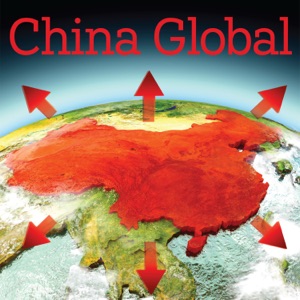
China Global

China’s rise has captivated and vexed the international community. From defense, technology, and the environment, to trade, academia, and human rights, much of what Beijing does now reverberates across the map. China Global is a new podcast from the German Marshall Fund that decodes Beijing’s global ambitions as they unfold. Every other week, host Bonnie Glaser will be joined by a different international expert for an illuminating discussion on a different aspect of China’s foreign policy, the worldview that drives its actions, the tactics it’s using to achieve its goals—and what that means for the rest of the world.
- 133 - China’s Global Strategy Under Xi Jinping: A Conversation with Steve Tsang
Under Xi Jinping’s leadership, Chinese foreign policy has become significantly more assertive. More than a decade ago, Xi moved away from Deng Xiaoping's approach of "hiding capabilities and biding time" and embraced what he calls “great power diplomacy with Chinese characteristics.” Since then, China has adopted a more assertive presence on the world stage, placed greater emphasis on relations with the Global South, taken a tougher approach toward Taiwan, and reorganized its foreign policy apparatus around Xi’s personal leadership and priorities. Understanding this transformation – and more fundamentally, understanding what Beijing wants – has become a central question for China-watchers and policy makers. What are China’s ambitions as it emerges as a global superpower? A new book offers an answer that differs in important ways from many previous analyses. The book is titled “China's Global Strategy Under Xi Jinping.” Its co-authors are Steve Tsang, Professor of China Studies and Director of the China Institute of the School of Oriental and African Studies, University of London and Olivia Cheung, a Lecturer in Politics at King’s College London. On this episode, we have Steve Tsang with us today to discuss the book, his assessment of China’s global ambitions under Xi Jinping, and what those ambitions mean for policymakers.
Tue, 15 Sep 2026 - 33min - 132 - Prospects for US-China Cooperation to Reduce AI Risks
Artificial intelligence is emerging as both a powerful source of competition between the United States and China and an area where the two countries may have a shared interest in reducing risk. Washington and Beijing have sharply different views about technology, national security, and governance, yet they also face some of the same potential dangers from increasingly capable AI systems—from cyberattacks and biological threats to unintended escalation and the loss of human control over critical decisions. With U.S.-China talks on AI expected to take place ahead of the Trump-Xi summit later this month, a pressing question is whether the two countries can carve out practical areas of cooperation even as they compete intensely over the technology itself. What could realistically be achieved in those talks, where do American and Chinese concerns about AI risks converge or diverge, and can the two sides keep discussions about risk reduction separate from the broader struggle over technology and export controls? To unpack those objectives and what a credible outcome might look like, we are joined by Mark MacCarthy. Mark is a non-resident senior fellow at the Brookings Institution in the Governance Studies program's Center for Technology Innovation and an adjunct professor at Georgetown University, where he teaches on the governance of emerging technology, AI ethics, and privacy. He is the author of Regulating Digital Industries: How Public Oversight Can Encourage Competition, Protect Privacy, and Ensure Free Speech. He also recently co-authored an article on how the US and China can cooperate to reduce urgent AI risks, which you can find on the Brookings website.
Wed, 2 Sep 2026 - 32min - 131 - Is China Trying to Rewrite the Rules at Sea?
Thirty years ago, the People's Republic of China ratified the UN Convention on the Law of the Sea. Since then, Beijing has frequently invoked UNCLOS to support its maritime claims and legal positions, while advancing interpretations of the Convention that many other states –but not all – reject. This June the China Institute for Marine Affairs under the Ministry of Natural Resources marked the 30-year anniversary with an extensive report providing Beijing's interpretation of UNCLOS, including its account of the 2016 arbitral award that found China’s expansive maritime claims in the South China Sea as lacking a legal basis under the Convention. To examine the PRC’s evolving interpretation of UNCLOS and Chinese maritime activities, and how both are being used to advance Chinese interests, I’m joined today by Dr. Peter Dutton. Peter is a Senior Research Scholar in law and senior fellow in the Paul Tsai China Center at Yale Law School. Previously, he held several positions at the U.S. Naval War College, including as director of the China Maritime Studies Institute. He served in the US Navy for more than 40 years in several capacities, including as a Judge Advocate and naval flight officer.
Tue, 4 Aug 2026 - 32min - 130 - China's Evolving Economic Statecraft Toolkit
China's growing use of economic power for strategic and political purposes has become one of the defining features of international competition. Beijing is no longer simply using trade and investment to promote economic growth—it is increasingly deploying a sophisticated toolkit of laws, regulations, export controls, market access, infrastructure investment, and technological standards to advance its broader geopolitical objectives. In today's episode, we'll explore how China's approach to economic statecraft has evolved, how effective it has been, its impact on Chinese foreign policy – especially relations with the United States -- and what governments around the world can do in response. I'm delighted to be joined by Dr. Evan Medeiros, one of the leading experts on Chinese foreign policy, including its use of economic statecraft, to help us unpack these important issues. Dr. Medeiros is the Penner Family Chair in Asia Studies in the School of Foreign Service and the Cling Family Distinguished Fellow in US-China Studies at Georgetown University. He served seven years in President Obama’s NSC first as director for China, Taiwan and Mongolia, and then as Special Assistant to the President and Senior Director for Asia.
Tue, 21 Jul 2026 - 31min - 129 - Europe's China Policy at a Critical Juncture
In today’s episode, we’ll examine the state of Europe-China relations and the trajectory of the EU’s policy toward China at a pivotal moment. The EU-China relationship has become increasingly complex and contentious. The growing trade imbalance is among the top priority issues: The EU had a record trade deficit in goods with China of 360 billion Euros last year. China’s support for Russia’s war in Ukraine also remains a major concern. At the same time, uncertainty in the transatlantic relationship has prompted debate across Europe about strategic autonomy, de-risking, and whether the EU should recalibrate its approach toward Beijing. We'll discuss the outcomes of the recent European Council meeting, debates taking place within Europe, and what we should expect in EU-China relations going forward. To make sense of where EU policy toward China is headed, we are joined by Noah Barkin, Visiting Senior Fellow at the German Marshall Fund, Senior Advisor at Rhodium Group, and author of the fantastic Watching China in Europe newsletter, which you can read on Substack.
Tue, 7 Jul 2026 - 32min - 128 - China's Push in the South China Sea
On today’s episode of the China Global Podcast, we’re going to discuss the South China Sea. The past year has been marked by four intersecting dynamics: First, a sharp escalation of Chinese Coast Guard and maritime militia operations, especially against the Philippines. Second, a resumption of large-scale Chinese island construction after nearly a decade-long pause; Third, increasingly sophisticated Chinese legal and administrative moves to consolidate and institutionalize its claims; And fourth, a deepening of the US-Philippines military partnership and the emergence of a broader network involving US allies and partners from Europe and the Indo-Pacific. To discuss these trends, I’m delighted to have as my guest today, Dr. Collin Koh, who is a senior fellow at the Institute of Defense and Strategic Studies in the S. Rajaratnam School of International Studies based in Nanyang Technological University in Singapore.
Tue, 23 Jun 2026 - 37min - 127 - Unpacking the Trump-Xi Summit
Summits between US and Chinese leaders are important events. They provide opportunities to discuss sensitive issues, manage friction, and to identify ways to solve problems and promote cooperation where possible. A great deal of preparation usually goes into a US-China summit, involving hundreds of phone calls, virtual, and in-person meetings between US and Chinese officials. The May 14-15 summit in Beijing was atypical, perhaps not surprisingly since Donald Trump is a very atypical president. Today we are going to talk about the summit – the process and well as the outcomes and the implications for the US-China relationship and American interests. Joining us today to talk about these issues is Sarah Beran. Sarah Beran was senior director for China and Taiwan affairs in the National Security Council during the Biden administration from 2022 to 2024. She was subsequently deputy chief of mission at the US Embassy in Beijing. At the NSC, she led strategic preparations for multiple summits between President Joe Biden and Xi Jinping. After her 23 years in government service, Sarah joined Macro Advisory Partners.
Tue, 26 May 2026 - 33min - 126 - China's Push to Internationalize the RMB
A currency becomes “internationalized” when it is widely used beyond its home economy for trade, financial transactions, and as a store of value. Achieving that status can lower transaction costs and exchange rate risks, while also enhancing the issuing country’s geopolitical influence. Today, the global financial system remains overwhelmingly dollar-centric, with China’s renminbi playing a comparatively modest role. Yet over the past decade, Beijing has taken steps to expand its global use, expanding offshore renminbi markets, establishing bilateral swap lines, and developing alternative payment infrastructure. To help us unpack where China’s renminbi internationalization efforts stand today, we are joined by Zongyuan Zoe Liu, a senior fellow at the Council on Foreign Relations. Zoe’s research centers on international political economy and global financial markets, with a focus on China and East Asia, as well as the Middle East. She is the author of Can BRICS De-dollarize the Global Financial System? and Sovereign Funds: How the Communist Party of China Finances Global Ambitions.
Tue, 12 May 2026 - 31min - 125 - Why China–North Korea Ties Are Warming Again
In the 1950s, Mao Zedong described the relationship between China and North Korea as “as close as lips and teeth.” Over subsequent decades, the relationship has ebbed and flowed, alternating between close alignment and periods of strain. In recent months, China-NK ties appear to be warming once again. A series of high-level exchanges, including Kim Jong Un’s attendance at China’s Victory Day parade last September, followed by a trip to North Korea by Chinese Premier Li Qiang the following month, suggest renewed diplomatic momentum. Chinese Foreign Affairs Commission Director and Foreign Minister Wang Yi’s visit to Pyongyang in mid-April is the latest sign of this trend. What is driving this renewed rapprochement between China and North Korea, and what are the implications for the United States? To explore these questions, we are joined today by Andrew Scobell. Andrew is a Distinguished Fellow at the Institute for Security and Development Policy’s Asia Program and an adjunct professor at Georgetown University. His work focuses on Chinese foreign and security policy, and he has published extensively on China-North Korea relations.
Tue, 28 Apr 2026 - 29min - 124 - Unpacking the Xi-Cheng Meeting: Objectives and Outcomes
On today’s episode, we’ll discuss the recent meeting between Chinese leader Xi Jinping and KMT Chairwoman Cheng Li-wun, the first in a decade between a Chinese Communist Party General Secretary and a KMT Chair. Ms. Cheng was elected party chair only four months ago, and her top priority was to meet with Xi Jinping. She has not yet visited the United States, but says she intends to do so later this year. In their public statements, Xi Jinping and Cheng Li-wun highlighted several common themes, including opposition to Taiwan independence, support for the 1992 Consensus, shared history and Chinese heritage, that the two sides of the Taiwan Strait are one family, the importance of China’s national rejuvenation, and the need to preserve peace and promote the peaceful development of cross-Strait relations. To discuss this historic meeting, I’m joined by Amanda Hsiao. Amanda is a director in Eurasia Group's China practice covering China's foreign policy and cross-strait relations. This episode was recorded on April 10, 2026.
Tue, 14 Apr 2026 - 34min - 123 - What the Iran War Means for China’s Energy Security
On February 28th, the United States and Israel launched airstrikes on multiple sites in Iran, marking the beginning of a wider military conflict with Iran. Tehran responded with attacks on Israel, US military bases, and US allies across the Middle East and closed the Strait of Hormuz. These events have caused a major disruption in the global supply of oil and gas. China, as the world’s largest energy importer, is exposed to these disruptions, but its long-term energy security strategy has left it better prepared than most. How has China approached energy security, and how might the current conflict reshape this strategy? To discuss these issues, we are joined today by Dr. Erica Downs. Erica is a Senior Research Scholar at the Center on Global Energy Policy at Columbia University’s School of International and Public Affairs. Her research focuses on Chinese energy markets and geopolitics, and she has published extensively on the subject.
Tue, 31 Mar 2026 - 28min - 122 - What to Expect from the Trump-Xi Summit: A Conversation with Dr. Da Wei
President Donald Trump is expected to visit Beijing from March 31 to April 2 for a summit with Chinese leader Xi Jinping. It will mark the first meeting between the two leaders since they agreed to a trade truce last October that ended months of escalating tensions prompted by tariffs imposed by the United States and Chinese restrictions on rare earth exports. U.S. Treasury Secretary Scott Bessent and U.S. Trade Representative Jamieson Greer will meet Chinese Vice Premier He Lifeng in Paris later this week to explore possible outcomes that could be announced during the Beijing summit.Planning for such a major summit usually takes place over several months, and is getting underway quite late, causing many observers to question whether anything meaningful can be achieved. In the meantime, the US is distracted by the ongoing conflict in the Middle East between Iran and a US-Israel coalition. To discuss the upcoming Trump-Xi summit, we're joined today by Dr. Da Wei. He is director of the Center for International Security and Strategy and professor of International Relations at Qinghua University.
Tue, 17 Mar 2026 - 40min - 121 - China-Iran Relations: Transactional or Strategic?
The United States is once again considering military strikes to curb Iran’s nuclear activities and missile program. China has emerged as a particularly important partner of Iran, serving as the country’s largest trade partner and one of its few sources of consistent diplomatic backing. For Beijing, the stakes in the relationship extend beyond energy security, but also include great power competition with the US and China’s broader strategic ambitions in the Middle East. There are reports that Iran is close to finalizing a deal to purchase supersonic anti-ship cruise missiles from China. To unpack China-Iran relations and these recent dynamics, we are joined today by Jonathan Fulton. Jonathan is a nonresident senior fellow with the Middle East Programs at the Atlantic Council and an associate professor of political science at Zayed University in Abu Dhabi. His research focuses on China-GCC relations, China’s Belt and Road Initiative, and Chinese foreign policy. This episode was recorded on February 26, 2026.
Tue, 3 Mar 2026 - 34min - 120 - If China Attacks Taiwan: China's Economic Vulnerabilities
Today’s episode is the third in a series of three that examine the potential consequences for China if a military operation against Taiwan were to fail. In each of these episodes, we’re speaking with authors of a recently published German Marshall Fund study of the possible costs that China would incur across four different, but interrelated areas: the Chinese economy, the military, Chinese social stability, and international costs. The report is titled, “If China Attacks Taiwan” and it is posted on GMFUS.org. Our podcast today focuses on the potential costs for the Chinese economy. To recap, the study considered two scenarios that could take place in the next five years. In the first scenario, a minor skirmish escalates into a multi-week maritime blockade of Taiwan by China. Although several dozen members of the Chinese and Taiwanese military are killed, U.S. intervention eventually forces China to de-escalate. In the second scenario, a conflict escalates into a full-fledged invasion, with Chinese strikes on not only Taiwan but also U.S. forces in Japan and Guam. After several months of heavy fighting, Chinese forces are degraded and eventually withdraw after suffering many tens of thousands of casualties. Our guests today are Charlie Vest and Logan Wright, who co-authored the chapter on the implications for the Chinese economy of a failed operation against Taiwan. Logan is a partner at Rhodium Group and leads the firm’s work on China’s economy and its global impact. Charlie is an associate director at Rhodium Group, where he manages corporate research and advisory work on China.
Tue, 17 Feb 2026 - 32min - 119 - If China Attacks Taiwan: Beijing Risks Social Instability in a Taiwan Conflict
Today’s episode is the second in a three-part series that examines the potential consequences for China if a military operation against Taiwan were to fail. In each of these episodes, we’re speaking with authors of a recently published German Marshall Fund study of the possible costs that China would incur across four different, but interrelated areas: the Chinese economy, the military, Chinese social stability, and international costs. Our podcast today focuses on the potential costs for domestic social stability. To recap, the study considered two scenarios occurring in the next five years. In the first scenario, a minor skirmish escalated into a multi-week maritime blockade of Taiwan by China. Although several dozen members of the Chinese and Taiwanese military were killed, U.S. intervention eventually forced China to de-escalate. In the second scenario, a conflict escalated into a full-fledged invasion, with Chinese strikes on not only Taiwan but also U.S. forces in Japan and Guam. After several months of heavy fighting, Chinese forces were degraded and eventually withdrew after suffering many tens of thousands of casualties. Joining us today are Sheena Chestnut Greitens and Jake Rinaldi. Sheena is an associate professor at the University of Texas at Austin and visiting research faculty at the U.S. Army War College. Jake is an associate political scientist at the RAND Corporation.
Tue, 3 Feb 2026 - 37min - 118 - If China Attacks Taiwan: Military Risks and International Costs
Concern about the possibility of a Chinese attack against Taiwan has surged in recent years. Wargames and research studies have focused primarily on identifying gaps in US and allied capabilities with the goal of strengthening deterrence. A relatively understudied question, however, is the potential consequences for China if a military operation against Taiwan were to fail. To address this gap, the German Marshall Fund led a study of the possible costs that China would incur across four different, but interrelated areas: the Chinese economy, the military, Chinese social stability, and international costs. GMF commissioned four papers on these key areas. We considered two scenarios that could realistically take place in the next five years. In the first scenario, a minor skirmish escalated into a multi-week maritime blockade of Taiwan by China. Although several dozen members of the Chinese and Taiwanese military were killed, US intervention eventually forced China to de-escalate. In the second scenario, a conflict escalated into a full-fledged invasion, with Chinese strikes on not only Taiwan but also U.S. forces in Japan and Guam. After several months of heavy fighting, Chinese forces were degraded and eventually withdrew after suffering many tens of thousands of casualties. The authors found that the costs to China of a failed military action against Taiwan would likely be considerable. We believe their findings are important and warrant wide dissemination. In this podcast, we’ll discuss the report’s major conclusions and implications. Then we’ll talk about the potential impact of a failed Chinese attempt to take Taiwan on China’s military capabilities and the possible international costs that Beijing could face. Our next two China Global podcasts will examine the implications of a failed military operation against Taiwan for China’s economy and social stability. Our guests today are Zack Cooper and Joel Wuthnow. Zack is a senior fellow at the American Enterprise Institute and lecturer at Princeton University. Joel is a senior research fellow in the Center for the Study of Chinese Military Affairs within the Institute for National Strategic Studies at NDU. Joel’s paper and this interview reflect only his personal views and not those of the National Defense University, the Department of War, or the US government.
Wed, 21 Jan 2026 - 38min - 117 - China’s Latin America Strategy: A Collision Course with the U.S.?
Although geographically distant from Chinese shores, Latin America and the Caribbean occupy an important place in Chinese foreign policy. In the past decade, China has significantly expanded its influence in the region. The main vector of Chinese involvement has been economic, including securing access to commodities such as soybeans, copper, oil, and lithium, creating markets for Chinese companies, and deepening financial ties through trade, lending, and infrastructure investment. On December 10, China released a new white paper on its relationship with Latin America and the Caribbean, the third such document following earlier editions in 2008 and 2016. The White Paper characterizes the region as “an essential force in the process toward a multipolar world and economic globalization.” Its release came on the heels of the Trump Administration’s release of its National Security Strategy, which places unprecedented emphasis on the Western Hemisphere and asserts that the US seeks a region “free of hostile foreign incursion or ownership of key assets,” highlighting the growing strategic salience of Latin America and the Caribbean in US-China competition. To discuss the new White Paper and the implications of China’s policies in the LAC for the United States and US-China relations, we are joined by Dr. Evan Ellis. Dr. Ellis is a research professor of Latin American studies at the U.S. Army War College Strategic Studies Institute. He previously served on the Secretary of State’s policy planning staff with responsibility for Latin America and the Caribbean as well as international narcotics and law enforcement issues.
Tue, 6 Jan 2026 - 31min - 116 - Taiwan Sparks Tensions: Inside the China-Japan Dispute
Tensions between China and Japan have spiked since November 7 when Japan’s newly elected prime minister, Sanae Takaichi, said in the Japanese parliament that a Chinese attack on Taiwan would be a situation threatening Japan’s survival. Under Japan's 2015 security laws, that suggests Japan's self-defense forces could be activated to respond. The following day, the Chinese consul general in Osaka, Xue Jian, posted that China had no choice but to cut off the prime minister’s head. China-Japan relations have since plummeted. China’s top diplomat, Wang Yi, stated that Takaichi had “crossed a red line that should not have been touched.” China has taken retaliatory actions, restricting tourism to Japan and banning imports of Japanese seafood, among other actions. Why has Beijing reacted so strongly and how far are China-Japan relations likely to deteriorate? Joining us today to discuss the latest episode in China-Japan relations is Professor Akio Takahara. Professor Takahara is a Distinguished Visiting Professor at Tokyo Woman’s Christian University and an Emeritus Professor at the University of Tokyo. He is also an Honorary Senior Fellow on Chinese Politics at the Asia Society Policy Institute’s Center for China Analysis.
Thu, 11 Dec 2025 - 29min - 115 - Inside the 2025 US-China Economic and Security Commission Report: Key Findings and Recommendations
The US-China Economic and Security Review Commission has just released its 2025 annual report to Congress. The annual report’s analysis and recommendations are a crucial source of information for Congress, the executive branch, and observers of US-China relations. This year’s report includes 28 key recommendations for Congress. On this episode of China Global, we have two Commissioners joining us to discuss the report, Commissioner Aaron Friedberg and Commissioner Mike Kuiken. Commissioner Friedberg is Professor of Politics and International Affairs at Princeton University and co-director of its Center for International Security Studies. He is also a non-resident senior fellow at the American Enterprise Institute, counselor to the National Bureau of Asian Research, and previously served as Vice President Dick Cheney’s Deputy Assistant for National Security Affairs. Commissioner Kuiken is a Distinguished Visiting Fellow at Stanford's Hoover Institution and advisor to the Special Competitive Studies Project. He has over 20 years of experience shaping US national security policy, including 12 years on the Senate Armed Services Committee.
Tue, 25 Nov 2025 - 31min - 114 - The Trump-Xi Summit and Future of US-China ties
On October 30, US President Trump and China’s leader Xi Jinping met in Busan, South Korea. It was their first face-to-face meeting in 6 years. There was a lot at stake in this meeting for the US and China, as well as for the rest of the world. In my view, the outcome is best described as a fragile truce. The path forward for US-China relations remains uncertain – greater stability and predictability is possible, but not assured. Intense competition across several domains, especially technology, is likely. Today’s episode focuses on the Trump-Xi summit and the future of US-China relations, featuring Mr. Dennis Wilder. Dennis is a senior fellow for the Initiative for U.S.-China Dialogue on Global Issues at Georgetown University, where he previously served as the managing director, and assistant professor of the practice in Asian studies in the School of Foreign Service. He served on President George W. Bush’s NSC first as director for China and then as senior director for Asian Affairs. He also had a distinguished career in the CIA, where he held many positions, the last of which was senior editor of the Presidential Daily Brief.
Tue, 11 Nov 2025 - 30min - 113 - The Fourth Plenum: Decoding China's Roadmap to 2030
From October 20-23, the Central Committee of the Chinese Communist Party held its Fourth Plenum in Beijing, marking an important moment as the Party sets the direction for China’s development for the next five years. The session adopted recommendations for the 15th Five-Year Plan, endorsing Xi Jinping’s goals of high-quality development, scientific and technological self-reliance, and strengthening national security in response to rising global instabilities. The Central Committee also announced the replacement of 11 members, the highest personnel turnover since 2017 amid an ongoing anti-corruption purge in the military. To discuss the plenum’s outcomes, we are joined by Jonathan Czin. Jonathan is a leading expert on Chinese politics and foreign policy. He holds the Michael H. Armacost Chair in Foreign Policy Studies and is a fellow in the John L. Thornton China Center at the Brookings Institution. He previously led the intelligence community’s analysis of Chinese politics and policy making at the CIA and also spent two years as director for China at the National Security Council during the Biden administration.
Tue, 28 Oct 2025 - 30min - 112 - Power, Pressure, and Partnerships: China in Southeast Asia
China’s ties with Southeast Asia states are increasingly consequential for regional stability and global geopolitics. Over the past two decades, China has become the region’s largest trading partner and a major source of investment and infrastructure financing. At the same time, China growing military presence and aggressive behavior in the South China Sea have caused anxiety and have prompted a number of Southeast Asian nations to seek closer security ties with the United States and other partners. The Trump administration’s policies of imposing tariffs, reducing foreign assistance, and implementing stricter immigration regulations have begun to erode US influence across the region, further encouraging Southeast Asian countries to rely on each other and to diversify their relationships with external partners. To discuss Beijing’s evolving approach to Southeast Asia and the efficacy of its policies, we are joined on the podcast today by Dr. Chong Ja Ian. He is an Associate Professor of Political Science at the National University of Singapore and a nonresident fellow at Carnegie China. Ian’s research focuses on Chinese politics, foreign policy, and US-China relations.
Tue, 14 Oct 2025 - 27min - 111 - Global Public Security with Chinese Characteristics
In mid-September, while many China watchers were focused on the Xiangshan Forum, the Chinese military’s annual high-level security and defense convening in Beijing, another major annual meeting was being held by the Ministry of Public Security in the Chinese city of Lianyungang (2-2-3). The Lianyungang Forum dates to 2015 but was upgraded and renamed the Global Public Security Cooperation Forum in 2022 following Xi Jinping’s launch of the Global Security Initiative. This year it was attended by 2,000 participants from 120 countries, regions and international organizations. The theme was “Shaping Global Public Security Together: United Action to Tackle Diverse Threats.” As Minister of Public Security Wang Xiaohong made clear in his opening speech, China is advancing an alternative to the western-led security order. Dr. Sheena Chestnut Greitens is a leading expert on Beijing’s push to reshape the global security order and promote China as a model and global security provider to developing countries. Sheena is an associate professor at the LBJ School of Public Affairs at the University of Texas at Austin where she directs UT’s Asia Policy Program and serves as editor-in-chief of the Texas National Security Review. She is also a nonresident scholar at the Carnegie Endowment of International Peace, and a visiting associate professor of research in Indo-Pacific security at the China Landpower Studies Center of the U.S. Army War College’s Strategic Studies Institute. Relevant to this episode’s discussion, Sheena recently published a co-authored report for the Carnegie Endowment of International Peace Carnegie titled “A New World Cop.”
Tue, 30 Sep 2025 - 35min - 110 - The Next Dalai Lama: Beijing's Bid for Control
Since 1951, when Tibet was formally annexed into the People’s Republic of China, Tibet has been a battleground between China’s efforts to assert control and the Tibetan people’s struggle to preserve their cultural and religious identity. This past August, Xi Jinping made a surprise visit to Tibet, his second since becoming China’s top leader in 2012. Less than two months earlier, the Dalai Lama, now 90 years old, announced that his office, not China, would choose his successor when he passes. A few months before that, the Dalai Lama revealed in a memoir that he would reincarnate outside of China. The PRC insists that the next incarnation – the 15th Dalai Lama – will be born inside PRC territory and approved by the Chinese government. What are Beijing’s interests in Tibet and how has Xi Jinping pursued them since coming to power? What is likely to occur after the Dalai Lama’s passing? I’m delighted to have as my guest today Tendor Dorjee. Tendor is an adjunct assistant professor of political science at Columbia University, a senior researcher at the Tibet Action Institute, and the inaugural Stephanie G Neuman Fellow at the Saltzman Institute of War and Peace Studies. He recently co-authored an article in Foreign Affairs titled Beijing’s Dangerous Game in Tibet”.
Tue, 16 Sep 2025 - 31min - 109 - The Race to AI Dominance: US and Chinese Approaches Differ
The United States and China are locked in a race for dominance in artificial intelligence, including its applications and diffusion. American and Chinese AI firms like OpenAI and DeepSeek respectively have captured global attention and major companies like Google and Microsoft have been actively investing in AI development. While the US currently boasts world-leading AI models, China is ahead in some areas of AI research and application. With the release of US and Chinese AI action plans in July, we may be on the cusp of a new phase in US-China AI competition. Why is AI so important for a country’s global influence? What are the strengths of China’s AI strategy? And what does China’s new AI action plan tell us about its AI ambitions? To discuss these questions, we are joined by Owen Daniels. Owen is the Associate Director of Analysis at Georgetown’s Center for Security and Emerging Technology and a Non-Resident Fellow at the Atlantic Council. His recently published article in Foreign Affairs co-authored with Hanna Dohmen -- titled China’s Overlooked AI Strategy -- provides insights into how Beijing is utilizing AI to gain global dominance and what the US can and should do to sustain and bolster its lead.
Tue, 19 Aug 2025 - 28min - 108 - After Stockholm: What's Next for US-China Trade Talks?
The United States and China wrapped up the third round of high-level trade negotiations earlier this week. American and Chinese negotiators met in Stockholm on July 28 and 29. US Treasury Secretary Scott Bessent described the talks as constructive and wide ranging. He acknowledged that an extension of the 90-day tariff pause was discussed but said that the final decision was up to President Trump. As of today – August 1 – Trump has remained mum. The Chinese side’s readout was devoid of details, although China’s vice minister of commerce said that both countries would continue to push for an extension of the reciprocal tariffs and Chinese countermeasures. How should we assess the dynamics in the trade talks, including the balance of leverage between Washington and Beijing? And how might the trade negotiations shape the future of the US-China relationship? To discuss these questions, we are joined by Dr. Scott Kennedy. Scott is senior adviser and trustee chair in Chinese Business and Economics at the Center for Strategic and International Studies.
Tue, 5 Aug 2025 - 32min - 107 - Forecasting ROK President Lee Jae Myung’s China Policy
South Korea and China have a complex relationship characterized by economic interdependence, strategic competition, and regional security concerns. Navigating this delicate balance has been a defining challenge for every South Korean president. Newly elected President Lee Jae Myung has assumed power at a time of increasing US-China strategic competition as well as uncertain global supply chains and growing threat from North Korea. Could this new administration mark a shift in Seoul’s approach to Beijing? Or will President Lee maintain strategies similar to that of President Yoon? To discuss ROK-China relations, and President Lee’s approach to this intricate issue, we are joined on the podcast today by Dr. Ramon Pacheco-Pardo. He is a professor of international relations at King’s College London and the KF-VUB Korea Chair at the Center for Security, Diplomacy and Strategy in the Brussels School of Governance. He is also an adjunct fellow with the Korea Chair at the Center for Strategic and International Studies, and the author of several books on the domestic affairs and foreign policy of South and North Korea.
Tue, 22 Jul 2025 - 39min - 106 - The Israel-Iran War and China's Middle East Strategy
On June 13th, Israel launched attacks on several military and nuclear facilities in Iran, marking the beginning of a 12-day war between the two countries. The United States followed with targeted strikes on Iranian nuclear sites to prevent Iran from becoming a nuclear power and posing a threat to regional and global stability. China’s involvement in the conflict was limited to condemning the Israeli and US use of military force and calling for de-escalation. Beijing offered only rhetorical support for Tehran. To discuss what the Israel-Iran war reveals about China’s relationship with Iran, its evolving strategy in the Middle East, and the broader implications for US-China competition, we are joined by Yun Sun on the podcast today. Yun is a Senior Fellow, co-Director of the East Asia Program and Director of the China Program at the Stimson Center. Her recent piece in The Wire China entitled “How China Sees Iran’s Future” offers provides a nuanced take on Beijing’s calculus during and after the war.
Tue, 8 Jul 2025 - 36min - 105 - China's Evolving Posture Toward the Russo-Ukrainian War
In February 2022, Russia launched a full-scale invasion of Ukraine. China has never condemned the invasion, and its government and media have carefully avoided using term “Ukraine War,” opting instead to refer to the war as the “Ukraine crisis,” the “Russia-Ukraine conflict,” or the “special military operation,” a term that echoes Moscow’s language. Beijing’s approach to the Ukraine War has included support for Russia, a commitment China’s own principles, including respecting Ukraine’s sovereignty and territorial integrity, and a professed desire for peace. This episode’s discussion will focus on China’s evolving posture toward the war and China’s relationship with Ukraine. Joining the podcast this episode is Dr. Vita Golod, who is a Junior Research Fellow at the A. Yu Krymskyi Institute of Oriental Studies, National Academy Sciences of Ukraine, and a Visiting Adjunct Instructor at the University of North Carolina at Chapel Hill. She is also the co-founder of the Ukrainian Platform for Contemporary China and a board member of the Ukrainian Association of Sinologists.
Tue, 24 Jun 2025 - 32min - 104 - China’s Role in the India-Pakistan Clash
On April 22, 2025, gunmen in the town of Pahalgam, located in the disputed region of Kashmir, killed 26 people—mostly Indian tourists. A four-day military clash between India and Pakistan ensued, bringing both countries to the brink of a full-blown war, before a ceasefire was reached on May 10, 2025. During the India-Pakistan clashes, Beijing urged both sides to deescalate and called for a “political settlement through peaceful means.” But China did not play a neutral role in the conflict. Consistent with Chinese Foreign Minister Wang Yi’s purported statement to his Pakistani counterpart that “China fully understands Pakistan’s legitimate security concerns and supports Pakistan in safeguarding its sovereignty and security interests,” China reportedly provided intelligence, satellite equipment, and other forms of support to Pakistan before and during the clashes. To analyze China’s role in the conflict, host Bonnie Glaser is joined by Andrew Small. Andrew is a senior transatlantic fellow with GMF’s Indo-Pacific program, and author of two books on China, including “The China-Pakistan Axis: Asia’s New Geopolitics,” which is now ten years old, but remains an insightful and relevant study.
Tue, 10 Jun 2025 - 34min - 103 - The Trajectory of US-China Relations Post-Geneva Talks
The United States and China reached a 90-day truce in the trade war when their representatives met in Geneva in early May. Both sides agreed to temporarily roll back tariffs and non-tariff trade barriers. President Trump announced that a “total reset” in US-China relations had been achieved. Beyond the hyperbole, the two sides agreed to establish a mechanism on economics and trade and launch negotiations to address trade imbalances and other problems. Whether a deal is reached, what it might look like, and what it might include, remains to be seen. The future trajectory of US-China relations, overall, is still unclear. This episode highlights a Chinese perspective on the US-China bilateral relationship, including on the recent trade talks and the factors that will influence US-China relations going forward. Sun Chenghao, a fellow and head of the U.S.-Europe program at Tsinghua University’s Center for International Security and Strategy (CISS), and council member of the Chinese Association of American Studies joins host Bonnie Glaser for this episode.
Tue, 27 May 2025 - 30min - 102 - China's Chokehold on Critical Minerals
Critical minerals are required for the manufacturing of electronics, aerospace equipment, medical devices, and renewable energy technologies, making them essential for a country’s economic and national security. These materials have been at the center of China’s domestic and foreign policy for many decades, and China’s ability to integrate internal industrial policies with foreign trade and investment policies has allowed them to gain dominance in the market. Meanwhile, the US has lagged behind China in terms of both access to and processing technology of critical minerals. The country has been heavily dependent on China for its critical minerals and struggles to find an alternative supplier. China’s announcement to impose export restrictions on seven rare earth elements on April 4th has opened many conversations surrounding critical minerals, especially regarding the US and its supply chain vulnerabilities. What has China done to achieve their global dominance in the critical minerals sector, and what can the US do to address the overdependence issue they are facing today? To answer these questions and more, host Bonnie Glaser is joined by Gracelin Baskaran, the director of the Critical Minerals Security Program at the Center for Strategic and International Studies. She is a mining economist whose area of expertise is critical minerals and trade.
Tue, 13 May 2025 - 29min - 101 - The China-Korea Yellow Sea Dispute
This episode of the China Global podcast discusses evolving disputes between China and South Korea, specifically regarding their unresolved maritime boundary in the Yellow Sea. There is a long history of fishing disputes between the two countries in the Provisional Measures Zone (or PMZ) of the Yellow Sea, which is where their exclusive economic zones overlap. Although China and South Korea have engaged in negotiations over the years, they have yet to come to an agreement on their boundaries in the Yellow Sea. Taking advantage of the persisting disagreement on delimitation of maritime borders, China has employed gray zone tactics in the Yellow Sea to expand its territorial presence in the region. In the most recent dispute, China installed a new steel structure in the PMZ, causing a maritime standoff between Chinese and Korean coast guards. To discuss recent developments in the Yellow Sea and China’s broader gray zone tactics in the maritime realm, host Bonnie Glaser is joined by Ray Powell, the Director of SeaLight, a maritime transparency project at Stanford University’s Gordian Knot Center for National Security Innovation. Ray is also the co-host of the Why Should We Care About the Indo-Pacific podcast, and a 35-year veteran of the US Air Force.
Tue, 29 Apr 2025 - 22min - 100 - China’s View on Escalation and Crisis Management
As China’s military capabilities expand, US-China frictions intensify, and regional tensions increase, concern is on the rise that a potential crisis, either accidental or deliberate, could take place that could spiral out of control. If a crisis arises with China, leaders may want to de-escalate and prevent a wider conflict. To do so, they will need to understand how China thinks about crisis management and escalation. The guest for this episode has dug into the writings of PLA strategists and authoritative PRC sources as well as Western scholarship to assess how China views military escalation and how the US and other countries can accurately predict and interpret PRC signal in crisis scenarios. Lyle Morris is a Senior Fellow on Foreign Policy and National Security at the Center for China Analysis at the Asia Society Policy Institute. His recently published paper is titled “China’s Views on Escalation and Crisis Management and Implications for the United States.”
Tue, 15 Apr 2025 - 33min - 99 - China’s Digital Governance in the Indo-Pacific
The year 2025 marks the 10th anniversary of China’s Digital Silk Road, which has become an increasingly crucial component of Xi Jinping’s flagship foreign policy project: the Belt and Road Initiative. Over the past decade, China has massively expanded its digital infrastructure investment across the globe. Accompanying the investment has been the diffusion of China’s digital governance norms and standards in recipient states. Countries in the Indo-Pacific have been at the forefront of this stretching Chinese digital influence landscape. The conflation between digital development cooperation and digital governance norms adoption has far-reaching implications that need to be better understood and addressed. To discuss the issue, Michael Caster joins host Bonnie Glaser. Caster is the Head of Global China Programme at ARTICLE 19, an NGO that advances freedom of opinion and expression. His organization has published two reports examining China's Digital Silk Road.
Tue, 1 Apr 2025 - 34min - 98 - Nuclear Weaponry and China’s Approach of Strategic Substitution
Nuclear weapons have changed the nature of modern warfare and exerted a profound impact on international politics. The Cold War logic of nuclear deterrence maintains that nuclear-armed states will not attack one another because of fear of massive retaliation, or mutually assured destruction. By this logic, nuclear weapons promote stability and can prevent war. At the same time, however, nuclear weapons created a new dilemma. That is: “How can a state achieve its political objectives through military force without triggering a catastrophic nuclear exchange?” This is a dilemma faced by all countries, especially nuclear powers. States have responded differently to this dilemma. What is China’s answer to this strategic dilemma? What has Beijing been doing to gain strategic leverage? How should we evaluate the success of China’s approach so far? These issues are the subject of a new book titled Under the Nuclear Shadow: China’s Information Age Weapons in International Security. The author, Fiona Cunningham, joins host Bonnie Glaser for this episode. Fiona is an Assistant Professor of Political Science at the University of Pennsylvania. She is also a Faculty Fellow at Perry World House and affiliated with the Center for the Study of Contemporary China and the Christopher H. Browne Center for International Politics at the University of Pennsylvania.
Tue, 18 Mar 2025 - 36min - 97 - China’s Middle East Strategy
In the past decade, China has ramped up its engagement in the Middle East, a region which is far from China geographically, but carries growing importance in China’s foreign policy. Economically, China is the biggest importer of the Middle East oil, particularly from Saudi Arabia and Iraq. Chinese state-owned enterprises have invested heavily in the region under the Belt and Road Initiative with an emphasis on physical and digital infrastructure, including telecommunications, 5G connectivity, submarine optic cables, and security information systems. Diplomatically, China played a role in brokering a deal between Saudi Arabia and Iran, two longstanding regional rivals. Beijing has also been instrumental in expanding the BRICS multilateral mechanism to include four Middle East countries. Securing access to vital natural resources is a key driver of Beijing’s intensified engagement in the Middle East. But China’s interests are broader and encompass economic, geopolitical and strategic considerations. To further discuss China’s interests and evolving role in the Middle East, Michael Schuman joins host Bonnie Glaser. Michael is a nonresident senior fellow at the Global China Hub of the Atlantic Council and an author and journalist with more than 25 years of on-the-ground experience in Asia. He is the co-author of a recently published report by the Atlantic Council titled “China’s Middle East policy shift from ‘hedging’ to ‘wedging.’”
Tue, 4 Mar 2025 - 26min - 96 - China and the Rising Global South
The Global South is a term that covers a broad swath of developing countries and emerging economies in Africa, Asia, Latin America, and Oceania. It is a grouping of over 130 heterogenous countries that is pushing to enhance its voice in global decision making. China, which self-identifies as a leader of the developing world, has a long history of engaging with the developing world. Under Xi Jinping, Beijing has deepened its ties with Global South countries through economic investment, diplomatic engagement, and security cooperation. Meanwhile, developed countries from the wealthier and more industrialized Global North are stepping up efforts to counter Chinese influence and win support from Global South countries. What are China’s interests in the Global South? What are the key strategies and tactics that Beijing utilizes to influence and engage with those countries? How have countries in the Global South responded to China’s influence? And how will intensified Sino-American rivalry impact developing countries in the future? To discuss these issues, host Bonnie Glaser is joined by Mr. Masaaki Yatsuzuka, Senior Research Fellow at the China Division of the Regional Studies Department at the National Institute for Defense Studies in Japan (NIDS). He is the co-author of the recently published report titled “The Rising Global South and China.”
Tue, 18 Feb 2025 - 27min - 95 - China’s Ambitious Civilian Space Program
Space, once a distant destination, has become yet another battleground for great power competition. Since the early days of the People’s Republic of China, the country has been pursuing a series of ambitious space programs aimed to build up its space capacity as an essential element of its comprehensive national power. In recent years, under the Xi Jinping regime, Beijing has significantly increased its investment in its civilian space program efforts. It has a plan to send Chinese Taikonauts to the Moon before the US can return. As the US-China strategic competition continues to heighten, it is vital to assess China’s space policy and its role in China’s grand strategy. To discuss these issues, host Bonnie Glaser is joined by Dean Cheng, senior advisor to the China program at the U.S. Institute of Peace and a nonresident fellow with George Washington University’s Space Policy Institute. Dean focuses on China’s space program, Chinese military doctrine, and “dual-use” issues associated with China’s scientific and technical enterprises. He also recently published a book titled China and the New Moon Race.
Tue, 4 Feb 2025 - 26min - 94 - Beijing's Approach Toward a Second Trump Presidency
When this episode goes live four days from now, Donald Trump will have been sworn in as the 47th president of the United States, after having served as the 45th president from 2017 to 2021. Many countries around the world are closely watching to identify changes in US policy and assess their impact. China is one of those countries. As presidential candidate Donald Trump threatened to impose 60% tariffs on Chinese goods imported into the United States. He also proposed revoking China’s Most Favored Nation trading status and banning China from buying US farmland. He pledged to curtail Chinese espionage and theft of intellectual property. On some occasions Trump praised Chinese leader Xi Jinping, and predicted that they would get along very well. In the past few months, Trump and Xi have been in communication through their representatives. What approach will Beijing take toward Trump’s presidency this time around? Is China in a stronger or weaker position than it was in during Trump’s first term? What is the likely trajectory of US-China relations in the coming four years? To discuss these questions, host Bonnie Glaser is joined by Dr. Evan Medeiros, who is the Penner Family Chair in Asia Studies in the School of Foreign Service and the Cling Family Distinguished Fellow in US-China Studies at Georgetown University. He served seven years in President Obama’s NSC first as director for China, Taiwan and Mongolia, and then as Special Assistant to the President and Senior Director for Asia.
Tue, 21 Jan 2025 - 37min - 93 - Status and Trajectory of India-China Relations
In June 2020, Indian and Chinese forces engaged in a deadly clash along their disputed border in the Ladakh region. It was the deadliest confrontation since the 1962 war. Subsequently, bilateral ties between India and China deteriorated to their lowest level in decades. In recent months, however, China-India ties have begun to thaw. Last October, India and China struck a border patrol deal. Indian Prime Minister Modi and China’s leader Xi Jinping subsequently met at the BRICS summit in Kazan—their first meeting in five years. That was followed by a round of talks by their top officials just a few weeks ago. To discuss the status and trajectory of India-China relations, including how the second Trump presidency and other geopolitical developments are likely to influence that relationship, host Bonnie Glaser is joined by Dr. Tanvi Madan. Tanvi is a senior fellow in the Center for Asia Policy Studies in the Foreign Policy program at the Brookings Institution. She is author of the book “Fateful Triangle: How China Shaped U.S.-India Relations During the Cold War.”
Tue, 7 Jan 2025 - 38min - 92 - Chinese Perspectives on Military Uses of AI
In China’s 14th Five-Year Plan that spans from 2021 to 2025, priority was assigned to development of emerging technologies that could be both disruptive and foundational for the future. China is now a global leader in AI technology and is poised to overtake the West and become the world leader in AI in the years ahead. Importantly, there is growing evidence that AI-enabled military capabilities are becoming increasingly central to Chinese military concepts for fighting future wars. A recently released report provides insights on Chinese perspectives on military use of AI. Published by Georgetown’s Center for Security and Emerging Technology (CSET), the report illustrates some of the key challenges Chinese defense experts have identified in developing and fielding AI-related technologies and capabilities. Host Bonnie Glaser is joined by the author of this report, Sam Bresnick, who is a Research Fellow at Georgetown’s CSET focusing on AI applications and Chinese technology policy.
Tue, 17 Dec 2024 - 31min - 91 - China's Implementation of the Global Security Initiative in Southeast and Central Asia
China’s push to revise the international security order entered a new phase with the launch of the Global Security Initiative (GSI) in April 2022. A few months after Xi Jinping proposed GSI, host Bonnie Glaser did a podcast episode with Manoj Kewalramani to discuss the drivers behind GSI and analyze the initial statements outlining its content. More than 2 ½ years have elapsed since then, and scholars have begun to investigate how China is implementing GSI in various regions around the world. A new report from the United States Institute of Peace (USIP) examines how GSI is being operationalized and received in two priority regions of Chinese foreign policy: mainland Southeast Asia and Central Asia. The study draws on field research in both regions. The report is titled “China’s Global Security Initiative Takes Shape in Southeast and Central Asia.” The report has three authors: Bates Gill, Carla Freeman and Alison McFarland. Bonnie Glaser is joined by Bates Gill for this episode to discuss the report’s findings. Bates is a senior fellow with the National Bureau of Asian Research, a Senior Associate Fellow with the Royal United Services Institute, and associated with USIP.
Wed, 4 Dec 2024 - 36min - 90 - China's Interest in an Expanded BRICS
The BRICS+ summit was held in the Russian city of Kazan this past October. The original BRICS comprised four countries: Brazil, Russia, India, and China. The first meeting that they held was in 2009. South Africa joined in 2011. BRICS has now grown to include Egypt, Ethiopia, Iran, and the United Arab Emirates. The recent summit also invited 13 countries to the group as partner states. Countries that have expressed interest in joining BRICS include Indonesia, Malaysia, Thailand (which is a U.S. treaty ally), and Turkey (which is a member of NATO). As countries in the Global South flock to form an increasingly significant geopolitical bloc in which China has assumed a leading role, it is important to understand how BRICS+ fits into China’s foreign policy strategy and the role that the BRICS mechanism is likely to play going forward. To discuss these issues, host Bonnie Glaser is joined by Alexander Gabuev, director of the Carnegie Russia Eurasia Center which is based in Berlin. His research focuses on Chinese and Russian foreign policy.
Wed, 20 Nov 2024 - 35min - 89 - Assessing Drivers and Progress in China’s Climate Policies
China is the world’s largest energy consumer and carbon emitter, accounting for one-third of global CO2 emissions. One of its biggest sources of emissions is coal, which plays a central role in China’s economy. At the same time, however, China is the world’s leading supplier of renewable energy, largely due to significant government investments in green technologies, including solar manufacturing, batteries, and minerals. In September 2020, China’s leader Xi Jinping announced the goal of achieving peak CO2 emissions before 2030 and carbon neutrality before 2060.” This ambitious pledge, if realized, will be an important step in global efforts to limit global warming. In the past few years, the increasingly competitive and fraught relationship between the United States and China has spilled into the climate domain, threatening the potential for both countries to work together to address climate change. That is the topic of a recent commentary co-authored by Margaret Pearson and Michael Davidson. The paper is titled, “Where are the US and China on addressing climate change?”, and it can be found on the Brookings Institution website. In this episode of China Global, host Bonnie Glaser speaks with one of the authors, Michael Davidson, who is an assistant professor at the School of Global Policy and Strategy and the Mechanical and Aerospace Engineering Department of the Jacobs School of Engineering at the University of California San Diego.
Tue, 5 Nov 2024 - 34min - 88 - Deciphering China's Nuclear Modernization
For many years, China’s nuclear doctrine was widely described as “minimum nuclear deterrence,” which essentially means that it relied on a limited number of nuclear weapons to deter an adversary from attacking. China’s authoritative defense white papers asserted that China sought to maintain a lean, effective and credible deterrent force, was committed to the policy of no first use of nuclear weapons, pursued a defensive nuclear strategy and would never enter into a nuclear arms race with any other country. In recent years, however, China has begun to expand and modernize its nuclear forces. Beijing is not transparent about its nuclear arsenal or its doctrine, however, which creates uncertainty for the United States and its allies. To help us decipher Beijing’s rapid nuclear expansion, host Bonnie Glaser is joined by John Culver, a nonresident senior fellow with the Atlantic Council’s Global China Hub and a former CIA senior intelligence officer. He is a co-author of a recent report published by the Atlantic Council titled “Adapting US Strategy to Account for China’s Transformation into a Peer Nuclear Power.”
Tue, 22 Oct 2024 - 31min - 87 - Understanding China Through Chinese Intellectual Debates
There are many writings by Western scholars on Chinese foreign as well as domestic policy. Yet few have ventured to analyze the internal intellectual debates in China that, either partly or significantly, shape Chinese policymaking. A recent book from the European Council on Foreign Relations titled The Idea of China: Chinese Thinkers on Power, Progress, and People, intends to fill that gap. Written by Alicja Bachulska, Mark Leonard, and Janka Oertel, the book presents some of the leading Chinese perspectives on a range of contemporary global as well as domestic issues. To help us further understand Chinese thinking and its significance, host Bonnie Glaser is joined by Alicja Bachulska, one of the co-authors of the book and a policy fellow at the European Council on Foreign Relations.
Tue, 8 Oct 2024 - 31min - 86 - China and Africa: 2024 FOCAC Outcomes
The Forum on China–Africa Cooperation, or FOCAC, was established in 2000 as a platform for facilitating multilateral cooperation between the People’s Republic of China and countries in Africa. A FOCAC summit is held every three years and is the occasion to issue joint declarations and a three-year China-Africa program plan. The 2024 FOCAC took place in Beijing from September 4th to September 6th under the theme “Joining Hands to Advance Modernization and Build a High-Level China-Africa Community with a Shared Future.” Heads of state and delegations from 53 African countries attended the forum, which made it the largest diplomatic event held by China this year. To discuss the recent FOCAC meeting and Chinese interests in Africa, host Bonnie Glaser is joined by Mr. Paul Nantulya who is Research Associate at the Africa Center for Strategic Studies at National Defense University. His research interests center on African security issues, and China-Afro-Asia engagements.
Tue, 24 Sep 2024 - 32min - 85 - China’s Engagement with New Caledonia
New Caledonia is a French territory comprising dozens of islands in the South Pacific. It possesses 25% of world’s nickel resources, a mineral critical in the development of weaponry. Several referenda on full independence from France have been held, but none have passed. In recent years, China has paid growing attention to the region, and New Caledonia is one of its targets of interest. A new report from the Australian Strategic Policy Institute (ASPI), titled “When China knocks at the door of New Caledonia,” explains China’s interests, intentions, and activities in New Caledonia. It calls for greater attention to the territory and makes recommendations for the US and other regional actors to address the growing Chinese interference. To discuss Beijing’s approach to New Caledonia, host Bonnie Glaser is joined by the report’s author, Anne-Marie Brady, Professor of Political Science at the University of Canterbury in New Zealand. She specializes in Chinese domestic politics and foreign policy, polar politics, China-Pacific politics, and New Zealand foreign policy.
Tue, 10 Sep 2024 - 32min - 84 - The Role of the Foreign Ministry in Shaping Chinese Policy
Most observers of China’s relations with the world maintain that China’s foreign policy started becoming more assertive beginning in the 2010s. The label “wolf warrior diplomacy” was coined by Western media to describe the aggressive language used by Chinese diplomats. The term “wolf warrior” comes from the title of the Chinese action film Wolf Warrior 2 and describes a more combative approach used by many Chinese diplomats, especially in social media and in interviews. Explanations for China’s increased diplomatic assertiveness vary, ranging from rising military and economic might to the personal leadership style of General Secretary Xi Jinping. A recently published book titled “China’s Rising Foreign Ministry,” investigates the role of the Ministry of Foreign Affairs in shaping and implementing Chinese foreign policy. In the words of a Southeast Asian diplomat who was interviewed by the book’s author, “China has a bigger international influence in the last five years—and it is the PRC foreign ministry that is pushing and driving it" (114). Host Bonnie Glaser is joined by the book’s author Dylan Loh Ming Hui, Assistant Professor of Public Policy and Global Affairs at Nanyang Technological University in Singapore. His research focuses on Chinese foreign policy, Southeast Asian regionalism, and Asian conceptions of the international order.
Tue, 20 Aug 2024 - 36min - 83 - Drivers of China’s Policy Toward Second Thomas Shoal
The waters, as well as the rocks, reefs and submerged shoals of the South China Sea are a major source of friction in East Asia. In recent months, tensions have flared between two of the claimants – China and the Philippines – over Second Thomas Shoal, a submerged feature in the Spratly Islands, which the Chinese call Ren Ai Jiao. In 1999, the Philippines intentionally grounded a Philippine Navy transport vessel called the Sierra Madre on the reef and since then the outpost has been manned by a small contingent of marines. In 2016, an arbitral tribunal established under the UN Convention on the Law of the Sea ruled that Second Thomas Shoal is a low-tide elevation located within the exclusive economic zone of the Philippines and therefore sovereignty belongs to the Philippines. No other country can legitimately claim sovereignty over the feature or the waters around it. Beijing doesn’t recognize the ruling, even though it was legally binding on both China and the Philippines. Late last year, Chinese Coast Guard and maritime militia vessels began aggressively interfering with the Philippines’ routine missions to deliver supplies to the Filipino forces on the Sierra Madre. On several occasions, Chinese ships have used high-pressure water cannons and rammed Filipino boats. The most serious confrontation took place in mid-June, when the Chinese used axes and knives to damage multiple Philippine vessels. A Filipino navy sailor lost his thumb in the skirmish. Negotiations between Beijing and Manila in early July produced a provisional arrangement, and the Philippines subsequently successfully conducted a resupply operation. It is uncertain whether the understanding will hold, however, since Beijing and Manila publicly disagree about what has been agreed upon. To discuss the situation at Second Thomas Shoal and China’s approach to the South China Sea, host Bonnie Glaser is joined by Zhang Feng, a visiting scholar at Yale Law School’s Paul Tsai China Center. His research focuses on Chinese foreign policy, international relations theory, and international relations in East Asia.
Thu, 8 Aug 2024 - 34min - 82 - Takeaways from the 24th Shanghai Cooperation Organisation Summit
Founded in 2001, the Shanghai Cooperation Organisation (SCO) is a Eurasian political, economic, and security forum led by Russia and China. And on July 4, 2024, the 24th summit of the SCO was convened in Astana, Kazakhstan. The summit resulted in the Astana Declaration that reaffirmed cooperation among the member states. This year’s summit was particularly notable due to Belarus’s accession as the SCO’s first European member state and the tenth member of the SCO. The continuous enlargement of the SCO seems indicative of the organization’s shifting role, evolving from a regional cooperative forum to a broader, perhaps counter-western bloc. This episode will focus on China’s strategy in the SCO, its intentions, and its objectives. Host Bonnie Glaser is joined by Dr. Eva Seiwert, an analyst at the Mercator Institute for China Studies (MERICS). Her research interests include China-Russia relations, China’s central Asian relations, and China’s behavior in international organizations.
Tue, 23 Jul 2024 - 28min - 81 - Quantum Computing in US-China Competition
Quantum computing uses quantum mechanics to perform fast and complex calculations. It is often defined as a disruptive technology and is among the advanced technologies at the forefront of US-China competition. Although the US has been in the lead in the development and applications of quantum technology, China is making rapid strides. Earlier this year, China’s independently developed quantum computer, Origin Wukong, named after the Monkey King (a famous character from Chinese mythology) made the country the third in the world to develop this state-of-the-art machine. Quantum computing has many potential applications, including financial modeling, artificial intelligence, scientific research, as well as in defense areas, such as undersea warfare and military communications networks. A new report from the Center for a New American Security (CNAS), titled “The Quest for Qubits: Assessing U.S.-China Competition in Quantum Computing” explains the quantum strategies being pursued by the US and China. It makes recommendations for the US to strengthen its position in its competition with China in quantum computing. Host Bonnie Glaser is joined by the report’s author, Sam Howell, an adjunct associate fellow, with the Technology and National Security program at CNAS. Her research interests include quantum information science, semi-conductor STEM workforce issues, and the use of emerging technologies to enhance human performance.
Tue, 9 Jul 2024 - 28min - 80 - Reviving the China-Japan-South Korea Trilateral Summit and Putin’s Visit to Pyongyang
On May 27th, China, Japan, and the Republic of Korea concluded their Ninth Trilateral Summit in Seoul. Leaders of the three countries resumed their highest-level annual meetings for the first time in over four years. At the conclusion of the meeting, they issued a joint declaration that includes six priority areas of cooperation, ranging from sustainable development to economic collaboration and trade. What were Beijing’s interests and motivations in reviving this trilateral mechanism? To discuss China’s participation in the trilateral summit, host Bonnie Glaser is joined by Yun Sun, a Senior Fellow and Co-director of the East Asia program and Director of the China program at the Stimson Center in Washington.
Tue, 25 Jun 2024 - 32min - 79 - China-Russia Trade Relations and the Limits of Western Sanctions
On May 17, Russian President Vladimir Putin concluded a two-day visit to China for his 43rd meeting with Xi Jinping. Based on public readouts, Putin emphasized the economic benefits that the Sino-Russian partnership could bring to both countries. Economic integration between Russia and China has accelerated dramatically, with total trade between them reaching $240 billion US dollars in 2023. Beijing’s decision to increase trade with Moscow after the February 2022 invasion of Ukraine has kept the Russian economy afloat. Western sanctions have failed to cripple Russia’s economy or its war effort. After the European Union halted the import of Russian oil, China stepped in and has since become Russia’s top energy buyer. Moreover, China has become Russia’s top goods supplier, having surged its sales of machine tools, microelectronics, and other technology that Moscow uses to produce weaponry in its ongoing war with Ukraine. To discuss China’s trade with Russia, host Bonnie Glaser is joined by Yanmei Xie. Yanmei is a Geopolitics Analyst at Gavekal Research, where she analyzes the implications of rising geopolitical and geoeconomic risks on trade, investments, and supply chains. Yanmei recently published a report on China’s economic support for Russia, which was titled “How China Keeps Russia in Business.”
Tue, 11 Jun 2024 - 28min - 78 - Xi Jinping and China's Techno-Industrial Drive
China’s rate of economic growth has slowed markedly in recent years. According to Chinese government statistics, the economy grew by 5.2% in 2023. There are numerous challenges: weak consumer confidence, mounting local government debt, and a real estate market that used to fuel the economy, but is now in a prolonged downturn. Many economists, including some in China, advocate that the government stimulate consumer spending. It is clear, however, that Xi Jinping is pursuing a different strategy. And this was quite clear when Chinese Premier Li Qiang delivered the Government Work Report last March. Host Bonnie Glaser is joined by Tanner Greer, who argued in a recent article published in Foreign Policy and in his blog, The Scholar’s Stage, that Xi Jinping and the Politburo believe that science and technology are the answer to China’s problems. To quote from the article: “the central task of the Chinese state is to build an industrial and scientific system capable of pushing humanity to new technological frontiers.” Tanner is the director of the Center for Strategic Translation. As a journalist and researcher, his writing focuses on world politics and history.
Tue, 28 May 2024 - 32min - 77 - China's Expanding Ties with Latin America and the Caribbean
In the past few weeks, China’s relations with Latin America and the Caribbean have been making headlines. Newsweek published an exclusive story about plans to create a Chinese-run special economic zone on the island of Antigua that will have a port, a dedicated airline, its own customs and immigration procedures, and be able to issue passports. An international crypto services zone will offer opportunities to participate in cryptocurrency operations from mining to dealing. The Americas Quarterly reported that China has expressed interest in building a port complex near the Strait of Magellan at the southern tip of South America, which is considered the most important natural passage between the Atlantic and Pacific Oceans. From there, according to the Americas Quarterly, Beijing could grow its presence in the region and also project influence in Antarctica. And in late April, China held the first China-Latin American and Caribbean States Space Cooperation Forum, which opened with a congratulatory letter from Xi Jinping applauding the high-level space cooperation partnership in which he emphasized the benefits of marrying China’s mature space technology with the unique geographic advantage of the countries in the Latin America and Caribbean region. To discuss Chinese interests in and strategy toward the Latin America and Caribbean region–known as the LAC–host Bonnie Glaser is joined by Leland Lazarus. He is the Associate Director of National Security at Florida International University’s Jack D. Gordon Institute of Public Policy and an expert on China-Latin America relations. He formerly served as the Special Assistant and Speechwriter to the Commander of US Southern Command and as a State Department Foreign Service Officer, with postings in Barbados and China.
Tue, 14 May 2024 - 30min - 76 - Illiberal Effects of Chinese Foreign Direct Investment
The Biden administration maintains that China is the only country with both the intent to reshape the international order and the power to do so. One part of China’s economic statecraft toolkit involves state-directed investments through high profile projects in the Belt and Road Initiative which are funded by loans through Chinese development banks. But the role and impact of Chinese companies that provide equity funding for foreign direct investment (FDI) often receive less attention. Does Chinese FDI have illiberal effects on recipient countries. And is this goal part of China’s economic statecraft and foreign policy strategy. To address these questions and more, host Bonnie Glaser is joined by Dr. Jan Knoerich. He is the author on a chapter of Chinese FDI on the recent Oxford publication “Rising Power, Limited Influence”, a collection of essays on the effects of Chinese investment in Europe. Dr. Knoerich is a senior lecturer on the Chinese economy for the Lau China Institute at King’s College in London. He is an expert on the Chinese economy, FDI, and international investment law and policy.
Tue, 30 Apr 2024 - 29min - 75 - Article 23: Implications for Hong Kong
When Hong Kong was handed over to China by the United Kingdom 1997, the city was given a mini-Constitution called the “Basic Law.” Article 23 of the Basic Law states that Hong Kong shall enact laws of its own to prohibit various national security offenses. The law did not pass, however, and was scrapped after mass protests in 2003. And in 2020, the Central Government of the People’s Republic of China (PRC) imposed a separate national security law on Hong Kong, citing the city’s delay in acting on Article 23. This year on March 19th, Article 23 was passed unanimously by the city’s parliament and it came into effect just days later. The law covers five types of crime: treason, insurrection and incitement to mutiny, theft of state secrets, and espionage, sabotage, and external interference. Critics say that Article 23 could lead to even further erosions of civil liberties in Hong Kong. To discuss Article 23 and its implications, host Bonnie Glaser is joined by Dr. Eric Yan-ho Lai. Dr. Lai is a Research Fellow at the Georgetown Center for Asian Law, an Associate Fellow at the Hong Kong Studies Hub of the University of Surrey, and a member of the Asian Civil Society Research Network.
Tue, 16 Apr 2024 - 25min - 74 - Transatlantic Perspectives on China: Consensus and Divergence
In the past decade, policy toward China has hardened on both sides of the Atlantic. Governments and publics across Europe and in the United States view Xi Jinping as implementing more repressive policies domestically and more aggressive policies abroad. The US and most capitals in Europe see Beijing as seeking to revise the international order in ways that would be disadvantageous to democracies. They agree on the need for de-risking and to preserve the status quo in the Taiwan Strait. Yet, despite the alignment in transatlantic assessments, cooperation on China remains limited. A new paper by experts from Chatham House and RUSI, leading think tanks in the United Kingdom, analyzes why transatlantic mechanisms have made slow progress, focusing on three domains: economics; security; and the multilateral system and global norms. The paper also offers ways to strengthen cooperation going forward. The title of the report is “Transatlantic China Policy: In Search of an Endgame?” Host Bonnie Glaser is joined by one of its authors, Ben Bland who is the director of the Asia-Pacific program at Chatham House. His research focuses on the nexus of politics, economics, and international relations in Southeast Asia, as well as China’s growing role in the broader region and the contours of US–China strategic competition.
Tue, 2 Apr 2024 - 34min - 73 - China's Diplomacy in the Israel-Hamas War and Red Sea Crisis
On a previous episode of the China Global Podcast, we discussed Beijing’s position on the conflict in Gaza during the early days following Hamas’ attacks on Israel on October 7, 2023. Today, we discuss one of the conflict’s spillover effects– the attacks on cargo and trade ships transiting the Red Sea by the Houthis, an Iranian-backed Shia group governing parts of Yemen. While the Chinese-brokered rapprochement between Saudi Arabia and Iran was as the beginning of a “wave of reconciliation” in the region by China’s foreign minister Wang Yi, the resurgence of violence since October 7th has proven that prediction to be overly optimistic. At face value, disruptions of global trade may seem to run counter to Chinese interests, but Beijing’s hesitance to become more deeply involved in the crisis may tell us something about China’s calculations in this crisis. It may also show the limits of Chinese influence in the region. Host Bonnie Glaser is joined by Ahmed Aboudouh. Ahmed is an associate fellow with the Middle East and North Africa Program at Chatham House, a nonresident fellow with the Atlantic Council, and heads the China Studies research unit at the Emirates Policy Center. His research focuses on China’s rising influence in the Middle East and North Africa region, Gulf geopolitics, and the effects of China-US competition worldwide.
Tue, 19 Mar 2024 - 32min - 72 - Mapping China's Influence in Myanmar's Crisis
On February 1st 2021, the Tatmadaw, or Myanmar military began a coup d’etat against the democratically-elected government, which was led by the National League for Democracy (or NLD) just before elected officials from the November 2020 elections could be sworn in. Since then, Myanmar has been largely controlled by a military junta, who continue to struggle against multiple ethnically-aligned armies dispersed throughout the country. Some countries in the region have refused to recognize the junta, but the People’s Republic of China called the coup simply a “major cabinet reshuffle” and accelerated their military trade with the junta while decrying Western sanctions on the country as escalatory measures, even going so far as to veto a security council resolution condemning the coup alongside Russia. China’s approach to relations with Myanmar since the coup have been evolving swiftly, especially since the recent Operation 1027, a large offensive staged by the ethnic armed forces coalition known as the Three Brotherhood Alliance on October 27th 2023. The losses by the junta during the operation revealed their control of the country to be more tenuous than Beijing might have expected and exemplify the complex factors going into China’s decision-making approach to the conflict. For this episode, host Bonnie Glaser is joined by Jason Tower, the country director for the Burma program at the United States Institute for Peace. Tower has over 20 years of experience working in conflict and security issues in China and Southeast Asia, including analysis on cross-border investments, conflict dynamics, and organized crime in the region. He worked previously in Beijing and is a former Fulbright research student and Harvard-Yenching fellow.
Tue, 5 Mar 2024 - 33min - 71 - Flashpoints in the US-China Relationship
Many books about US-China strategic competition have been published in recent years. This episode will focus on Facing China: The Prospect for War and Peace, which examines various flashpoints in the Indo-Pacific that could result in military conflict. There are several reasons why this book stands out: First, it includes an examination of debates within China about China’s national interests; Second, it focuses not only on the challenges of major wars, but also on China’s gray-zone strategy of deliberately pursuing its interests in ways that stay below the threshold that would trigger a US military response. And finally, it assesses the applicability of the Thucydides Trap to the US-China relationship. The Thucydides Trap concept was coined by Graham Allison who examined historical cases in which a rising power threatened to displace a ruling power in his book Destined for War: Can America and China Escape Thucydides’s Trap? Allison concluded that in the majority of historical cases the outcome was war. This book is especially interesting because it is written by a European expert who has deep knowledge of Taiwan, mainland China, and the United States: Jean-Pierre Cabestan. He is an emeritus senior researcher at the French Center for Scientific Research in Paris and an emeritus professor political science at the Department of Government and International Studies at Hone Kong Baptist University, and a visiting senior fellow at GMF.
Tue, 20 Feb 2024 - 22min - 70 - China’s Central Foreign Affairs Work Conference: Implications for PRC Foreign Policy
On December 27 and 28, 2023, the Communist Party of China held the Central Conference on Work Relating to Foreign Affairs. This was the sixth such meeting – the first one was held way back in 1971. This Foreign Affairs Work Conference was the third held under Xi Jinping’s leadership, with earlier meetings held in 2014 and 2018. Xi delivered a major speech at the Work Conference, which marks the most comprehensive expression yet of his more activist approach to PRC diplomacy. The speech provides valuable insights into Xi’s assessment of the global balance of power, his vision of the international order, and his views of the role of Chinese diplomacy. Host Bonnie Glaser is joined by Neil Thomas, a Fellow for Chinese Politics at Asia Society Policy Institute’s Center for China Analysis, where he studies elite politics, political economy, and foreign policy. Previously, he was a Senior Analyst for China and Northeast Asia at Eurasia Group.
Tue, 6 Feb 2024 - 30min - 69 - Beijing’s Response to Taiwan’s Election
On January 13, 2024, voters in Taiwan elected the DPP’s Lai Ching-te the next president of Taiwan. Lai won 40% of the votes–a plurality, but not a majority. In his acceptance speech, Lai pledged to safeguard Taiwan from continuing threats and intimidation from China. He also said that he has an important responsibility to maintain peace and stability in the Taiwan Strait and reiterated a statement that the current president, Tsai Ing-wen, made 8 years ago: that he would act in accordance with the Republic of China constitutional order. Beijing expected that Lai would win and was therefore well prepared. The statement, issued by the Taiwan Affairs Office shortly after the final tally was announced, emphasized that the election result would not change the trend of cross-Strait relations and said that reunification remained inevitable. It also warned against Taiwan independence and foreign interference. This episode focuses on China’s perspectives on the election and its likely reaction going forward. Host Bonnie Glaser is joined by Rick Waters, who is managing director of Eurasia Group’s China practice. He has served 27 years as a career diplomat, most recently as the inaugural head of the State Department’s Office of China Coordination and Deputy Secretary of State for China and Taiwan.
Tue, 23 Jan 2024 - 30min - 68 - How Domestic Politics are Shaping US-China Relations
This episode covers the role of US and Chinese domestic politics in the US-China relationship. There are many drivers of US-China strategic competition, and domestic politics is among them, and has become increasingly important, though it has not been well researched and analyzed in recent years. One reason for the lack of analysis on Chinese politics is that since Xi Jinping became China’s top leader in 2012, domestic politics in China has become even more of black box than previously. Bonnie is joined by Dr. Evan Medeiros, who has recently published a pathbreaking study that seeks to update the understanding of political forces in China and the United States that are influencing the bilateral relationship. Medeiros is one of the world’s leading experts on Chinese foreign policy. He is the Penner Family Chair in Asia studies and the Cling Family Distinguished Fellow in US-China Studies in the School of Foreign Service at Georgetown University. The report we will discuss today is titled: "The New Domestic Politics of US-China Relations" and was published by the Asia Society Policy Institute’s Center for China Analysis where Evan is a senior fellow for foreign policy. During the Obama administration, Evan was on the NSC staff, first as director for China, Taiwan and Mongolia, and then as special assistant to the president and Senior Director for Asia.
Tue, 9 Jan 2024 - 31min - 67 - Balancing Assurances and Threats in the Case of Taiwan: A conversation with Bonnie Glaser, Jessica Chen Weiss, and Thomas Christensen
This podcast episode is a joint and cross-over episode between the CSIS ChinaPower Podcast and the German Marshall Fund’s China Global Podcast. We are joined by Bonnie Glaser, Jessica Chen Weiss, and Thomas Christensen to discuss their recently released article titled “Taiwan and the True Sources of Deterrence.” The authors underline the article’s key point, that assurances, alongside threats, are an integral part of effective deterrence. They emphasize that in order for deterrence to work, the threat of punishment must be not only credible but also conditional. Finally, the authors outline what actions each of the three actors- the U.S., China, and Taiwan- should take to effectively convey assurances to one another. Ms. Bonnie Glaser is the managing director of the German Marshall Fund’s Indo-Pacific program. She is also a nonresident fellow with the Lowy Institute in Sydney, Australia, and a senior associate with the Pacific Forum. She was previously senior adviser for Asia and the director of the China Power Project at CSIS. Ms. Glaser has worked at the intersection of Asia-Pacific geopolitics and U.S. policy for more than three decades. Dr. Jessica Chen Weiss is a professor for China and Asia-Pacific Studies in the Department of Government at Cornell University. She was previously an assistant professor at Yale University and founded the Forum for American/Chinese Exchange at Stanford University. Formerly, Dr. Weiss served as senior advisor to the Secretary’s Policy Planning Staff at the U.S. State Department on a Council on Foreign Relations Fellowship for Tenured International Relations Scholars. Dr. Thomas Christensen is a professor of Public and International Affairs and Director of the China and World Program at Columbia University. Prior to this, he served as Deputy Assistant Secretary of State for East Asian and Pacific Affairs with responsibility for relations with China, Taiwan, and Mongolia. His research and teaching focus is on China’s foreign relations, the international relations of East Asia, and international security.
Tue, 12 Dec 2023 - 41min - 66 - EU-China Relations on the Eve of the 24th Bilateral Summit
Early next month, the European Union and China are set to hold the 24th bilateral summit. The last EU-China summit was held via video conference in April 2022. It took place against the background of China’s countermeasures to EU sanctions on human rights, Chinese economic coercion and trade measures against the single market, and most importantly, Russia’s military aggression against Ukraine and Beijing’s unwillingness to condemn the invasion. Earlier this year, the European Council reaffirmed the EU’s multifaceted policy approach towards China, which is based on the judgment that China is simultaneously a partner, a competitor, and a systemic rival. However, that balancing act is getting more and more difficult. Host Bonnie Glaser is joined by Mr. Gunnar Wiegand, who has recently retired from the post of Managing Director for Asia and the Pacific at the European External Action Service, which he held for 7 ½ years. He is now a visiting professor at the College of Europe and the Paris School of International Affairs, and as of November 1, 2023, he has joined GMF’s Indo-Pacific program as a visiting distinguished fellow.
Tue, 21 Nov 2023 - 31min - 65 - China’s Response to the Israel-Hamas War
On the morning of October 07, 2023, Hamas launched an unprovoked attack from the Gaza Strip, indiscriminately killing more than 1,400 Israeli and foreign nationals. Over 200 civilians, including women and children, were taken to Gaza as hostages. IN response to this attack, as well as subsequent attacks launched from Lebanon and Syria, Israel began an unprecedented bombing campaign of Gaza and targeted Hezbollah and Syrian government military positions. The conflict is unlikely to end soon and may spread. While the conflict itself demands global attention, the focus of this podcast is Chinese foreign and security policy. This discussion focuses on China’s response to the war, China’s relations with Palestine and Israel, and the actions that Beijing might take in the coming weeks and months that could help defuse the conflict or cause it to worsen. To date, China has not condemned Hamas. Instead, it has criticized what it calls Israel’s disproportionate military response and the “collective punishment of the Gazan people.” Moreover, it has trumpeted its position as an unbiased potential mediator and called for a ceasefire and the implementation of a two-state solution. Host Bonnie Glaser is joined by Tuvia Gering, who, like many Israelis, has been activated to defend his country. Gering is a leading expert on China and its relations with the Middle East. In his civilian capacity, he is a researcher at the Diane & Guilford Glazer Foundation’s Israel-China Policy Center at the Institute for National Security Studies in Tel Aviv and a nonresident fellow for the Atlantic Council’s Global China Hub.
Tue, 7 Nov 2023 - 28min - 64 - China’s Military Diplomacy and its Quest for Bases Abroad
On August 1, 2017, China official opened its first overseas military base in the East African nation of Djibouti. The base, constructed to provide logistical support to the Chinese navy’s counter-piracy mission off the coast of Somalia, marked a major step toward Xi Jinping’s goal of constructing a world class military by the middle of the century. The US Defense Department has just released its annual China Military Power Report, and that says that the People’s Republic of China (PRC) probably has also considered adding military logistics facilities in 19 countries around the world (in addition to Djibouti): Cambodia, Burma, Thailand, Indonesia, Pakistan, Sri Lanka, United Arab Emirates, Kenya, Equatorial Guinea, Seychelles, Tanzania, Angola, Nigeria, Namibia, Mozambique, Bangladesh, Papua New Guinea, the Solomon Islands, and Tajikistan. To expand its global footprint, People’s Liberation Army (PLA) will need to cultivate good relations with potential host countries. China’s military diplomacy is likely aimed at achieving that objective among others. Today’s discussion focuses on the key features and goals of China’s military diplomacy and its quest for additional military installations – or what the Chinese call “strategic strongpoints.” Host Bonnie Glaser is joined by Kristin Gunness, a senior policy researcher at the RAND Corporation. She previously served as the Director of the Navy Asia Pacific Advisory Group at the Pentagon, advising the Chief of Naval Operations on security and foreign policy trends in the Indo-Pacific, focusing on Chinese naval and gray zone warfare capabilities. Earlier this year, Kristin testified on China’s overseas military diplomacy and its implications for American interests at a hearing convened by the US Economic and Security Review Commission.
Tue, 24 Oct 2023 - 26min - 63 - The Philippines-China Row Heats Up
On this episode of the China Global podcast, the relationship between the Philippines and China, and some of the flashpoints therein (especially in the maritime realm), will be discussed. Since taking office in June 2022, President Ferdinand “Bongbong” Marcos Jr. has pursued a strategy of “being a friend to all and an enemy to none.” He has tried to maintain close economic ties with China, signing 14 cooperation agreements when he visited Beijing last January, including an updated Belt and Road Initiative memorandum. He secured over $22 billion in investment and trade deals. But the maritime disputes between the Philippines and China are becoming more contentious, and Manila is pushing back against Chinese pressure in new ways. Host Bonnie Glaser is joined by Richard Heydarian to analyze the bilateral relationship and especially the maritime flashpoints. Heydarian is a columnist at the Philippine Daily Inquirer, a Senior Lecturer at the University of the Philippines, and a policy adviser. His most recent book is The Indo-Pacific: Trump, China, and the New Global Struggle for Mastery.
Tue, 10 Oct 2023 - 32min - 62 - Unpacking China’s New Standard Map
In late August, China’s Ministry of Natural Resources released its new “standard map,” which includes not only Taiwan, but also parts of the maritime zones of the Philippines, Vietnam, Brunei, Indonesia, and Malaysia. It also includes land that China disputes with India—and even some Russian territory. To publicize the map and China’s claims, Beijing launched a “national map awareness publicity week,” as it has for map releases in recent years. China’s map release is an annual event, which can happen at any time. So why now? And what does the map tell us about Chinese foreign policy under Xi Jinping? To discuss this topic, host Bonnie Glaser is joined by Dr. Collin Koh who is Senior Fellow at the Institute of Defense and Strategic Studies at the S. Rajaratnam School of International Studies, based in Nanyang Technological University, Singapore. He has research interests on naval affairs in the Indo-Pacific, focusing on Southeast Asia.
Tue, 26 Sep 2023 - 32min - 61 - BRICS in China's Foreign Policy Agenda
In 2001, Goldman Sachs economist Jim O’Neill coined the term “BRIC” to describe the fast-growing economies that he predicted would collectively dominate the global economy by 2050. The BRIC countries he was referring to were Brazil, Russia, India, and China. After a series of high-level meetings that included officials from the four countries, the BRIC grouping was founded in 2009. The following year, South Africa joined, and the name became “BRICS”. Last month, the fifteenth BRICS summit was held in Johannesburg. In addition to the leaders of the five core countries, representatives from more than 60 countries attended, and six were officially invited to join the club: Argentina, Egypt, Ethiopia, Iran, Saudi Arabia, and the United Arab Emirates. How does the BRICS serve China’s foreign policy objectives? And is this expansion a major win for Xi Jinping? Is BRICS likely to become a global grouping of authoritarian countries that poses a challenge to the G-7 group of democracies – and is that what Beijing wants? To discuss these topics and more, host Bonnie Glaser is joined by Colleen Cottle, deputy director of the Atlantic Council’s Global China Hub. Prior to joining the Atlantic Council, she spent over a dozen years at the Central Intelligence Agency where she worked on East and South Asia.
Tue, 12 Sep 2023 - 31min - 60 - Shakeup in PLA Rocket Force
Earlier this summer, there was an unexpected shakeup in the People’s Liberation Army (PLA) Rocket Force. Commander Li Yuchao was removed along with his deputy Liu Guangbin and a former deputy Zhang Zhenzhong. All three men are reportedly under investigation for disciplinary violations by the Central Military Commission’s anti-corruption unit. Xi Jinping appointed Wang Houbin, former deputy commander of the navy, as head of the Rocket Force, and Xu Xiesheng, from the air force as political commissar. The PLA’s Rocket Force, established on January 1, 2016, is the successor to the Second Artillery Corps. It has responsibility for China’s growing arsenal of land-based ballistic and cruise missiles, both nuclear and conventional. What is the significance of this reshuffle in the PLA’s most sensitive branch? What implications do the appointments of new commanders from other parts of the military have for PLA readiness and preparations for a Taiwan invasion scenario? To discuss these questions, host Bonnie Glaser is joined by Dr. Phillip Saunders, Director of the Center for the Study of Chinese Military Affairs and a Distinguished Research Fellow at the National Defense University’s Institute of National Strategic Studies. Dr. Saunder’s most recent publication is a study he conducted with David Logan on the drivers of China’s nuclear force development. The views he expresses today are his own and do not represent the National Defense University or the US Department of Defense.
Tue, 29 Aug 2023 - 33min - 59 - Centrality of Artificial Intelligence in US-China Competition
Technology is the focus of the intensifying competition between the United States and China, and Artificial Intelligence (AI) is at the core. China views AI as a means to gain a strategic advantage over the United States and its allies. It intends to use AI to build a world-class military. Beijing also views AI as an enabler of surveillance and repression that can help to bolster its illiberal model of governance. China’s national AI strategy calls for a vast expansion of AI in manufacturing, governance, and national defense, with China becoming a global leader in the field by 2030 through multiple AI technology innovations and personnel training centers. To discuss this topic, host Bonnie Glaser is joined by Gregory Allen, director of the Wadhwani Center for AI and Advanced Technologies at the Center for Strategic and International Studies (CSIS). Before joining CSIS, he was the director of strategy and policy at the Department of Defense (DOD) Joint Artificial Intelligence Center, where he oversaw development and implementation of the DOD’s AI Strategy, drove policy and human capital reforms to accelerate the DOD’s adoption of AI, and developed mechanisms for AI governance and ethics.
Tue, 15 Aug 2023 - 29min - 58 - China’s Role in Critical Mineral Supply Chains
Critical minerals are non-fuel minerals or mineral materials essential to the economic or national security of the U.S. They have no viable substitutes yet face a high risk of supply chain disruption. Critical minerals are used for many different purposes, including the production of advanced electronics, weapons systems, manufacturing equipment, and cutting-edge medical devices. They are indispensable for the transition to low-carbon energy sources. Last year, the U.S. Secretary of the Interior, with the aid of the U.S. Geological Survey, published a list of 50 critical minerals. China dominates global critical mineral supply chains, accounting for approximately 60% of world-wide production and 85% of processing capacity. However, the U.S. and several European countries are taking steps to build out their own ability to mine, process, and manufacture critical minerals. To discuss the implications of China’s role in critical mineral supply chains and the responses of the U.S. and its partners, host Bonnie Glaser is joined by Abigail Wulf, vice president and director of the Ambassador Alfred Hoffman Jr. Center for Critical Minerals Strategy at Security America’s Future Energy (SAFE), a non-profit advancing transformative transportation technology to enhance energy security.
Wed, 2 Aug 2023 - 34min - 57 - Interpreting China’s New Foreign Relations Law
A new Foreign Relations Law took effect in China on July 1, 2023 that formalizes Chinese Communist Party leadership in all foreign policy matters. It puts China’s security and development interests and global rise at the center of its engagement with the world. The new law has been widely interpreted as providing a legal basis for Beijing’s struggle against what it says is a strategy of containment by the United States and its allies, and against foreign interference and sanctions, as well as what is calls America’s “long-arm jurisdiction.” To discuss the Foreign Relations Law, host Bonnie Glaser is joined by Dr. Moritz Rudolf, a Research Scholar in Law and Fellow at Yale Law School’s Paul Tsai China Center, where he focuses on the implications of China’s rise for the international legal order.
Tue, 18 Jul 2023 - 25min - 56 - US-China Relations Following Blinken’s Beijing Visit
Relations between the United States and China have slid to their lowest point since the 1970s. After President Biden and Xi Jinping met in November 2022, they instructed their senior officials to initiate a process to stabilize the relationship. Before much headway could be made, however, China sent a surveillance balloon to the west coast of the United States that ended up loitering over sensitive military sites and then flew across the entire country before being shot down by the US. Secretary of State Blinken postponed his planned visit to China. Acrimony and distrust spiked. Several months later, the US and China decided to try again. Blinken visited Beijing from June 18-19, and had meetings with Chinese President Xi Jinping, CCP Central Foreign Affairs Office Director Wang Yi, and State Councilor and Foreign Minister Qin Gang. What is the trajectory of the bilateral relationship after the visit? Is it possible to stabilize ties and resume dialogue mechanisms and some forms of cooperation, or is further deterioration of relations more likely? To discuss these issues, host Bonnie Glaser is joined by Dr. Evan Medeiros, the Penner Family Chair in Asia Studies in the School of Foreign Service at Georgetown University, and the Cling Family Distinguished Fellow in U.S.-China Studies. During the Obama administration, Evan served for six years on the National Security Council as Director for China, Taiwan, and Mongolia.
Tue, 4 Jul 2023 - 33min - 55 - China's Unprofessional Intercept in the Taiwan Strait
On June 3, 2023, there was a near-collision between a US and a PRC destroyer in the Taiwan Strait. According to a statement issued by US Indo-Pacific Command, a US Navy destroyer, the USS Chung-Hoon, and a Canadian warship were conducting a routine south to north Taiwan Strait transit through waters where high seas freedoms of navigation and overflight apply. The Luyang III, a People’s Liberation Army destroyer, overtook the Chung-Hoon on her port side and crossed her bow at 150 yards. The US warship maintained course and slowed to 10 knots to avoid a collision. US Indo-Pacific Command stated that the actions of the Chinese destroyer violated the maritime Rules of the Road of safe passage in international waters. How dangerous was this incident? Why do US warships sail in these waters, and do they do so in accordance with international law? And what steps should be taken to ensure that accidents do not take place between US and Chinese naval vessels? To discuss these questions, host Bonnie Glaser is joined by Dr. Peter Dutton, professor of international law in the Stockton Center for International Law at the US Naval War College and an Adjunct Professor of Law at New York University School of Law. His research focuses on international law of the sea, Chinese views of sovereignty and international law, and China’s maritime expansion.
Tue, 20 Jun 2023 - 25min - 54 - Evolving Switzerland-China Relations
Switzerland was one of the first countries to recognize the People’s Republic of China (PRC) in 1950. China is Switzerland’s third most important trading partner, with a free trade agreement that has been in effect since 2014. Since 2018, their senior foreign affairs officials have held an annual strategic dialogue. The Chair of Swiss financial services giant UBS Group has described Swiss businesses as “very pro-China.” Since the launch of their bilateral stock exchange agreement last year, Chinese companies have raised more shares in Zurich than it has in the United States. But there is also growing friction in the Swiss-Chinese relationship. In its recently released China Strategy, Switzerland called out the PRC’s increasing “authoritarian tendencies,” and cited China’s human rights violations. At the same time, Switzerland’s relations with Taiwan are expanding against Beijing’s wishes. In February, the Swiss parliament sent a delegation to Taiwan, where they were received by Taiwan President Tsai Ing-wen. What’s driving these changes in Swiss-Chinese relations? With its democratic values and open economy, how does Bern reconcile its principle of neutrality with the challenges posed by Beijing? To discuss evolving ties between Switzerland and China, host Bonnie Glaser is joined by Dr. Simona Grano, Senior Lecturer and Director of the Taiwan Studies Project at the University of Zurich. Her latest co-edited book is titled, China-US Competition: Impact on Small and Middle Powers' Strategic Choices.
Tue, 6 Jun 2023 - 26min - 53 - China's Rise in the Global Digital Space
In a speech delivered in 2014, Chinese leader Xi Jinping said, “Efforts should be made to build our country into a cyber power.” Under national strategies such as Building Digital China, the Digital Silk Road, and China Standards 2035, Beijing seeks not only the digital transformation of the nation but also aspires to play a leading role in the global digital order. How should we understand Beijing’s ambition to become a cyber superpower and have digital sovereignty? What is China’s role in the global digital space today and how do Chinese digital platforms advance China’s influence? To discuss these questions, host Bonnie Glaser is joined by Peter Raymond, a nonresident senior associate with the economics program at the Center for Strategic and International Studies (CSIS). He has a 30-year career of service at the intersection of the public and private sectors of infrastructure and financial services. He is author of a recently released CSIS report titled, “Re-platformed Planet? Implications of the Rise and Spread of Chinese Platform Technologies.”
Tue, 23 May 2023 - 28min - 52 - China's Role in Developing Country Debt Restructuring
According to estimates by the International Monetary Fund, 60% of low-income countries are now in or at high risk of debt distress, double the number in 2015. Zambia defaulted on its public debt two years ago. Sri Lanka, Ghana, Ethiopia and Pakistan have already defaulted or are on the cusp of doing so. In all these cases, China is a significant creditor. China’s lending of projects in other countries between 2000 and 2017 totaled more than $800 billion. In the past five years, Beijing’s lending has tapered off, but it has left a trail of unsustainable debt. China’s role in sovereign debt restructuring is under scrutiny and criticism. Beijing has been reluctant to participate in multilateral debt restructuring unless the World Bank and other regional development banks also agree to write down their own loans. The World Bank dismisses that demand, arguing that development bank financing already comes with low interest rates and does not add significantly to a country’s debt burden. What is China’s approach to debt relief and should it be doing more? To discuss these topics and more, host Bonnie Glaser is joined by Jeremy Mark, a nonresident senior fellow at the Atlantic Council’s GeoEconomics Center, who writes on developing country debt and US-China issues. He worked in Asia for The Wall Street Journal early in his career and as a communications specialist for the International Monetary Fund for over two decades, where he was responsible for its communications in Africa and Asia.
Tue, 9 May 2023 - 27min - 51 - China’s Industrial Policy and Semiconductors
China’s use of industrial policies is neither new nor unique, but only in the last decade has the Chinese Communist Party (CCP) provided systematic support to frontier technologies such as artificial intelligence, robotics, and communications. President Xi Jinping announced in 2015 a “Made in China 2025” plan whose aim is Chinese global dominance in 20 key sectors including information technology, green energy technology, and semiconductors. Since then, the CCP has become increasingly involved in private-sector innovation to build Chinese self-sufficiency in cutting-edge technologies. The CCP does not reveal official data on state subsidies but estimates of expenditures range from 1.7% to 4.9% of GDP, far surpassing any other nation’s spending on industrial policy. Yet the success of these costly measures is at best uneven, especially in the crucial semiconductor sector, where China’s design and manufacturing challenges are now compounded by US-led export controls. To discuss Chinese industrial policies and their overlap with Chinese foreign policy, host Bonnie Glaser speaks with John Lee, director of East West Futures, a political and risk consultancy that focuses on China. Lee is also a researcher with the Leiden Asia Center and has worked for the Australian Department of Defense, the Australian Department of Foreign Affairs and Trade, and the Mercator Institute for China Studies. Lee’s research focuses on China’s semiconductor-related industries, cyberspace governance, and the future of telecommunications networks.
Tue, 25 Apr 2023 - 31min - 50 - Decoding the Vocabulary of Chinese Foreign Policy
The terminology of international relations is important to understand, but that task is challenging because shared definitions of key words do not always exist. China’s government and party-state actors, for example, often interpret terms in ways that differ from the American and European understanding of them. Chinese concepts of democracy, rule of law, and human rights are not those of the West. As Beijing seeks to inject its norms into the international order and lead global governance reform, knowing the differences is important. To discuss these topics, Bonnie is joined by Malin Oud, director of the Stockholm office of the Raoul Wallenberg Institute of Human Rights and Humanitarian Law, where she also heads the institute’s China program. Oud has worked on human rights and sustainable development in China in various capacities for more than 20 years, and was based in Beijing from 2000 to 2009. Two years ago, Malin co-authored The Decoding China Dictionary. In early March, she co-edited the dictionary’s second edition, which includes 26 terms. It is an invaluable resource for understanding Chinese foreign and domestic policies.
Tue, 11 Apr 2023 - 26min - 49 - China's Role in the US Fentanyl Crisis
Overdoses on fentanyl and other synthetic opioids are the leading cause of death for Americans under the age of 45. China was for years the world’s primary source of fentanyl, but that changed when the country, in 2019, effectively banned fentanyl exports to the United States, a move that the Trump administration hailed. The celebration, unfortunately, was premature. Chinese chemical and shipping companies began instead selling precursor chemicals for manufacturing fentanyl to Mexican drug cartels, which subsequently smuggled the illicit material into the United States. Beijing denies that it is the cause of the US fentanyl crisis and blames the US pharmaceutical industry’s power and American social problems. US-China cooperation on counternarcotics efforts yielded results in the past, but such collaboration is constantly in flux. The two countries’ law enforcement agencies, for example, conducted joint investigations that led to convictions of fentanyl traffickers in 2019. But despite that success, China suspended, in the wake of former House Speaker Nancy Pelosi’s 2022 visit to Taiwan, bilateral cooperation in, among other critical areas, counternarcotics activity. The Biden administration is eager to restart cooperation to curb the fentanyl trade. To discuss China’s role in the fentanyl crisis, host Bonnie Glaser speaks with Dr. Vanda Felbab-Brown, a foreign policy senior fellow at the Brookings Institution’s Strobe Talbott Center for Security, Strategy, and Technology. Felbab-Brown is also director of the Initiative on Nonstate Armed Actors and co-director of the Brookings series “The Opioid Crisis in America: Domestic and International Dimensions”. Her book, Narco Noir: Mexico’s Cartels, Cops, and Corruption, will be released in January 2025.
Tue, 28 Mar 2023 - 28min - 48 - China and Australia
Two and a half years after China imposed trade restrictions on more than one dozen Australian products, bilateral trade may be returning to normal as the diplomatic thaw between Canberra and Beijing gains momentum. Chinese trade bans on products like coal, lime, lobster, timber, and barley were imposed after former Prime Minister Scott Morrison called for an independent investigation into the origins of COVID-19 in September 2020. Relations began to warm this past November when Chinese leader Xi Jinping and Prime Minister Anthony Albanese met at the G-20 Summit in Bali, Indonesia. Since then, there have been meetings between the two countries’ foreign ministers and a virtual meeting between trade ministers. Early this year, China resumed coal imports from Australia, and some speculate the coal ban may soon be lifted completely. In another sign of warming ties, the Australian government approved a 1.38 billion US dollars Chinese investment in an iron ore joint venture, which is the largest Chinese investment in Australia since 2019. So, what explains China’s sudden about face in its approach to Canberra? What does China seek to gain in return if anything? And is Canberra likely to moderate its approach toward Beijing to sustain the positive momentum? To discuss China’s new approach to Australia, the motivating factors behind it, and the potential future course of China-Australia relations, host Bonnie Glaser speaks with Dr. Benjamin Herscovitch, a research fellow at the Australian National University’s School of Regulation and Global Governance and National Security College, whose research focuses on China’s economic statecraft and Australia-China relations. He is also the writer of Beijing to Canberra and Back, a fortnightly newsletter on Substack, that analyzes Australia-China ties. Previously, he was an analyst and policy officer in Australia’s Department of Defence.
Tue, 14 Mar 2023 - 36min - 47 - US-China Competition in Africa
China’s newly appointed foreign minister, Qin Gang, upheld a 33-year tradition by making his first trip since taking office to Africa. Gang visited Ethiopia, Angola, Gabon, Benin, and Egypt. Chinese President Xi Jinping has prominently elevated the continent as a foreign policy priority and himself traveled there ten times between 2014 and 2020. After Beijing launched its Belt and Road Initiative in 2013, Chinese investment in Africa surged, peaking at $28.4 billion in 2016. For 2020 the figure was only $1.9 billion, lowered, in part, due to the COVID-19 pandemic, changing Chinese priorities, and African governments’ difficulties repaying Chinese loans. Meanwhile, President Joe Biden’s administration has deepened US engagement with Africa. Treasury Secretary Janet Yellen and US Ambassador to the United Nations Linda Thomas-Greenfield visited in January. A month before that, Biden hosted 49 African leaders at the United States-Africa Leaders Summit in Washington, DC. He announced then that he will visit sub-Saharan Africa later this year, the first trip there by a US president in a decade. To discuss China’s interests and US-China competition in Africa, host Bonnie Glaser speaks with Dr. Joshua Eisenman, associate professor of politics at the Keough School of Global Affairs at the University of Notre Dame. Eisenman’s research focuses on China’s development and its relations with the Global South, particularly Africa. His forthcoming book, "China’s Relations with Africa: A New Era of Strategic Engagement," co-authored with Ambassador David Shinn, will be available this summer.
Tue, 28 Feb 2023 - 29min - 46 - Chinese Surveillance Balloon
On January 28 , just days before US Secretary of State Antony Blinken was due to travel to Beijing, a high-altitude Chinese surveillance balloon carrying a payload the size of three buses entered the US Air Defense Identification Zone north of the Aleutian Islands. It drifted eastward, over Alaska and Canada, before reaching the continental United States. Officials in Washington claim that the balloon’s entry into US airspace, not to mention its loitering over sensitive military installations in Montana, violated American sovereignty and international law. US President Joe Biden, advised that the balloon posed no immediate threat and that shooting it down over land risked harm to civilians and property, ordered the military to end the balloon’s meanderings once it reached the Atlantic Ocean. Blinken’s trip was postponed. The Chinese expressed regret about the intrusion, maintaining that the vessel was a weather balloon that had gone off course. Beijing also condemned the decision to shoot it down, saying the act was a “clear overreaction and a serious violation of international practice”. The Chinese indicated that they reserved the right to respond. To discuss China’s intelligence operations and the implications of the surveillance balloon for US-China relations, host Bonnie Glaser speaks with retired Senior Intelligence Officer John Culver. He worked at the Central Intelligence Agency for 35 years analyzing East Asian affairs, including those related to China and the People’s Liberation Army. From 2015 to 2018, he was the National Intelligence Council’s national intelligence officer for East Asia.
Tue, 14 Feb 2023 - 32min - 45 - China and North Korea
“As close as lips and teeth.” So described Mao Zedong China’s relationship with North Korea, the only country with which, since 1961, China has a mutual defense treaty. But many sources of bilateral friction exist, including North Korea’s nuclear weapons program and China’s close relationship with South Korea. Recent regional and global developments are now causing China to adjust its policy toward North Korea. The war in Ukraine may be driving the two countries closer together, as evidenced by Beijing’s veto last May of a draft UN Security Council resolution aimed at tightening sanctions against Pyongyang. This was the first time China wielded its veto on the issue. Since 2006, the Security Council approved ten similar resolutions unanimously. Given China’s new stance, how would it respond if North Korea conducts a nuclear test in the coming months? To discuss China’s evolving policy, host Bonnie Glaser speaks with Yun Sun, a senior fellow and co-director of the East Asia Program, and director of the China Program, at the Stimson Center.
Wed, 1 Feb 2023 - 29min - 44 - China’s Shifting Foreign Policy
President Xi Jinping smiled when he met his US counterpart, Joe Biden, on the margins of last November’s G20 summit in Indonesia. Xi also struck a moderate tone in his remarks and in meetings with several other leaders, especially Australia’s new prime minister, Anthony Albanese. Are we seeing a shift in Chinese foreign policy? If so, is it tactical or more strategic? And what is driving it? The National Security Council Coordinator for the Indo-Pacific, Kurt Campbell, recently suggested that the Chinese have recognized that certain elements of their foreign policy, such as their wolf-warrior diplomacy, have been unsuccessful and, in many respects, have backfired. Other experts speculate that Xi needs to focus attention on addressing mounting domestic economic and pandemic challenges , and consequently needs a more favorable external environment including, in particular, reduced tensions with the United States. To discuss the factors shaping current Chinese foreign policy and the direction China’s approach to the world is taking, host Bonnie Glaser speaks with Ryan Hass, a senior fellow in the Center for East Asia Policy Studies and the Chen-fu and Cecilia Yen Koo Chair in Taiwan Studies at the Brookings Institution.
Thu, 19 Jan 2023 - 26min - 43 - China and the Middle East
In early December, Chinese President Xi Jinping traveled to Saudi Arabia for a three-day trip, his first to the country since 2016. Xi met with King Salman and Crown Prince Mohammed bin Salman and signed a strategic partnership agreement with the Kingdom, which promises to usher in a “new era” of China-Saudi relations. Xi also held a summit with six Gulf Cooperation Council countries and a China-Arab States Summit with leaders from 21 countries of the Arab League. To discuss Xi’s visit and China’s policy towards the Middle East and North Africa, host Bonnie Glaser speaks with Dr. Jonathan Fulton, an Assistant Professor of Political Science at Zayed University in Abu Dhabi, a non-resident senior fellow at the Atlantic Council, and the host of the China-MENA Podcast.
Wed, 4 Jan 2023 - 29min - 42 - China’s Energy Security
Following the COP 27 climate change summit in Egypt and preceding the oncoming winter, energy security is a concern for many countries. China, which has become a major player in global energy markets, is no exception. Its willingness to buy Russian oil and sell excess liquefied natural gas (LNG) to Europe has significantly influenced energy flows in 2022. Unsurprisingly, energy security has been among Chinese leader Xi Jinping’s priorities. He has said that China “must hold the energy food bowl in its own hands”. The country is a significant consumer of renewables and fossil fuels, and its changing energy mix and overseas energy investments impacts the world’s ability to combat global warming. To discuss the evolution of China’s energy policy and its influence on global energy markets, host Bonnie Glaser speaks with Dr. Erica Downs, senior research scholar at the Center on Global Energy Policy at Columbia University’s School of International and Public Affairs. Dr. Downs previously worked as a senior research scientist in the China Studies program of the CNA Corporation, as a senior analyst in the Asia practice at Eurasia Group, as an energy analyst at the Central Intelligence Agency, and as a lecturer at the Foreign Affairs College in Beijing.
Fri, 16 Dec 2022 - 29min - 41 - China’s Role in the United Nations
China has been a member of the United Nations and the UN Security Council since its founding. UN Resolution 2758, which expelled the Republic of China and gave its seat to the People’s Republic of China (PRC), marked a turning point in the PRC’s diplomatic representation and led to the normalization of relations with many countries, including the United States. Over time, China became an active participant in the UN and its influence increased dramatically. In 2020, China headed four of the 15 principal specialized agencies of the UN and had deputies in nine other agencies. In his speech at the 20th Party Congress in October, China’s leader Xi Jinping said that “China is firm in safeguarding the international system with the United Nations at its core,” reiterating the importance that China attaches to the UN in the international system. Beijing’s agenda in the United Nations provides important clues about its views of the global order and how it seeks to revise that order to defend and advance its interests. At times, China has voted alongside the United States and its allies, such as when sanctions were imposed on North Korea for conducting nuclear weapons tests. However, on other issues, such as human rights and the war in Ukraine, Beijing has adopted opposing positions. To discuss China’s policy toward the UN, host Bonnie Glaser speaks with Dr. Courtney Fung, an associate professor in the Department of Security Studies & Criminology at Macquarie University in Sydney, Australia. Fung is also an associate fellow at both Chatham House and the Lowy Institute and her book, China and Intervention at the UN Security Council: Reconciling Status (2019), examines China’s engagement with the UN.
Thu, 1 Dec 2022 - 32min - 40 - Olaf Scholz’s Trip to China
On November 4, Germany’s Chancellor Olaf Scholz visited China, marking the first time that a G7 country’s leader met with President Xi Jinping since the beginning of the coronavirus pandemic and since Xi secured a third term in power. It was also their first in-person meeting since Scholz took over the Chancellery from long-time leader Angela Merkel in 2021 and since the conclusion of the 20th Party Congress of the Chinese Communist Party and Xi’s further consolidation of power. To assess the outcomes of Chancellor Scholz’s trip and Germany’s policy toward China, host Bonnie Glaser speaks with Noah Barkin, a visiting senior fellow at the German Marshall Fund and Managing Editor at the Rhodium Group’s China Practice. Barkin writes about European policy toward China in his monthly Watching China in Europe newsletter.
Wed, 16 Nov 2022 - 25min - 39 - The 20th Party Congress & China’s Foreign Policy
From October 16 to 22, the Chinese Communist Party (CCP) held its 20th Party Congress. The Party Congress is held every five years to reshuffle the Party’s top leadership, followed by a political report delivered by the Party General Secretary. This report reviews the achievements of the past five years and sets priorities for the next five years. During the 20th Party Congress, Xi Jinping secured a third term as General Secretary of the CCP and Chairman of the Central Military Commission. In spring 2023, the National People’s Congress will elect the next president of the People’s Republic of China and minister of foreign affairs. China watchers around the world have been closely tracking the personnel changes and analyzing the Party Congress political report. To analyze some of the crucial elements of that report and discuss the impact of the Party Congress on China’s foreign policy strategy, host Bonnie Glaser speaks with Dr. Bates Gill. Gill is the executive director of the newly established Center for China Analysis at the Asia Society Policy Institute. Gill has authored or edited nine books on China and Asia, including Daring to Struggle: China’s Global Ambitions under Xi Jinping, which was published in June 2022.
Wed, 2 Nov 2022 - 26min - 38 - China’s Influence on Global Media
Over the last two decades, China has invested in the international media system to shape different populations’ public opinion on China and to suppress anti-China media narratives. Its investments include funding media organizations and communications infrastructure in targeted countries, engaging with foreign publics on social media, launching dis- and misinformation campaigns, training journalists, and other strategies. In the process, independent, objective journalism has been eroded, thus challenging the resiliency of governments, civil society, and the media. To discuss China’s investments in and impact on international media, host Bonnie Glaser speaks with Sarah Cook, research director for China, Hong Kong, and Taiwan at Freedom House. Cook is one of the lead authors on Freedom House’s recently published report, Beijing’s Global Media Influence 2022. She also directs the China Media Bulletin, an English and Chinese monthly digest on China-related media freedom developments.
Tue, 18 Oct 2022 - 30min - 37 - China, the SCO, and Central Asia
The Shanghai Cooperation Organization (SCO) summit took place on September 15–16 in Uzbekistan's Samarkand. The leaders of China, Russia, India, Pakistan, Kazakhstan, Kyrgyzstan, Uzbekistan, and Tajikistan, as well as the leaders of observer countries Iran, Belarus, and Mongolia attended. In addition, the leaders of Azerbaijan, Türkiye, and Turkmenistan joined the summit as special guests. This was the first in-person SCO summit since June 2019 and was also Chinese President Xi Jinping’s first trip outside of China since early 2020. As the SCO marks 21 years since its founding, the question remains: has it achieved Beijing’s goals and advanced Chinese interests? To discuss the SCO as well as China’s interests and role in Central Asia, host Bonnie Glaser speaks with Vina Nadjibulla, an adjunct professor at the School of Public Policy and Global Affairs at the University of British Columbia. Her current research focuses on China’s diplomacy in multilateral and regional organizations. Nadjibulla previously worked at the United Nations headquarters in New York and in peacekeeping and peacebuilding missions in West and Central Africa. Born in the Soviet Union, raised in Afghanistan, and educated in the United States, Nadjibulla has also worked and lived in China and Central Asia.
Tue, 4 Oct 2022 - 27min - 36 - China’s Dominance in Global Supply Chains
In 1978, China was a nearly autarkic country. But in the 30 years that followed, the country transitioned to become the world’s largest manufacturer and goods exporter. Today, China is a major actor in global value chains, accounting for nearly 20 percent of global manufacturing trade and an even greater share of many intermediate global value chain inputs that are essential for production. So how did China become so deeply integrated into global supply chains? What has been the role of industrial policies in China’s achievement of supply chain dominance? To answer these questions and to discuss China’s dominance in global supply chains, host Bonnie Glaser speaks with Dr. David J. Bulman, the Jill McGovern and Steven Muller Assistant Professor of China Studies and International Affairs and the US Director of the Pacific Community Initiative at the Johns Hopkins School of Advanced International Studies. His research examines economic and political development in China and the implications for US-China relations.
Tue, 20 Sep 2022 - 30min - 35 - The People’s Liberation Army: China’s Capabilities and Intentions in 2022
In early August, Nancy Pelosi, the Speaker of the United States House of Representatives, visited Taiwan. Her visit was met with harsh condemnation by Beijing, followed by a Chinese ban on thousands of Taiwanese food imports, from fruits and vegetables to cookies and baby food. In addition, China suspended or canceled various dialogues with the United States. The Chinese military, the People’s Liberation Army (PLA), conducted a series of provocative exercises around Taiwan. These actions were reminiscent of when China fired missiles into the waters around the island in 1995–1996 after Taiwan’s then-President Lee Teng-hui visited the United States. Of course, the PLA’s capabilities have evolved significantly over the past 25 years, and the current round of military drills reflected some of this progress. In this episode, host Bonnie Glaser is joined by John Culver to discuss the military exercises and China’s intentions and capabilities. Culver is currently a nonresident senior fellow with the Atlantic Council’s Global China Hub. Previously he was a National Intelligence Officer for East Asia and a Central Intelligence Agency analyst.
Tue, 6 Sep 2022 - 30min - 34 - China’s Global Security Initiative
On April 21, China’s President Xi Jinping proposed a new Global Security Initiative (GSI) during a keynote speech at the Boao Forum for Asia Annual Conference. Like Xi’s other big ideas, such as the Belt and Road Initiative and the Global Development Initiative, GSI is heavy on principles and light on concrete details. Described as “another global public good that contributes Chinese solutions and wisdom to addressing the world’s security challenges” by China’s state media, the GSI rests on six pillars. Some of them, like respecting sovereignty and territorial integrity, are long-standing features of Chinese foreign policy. However, the GSI also has new components, including upholding “indivisible security.” To unpack the Global Security Initiative and its components, Bonnie Glaser is joined by Manoj Kewalramani, chairperson of the Indo-Pacific Research Programme and a China Studies fellow at the Takshashila Institution in India. He is also a non-resident senior associate with the Freeman Chair in China Studies at the Center for Strategic and International Studies in Washington, DC. Kewalramani publishes “Tracking People’s Daily,” a newsletter that offers a breakdown of the weekday editions of the People’s Daily.
Thu, 25 Aug 2022 - 27min
Podcasts similares a China Global
 El Partidazo de COPE COPE
- Herrera en COPE COPE
- La Linterna COPE
- Es la Mañana de Federico esRadio
- La noche de Cuesta esRadio
- Hondelatte Raconte Europe 1
- Au Coeur du Crime Europe1
- Affaires sensibles France Inter
- LEGEND Guillaume Pley
- El colegio invisible OndaCero
- La Rosa de los Vientos OndaCero
- Les grands dossiers de l'Histoire par Franck Ferrand Radio Classique
- Espacio en blanco Radio Nacional
- Enquêtes criminelles RTL
- Entrez dans l'Histoire RTL
- Le grand récit RTL
- Les Grosses Têtes RTL
- L'Heure Du Crime RTL
- Parlons-nous RTL
- El Larguero SER Podcast
- SER Historia SER Podcast
- Todo Concostrina SER Podcast
- Un Libro Una Hora SER Podcast
- HISTORIAS DE LA HISTORIA VIVA RADIO